Religious Couple Faces Challenges Because Husband Doesn't See His Wife The Same After Consuming Marriage
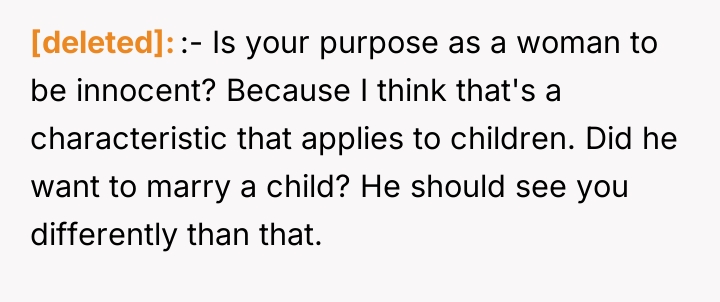
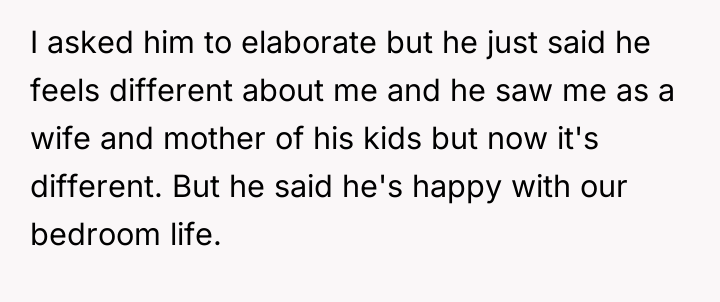
Bound by faith and love, they entered marriage with pure hearts and hopeful spirits, cherishing the promise of intimacy reserved for their sacred union. But just six months in, a shadow fell over their bond when he confessed seeing her in an entirely new light—one that left her questioning the innocence they once shared and the image he held of her as wife and mother.
Her honesty, once a bridge between them, now feels like a chasm of regret and shame. She wrestles with the memories of desire and vulnerability, fearing those moments have altered his love forever. Amidst confusion and pain, she clings to hope, yearning to understand and restore the connection that now feels fragile and uncertain.






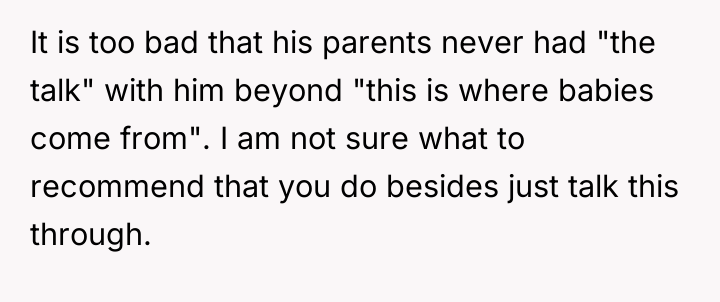
Dr. David Schnarch, a noted marriage therapist, emphasized that successful long-term relationships require partners to move beyond idealized fantasies of each other toward accepting the real, flawed individuals they are. In this situation, the husband appears to be struggling with the gap between his idealized, pre-marital vision of his wife as completely 'innocent' and the reality of her as a sexual partner within the marriage.
The wife's feelings of shame stem from a perceived violation of an unspoken agreement regarding expectations of purity. Her honesty, though commendable in the context of marital intimacy, was met with an inability from the husband to articulate his feelings constructively, leading to emotional ambiguity and distress for her. His statement that he is 'happy with our bedroom life' suggests the issue is one of cognitive dissonance—he values the intimacy but is simultaneously struggling with a pre-conceived narrative about her past. This highlights a significant communication breakdown regarding shared values post-marriage.
The wife's actions in initiating intimacy were appropriate within the framework of a consensual marriage. To address this, she needs to move past seeking to 'take it back' and instead invite a deeper, non-judgmental conversation focused on *his* expectations of marriage versus the reality of their shared life. A constructive recommendation is for the couple to seek professional counseling to discuss the broader meaning of sexual history within their shared religious and marital context, separating sexual satisfaction from perceived moral status.
THIS STORY SHOOK THE INTERNET – AND REDDITORS DIDN’T HOLD BACK.:
What started as a simple post quickly turned into a wildfire of opinions, with users chiming in from all sides.


The wife is currently experiencing deep feelings of shame and regret after sharing intimate details with her husband, leading her to question her past actions. A significant conflict exists between her desire for openness in her new marriage and the negative judgment she now perceives from her husband regarding her past innocence.
Given the husband's vague but impactful statement that he views his wife 'differently' now that her past sexual experience is known, the central question remains: Can trust and idealized perception be restored in a marriage after one partner expresses disappointment about the other's pre-marital history, even when current physical satisfaction is confirmed?
Trending This Week

AITA for telling my sister she has more than enough children?
My sister already has six children with her husband, which is far more than they can comfortably provide for given their financial troubles. It is also more than both of them can handle, resulting in my fifteen-year-old niece being treated as an unpaid babysitter who is constantly expected to help with her younger siblings. Recently, my sister experienced a miscarriage during the early stages of her seventh pregnancy. While talking to her about this painful experience, I remarked that at least she already has six other children and suggested that perhaps that is enough. My sister was highly offended, calling me insensitive and stating that her family choices do not concern me. However, they do affect me, as I have loaned her and her husband money on multiple occasions to help support their household.

AITA for prioritising my cat over taking my partner out to birthday dinner?
I am dating a man whose birthday was on Monday. We were supposed to go to an expensive birthday dinner because he spent a lot of money on my birthday earlier this year. He earns much more than I do, but I wanted to do what I could. We have been together for two years. On the day before our dinner, I noticed my cat had a painful cyst in her eye that appeared overnight. I drove her two hours to an emergency vet on Sunday. There is a high risk she might lose her eye. Because she was not eating from the pain, I became very worried, canceled the dinner, and stayed home with her. I offered to reschedule and invited my partner to help me care for her. My partner became very angry. He had taken a vacation day to get drunk, and the restaurant had a three-month waiting list. He called me selfish and an asshole because he would miss his favorite seasonal meal. I decided to break up with him. I realized I care about my cat more and would make the same choice again. My cat is still weak and has developed diarrhea, so I am taking her back to the vet.

AITAH for not telling my housemate I’m moving out and taking everything with me?
I have lived with two of my friends in a rented house share for ten months. Around three months into our tenancy, a girl we did not know moved in to fill the final room. While I was initially excited to have another female housemate, our first interaction was tense; instead of greeting me, she immediately asked about our cleaning plans. Despite explaining our weekly routine, she quickly began using our kitchen items and leaving them dirty. When one of my friends gently addressed this, she reacted by shouting at me for fifteen minutes, accusing me of trying to look good in front of the male roommates. Over the next seven months, her behavior deteriorated further. She monopolized the clothes drying racks, damaged our communal chopping boards, and left her hair all over the floors. Additionally, she filled the entire freezer, left appliances dirty, neglected bathroom hygiene, and took my personal hygiene products without permission. Whenever we tried to address these grievances, her anger was directed solely at me. Recently, a new job opportunity allowed my two friends and me to find a three-bedroom flat together. We are moving out next week. Since we purchased about ninety percent of the communal items in the house—including the toaster, microwave, kettle, and vacuum—we plan to take them with us. Because our communication has completely broken down, I have decided not to inform her of our departure, leaving her to find out when she notices the viewings or when the moving van arrives.