
Redditor Cries Out As Her Adult Son Wants To Take His Dog That She Has Trained And Bonded With
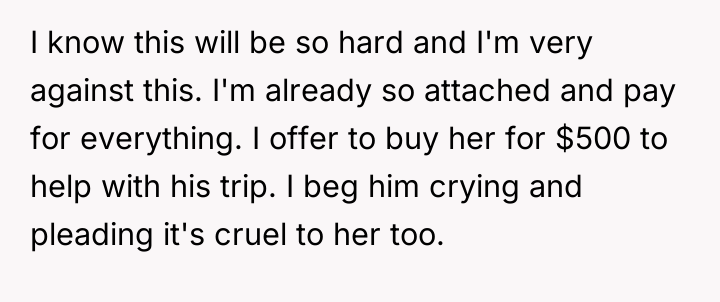
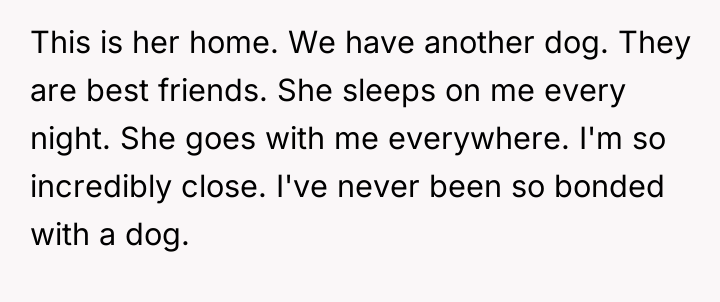
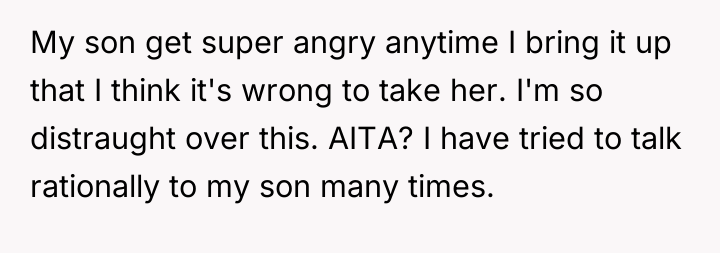
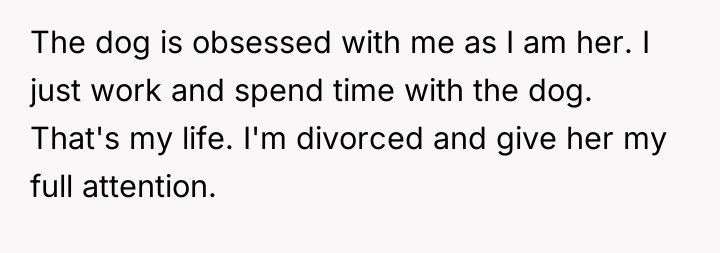
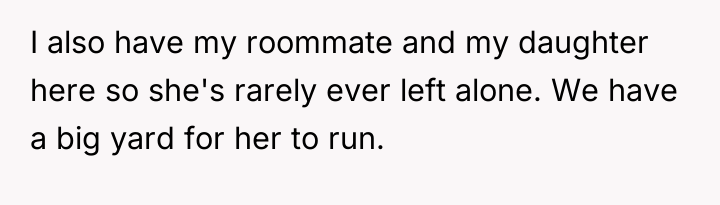
A mother’s heart swells with quiet pride and deep love as she raises a vibrant border collie, pouring her soul into training the dog that became her steadfast companion during her son’s long absences. In the silence of those months, the dog became her lifeline, her joy, and the living proof of her unwavering dedication, even as her son drifted further into a world where connection seemed fragile and fleeting.
When her son returns, bringing the dog back into his orbit, a bittersweet tension unfolds—between the loyalty of a mother and the pull of a restless youth chasing love across the country. The dog, caught in the middle, mirrors the unspoken longing for attention and belonging, a silent witness to a family’s shifting bonds and the heartache of growing apart.
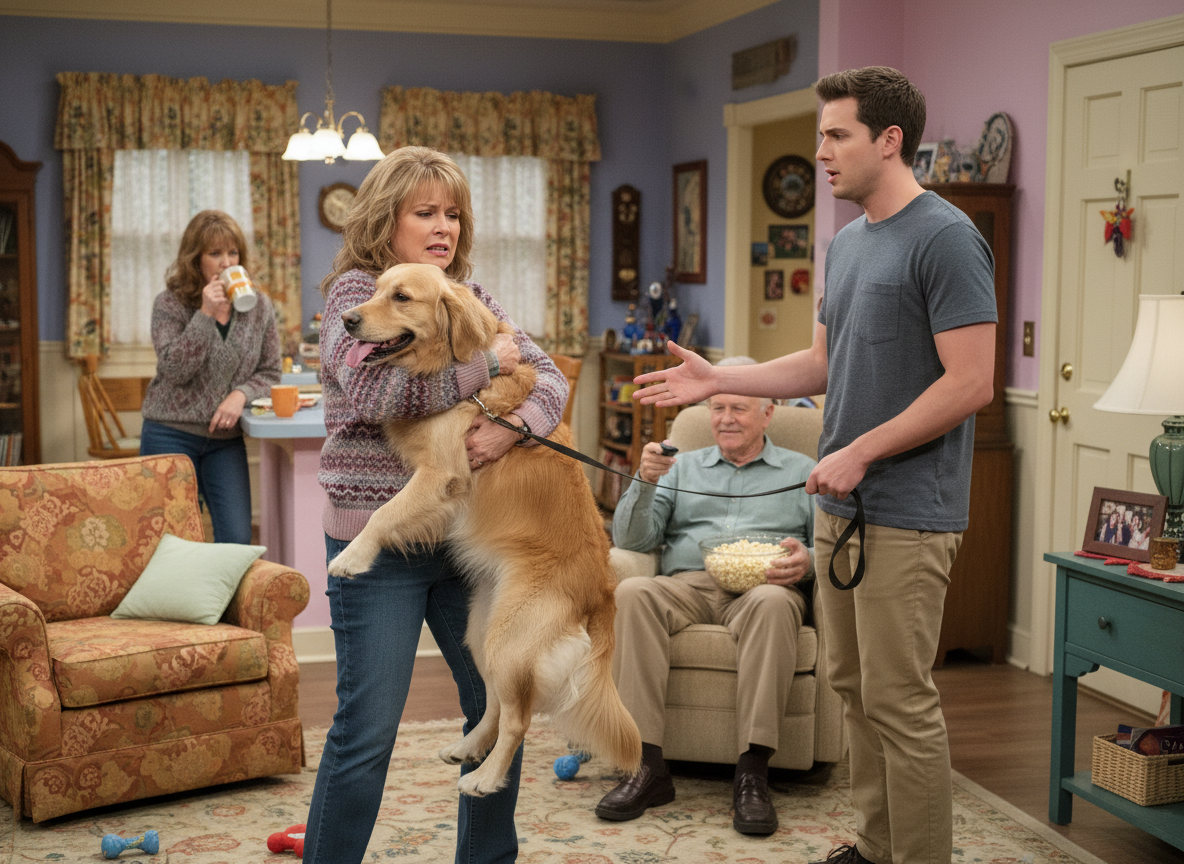





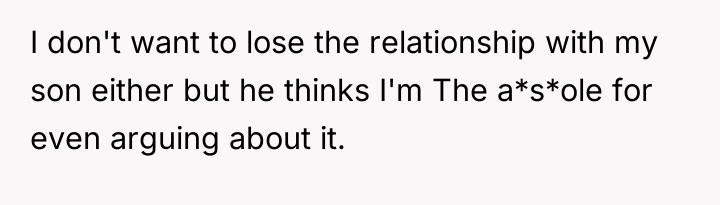
Dr. Patricia Pendry, a leading researcher in human-animal interaction, emphasizes that dogs form deep attachments to their primary caregivers, often based on consistent routines and positive reinforcement, similar to human attachment bonds. When a caregiver steps in consistently, as the mother did by training and caring for the border collie for months, the dog reorients its primary attachment to that person.
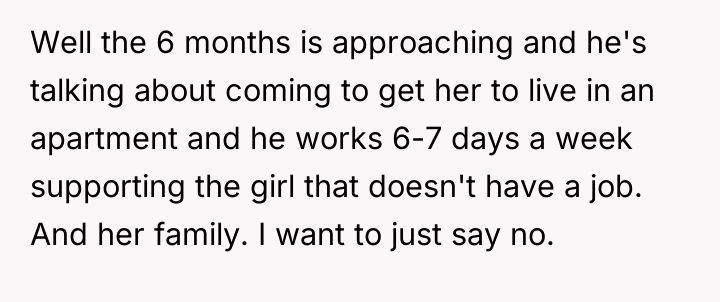
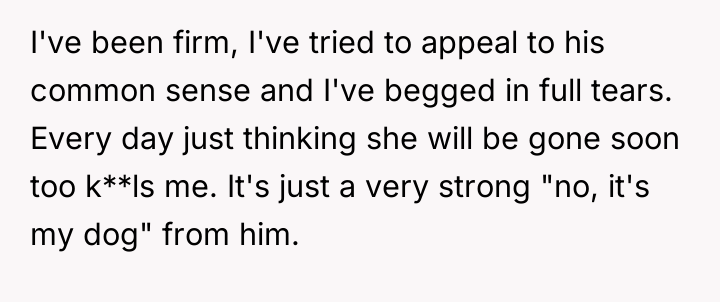
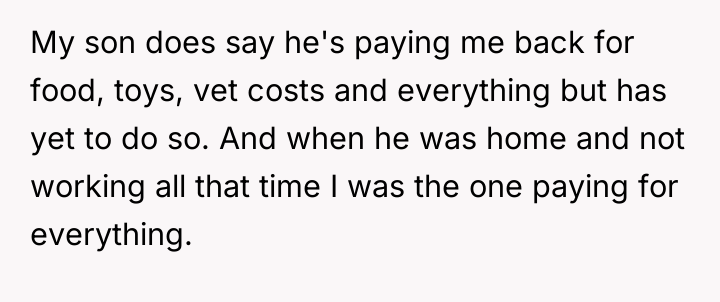
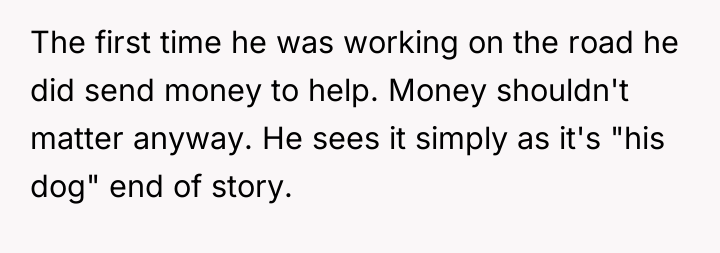
This situation is a classic conflict involving emotional labor, attachment theory, and perceived ownership. The son operates from a legalistic view: 'It's his dog.' However, ownership is not solely defined by initial purchase or title; it is heavily influenced by consistent caregiving and primary attachment formation. The mother provided consistent care, training, and fulfillment of the dog's high-level needs (especially for an active border collie), making her the de facto primary attachment figure. The son's recent withdrawal, long periods of absence, and current demanding lifestyle (supporting a partner while working six or seven days a week) demonstrate an inability or unwillingness to meet the dog's needs, contrasting sharply with the mother’s established, high-quality care environment.
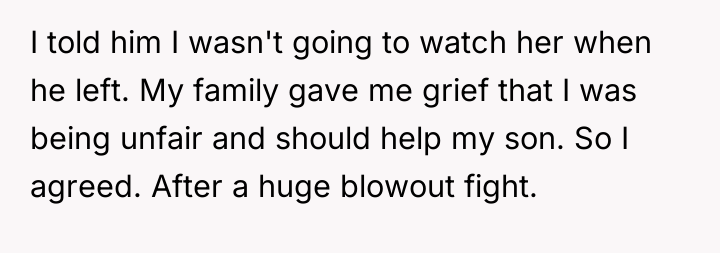
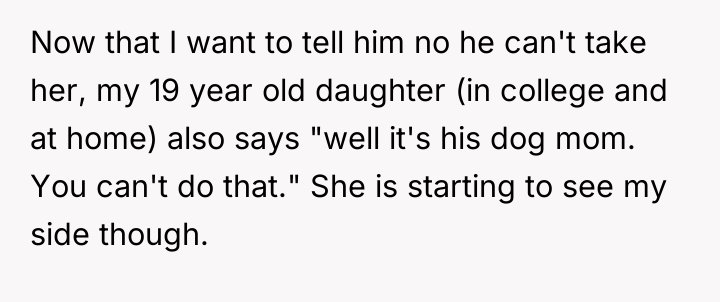
The son's anger when confronted suggests avoidance of responsibility for the consequences of his decision. While the mother initially yielded under family pressure, her current stance—refusing to allow the transfer—is ethically sound regarding the dog's welfare. A constructive recommendation would involve a structured mediation focusing strictly on the dog's welfare needs, presenting documented evidence of the dog’s current routine and training adherence. If the son cannot guarantee a comparable, consistent environment in Maine, the mother should hold firm on temporary guardianship, framing it as a necessity for the dog's health, rather than a permanent denial of ownership.
AFTER THIS STORY DROPPED, REDDIT WENT INTO MELTDOWN MODE – CHECK OUT WHAT PEOPLE SAID.:
The internet jumped in fast, delivering everything from kind advice to cold truth. It’s a mix of empathy, outrage, and no-nonsense takes.
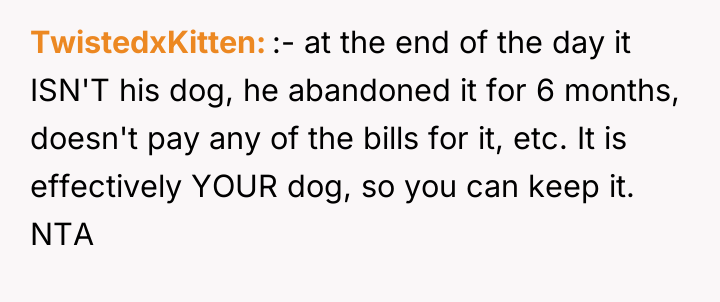
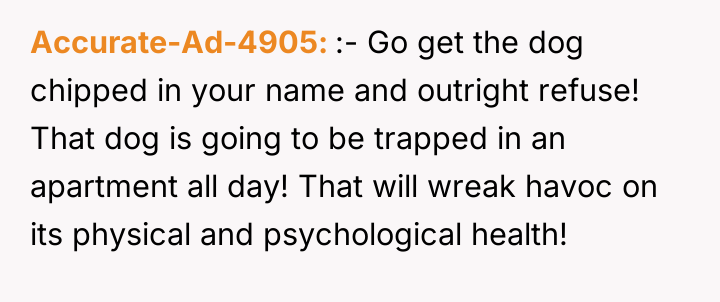
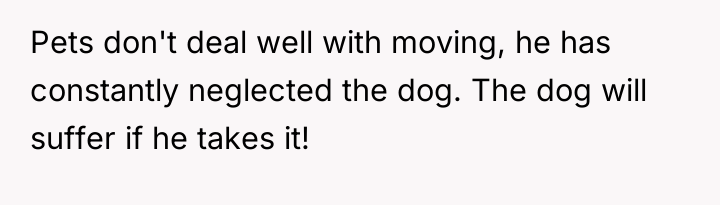
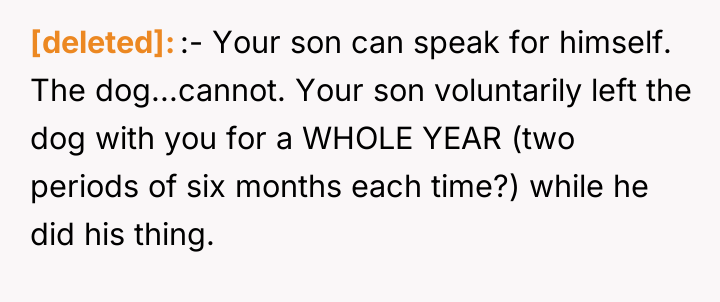
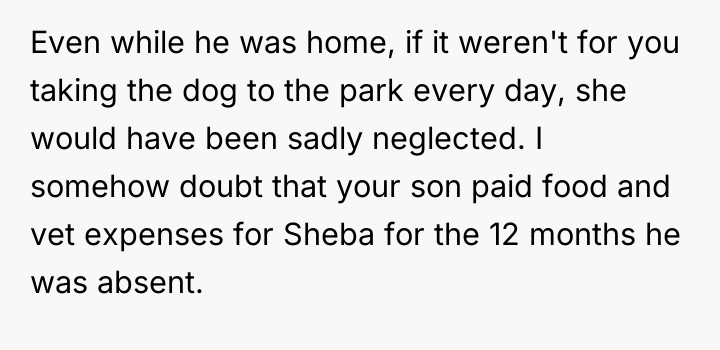
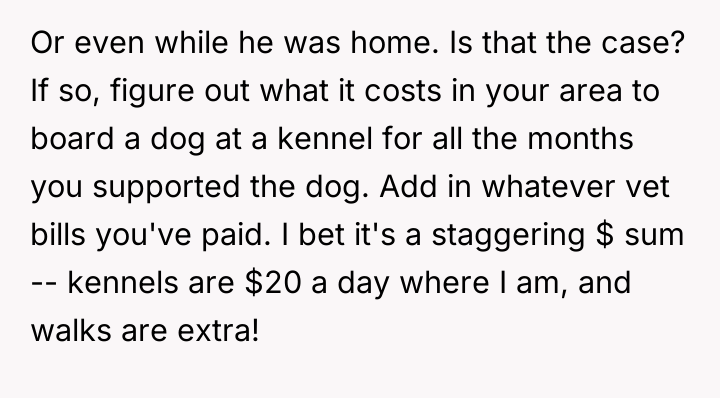
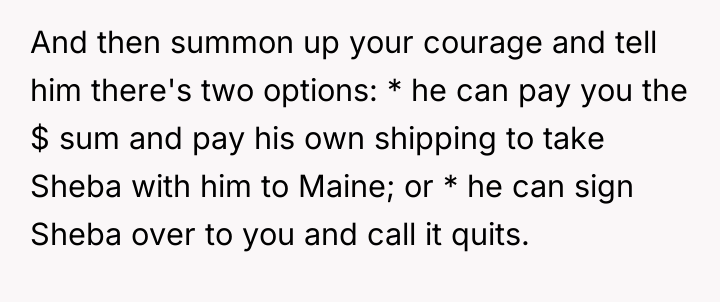
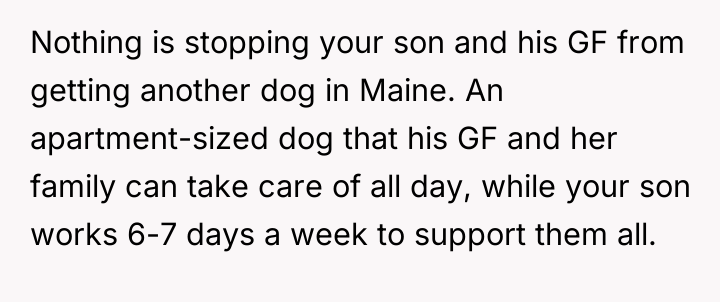
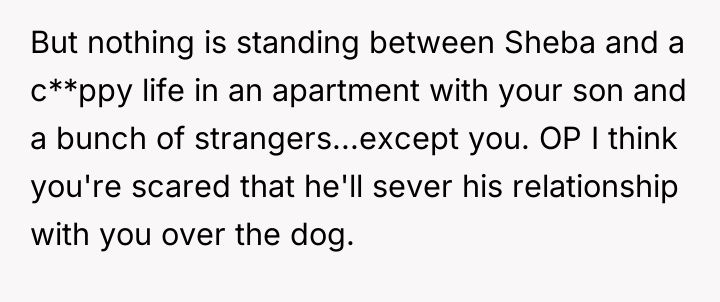
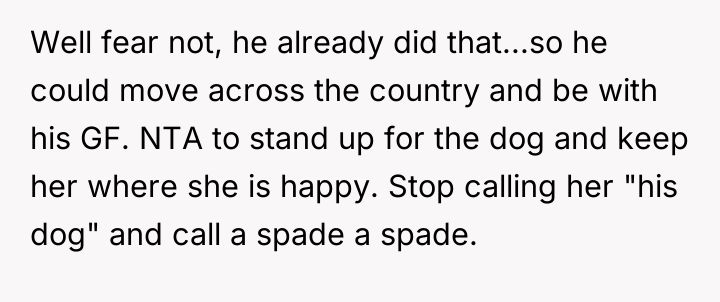
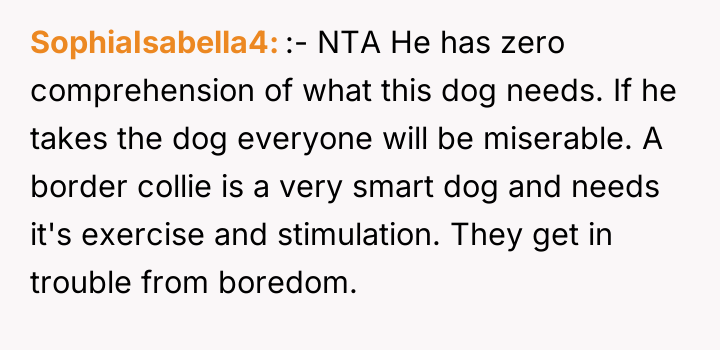
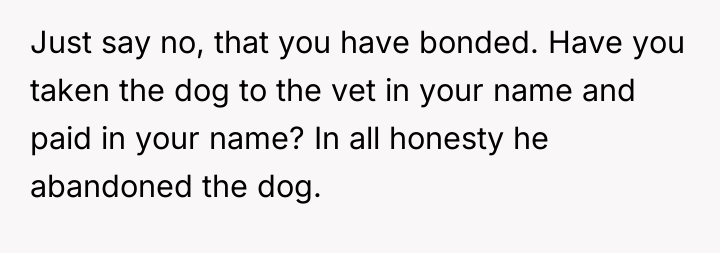
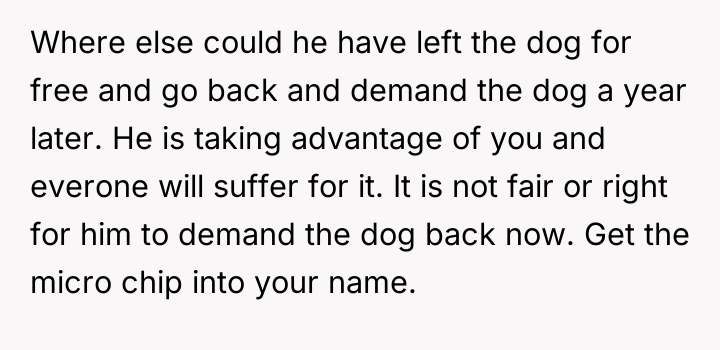
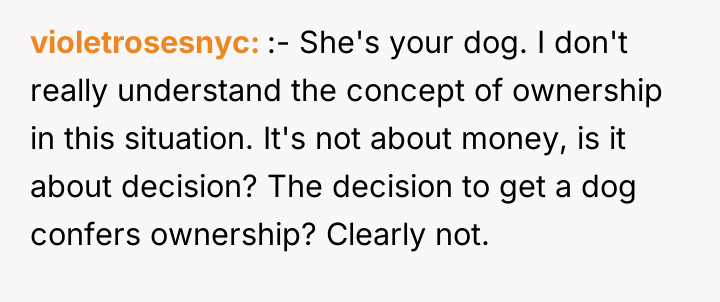
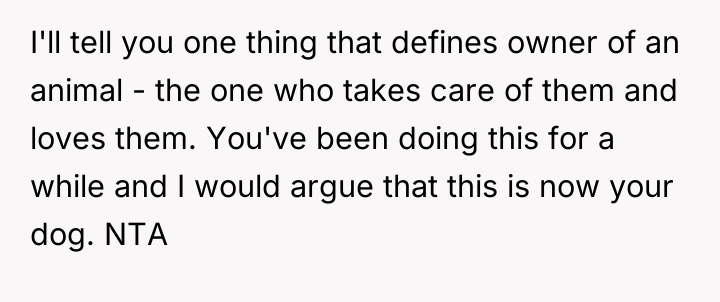
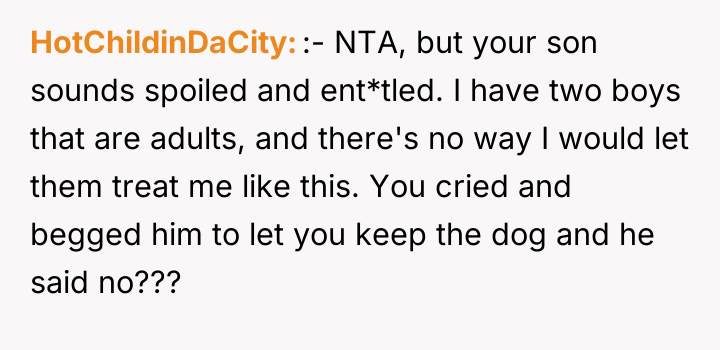
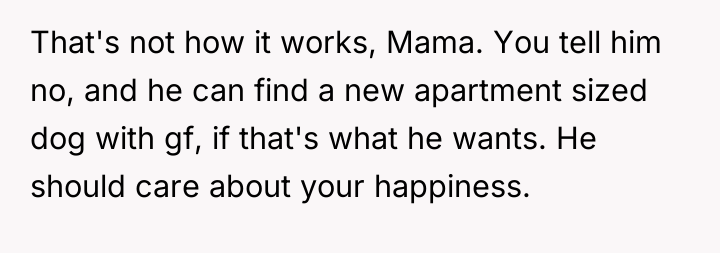

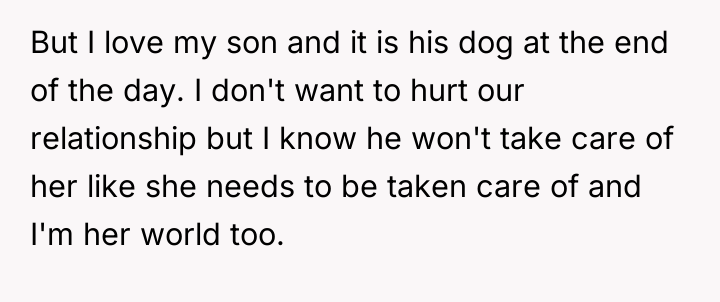
The primary caregiver feels intense distress and heartbreak because she has developed a deep, reciprocal bond with the dog during her son's long absences, leading to a major conflict between her emotional needs and her son's assertion of ownership over the pet.
Given the conflicting claims of emotional attachment versus legal ownership, should the mother ultimately prioritize the established high quality of care and established bond, or yield to her adult son's explicit desire to reclaim his property, despite the probable negative impact on the animal's well-being?