
Furious Bar Hopper Tackles Dog Mom For Casually Placing Her Service Dog On Bar Counter
In the dim glow of a new brewery, a quiet Friday night spiraled into an unexpected clash of boundaries and beliefs. A lone man, seeking the familiar comfort of his favorite bars and friendly banter, found himself unsettled and confronted by a bold act that challenged the very rules and respect he held dear.
What began as a simple night out morphed into a charged encounter when a woman defiantly placed her small dog on the bar, claiming it as a service animal. The tension cracked the room like a lightning strike—between disgust and disbelief, authority and defiance, two strangers locked in a silent battle over what is right and what is real.
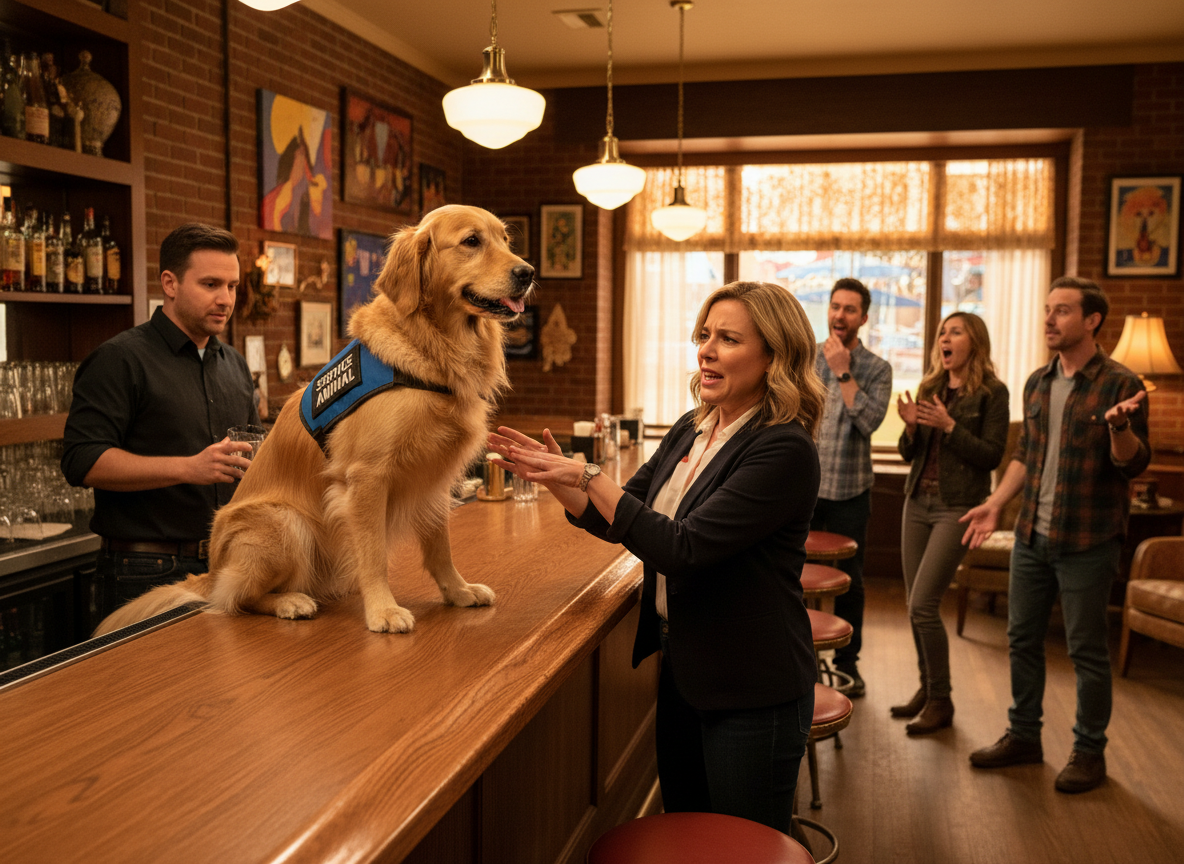
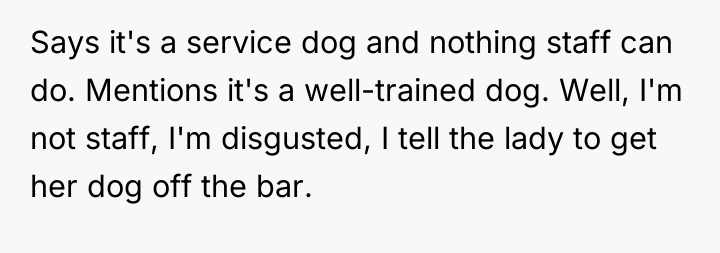
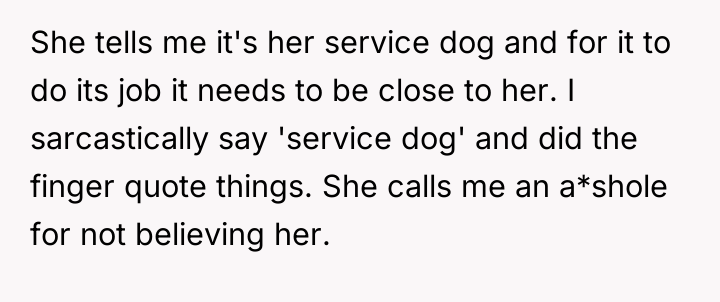
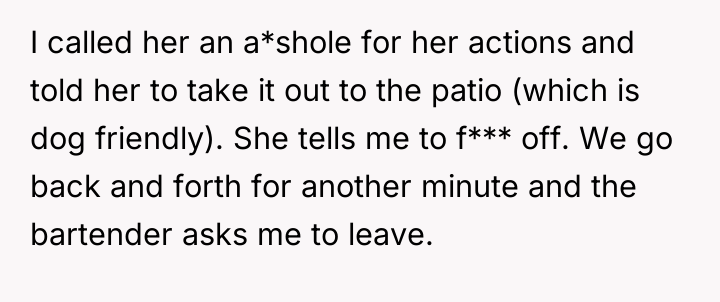
Dr. Robert Cialdini, known for his work on persuasion and social influence, emphasizes the power of social norms and compliance. In this scenario, the key conflict revolves around perceived authority and compliance with establishment rules. When the OP challenged the woman, he was essentially attempting to enforce a social norm (no dogs on the bar top) that he believed was being violated, despite the bartender's indication that the establishment was accommodating the situation under the guise of a service animal accommodation.
The OP’s actions displayed a breach of established social etiquette by directly confronting another patron rather than relying on management to handle the situation. While the OP's concern about hygiene is understandable, directly questioning or mocking a proclaimed service animal—especially using finger quotes—is widely considered aggressive and disrespectful, often escalating conflicts unnecessarily. The ADA (Americans with Disabilities Act) permits business owners to ask only two specific questions about a service animal: 1) Is the dog a service animal required because of a disability? and 2) What work or task has the dog been trained to perform? The OP bypassed this legal framework by demanding action as a fellow customer.
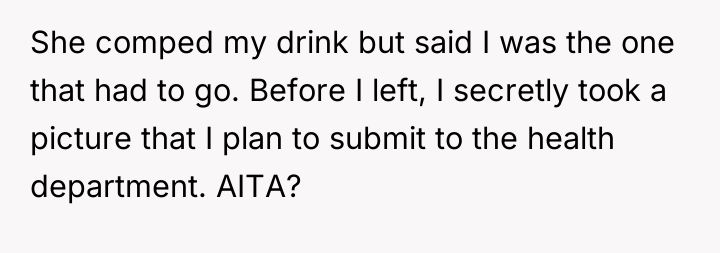
The OP’s decision to secretly photograph the situation for the health department suggests a focus on punitive action rather than immediate conflict resolution. While reporting health code violations is appropriate, doing so after a heated public argument is an escalation. Moving forward, the most constructive approach is to immediately alert management privately about a concern, allowing them to address the situation using their official authority and knowledge of local health codes. If the management takes no action, the patron can then choose to leave or follow up with authorities later, minimizing personal confrontation.
REDDIT USERS WERE STUNNED – YOU WON’T BELIEVE SOME OF THESE REACTIONS.:
The thread exploded with reactions. Whether agreeing or disagreeing, everyone had something to say — and they said it loud.
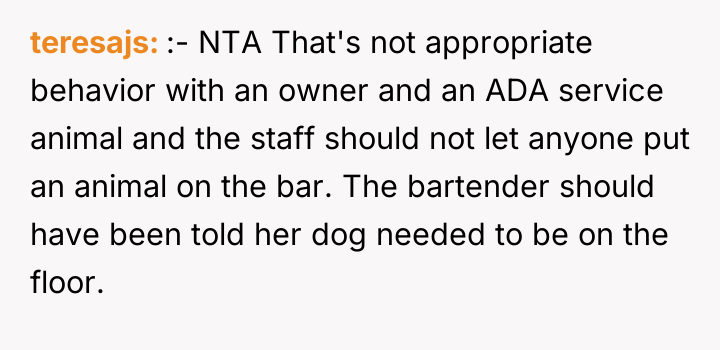
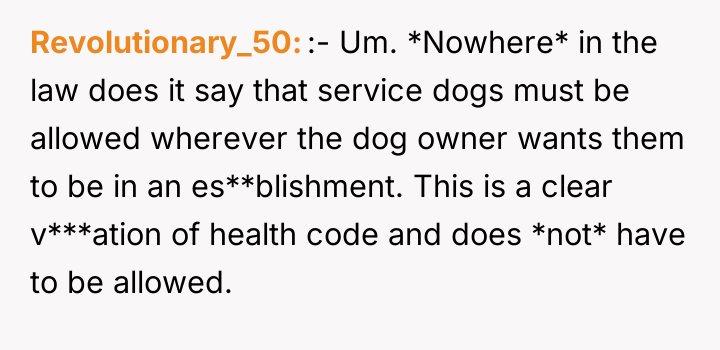
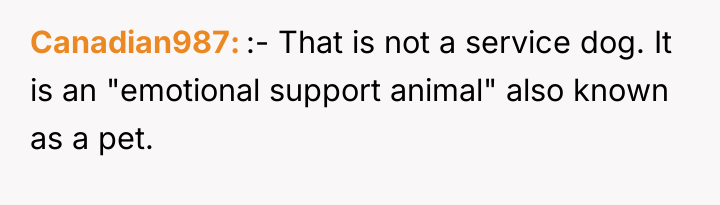
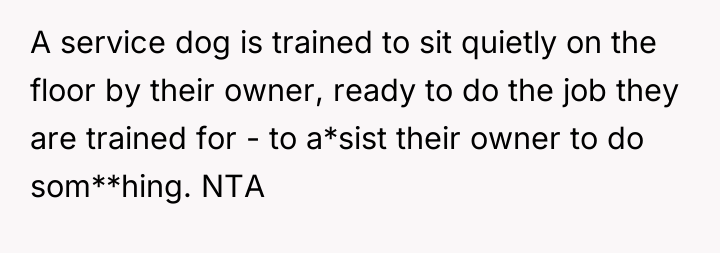
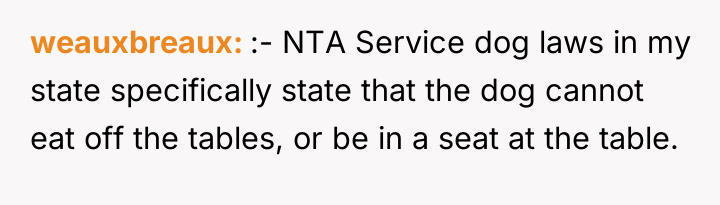
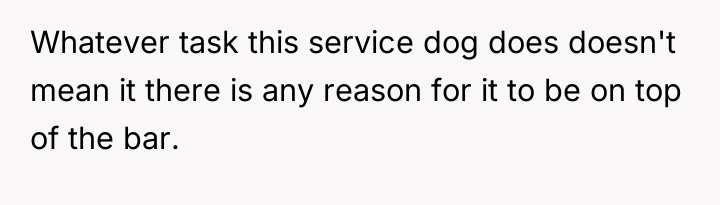

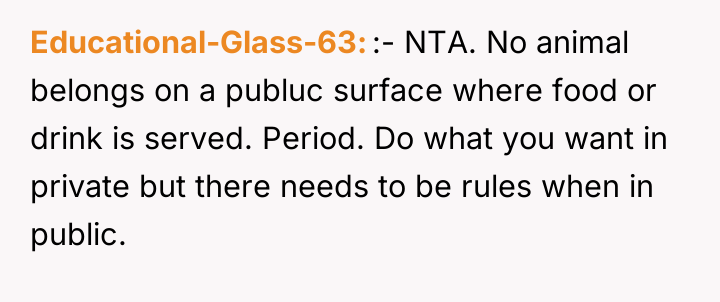
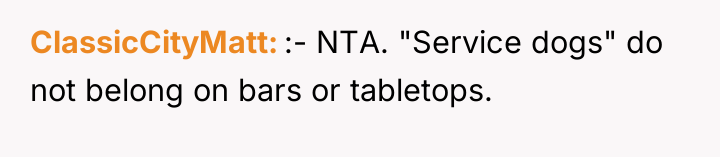
The individual felt a strong sense of disgust and a belief that rules regarding public hygiene and pet restrictions were being broken. This led to a direct confrontation with another patron, overriding the establishment's staff intervention.
Did the patron have the right to challenge another customer's service animal claim and demand compliance with unstated personal standards, or should they have deferred entirely to the judgment of the bar staff and health regulations?