
My Wife Refuses to Get a Job, Spent $6,000 on Cat Toys, and Now Demands I Pay Back “Her” Cash
For nine years, he has stood at the crossroads of love and exhaustion, carrying the weight of their shared life while she remains anchored in excuses and dependence. Despite his relentless efforts—juggling work, study, and job hunting on her behalf—her brief stint of employment ended abruptly, leaving him to navigate the harsh reality of one-sided sacrifice.
Every early morning spent driving her to a job she soon abandoned chipped away at his spirit, revealing a painful imbalance in their partnership. Her unexpected resignation and costly Uber ride home became the breaking point, a silent scream of frustration and heartbreak in a relationship strained by unspoken burdens and unmet expectations.









Subscribe to Our Newsletter
As renowned researcher Dr. Brené Brown explains, “Boundaries are the distance at which I can love you and me simultaneously.” In this situation, the core issue revolves around established relationship boundaries regarding finances, division of labor, and mutual respect.
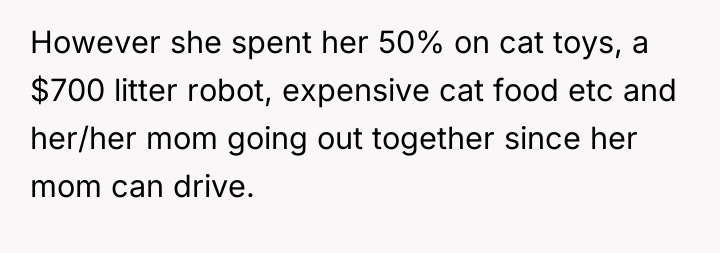
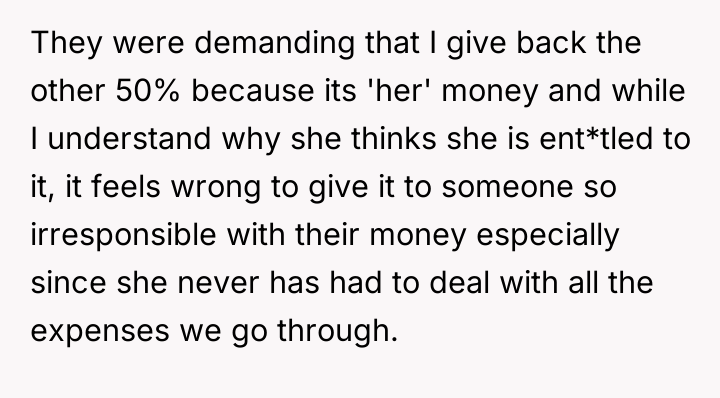
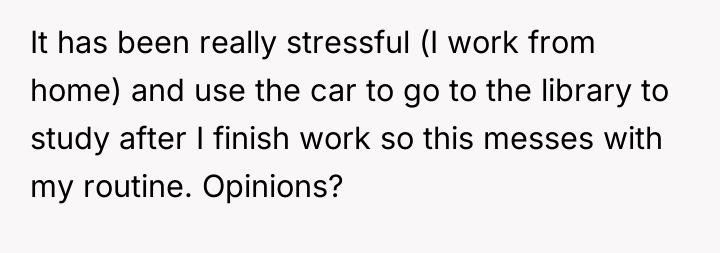
The husband has taken on the entire financial and academic load for the partnership, while the wife has historically avoided gainful employment and, upon receiving an inheritance, immediately made significant, non-essential purchases without consulting him as a financial unit. Her justification for demanding the return of the $3,000—which the husband argues should be treated as shared marital assets given his financial management—highlights a severe misalignment in perceived contribution and entitlement. The mother's escalation, including taking the car without permission, further indicates a lack of respect for the husband's role and the couple's autonomy.
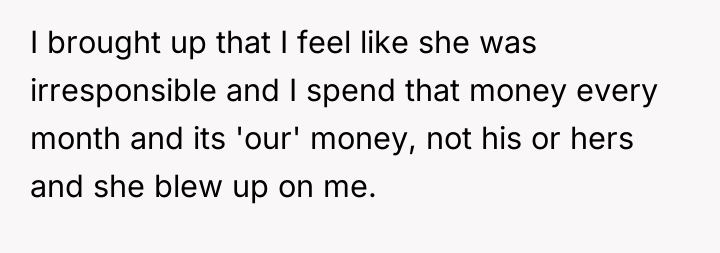
The husband's actions in managing the money based on his functional role (handling all expenses) were an attempt to create structure where his wife failed to contribute. However, by allowing the situation to escalate to the point where he feels entitled to control her inheritance, he has moved from boundary setting to control. Moving forward, the constructive approach is to immediately stop managing her inheritance funds, clearly communicate that future joint expenses must be planned together, and firmly address the mother's behavior regarding the vehicle. If a joint financial agreement cannot be reached, the OP must seek couples counseling to redefine roles and boundaries before this control issue permanently damages the marriage.
THE COMMENTS SECTION WENT WILD – REDDIT HAD *A LOT* TO SAY ABOUT THIS ONE.:
The internet jumped in fast, delivering everything from kind advice to cold truth. It’s a mix of empathy, outrage, and no-nonsense takes.
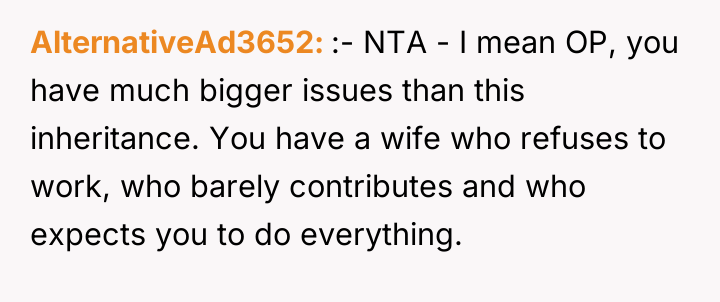
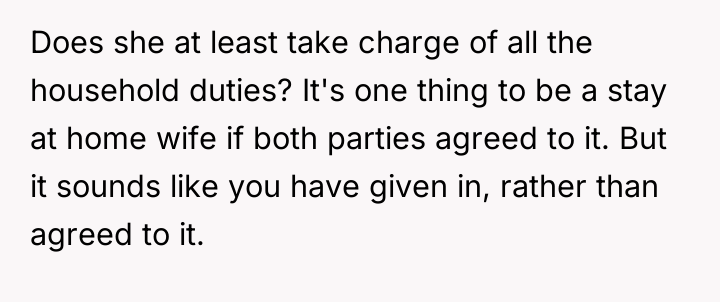


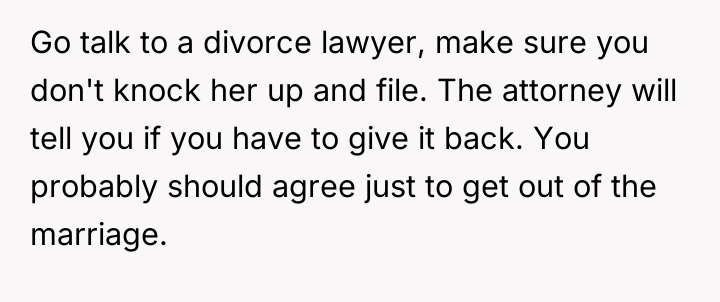
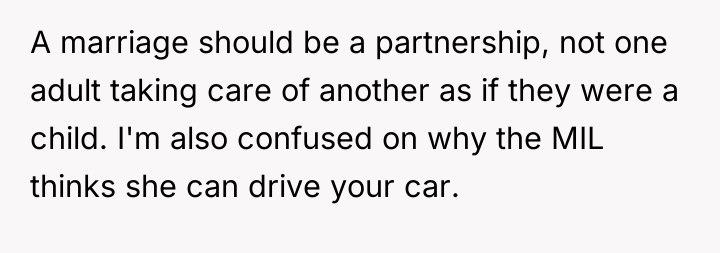
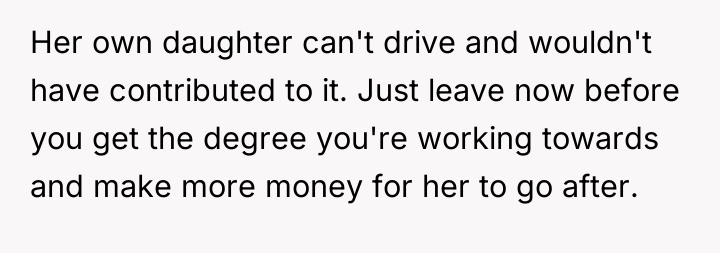
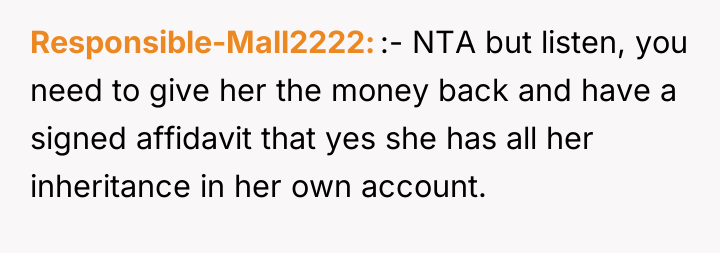


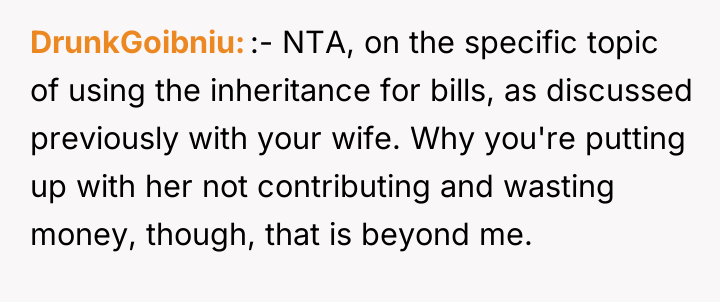


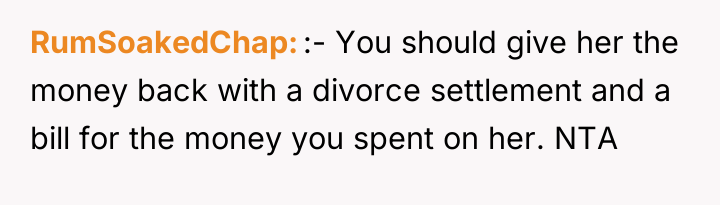


The original poster is deeply frustrated because his wife, who has rarely worked, has demonstrated financial irresponsibility with a recent inheritance, prioritizing luxury pet items over shared financial stability. He feels his significant efforts in managing all finances, work, and study are being dismissed by both his wife and her mother, who are demanding he return her portion of the inheritance.
Is the husband justified in refusing to return the wife's share of the inheritance, given her pattern of financial dependence and perceived irresponsibility, or should he return the money as she and her mother demand, viewing it as solely her inheritance to control?