AITA for refusing to let my mom move into my new house
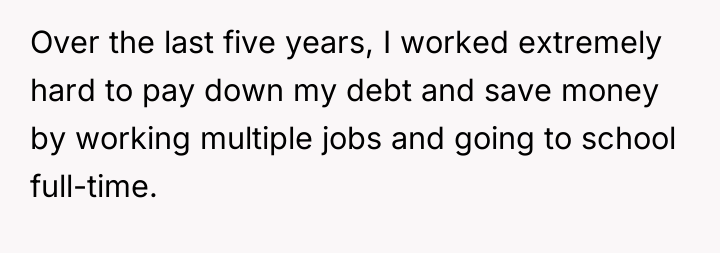
For five relentless years, he poured every ounce of energy into building a future where stability wasn’t just a dream but a reality. Balancing full-time work, side gigs, and full-time school, he sacrificed comfort and time, all for the moment his offer on a home was finally accepted—a testament to his grit and unwavering hope.
Yet, beneath this hard-earned triumph lies the fragile thread of a strained relationship with his mother, whose financial struggles and dependence have complicated their fragile truce. What started as a temporary solution to help her has become a daily battle, testing the limits of his resilience and the true cost of sacrifice.


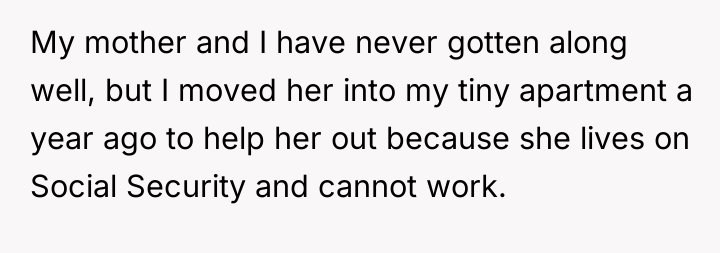
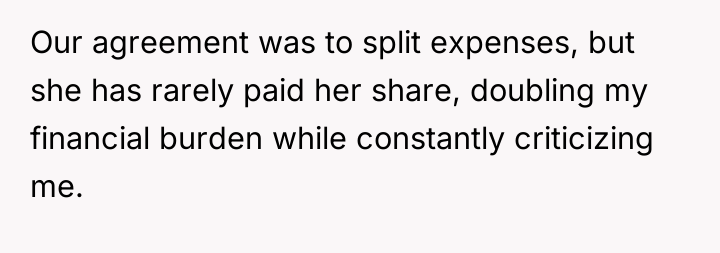
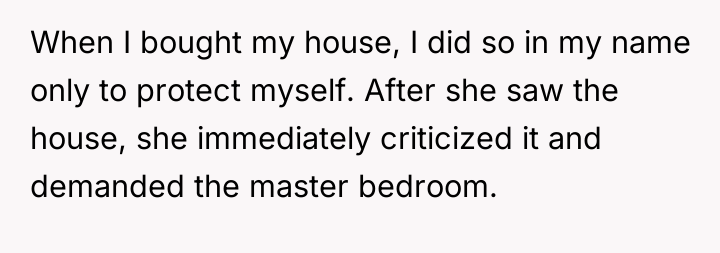

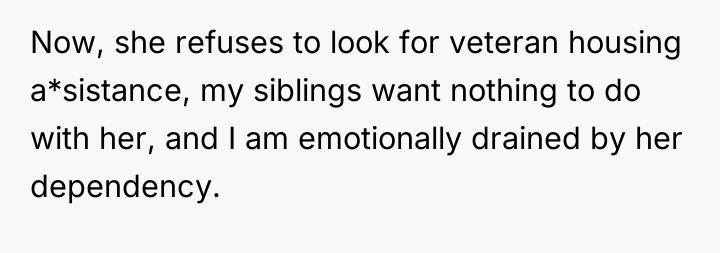
According to Dr. Henry Cloud, a clinical psychologist and co-author of the book Boundaries, people who have boundary issues routinely take on tasks that are not theirs to do, and they often suffer from burnout and resentment as a result. In this situation, the son has spent a year enabling his mother's financial irresponsibility by covering her unpaid share of the living expenses, which has doubled his financial burden. His mother's chronic poor financial habits, combined with her critical attitude and sense of entitlement—such as demanding the master bedroom in a house she did not contribute toward—demonstrate a severe lack of personal boundaries and respect for her son's autonomy.
The dynamic between the son and his mother is a classic example of parentification and codependency, where the child assumes the caretaking role for an irresponsible parent. By refusing to explore housing assistance programs available to her as a veteran, the mother exhibits learned helplessness, relying entirely on her son to solve her problems. The son’s decision to exclude her from the home purchase process and eventually revoke her invitation to move in represents a desperate but necessary attempt to establish a boundary and protect his financial future from her creditors and perpetual debt.
Ethically and psychologically, the son's decision to rescind the offer for his mother to live with him is appropriate and necessary for his own mental and financial well-being. To handle this transition effectively, he should firmly refuse to back down on his boundary while providing her with a list of veteran housing resources and social services. He must allow her to face the consequences of her financial choices, facilitating her transition to independent government-assisted living rather than continuing a cycle of resentment-fueled enablement.
HERE’S HOW REDDIT BLEW UP AFTER HEARING THIS – PEOPLE COULDN’T BELIEVE IT.:
This one sparked a storm. The comments range from brutally honest to surprisingly supportive — and everything in between.
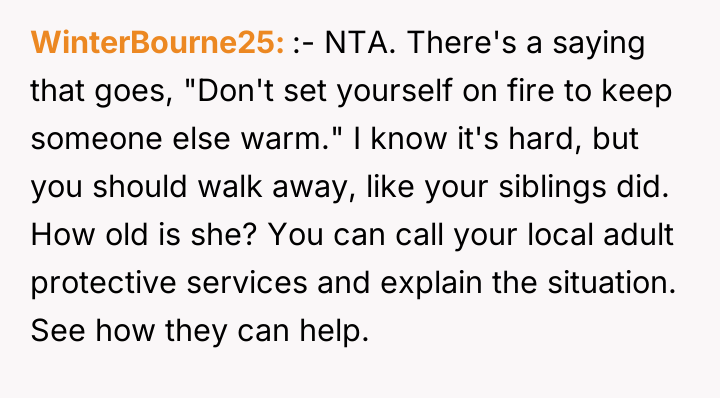
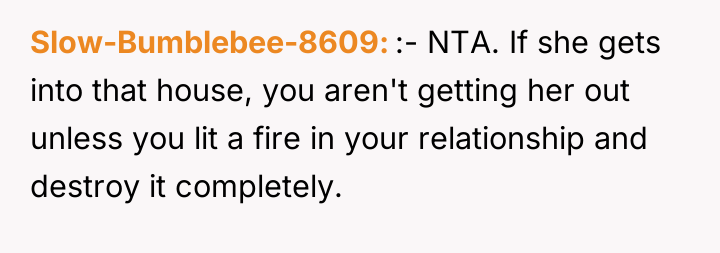
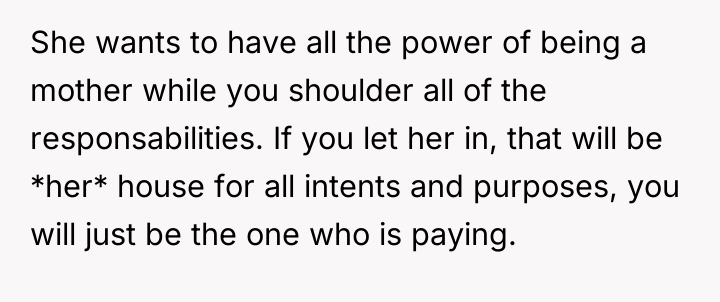
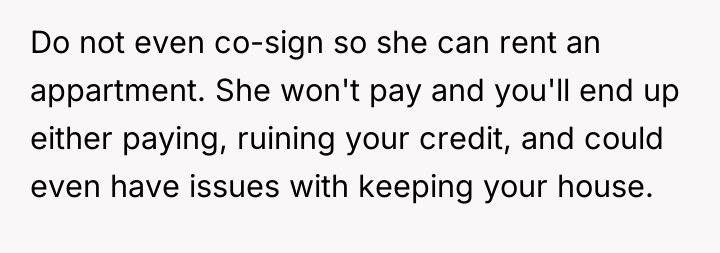
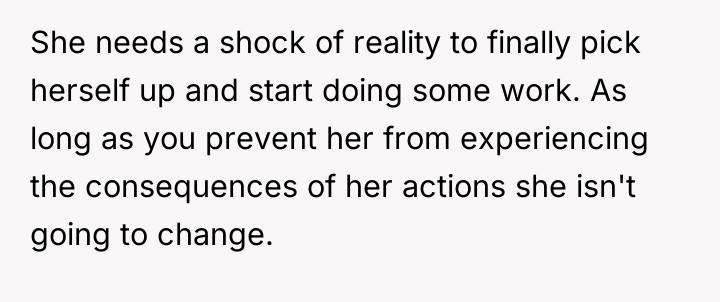

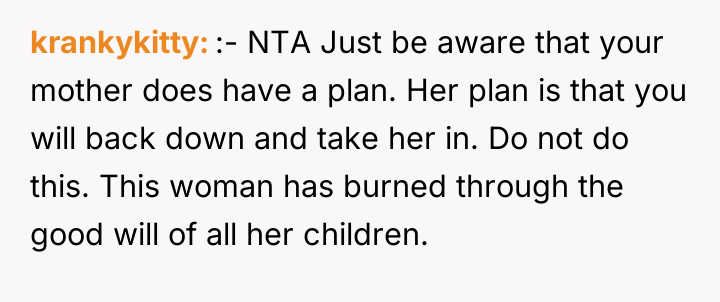
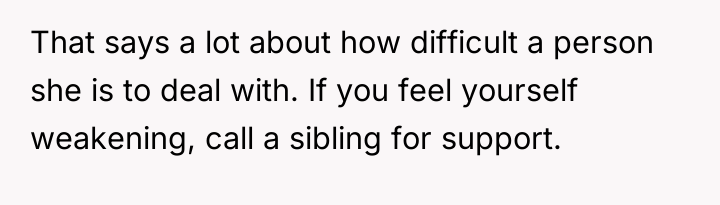
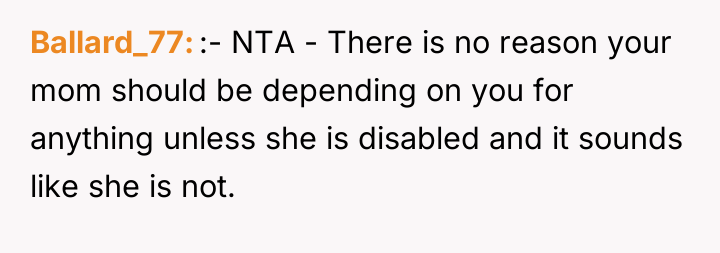
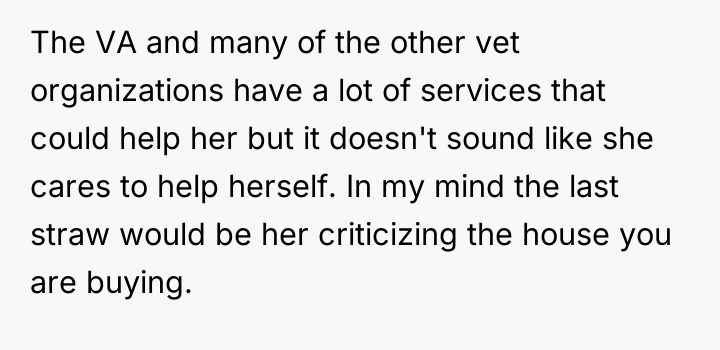
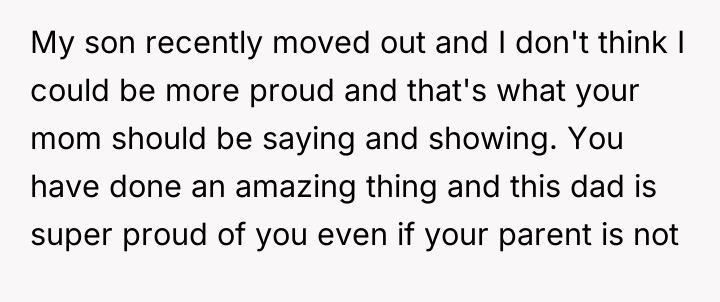


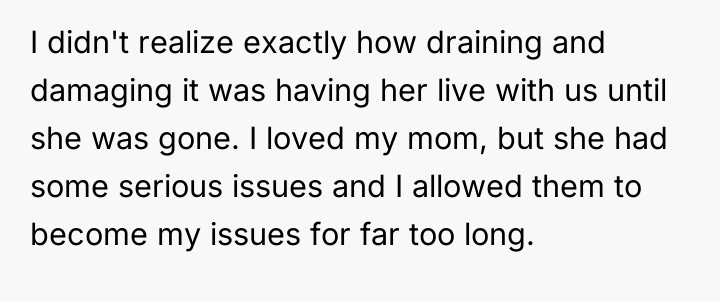
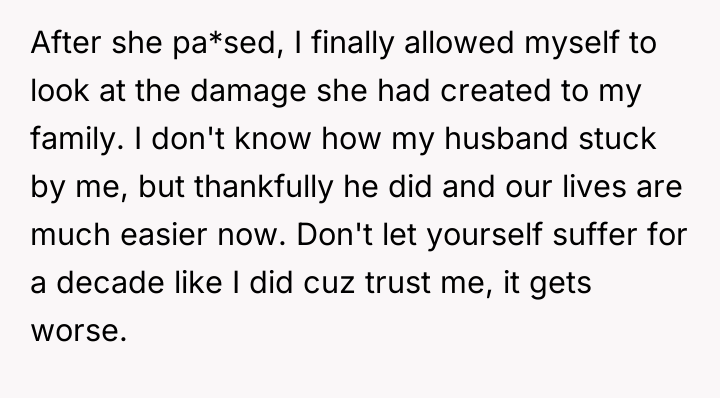
The homeowner is caught in a deeply painful position, torn between the exhausting financial and emotional drain of supporting his mother and the societal expectation to care for an aging parent. Despite his efforts to help, her lack of financial responsibility and constant criticism have pushed him to his absolute limit, forcing a clash between his need for personal boundaries and her survival.
Should a child be obligated to sacrifice their own financial security and mental well-being to support a parent who refuses to help themselves, or is it entirely justified to sever ties and prioritize one's own hard-earned peace of mind?
Trending This Week

AITA for canceling stepdaughter's birthday party?
My stepdaughter is turning 18 and lives mostly with her mother. My husband works a lot but is a very involved father. He asked me to plan her birthday party, and I agreed, spending several hundred dollars and many hours of my own time to make sure everything was perfect. The conflict began when the biological mother demanded my husband buy over five thousand dollars in jewelry and concert tickets for their daughter, which we could not afford. When my husband refused, the biological mother drove to our home, stood in our driveway, and began screaming and cursing at him. To defend my husband and our home, I went outside and told her to shut her mouth and that she had no right to speak to him that way. Although my stepdaughter was not present, her mother told her about the confrontation. Consequently, my stepdaughter uninvited me from the party I planned and funded, claiming she and her mother felt too uncomfortable to have me there. In response, I decided to cancel the reservations, catering, and decorations, choosing to redirect my money elsewhere.

AITA for prioritising my cat over taking my partner out to birthday dinner?
I am dating a man whose birthday was on Monday. We were supposed to go to an expensive birthday dinner because he spent a lot of money on my birthday earlier this year. He earns much more than I do, but I wanted to do what I could. We have been together for two years. On the day before our dinner, I noticed my cat had a painful cyst in her eye that appeared overnight. I drove her two hours to an emergency vet on Sunday. There is a high risk she might lose her eye. Because she was not eating from the pain, I became very worried, canceled the dinner, and stayed home with her. I offered to reschedule and invited my partner to help me care for her. My partner became very angry. He had taken a vacation day to get drunk, and the restaurant had a three-month waiting list. He called me selfish and an asshole because he would miss his favorite seasonal meal. I decided to break up with him. I realized I care about my cat more and would make the same choice again. My cat is still weak and has developed diarrhea, so I am taking her back to the vet.

AITA for leaving Thanksgiving because my partner's creepy brother was there?
I and my partner have been friends for a few years and started dating more seriously early this year. This was the first time he invited me to Thanksgiving, which he called a Friendsgiving. His parents were hosting it, but it was mostly their friends and his friends, not extended family. For whatever reason, I assumed his brother would not be there. I have tried really hard to be nice to his brother, who has always made me uncomfortable with staring and hovering. Last year, my partner asked if his brother could join us on a road trip. I expressed my discomfort, but my partner assured me it would be fine. During the trip, I felt like I was babysitting him. A few weeks later, I discovered that his brother had posted lewd drawings of me online, which he had created during our trip. When I brought this up to my partner, he brushed it off, and I did not explicitly spell out how uncomfortable it made me. I made it clear that I did not want to be around his brother after that. When I had dinner with his parents, his brother usually stayed in his room. However, at the Friendsgiving dinner, his brother showed up and was seated right next to me. My partner did not warn me or try to prevent us from being seated together. Feeling overwhelmed, I decided to leave. I took the car keys, and when my partner asked what I was doing, I raised my voice in front of the guests, telling him he could choose between me and his brother. I drove away, leaving him at his parents' house, and went to stay with my sister.