
AITAH for deciding I am never having a relationship with my siblings after they contacted me so I could apologize for exposing our father's a**se of me?
At just seven years old, he endured a brutal assault from the very man who was meant to protect him, a pain so deep it left invisible scars and shattered his sense of safety. The silence that followed, masked by his mother’s painful complicity, only fueled a storm of anger and betrayal inside him, as innocence was stolen in a moment that replayed endlessly in his memory.
For years, the fear turned into fury, each explosive outburst from his father a fresh wound, each act of violence a reminder of his helplessness. His mother’s refusal to shield him from harm deepened the chasm between them, turning his pain inward and his voice into a raw, desperate cry against the silence that surrounded his suffering.
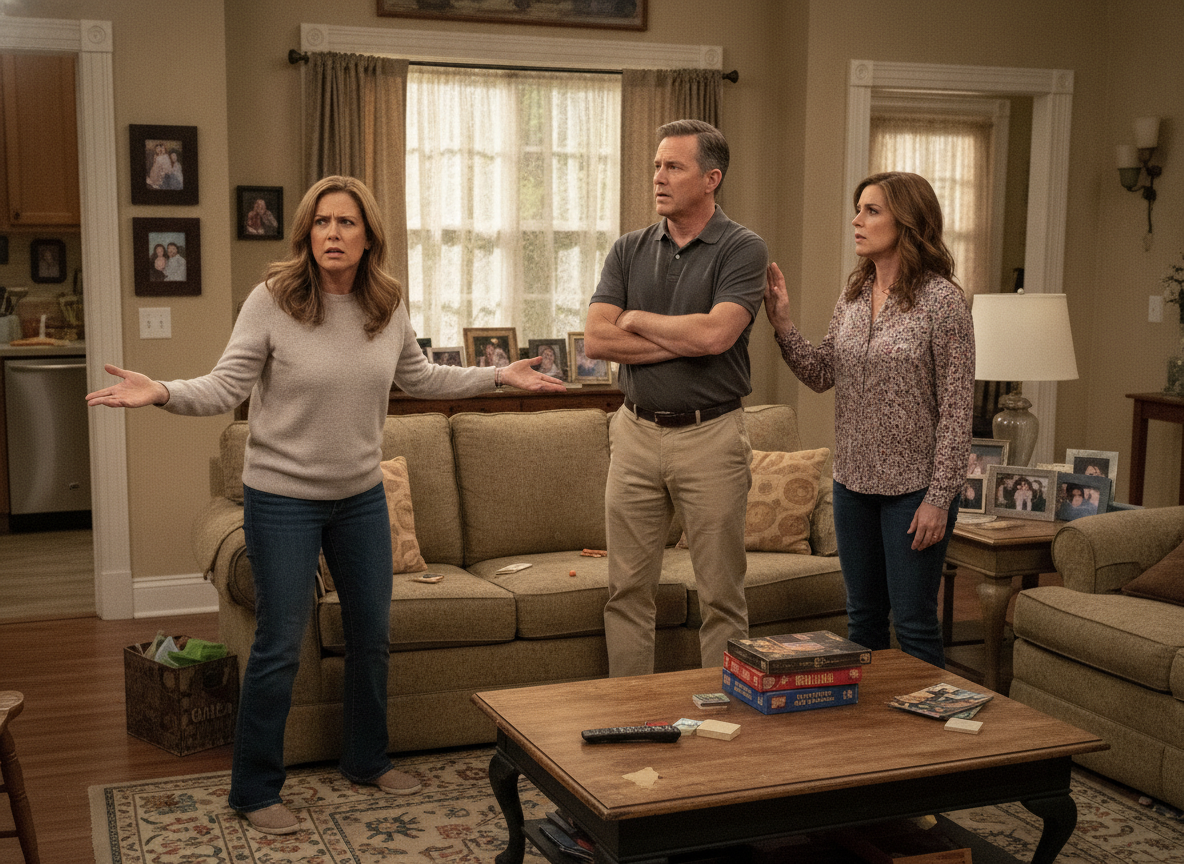
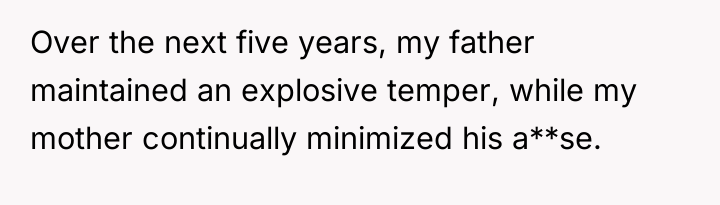
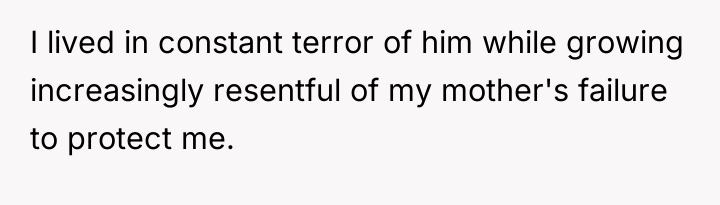
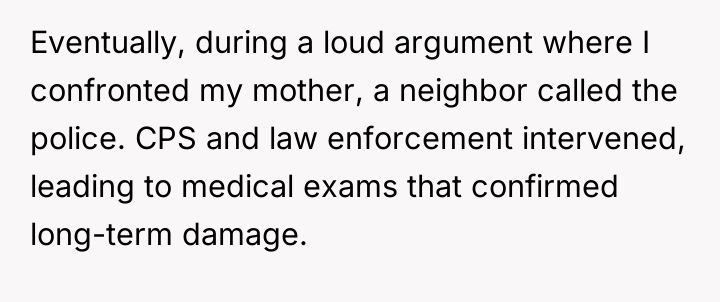
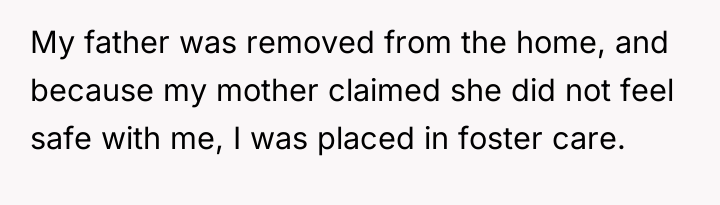
As trauma expert Dr. Bessel van der Kolk notes in The Body Keeps the Score, severe trauma creates lasting changes in emotional processing, making physical and psychological safety essential for recovery. In abusive family systems, members often engage in collective denial and scapegoating to avoid facing uncomfortable truths. The poster's siblings, raised by a mother who consistently minimized violence, appear to have internalized a false narrative that blames the victim for family disruption rather than holding the perpetrator accountable.
Establishing complete boundary enforcement with family members who invalidate severe abuse is a healthy self-preservation mechanism. Expecting a childhood assault survivor to tolerate emotional invalidation or take responsibility for an abuser's criminal record is unjust and harmful. The poster's decision to sever contact protects the emotional stability, independence, and social happiness he worked diligently to build after leaving foster care.
In conclusion, the poster acted appropriately by protecting his mental health and setting clear boundaries against further emotional harm. He is under no ethical or psychological obligation to endure secondary victimization or wait for his siblings to mature. Moving forward, maintaining firm boundaries and avoiding detailed arguments with unsupportive relatives will best preserve his long-term peace.
THIS STORY SHOOK THE INTERNET – AND REDDITORS DIDN’T HOLD BACK.:
Users didn’t stay quiet — they showed up in full force, mixing support with sharp criticism. From calling out bad behavior to offering real talk, the comments lit up fast.
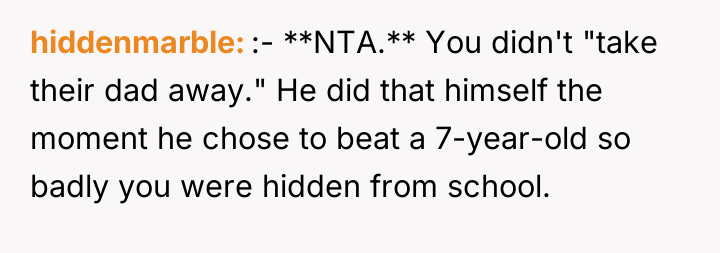
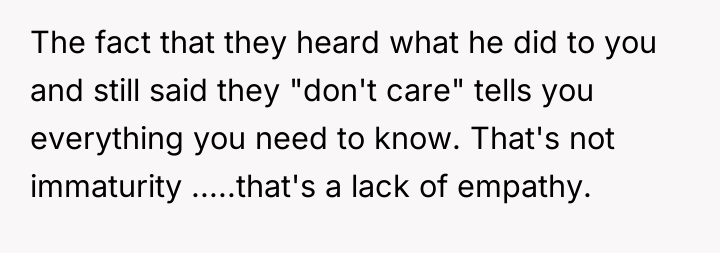
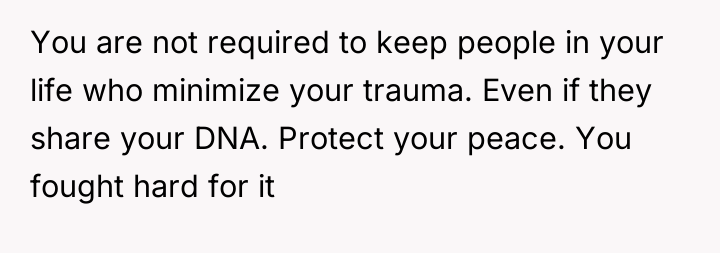
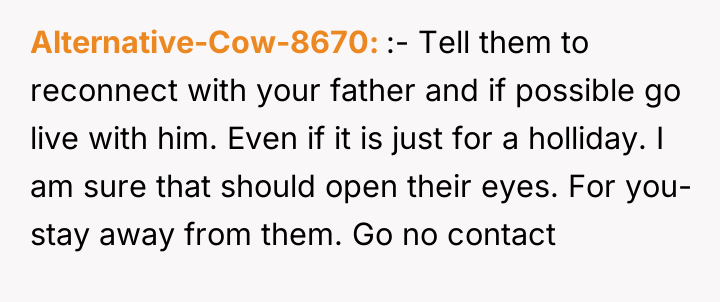
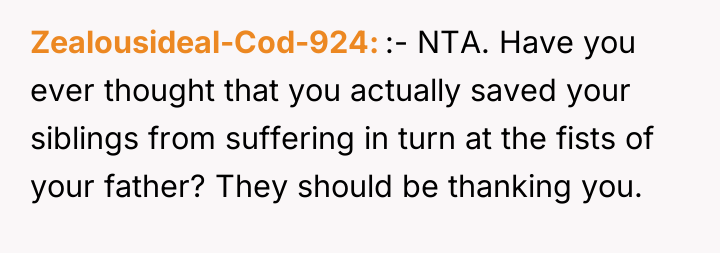
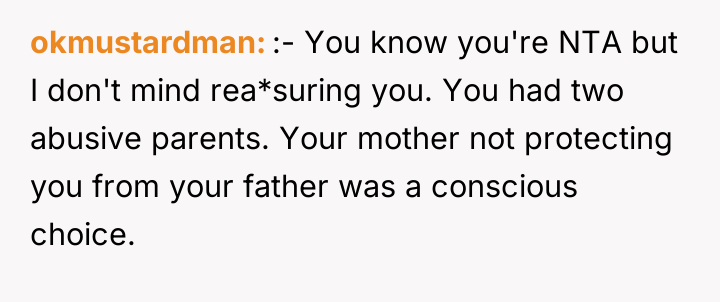
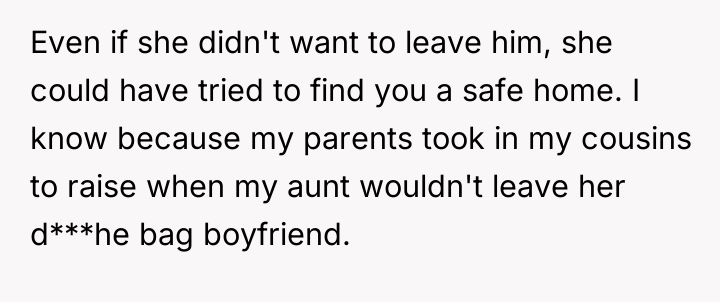
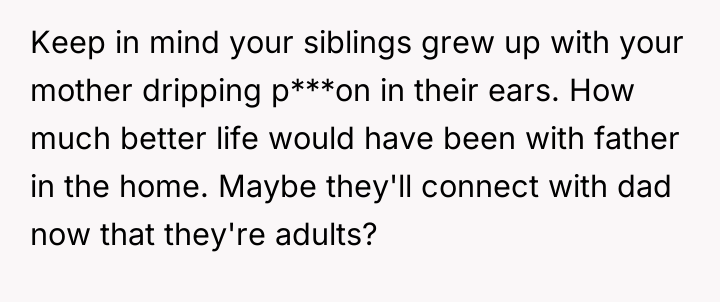
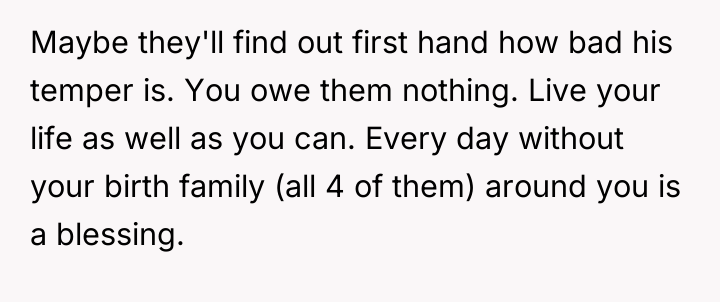
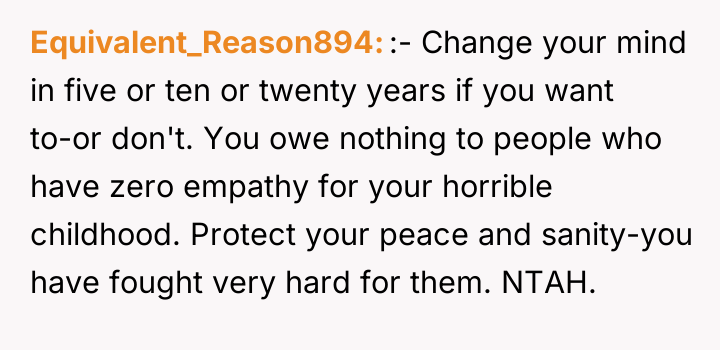
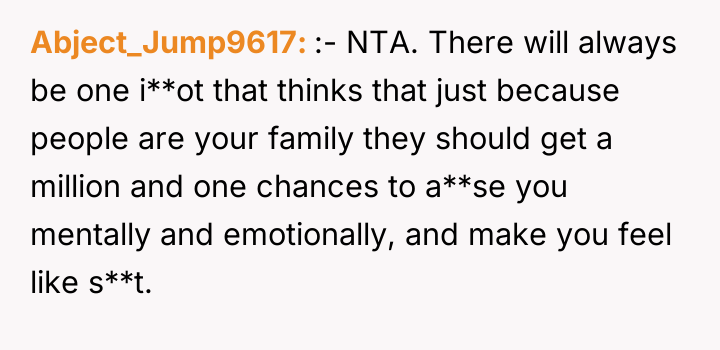
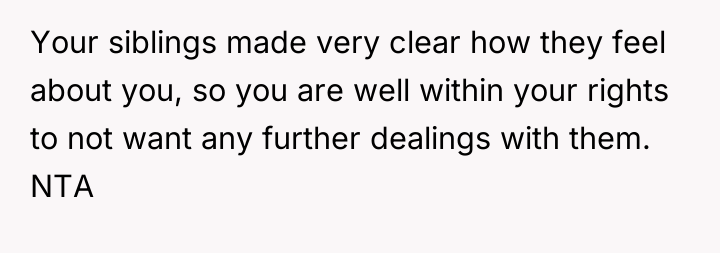
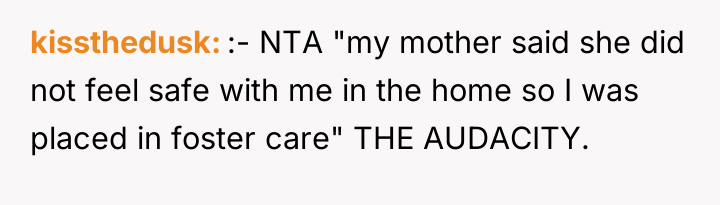
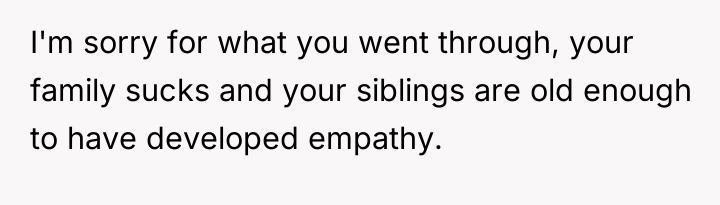
The poster remains steadfast in prioritizing his mental well-being and personal peace after enduring severe childhood abuse and deep systemic family failure. He feels entirely justified in cutting off siblings who blame him for their father's arrest and dismiss his past trauma, viewing their demands as a continuation of the family's toxic pattern of denial and emotional neglect.
Is the poster justified in permanently severing ties with siblings who demand an apology for their abusive father's absence, or should he leave the door open for potential reconciliation as they mature?