
AITA for not immediately telling my friend’s boyfriend that I speak Spanish and telling his girlfriend what he’s been saying about her?
In the midst of a chaotic house party where laughter and music blurred the edges of reality, a young woman found herself on the outskirts, drawn to the quiet of the shadowed garden. Among the shadows, two figures spoke in a language close to her heart—Spanish—yet she remained unseen, a silent observer yearning to connect beyond the surface of introductions and drunken revelry.
This night, meant to welcome new bonds, instead stirred a deeper, unspoken tension within her. The familiar cadence of her native tongue whispered through the darkness, stirring memories and emotions she had long tucked away, as the distance between her and these strangers seemed to stretch far beyond the garden’s dim light.

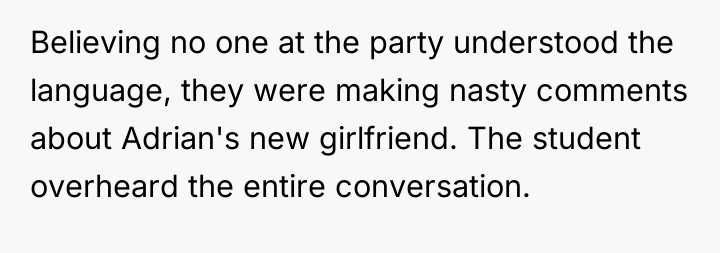
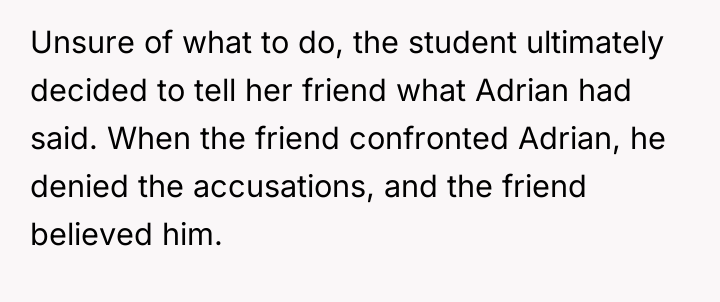
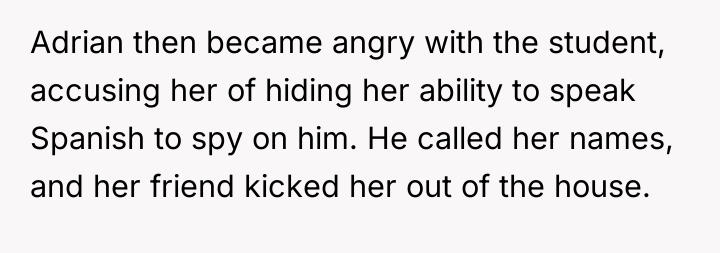
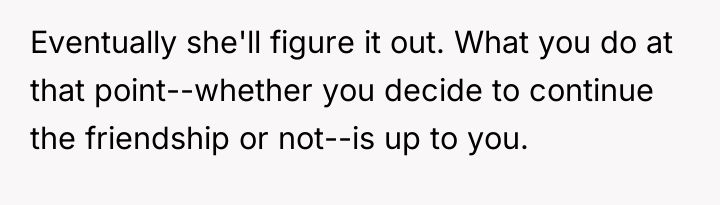
As psychologist Dr. Harriet Lerner notes in her work on human relationships, telling the truth in close bonds often triggers intense resistance when the listener is not ready to face reality. In this situation, Adrian engaged in deflection and aggression after being exposed. Rather than taking accountability for his disrespectful remarks about his girlfriend, he shifted the blame onto the student by accusing her of spying and hiding her language skills. This reaction is a classic defense mechanism designed to manipulate the narrative and avoid consequences for his actions.
The student's friend likely experienced cognitive dissonance, choosing to believe her new partner over her friend to avoid the pain of betrayal. Blaming the student allowed the friend to protect her feelings and maintain her relationship. The student acted with integrity by attempting to protect her friend from disrespect. In the future, when delivering sensitive news, it can be helpful to present the facts calmly and step back, giving the listener space to process the information without forcing an immediate reaction.
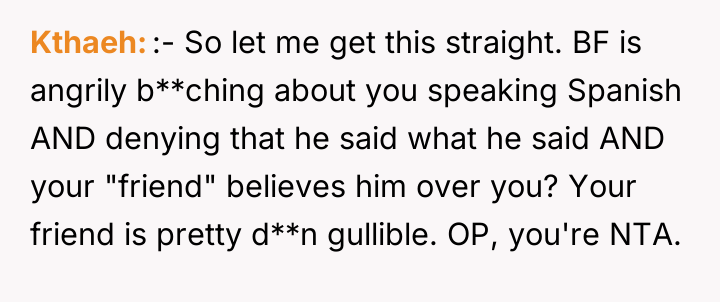
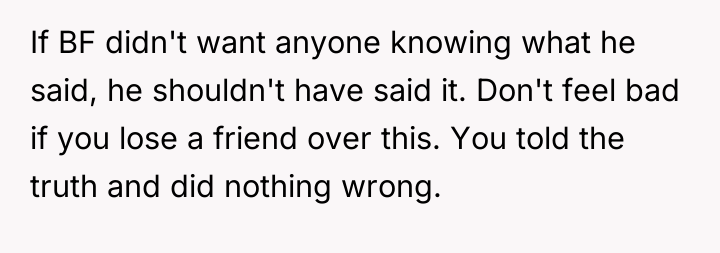
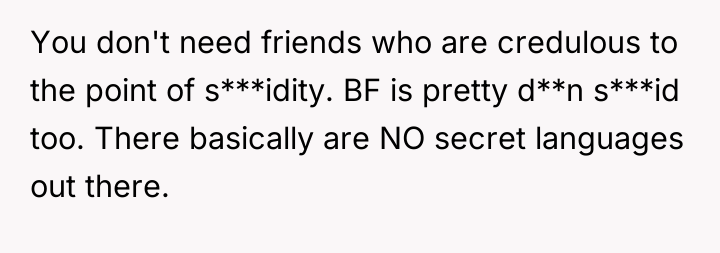
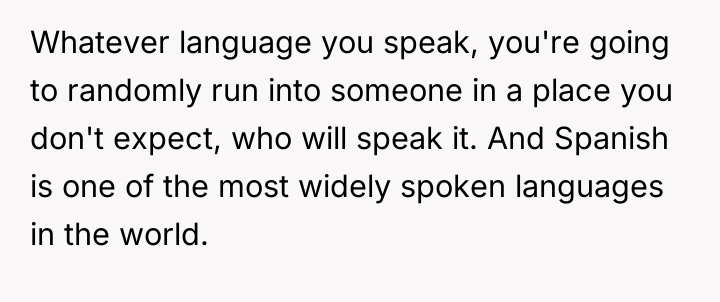
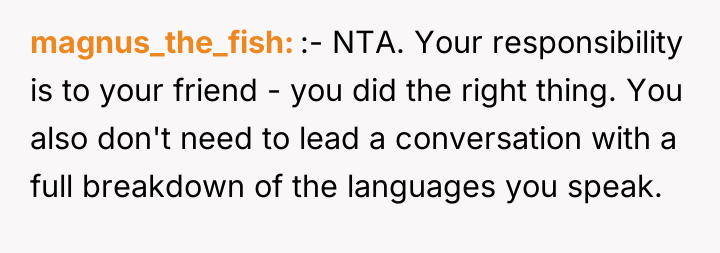
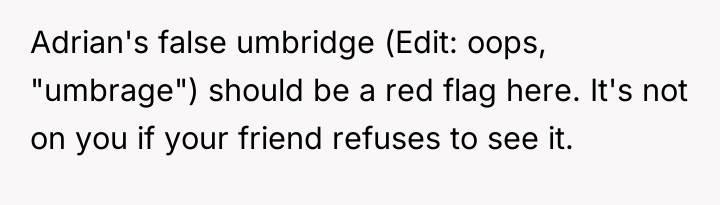
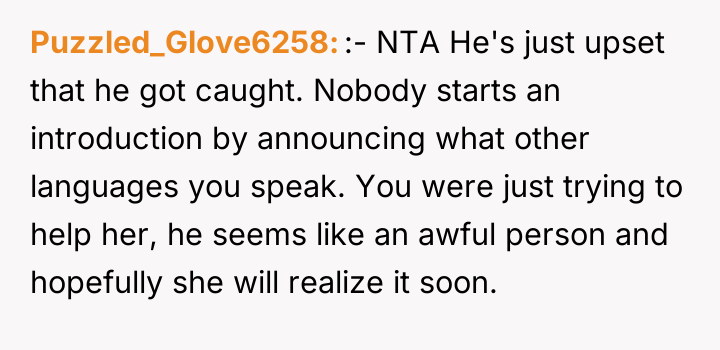
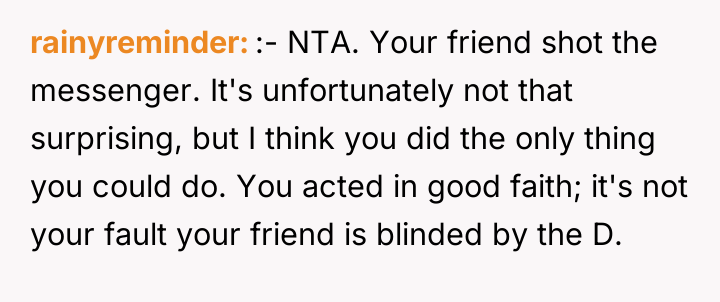
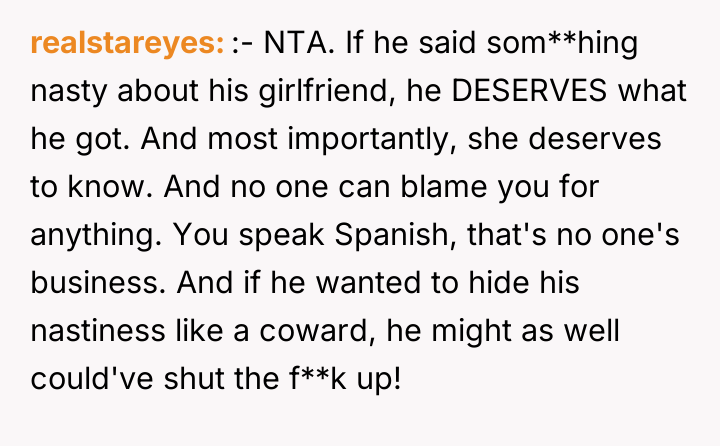
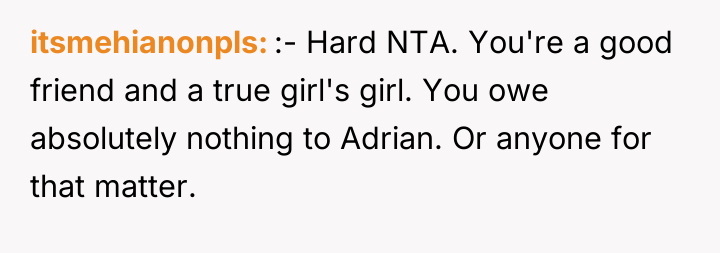
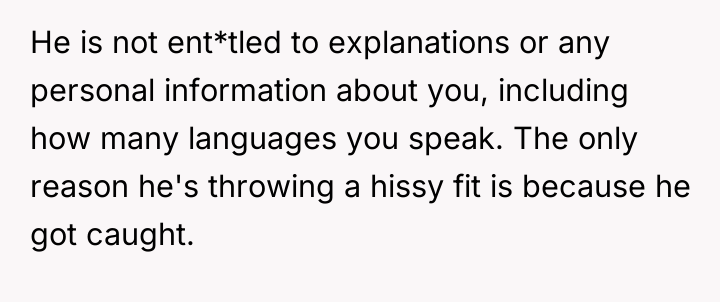
AFTER THIS STORY DROPPED, REDDIT WENT INTO MELTDOWN MODE – CHECK OUT WHAT PEOPLE SAID.:
What started as a simple post quickly turned into a wildfire of opinions, with users chiming in from all sides.
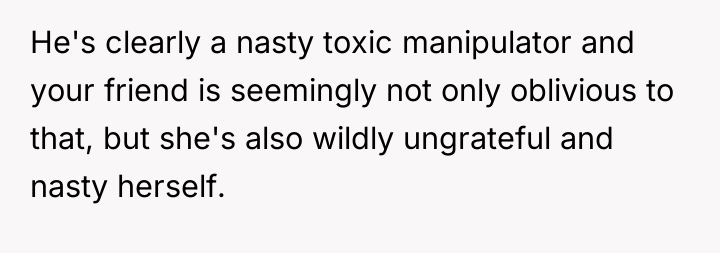
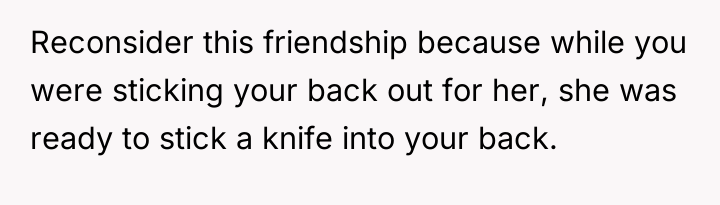
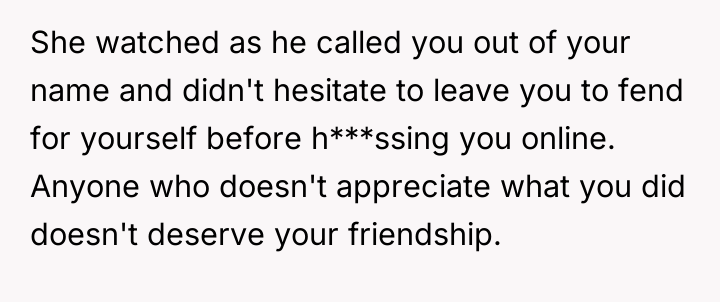
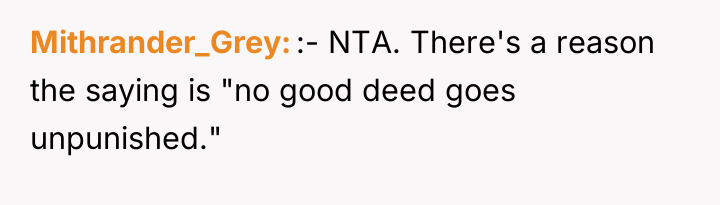
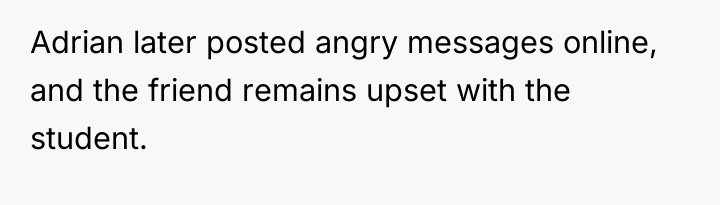
The student feels distressed and confused after trying to protect her friend from a dishonest partner, only to be rejected and blamed by the very person she attempted to help. She faces a conflict between her loyalty to her friend and her friend's unwillingness to accept an uncomfortable truth about her boyfriend.
Was the student right to reveal the boyfriend's nasty comments despite the drama it caused, or should she have stayed out of a relationship that was not hers to manage?