AITA for telling a couple to f**k off in the cinema after she interrupted my viewing to tell me stop laughing because it was annoying her?
Amid the dim glow of the cinema, a night meant for lighthearted escape spiraled into a tense battle of wills. What should have been a shared joy in superhero antics turned into a clash of respect and boundaries, where laughter sparked unexpected fury and confrontation.
In the charged silence that followed, raw emotions erupted—anger met indignation, and a simple request ignited a storm of defiance. The struggle wasn’t just about laughter; it was a fight for personal freedom in a public space, where civility was tested and tempers flared under the weight of unspoken frustrations.


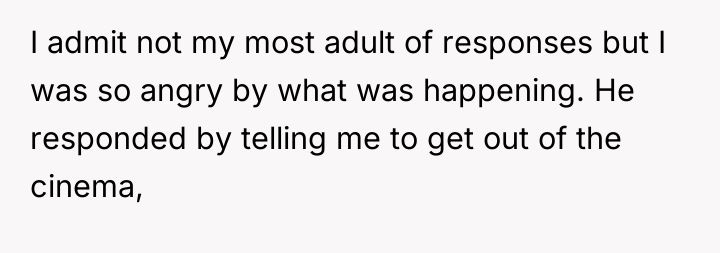
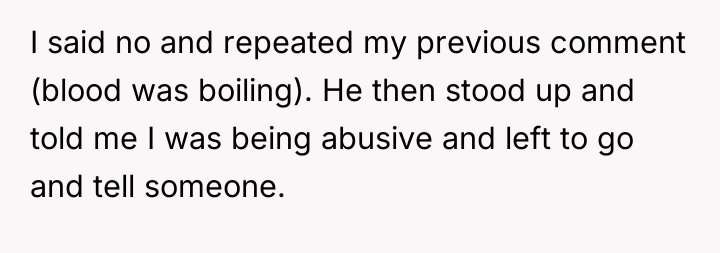
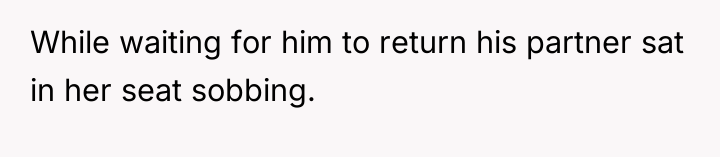
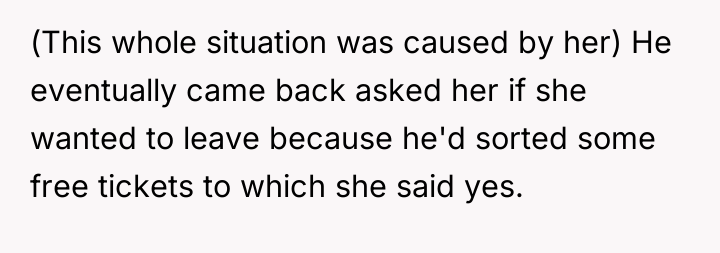
As renowned researcher Dr. Brené Brown explains, “Boundaries are the distance at which I can love you and me simultaneously.” This situation highlights a severe breakdown in establishing or respecting personal boundaries in a public setting. The initial request from the woman, while potentially infringing on the OP's right to react naturally in a communal space, was an attempt to set a boundary regarding her own experience. The OP interpreted this request not as a boundary negotiation but as an unwarranted personal attack on their enjoyment.
The OP’s reaction—escalating from defensiveness to using abusive language and engaging in a protracted conflict—indicates a strong emotional response triggered by feeling controlled or judged. While the OP claims infrequent cinema visits, making the experience valuable, this heightened investment may have lowered their frustration tolerance. The man’s involvement, involving physical gestures (waving a finger) and threats, further inflamed the situation, demonstrating a parallel inability to de-escalate from both sides. The entire exchange devolved because neither party prioritized calm communication over asserting dominance or defending their immediate feelings.
While the OP was enjoying a legal activity in a public space, aggressive verbal responses (even when provoked by initial irritation) generally shift the ethical balance of responsibility toward the aggressor. A more constructive approach would have involved a brief, neutral acknowledgment of the complaint (e.g., “I understand, I will try to keep it down”) or simply ignoring the request, rather than engaging in a shouting match. Future conflict management should focus on disengagement from perceived threats rather than retaliation to preserve the intended enjoyable experience.
THE COMMENTS SECTION WENT WILD – REDDIT HAD *A LOT* TO SAY ABOUT THIS ONE.:
The thread exploded with reactions. Whether agreeing or disagreeing, everyone had something to say — and they said it loud.
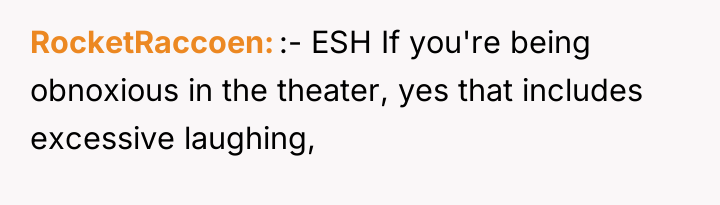

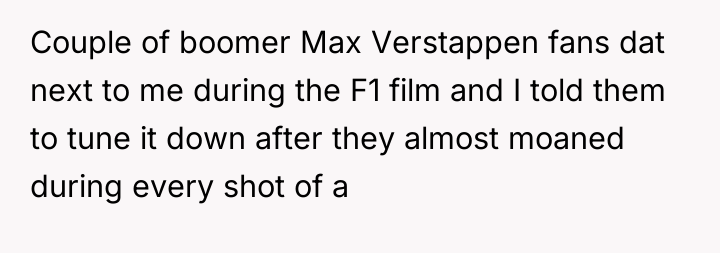
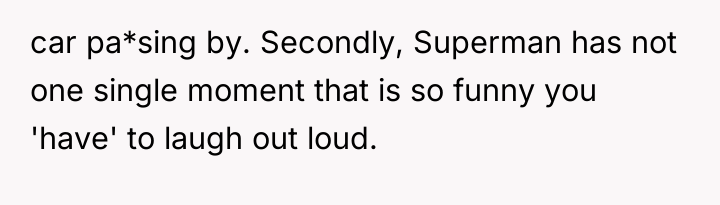
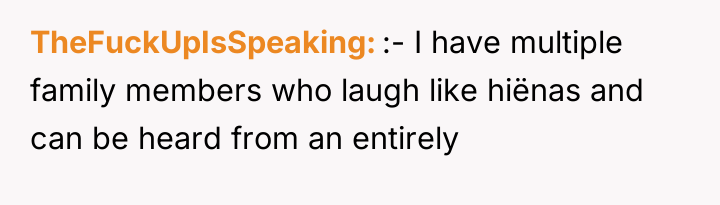
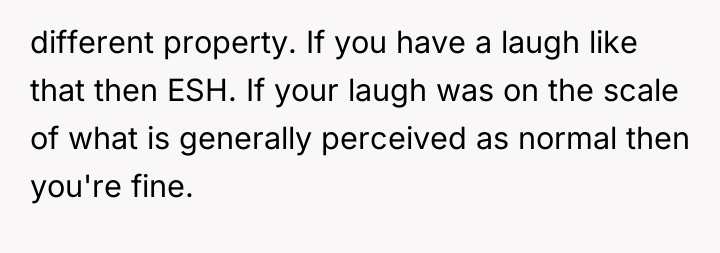

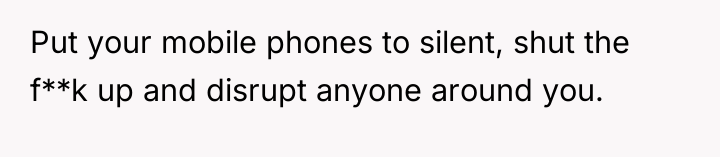
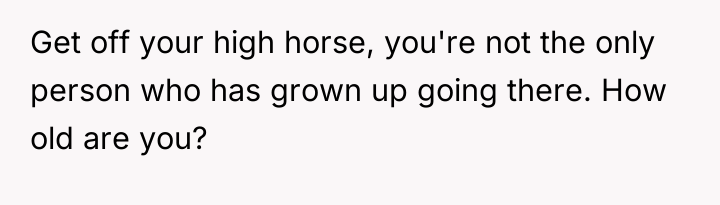

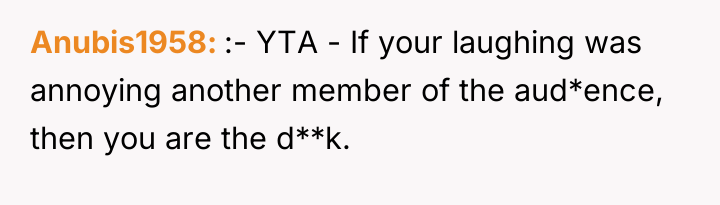
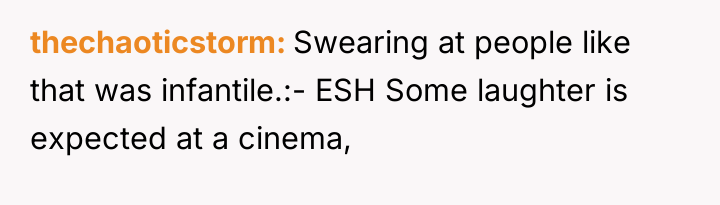
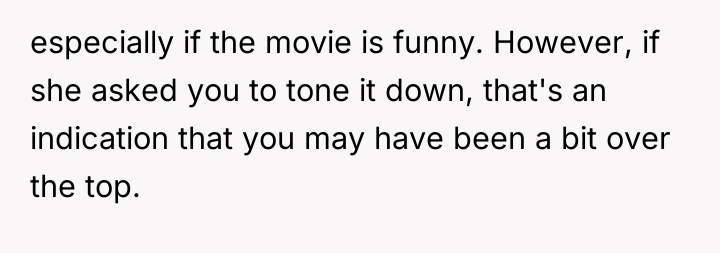
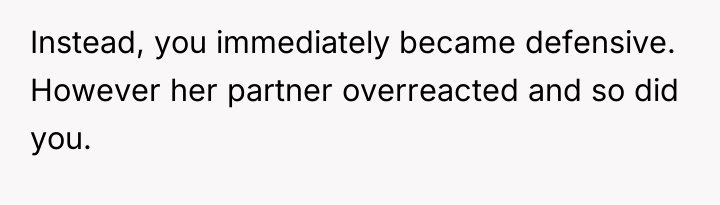

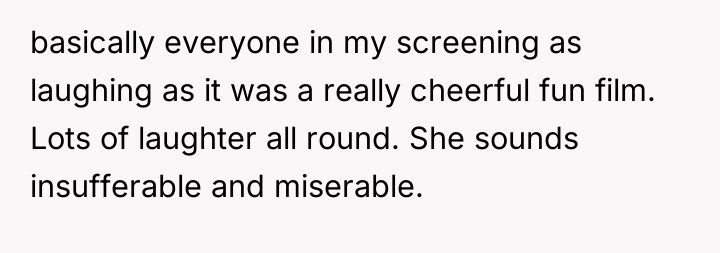

The original poster (OP) experienced a significant escalation during a cinema outing after being asked to stop laughing by a stranger. The core conflict lies between the OP’s right to enjoy a public space according to their personal preference (laughing during a superhero movie) and the complainant's demand for a quiet viewing experience, leading to mutual hostility and threats of involving authorities.
Was the OP justified in defending their presence and right to react to the initial confrontation, even if their response was aggressive, or did the initial request for quiet supersede the OP's freedom to express enjoyment in a public setting? The debate centers on the acceptable boundaries for personal behavior in shared entertainment venues.
Trending This Week

AITA for prioritising my cat over taking my partner out to birthday dinner?
I am dating a man whose birthday was on Monday. We were supposed to go to an expensive birthday dinner because he spent a lot of money on my birthday earlier this year. He earns much more than I do, but I wanted to do what I could. We have been together for two years. On the day before our dinner, I noticed my cat had a painful cyst in her eye that appeared overnight. I drove her two hours to an emergency vet on Sunday. There is a high risk she might lose her eye. Because she was not eating from the pain, I became very worried, canceled the dinner, and stayed home with her. I offered to reschedule and invited my partner to help me care for her. My partner became very angry. He had taken a vacation day to get drunk, and the restaurant had a three-month waiting list. He called me selfish and an asshole because he would miss his favorite seasonal meal. I decided to break up with him. I realized I care about my cat more and would make the same choice again. My cat is still weak and has developed diarrhea, so I am taking her back to the vet.
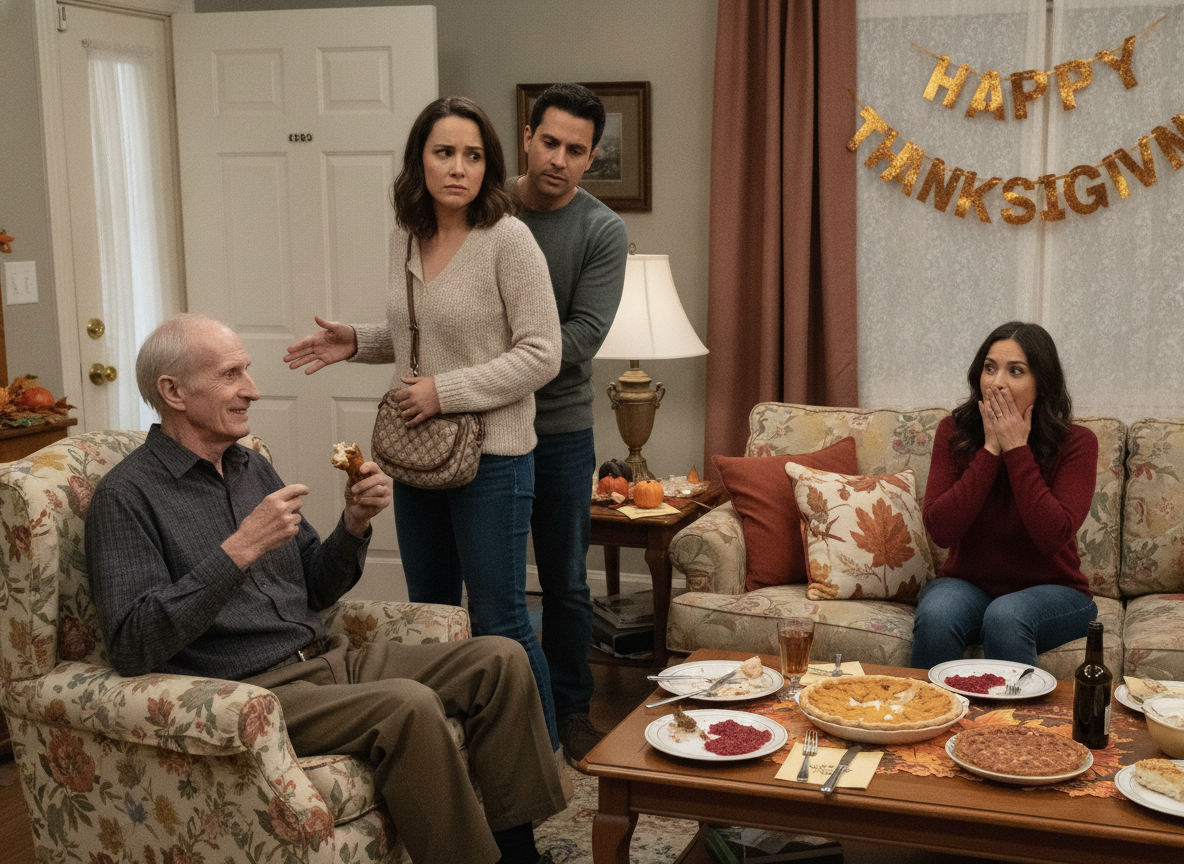
AITA for leaving Thanksgiving because my partner's creepy brother was there?
I and my partner have been friends for a few years and started dating more seriously early this year. This was the first time he invited me to Thanksgiving, which he called a Friendsgiving. His parents were hosting it, but it was mostly their friends and his friends, not extended family. For whatever reason, I assumed his brother would not be there. I have tried really hard to be nice to his brother, who has always made me uncomfortable with staring and hovering. Last year, my partner asked if his brother could join us on a road trip. I expressed my discomfort, but my partner assured me it would be fine. During the trip, I felt like I was babysitting him. A few weeks later, I discovered that his brother had posted lewd drawings of me online, which he had created during our trip. When I brought this up to my partner, he brushed it off, and I did not explicitly spell out how uncomfortable it made me. I made it clear that I did not want to be around his brother after that. When I had dinner with his parents, his brother usually stayed in his room. However, at the Friendsgiving dinner, his brother showed up and was seated right next to me. My partner did not warn me or try to prevent us from being seated together. Feeling overwhelmed, I decided to leave. I took the car keys, and when my partner asked what I was doing, I raised my voice in front of the guests, telling him he could choose between me and his brother. I drove away, leaving him at his parents' house, and went to stay with my sister.

AITA for telling my sister that her husband is having an affair?
I am seventeen years old, and my twenty-five-year-old sister is married to a thirty-eight-year-old man named James. Recently, while having lunch at a restaurant with a friend, I saw James with another woman. They appeared to be on an intimate date. My friend advised me to record them instead of confronting them immediately, so we gathered video proof. I went straight to my sister's house and showed her the footage. Instead of being sad, she became furious with me, accusing me of trying to ruin her marriage out of jealousy, and she kicked me out and blocked me. The next day, my sister arrived at our parents' house with her bags, having decided to leave James. She apologized to me, explaining that she already had suspicions but had reacted badly because she had fought hard against our family to marry him. Our father had previously warned her about James's manipulative nature and the age gap. My sister and I reconciled, and she is now proceeding with a divorce.