
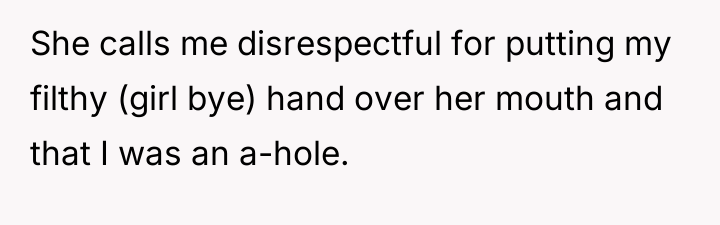
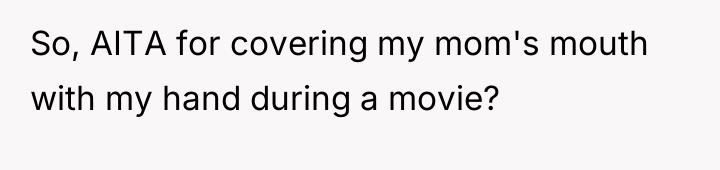
AITA for covering my mom's mouth during a movie?
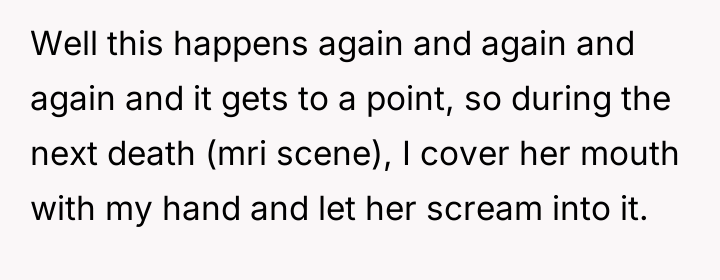
In a dimly lit theater, a son sat nervously beside his mother, bracing himself for a night of heart-pounding terror. His mother’s screams pierced the silence with every chilling death on screen, each outburst a raw, unfiltered expression of fear that made the horror feel all too real. It was a moment that revealed the depth of her fragile courage, even as it filled him with a mix of embarra*sment and empathy.
This was more than just a movie night; it was a glimpse into the unique bond they shared—one where love meant enduring loud gasps and screams in crowded rooms, all for the sake of a shared experience. Despite his own discomfort with horror, he honored his mother’s wishes, navigating the uneasy terrain between fear and family connection with quiet resilience.

Subscribe to Our Newsletter
As renowned researcher Dr. Brené Brown explains, "Boundaries are the distance at which I can love you and me simultaneously."
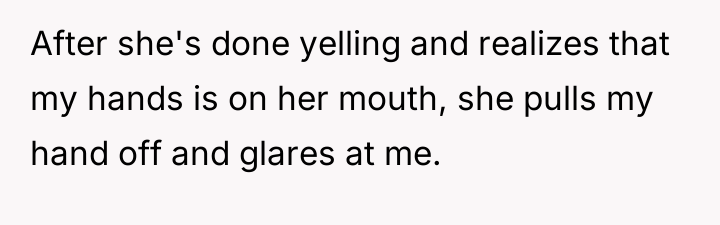
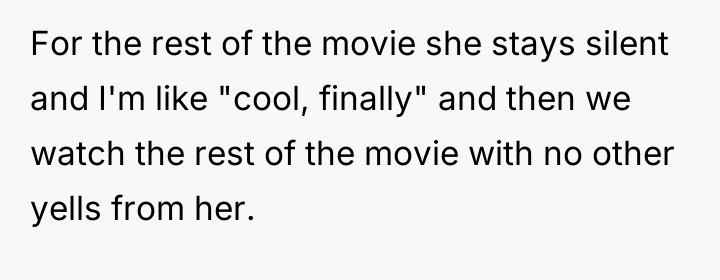
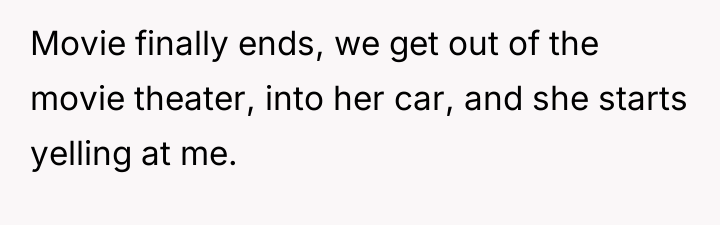
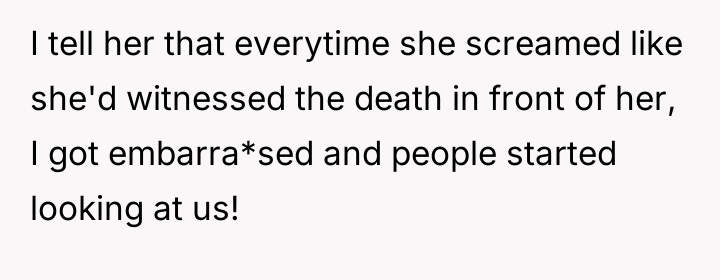
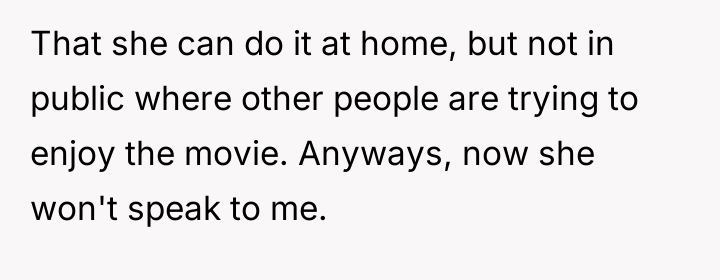
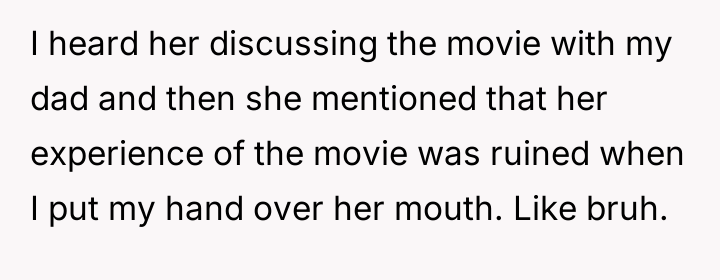
This situation highlights a classic conflict regarding public etiquette versus individual emotional expression, complicated by the parent-child dynamic. The mother's behavior, while genuine in its emotional response to the movie, violated the social contract of a public venue like a movie theater. Her reaction was disruptive, causing embarrassment for the OP and potentially disturbing other patrons. The OP's motivation was to enforce a necessary boundary in a public setting, but the method chosen—physically covering her mouth—is highly confrontational. While the OP's action temporarily solved the external problem (the noise), it created a severe internal relational problem by overriding the mother's autonomy in a sudden, non-verbal manner. The mother's reaction, focusing on the perceived disrespect of the hand covering her mouth rather than the prior disruption, suggests a focus on self-image and violation of personal space over shared social responsibility.
The OP's action was understandable given the persistent nature of the disruption and the prior failure of implicit communication (leaning away). However, the execution was poor. A more constructive approach would have involved a private, pre-agreed boundary setting before attending the movie, or a firm, verbal request during the first instance of screaming (e.g., "Mom, please keep it down, you are disturbing people"). In the future, when setting boundaries with close family in public, assertiveness without physical restraint is generally the preferred route to maintain relationship integrity while addressing the issue.
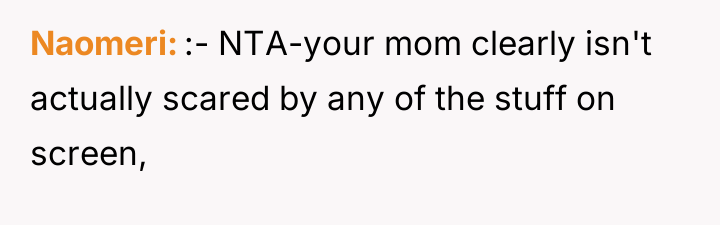
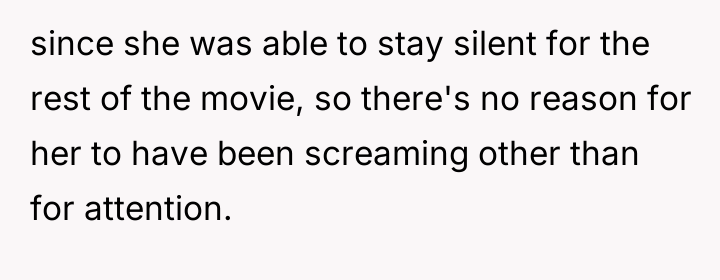
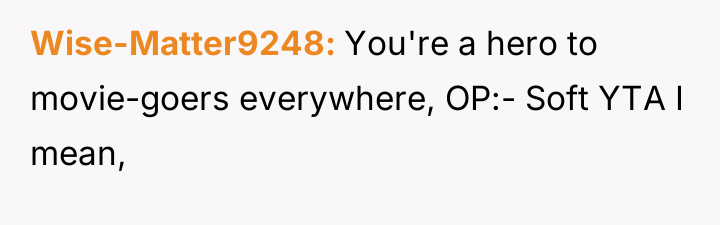
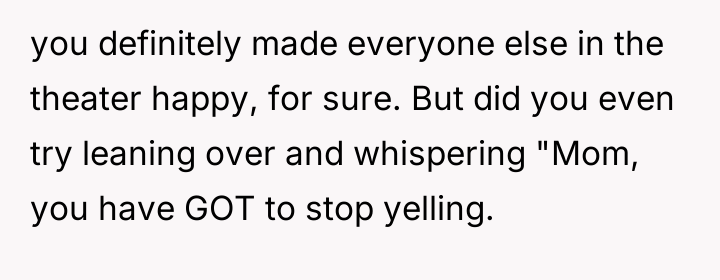
AFTER THIS STORY DROPPED, REDDIT WENT INTO MELTDOWN MODE – CHECK OUT WHAT PEOPLE SAID.:
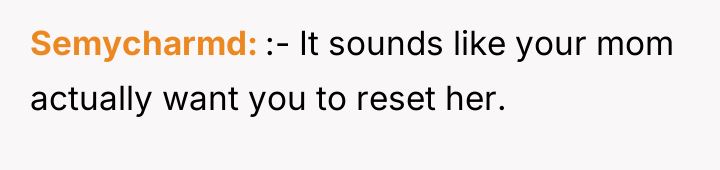
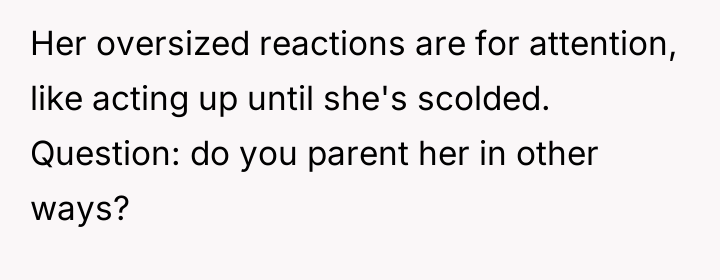
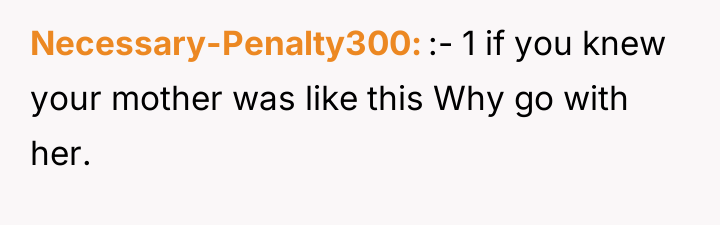
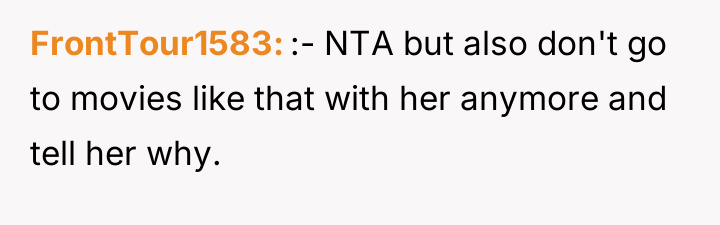
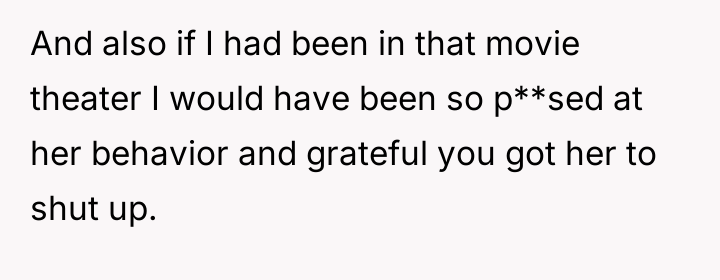
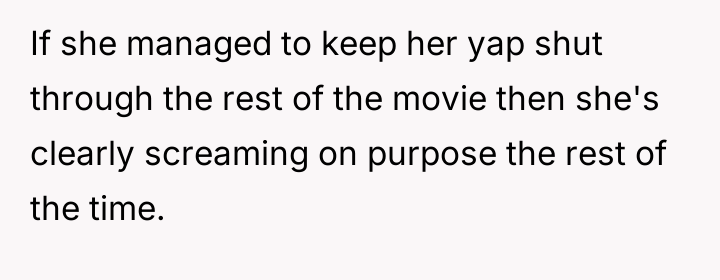
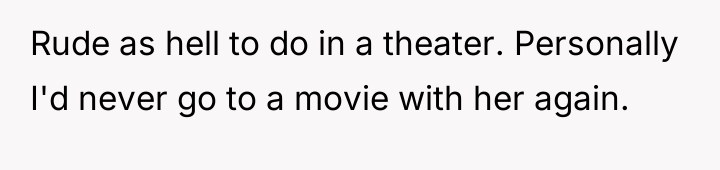
The internet jumped in fast, delivering everything from kind advice to cold truth. It’s a mix of empathy, outrage, and no-nonsense takes.
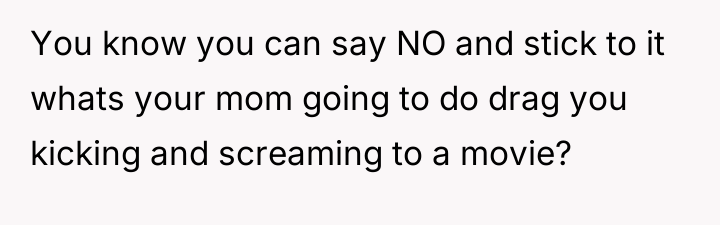
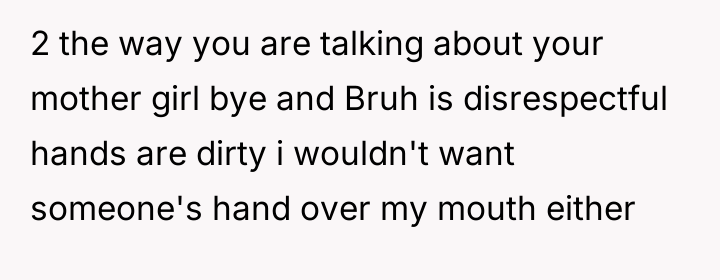
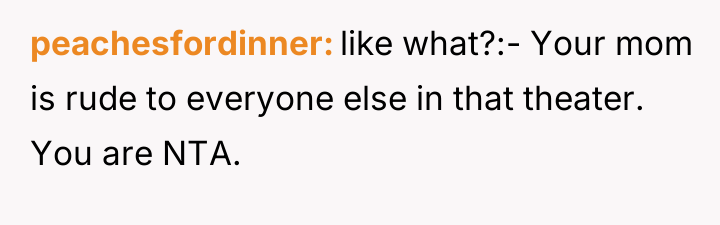
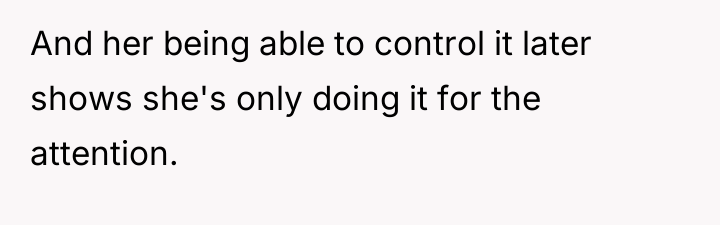

The original poster (OP) faced an embarrassing situation in a public setting due to their mother's extremely loud reactions during a horror movie. The OP acted by physically covering the mother's mouth to stop the disruptive behavior, which resulted in immediate conflict and ongoing silence from the mother, who felt disrespected.
Was the OP justified in using physical restraint to address a behavior that was disrupting others in a public space, or did this action cross a line regarding respect and autonomy, even if the initial behavior was inappropriate? The core question remains whether the disruption caused by the mother warranted the OP's physical intervention.