
AITA for charging an “entry fee” for a family dinner on April 1st, leading my aunt to think it was an April Fool’s joke?
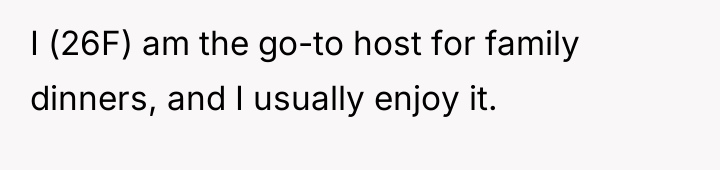
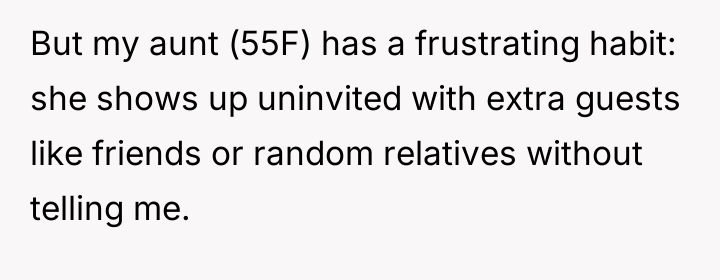
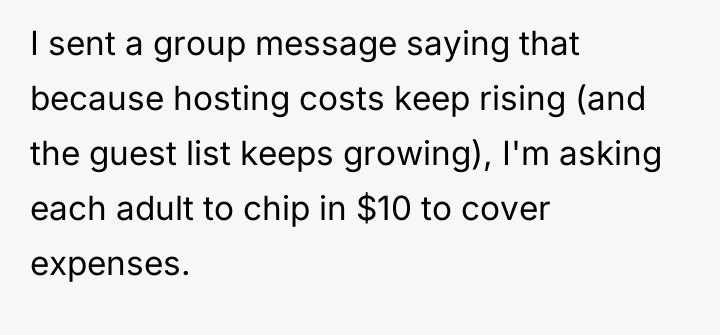
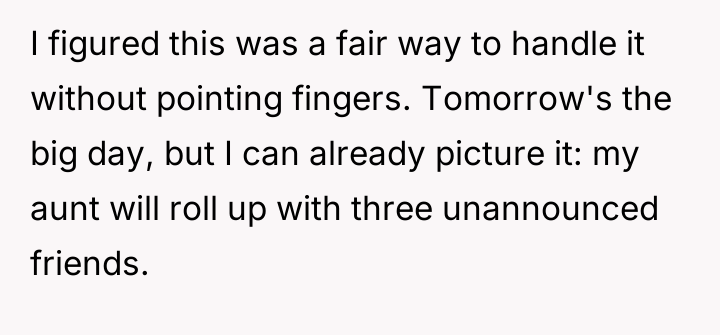
In the quiet anticipation of a family anniversary dinner, a young woman braces herself against the familiar tide of chaos brought on by her aunt's uninvited guests. Despite her efforts to create a warm, well-prepared gathering, the repeated disregard for her boundaries chips away at her patience and peace.
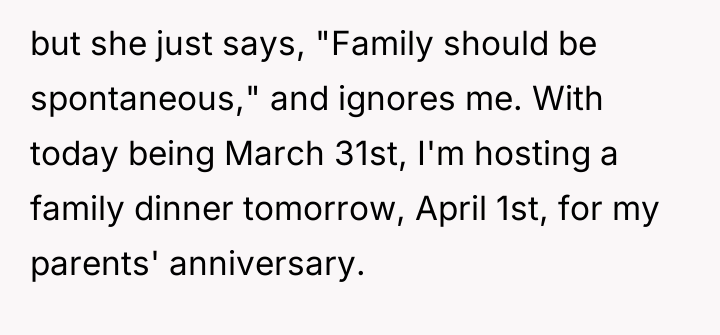
Determined to reclaim control and fairness, she takes a bold step by requesting contributions from all adults to cover the growing costs. Yet, beneath this practical gesture lies a deeper hope—for respect, understanding, and a moment of harmony in a family too often stretched thin by spontaneity and unspoken frustrations.



Subscribe to Our Newsletter
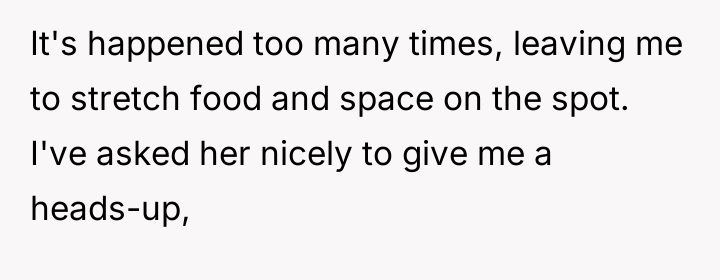
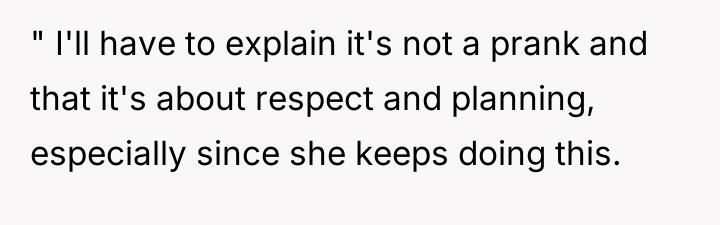
As renowned researcher Dr. Brené Brown explains, “Boundaries are the distance at which I can love you and me simultaneously.” This situation highlights a critical failure in establishing and maintaining functional interpersonal boundaries. The OP has consistently enjoyed the role of host but has allowed the aunt to repeatedly violate the unspoken agreement of responsible hosting by bringing uninvited guests, forcing the OP to absorb increased costs and labor.
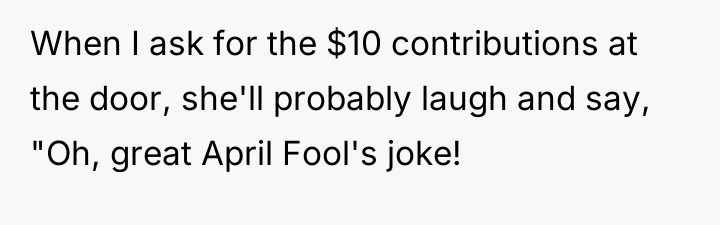
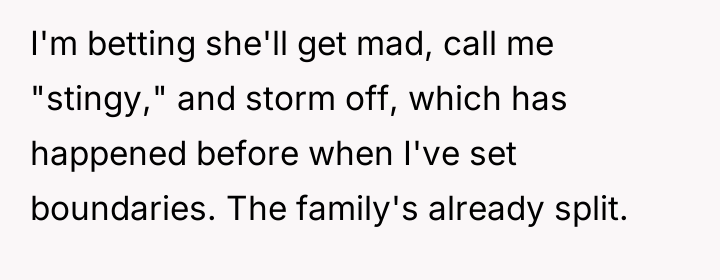
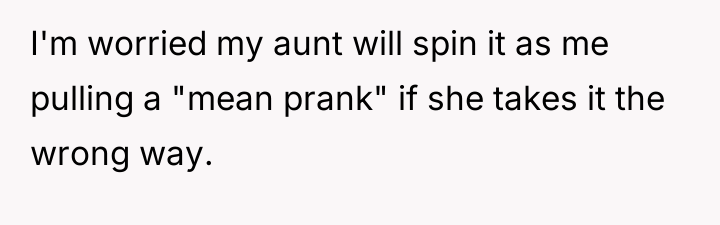
The OP’s decision to implement a $10 contribution is a direct, albeit belated, attempt to enforce a boundary related to resources and planning. While the aunt’s reaction—labeling the OP as 'stingy' or dismissing it as an 'April Fool's joke'—is a predictable defense mechanism intended to deflect responsibility and maintain control, the OP’s frustration is rooted in the lack of respect for their effort. The core issue is not the $10, but the pattern of disregarding the host's needs.
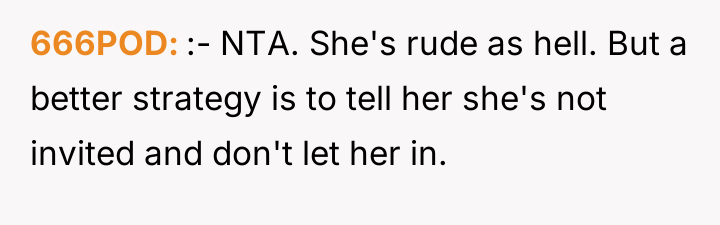
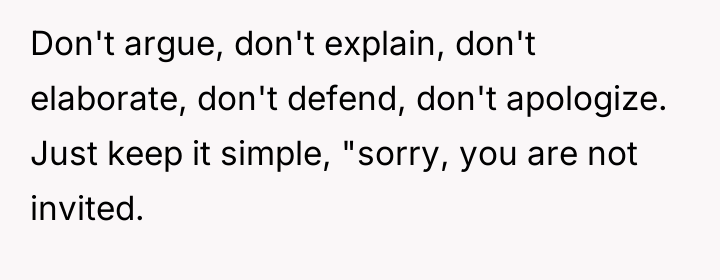
The OP’s action, while potentially disruptive, was appropriate as a last resort when polite requests failed; however, the execution was complicated by the April 1st timing, which provided the aunt an easy out. Moving forward, the OP should address the uninvited guests issue separately from the financial contribution. A constructive path would be to firmly state that future gatherings require prior notice for all attendees, and if the aunt arrives with unannounced guests, they will need to be accommodated separately or politely declined entry.
REDDIT USERS WERE STUNNED – YOU WON’T BELIEVE SOME OF THESE REACTIONS.:
It didn’t take long before the comment section turned into a battleground of strong opinions and even stronger emotions.

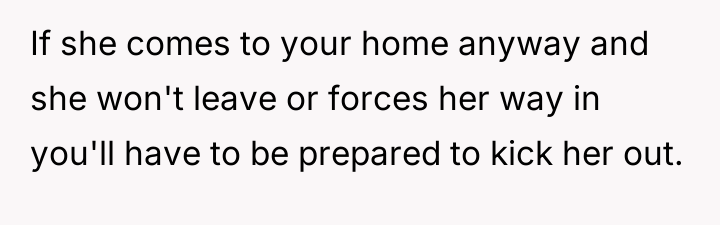
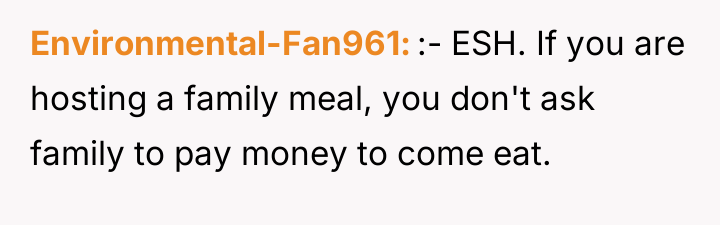
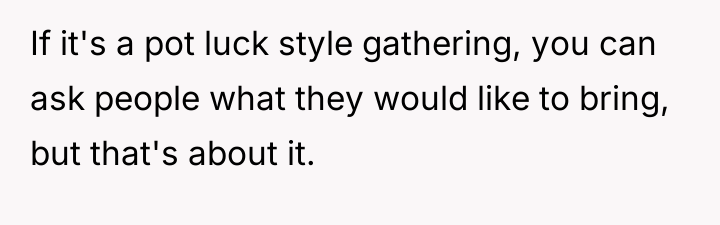

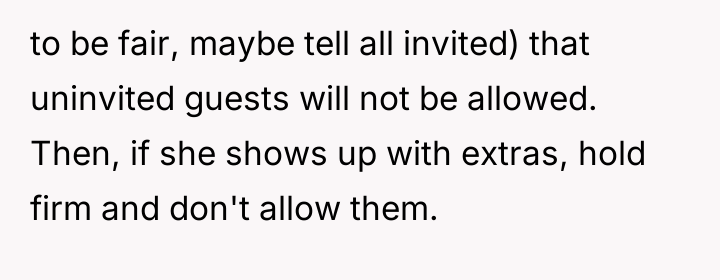
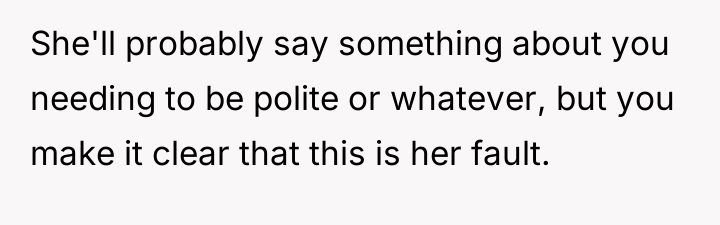

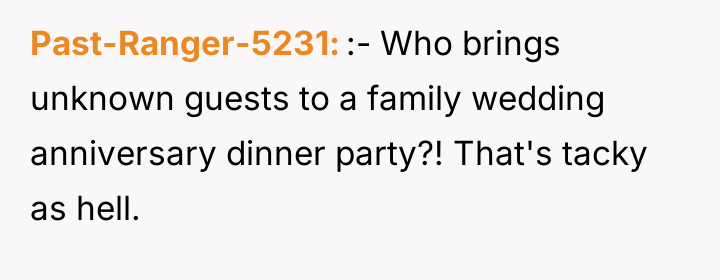

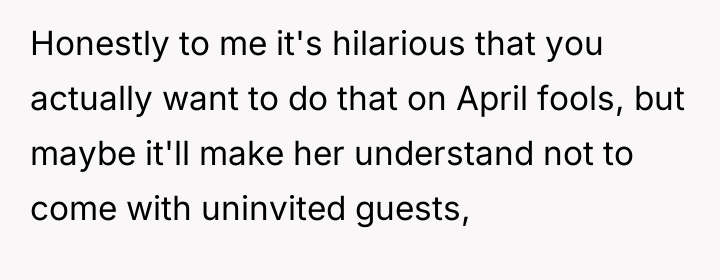
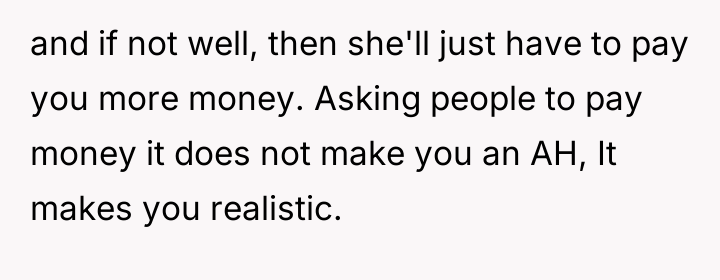

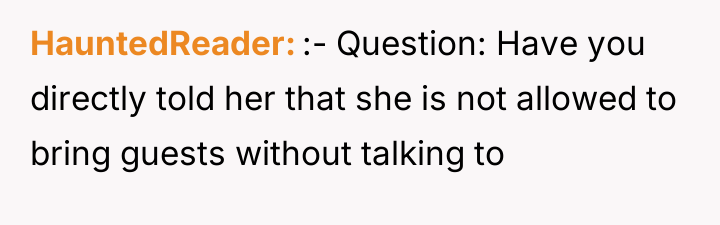
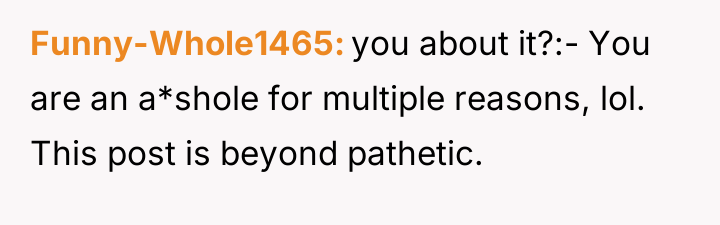
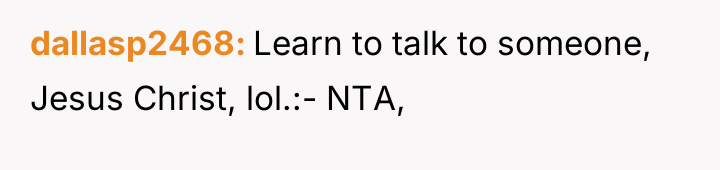
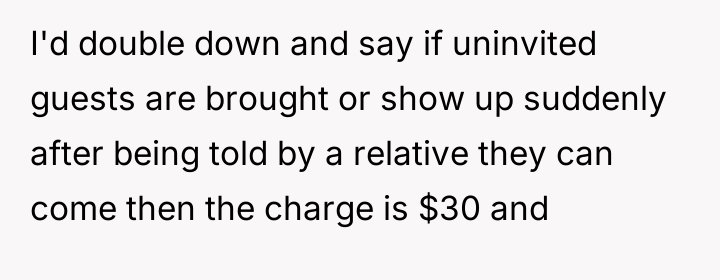
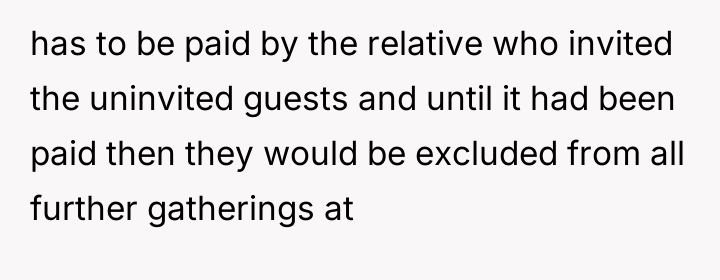

The original poster (OP) is facing a recurring conflict where their generosity as a host is being taken advantage of by an aunt who frequently brings unannounced extra guests. The OP attempted to address this issue indirectly by instituting a small mandatory contribution, which directly clashes with the aunt's expectation of free, spontaneous hospitality, leading to high potential for emotional confrontation.
Is the OP justified in prioritizing necessary planning and shared financial responsibility over maintaining superficial family peace, especially when previous polite requests were ignored, or does the timing (April 1st) and the nature of the request make their action an inappropriate escalation that risks further alienating family members?