
My Mother-in-Law Turned My New Home Into Her Storage Unit and Now I'm the Bad Guy
They had dreamed of this moment for years—a small, perfect home that was truly theirs. Every corner was filled with hope and new beginnings, a fresh start painted in the colors they chose together. But that fragile joy was slowly suffocated by unwelcome boxes, each one a symbol of a love that suffocated rather than supported, turning their sanctuary into a battlefield of silent resentment and unspoken boundaries.
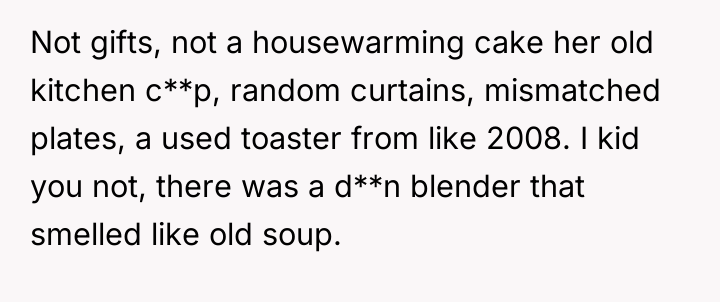
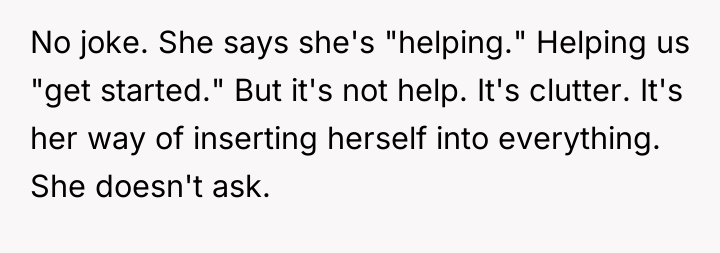
His mother’s “help” wasn’t kindness; it was control wrapped in old curtains and broken appliances, a relentless invasion that chipped away at their peace. What was meant to be a celebration of independence became a daily struggle against clutter and disappointment, leaving her heart heavy with the weight of unacknowledged emotions and the bitter taste of unfulfilled dreams.













As renowned researcher Dr. Brené Brown explains, “Boundaries are the distance at which I can love you and me simultaneously.” This situation perfectly illustrates the tension that arises when one party fails to recognize or respect the established boundaries of another, especially within the highly personal domain of the home.
The OP’s initial attempts to manage the situation—smiling and accepting the first few items—represent a common pattern where individuals prioritize immediate peace over addressing underlying issues. However, when the MIL escalated from dropping off items to physically rearranging the OP's kitchen, the intrusion moved from an imposition of objects to a violation of personal territory and autonomy. The OP’s final confrontation, while perhaps delivered at the breaking point of her patience, was a necessary act of self-advocacy. The husband's reaction, suggesting the OP should have been 'nicer,' indicates a failure to grasp the significance of the boundary being set, often placing the burden of emotional labor on the person who feels violated (the OP) rather than the person committing the boundary violation (the MIL).
The OP's actions were appropriate given the persistent nature of the intrusion; she defended her right to define her own domestic space. For future situations, a constructive recommendation is to establish boundaries collaboratively with the spouse first, presenting a unified front. When communicating boundaries to the MIL, using 'I' statements focused strictly on the desired action (e.g., "I need us to select our own kitchen items") without justifying past actions can reduce the space for guilt-tripping responses.
AFTER THIS STORY DROPPED, REDDIT WENT INTO MELTDOWN MODE – CHECK OUT WHAT PEOPLE SAID.:
The crowd poured into the comments, bringing a blend of heated opinions, solid advice, and a few reality checks along the way.
















The original poster (OP) experienced significant frustration as her mother-in-law (MIL) repeatedly imposed unwanted, used household items onto their new home under the guise of "helping," leading the OP to feel that her autonomy over her new living space was being violated. The central conflict arises from the OP's necessary action of setting a firm boundary versus the MIL's subsequent emotional reaction, which framed the OP as ungrateful or disrespectful, and the husband's failure to fully support the OP's need for defined personal space.
The core question remains whether establishing clear, direct boundaries against unsolicited intrusions into a new shared living space justifies causing immediate relational conflict, or if prioritizing temporary peace over asserting one's needs was the better initial course of action. Should the OP prioritize maintaining surface-level harmony or defending the integrity of her new home environment?