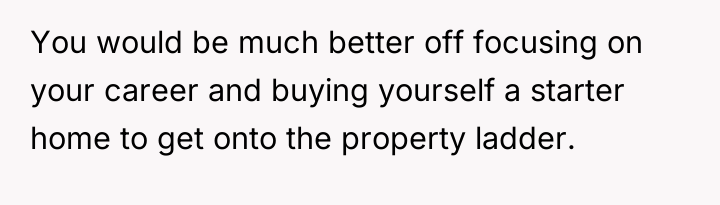
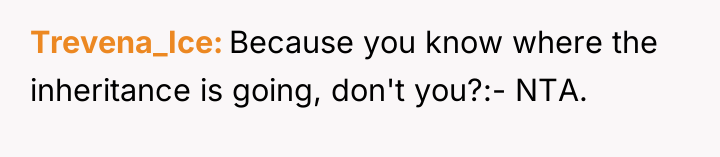
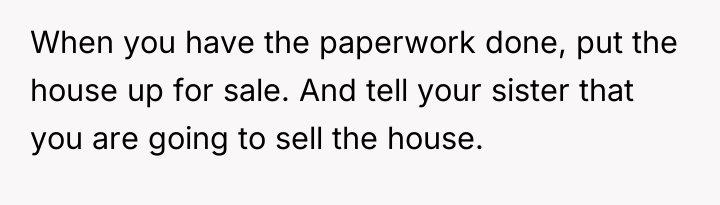
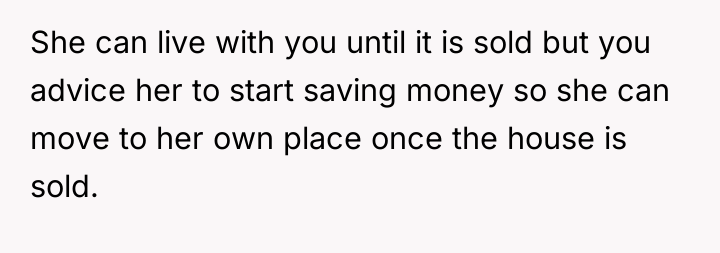
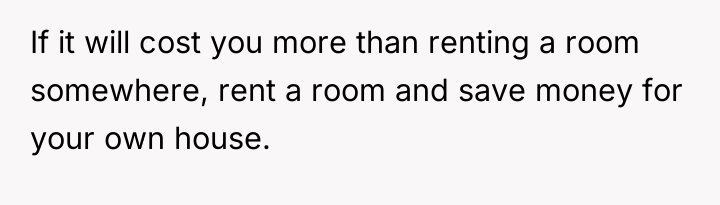
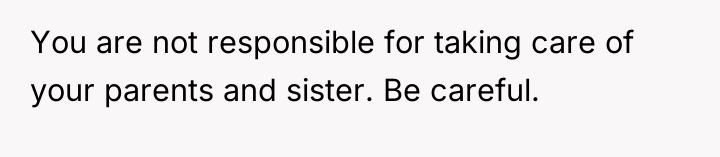
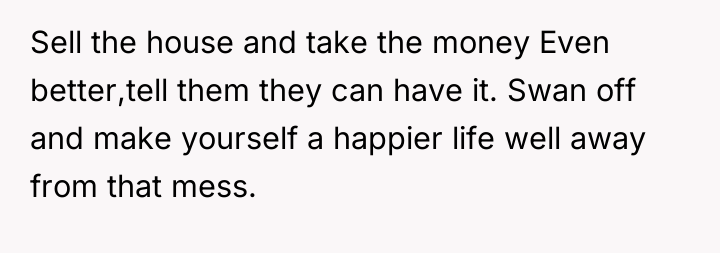
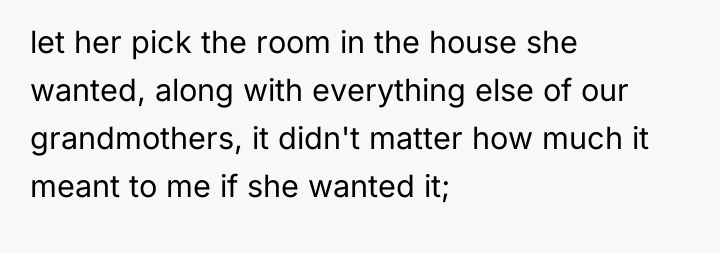
WIBTA for telling my mother that I won’t look after HER other child for the rest of my life?
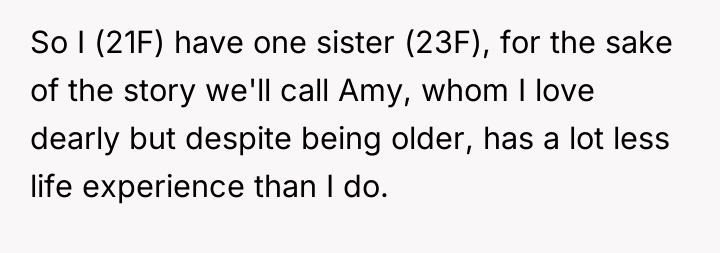
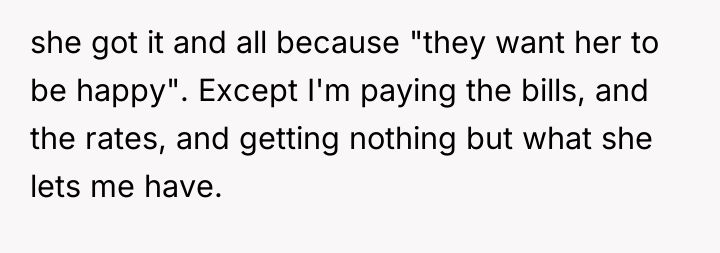
At just 21, she carries a weight far heavier than her years, caught in the relentless shadow of favoritism and unspoken resentment. While she’s been fighting for her place in the world since she was fifteen, working hard and chasing independence, her sister Amy remains sheltered—cradled by their mother’s narcissistic love and endless indulgence. The divide between them is as much about love as it is about survival, a silent battle waged beneath the surface of family ties.
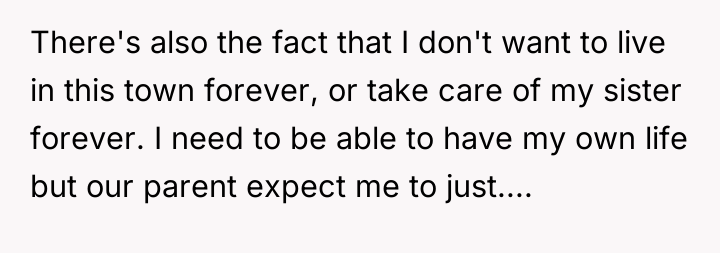
Now, with their grandmother’s passing, the fragile balance shatters further. She is thrust into the crossroads of sacrifice and duty, forced to shoulder the burdens of a home she once dreamed of leaving behind. As her parents escape into a carefree van life, she is left to navigate the loneliness and bitterness of a house filled with memories and unpaid bills, where love and resentment intertwine in a haunting dance.




As renowned family therapist Dr. Harriet Lerner explains, “Boundaries are a fact of life. You are going to have to set them, and you are going to have to enforce them, or other people will violate them.” This situation illustrates a severe lack of healthy boundaries enforced by the parents, which has resulted in the OP being positioned as an unwilling caretaker under unequal financial terms.
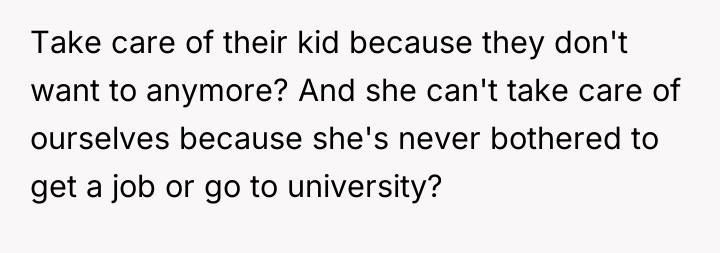
The dynamic described—where one child is consistently favored (Amy) and the other (OP) is made responsible, often as compensation for perceived past neglect or imbalance—is a classic pattern of parental triangulation and burden-shifting. The mother's alleged narcissistic tendencies likely reinforce this, prioritizing Amy's immediate desires (the art studio, possessions) over the OP's long-term stability and fairness. While Amy's mental health and lack of work experience require consideration, the parents' failure to mandate developmental steps (like self-support or contribution) places an unsustainable emotional and financial labor load entirely on the OP.
The OP's feelings of resentment are entirely appropriate given the inequity. Their realization that they need to live their own life is crucial. The professional recommendation is to transition from vague frustration to clear, direct communication centered on actionable, time-bound changes, not just emotional grievances. Instead of announcing they 'won't take care of her forever,' the OP should propose a transition plan: setting a specific date (e.g., six months) after which Amy must contribute financially or seek alternative arrangements, thereby forcing the parents to address their responsibilities now.
THIS STORY SHOOK THE INTERNET – AND REDDITORS DIDN’T HOLD BACK.:
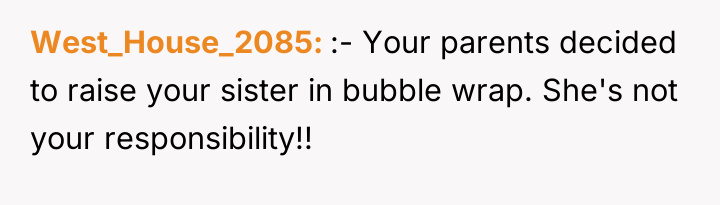
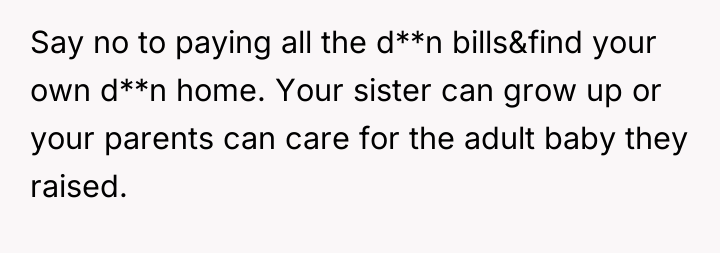
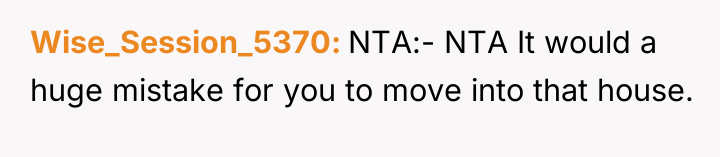
It didn’t take long before the comment section turned into a battleground of strong opinions and even stronger emotions.


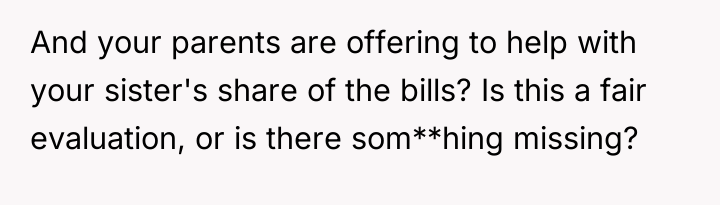
The original poster (OP) feels significant resentment because they are financially supporting a shared living situation while the sister, Amy, receives preferential treatment, expensive gifts, and no pressure to become independent, all stemming from parental favoritism. The central conflict lies between the OP's need to establish personal boundaries and pursue their own life path, versus the parents' expectation that the OP will permanently take over the care and financial support of their adult, dependent sister.
Given the clear imbalance in responsibility and the parents' refusal to encourage Amy's self-sufficiency, the core question remains: Is the OP justified in setting a firm boundary by telling their mother they will not commit to caring for their sister indefinitely, or does the perceived parental obligation override the OP's need for autonomy and fairness?
Trending This Week

UPDATE: AITA for blocking my friend of 10 years after she committed a HIPAA violation against me?
A close friend of ten years, Alice, used her work computer at a medical clinic to look up the author's health insurance information. Alice took a photo of the screen with her phone and sent the screenshot to the author, claiming she did it out of curiosity to help with the author's worsening health issues. However, the author never gave permission for this search. Furthermore, Alice's boyfriend had access to Alice's phone and laptop, raising concerns that the author's sensitive personal information, including name, address, and birthday, was exposed to an unauthorized third party. After the incident, the author blocked Alice due to her lack of a sincere apology. Another friend, Bella, dismissed the author's privacy concerns as Alice being playful, while a third friend, Cassie, initially validated the author but then ghosted them. Feeling isolated and recognizing the severity of the privacy breach, the author filed an official HIPAA complaint and eventually called the clinic's management to report the unauthorized access. The clinic launched an investigation, reviewed their access logs, and placed Alice on leave. They conducted an HR meeting and mandated HIPAA training for Alice while implementing new security measures to prevent future breaches. The author's friendship with the group ended, but the author felt reporting the incident was necessary to establish personal boundaries and secure closure.

AITAH for not telling my housemate I’m moving out and taking everything with me?
I have lived with two of my friends in a rented house share for ten months. Around three months into our tenancy, a girl we did not know moved in to fill the final room. While I was initially excited to have another female housemate, our first interaction was tense; instead of greeting me, she immediately asked about our cleaning plans. Despite explaining our weekly routine, she quickly began using our kitchen items and leaving them dirty. When one of my friends gently addressed this, she reacted by shouting at me for fifteen minutes, accusing me of trying to look good in front of the male roommates. Over the next seven months, her behavior deteriorated further. She monopolized the clothes drying racks, damaged our communal chopping boards, and left her hair all over the floors. Additionally, she filled the entire freezer, left appliances dirty, neglected bathroom hygiene, and took my personal hygiene products without permission. Whenever we tried to address these grievances, her anger was directed solely at me. Recently, a new job opportunity allowed my two friends and me to find a three-bedroom flat together. We are moving out next week. Since we purchased about ninety percent of the communal items in the house—including the toaster, microwave, kettle, and vacuum—we plan to take them with us. Because our communication has completely broken down, I have decided not to inform her of our departure, leaving her to find out when she notices the viewings or when the moving van arrives.

AITAH after kicking my boyfriend out for calling my daughter a snitch and spoiled brat?
I have been dating my boyfriend for a couple of years now. I have an eight-year-old daughter from a previous relationship, and he has a four-year-old son. My boyfriend and I have always bumped heads on parenting styles and discipline. He believes his son is too young to know better, but says my daughter should already know how to act, calling her disrespectful and spoiled. My daughter's father is in jail and no longer in her life, so she craves a father figure, but my boyfriend refuses to show her affection, calling it weird. Recently, he called her a spoiled brat for leaving her plate on the table and a snitch for reporting his son's behavior. When I saw my daughter cry, I asked him to apologize, but he refused. I kicked him out of my house, and now he claims I am being too dramatic.