
My Mom Makes Money Posting My Life Online So I Started Wearing A Hood*e That Says No
Growing up in the shadow of her mom’s online fame, a teenager wrestles with the heavy cost of public exposure—every moment of her and her sister’s childhood broadcast for the world to see. The constant invasion of privacy isn’t just an annoyance; it’s a defining force that threatens her future, coloring how she’ll be perceived in jobs, relationships, and beyond.
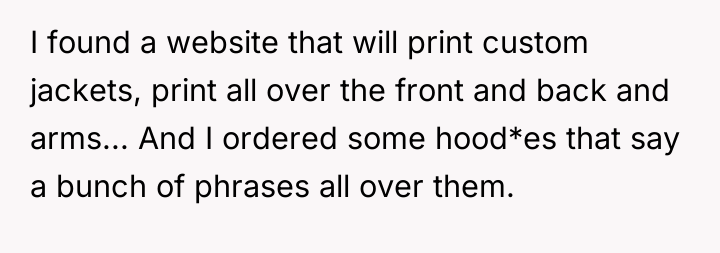
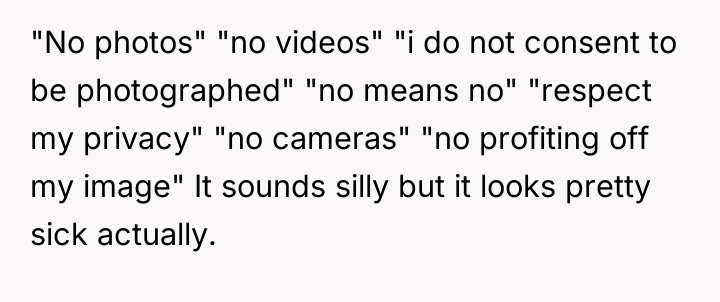
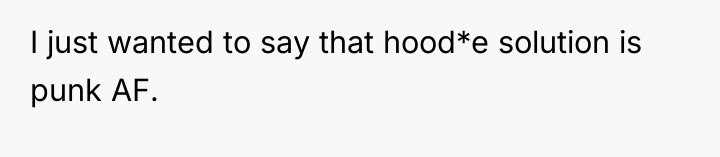
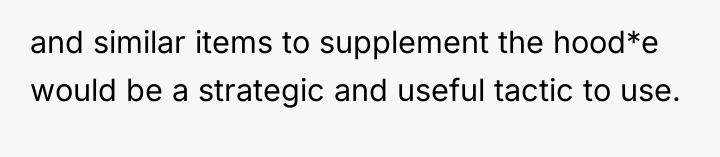
In a bold act of reclaiming control, she creates custom hoodies plastered with fierce declarations of privacy and consent, transforming her silent frustration into a powerful statement. These garments aren’t just clothes—they’re shields, a quiet rebellion against a world that has shared her story without her permission, demanding respect for her boundaries and identity.

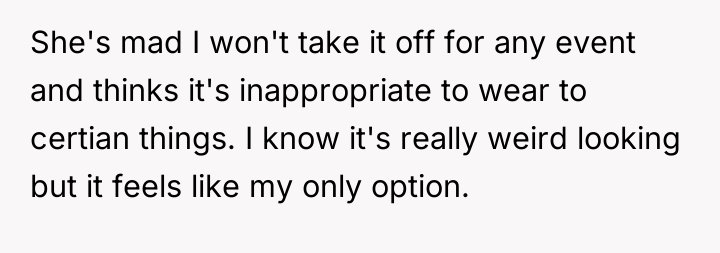

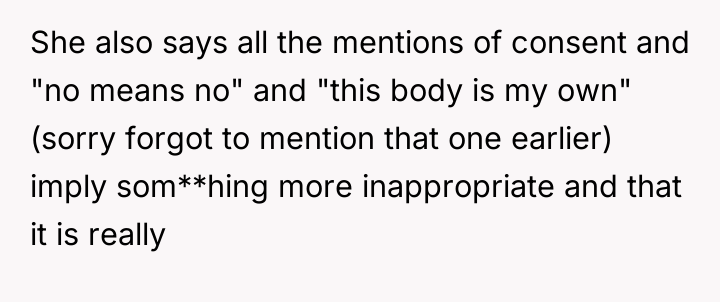
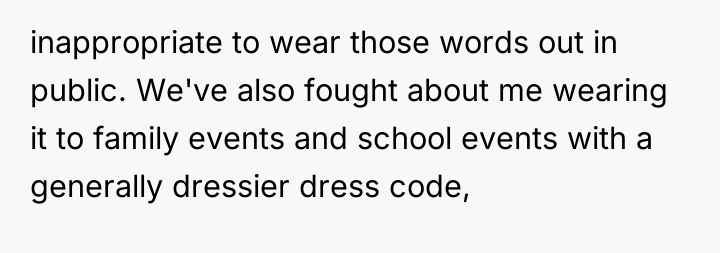
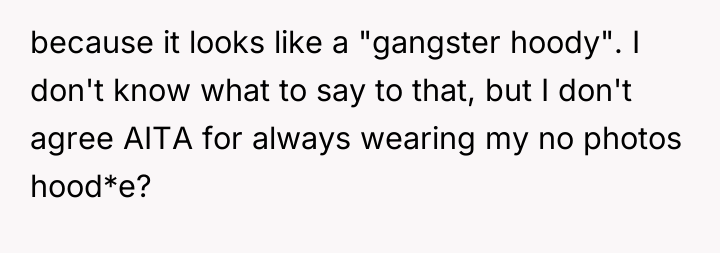
As renowned researcher Dr. Brené Brown explains, “Boundaries are the distance at which I can love you and me simultaneously.” This situation perfectly illustrates the tension that arises when established boundaries are violated, leading one party to adopt extreme measures to re-establish a necessary distance for self-preservation.
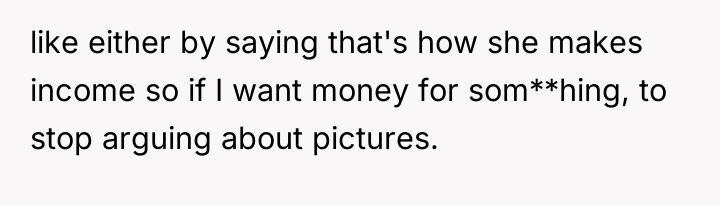
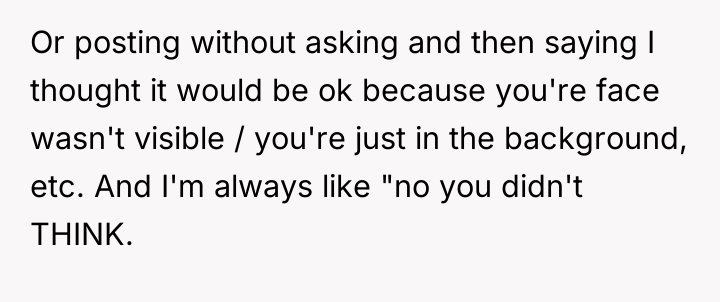
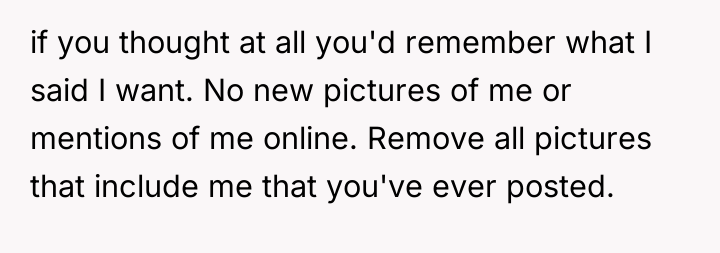
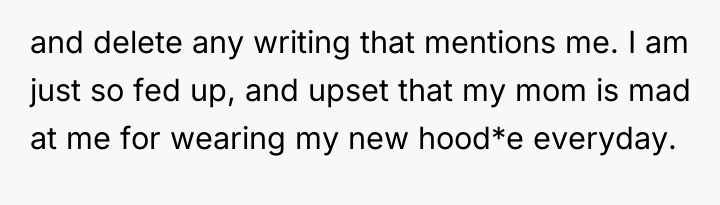
The OP's actions, while seemingly extreme (custom-printed hoodies stating legalistic terms like 'no consent' and 'no profiting off my image'), are a direct response to a persistent pattern of parental boundary violation concerning digital consent and autonomy. The mother's counterarguments—that the messages imply impropriety or that the clothing is inappropriate for certain settings—function as deflection tactics that avoid addressing the core issue: the OP's lack of control over their own image after childhood. The mother's desire for 'memories' conflicts directly with the OP's need to control future reputation and privacy, especially as they move toward adulthood where digital footprints have real-world consequences (employment, dating).
The use of the hoodie is a powerful, albeit provocative, form of non-verbal communication asserting autonomy. While it creates immediate conflict, it forces the underlying issue into the open. A more constructive approach for the future would involve clear, documented communication (perhaps in writing) detailing exactly *which* existing content needs removal and establishing a zero-tolerance policy for future use, rather than relying solely on spontaneous, visible confrontation. However, given the past failures of verbal agreements, the OP’s current action is an understandable, albeit high-stakes, attempt to gain immediate compliance.
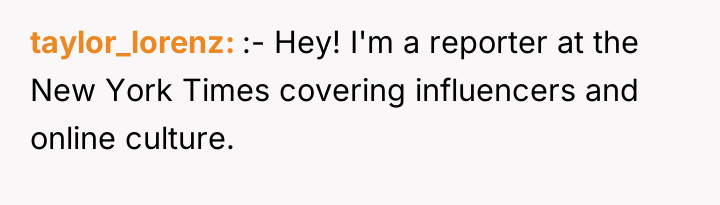
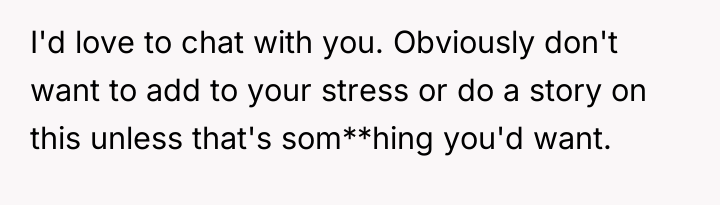
THIS STORY SHOOK THE INTERNET – AND REDDITORS DIDN’T HOLD BACK.:
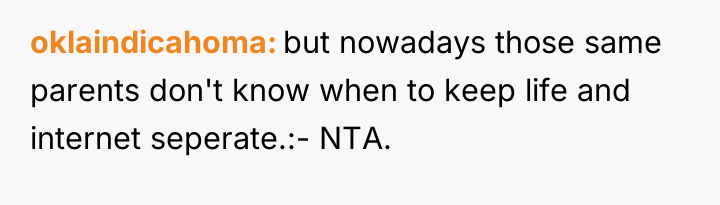
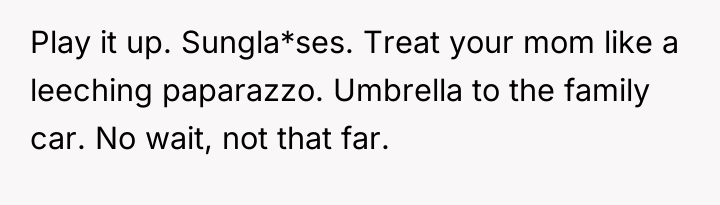
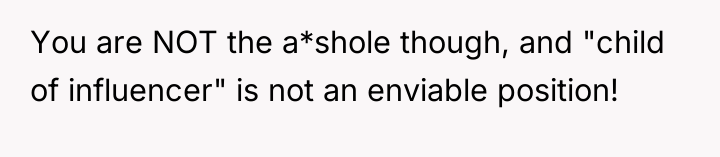
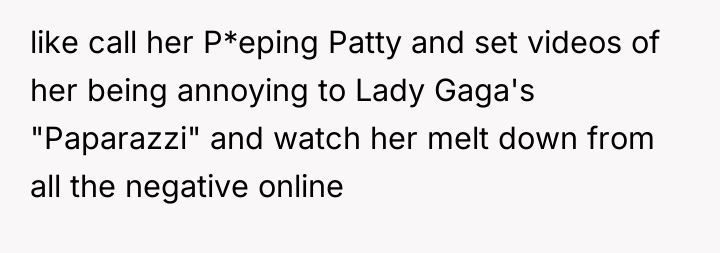
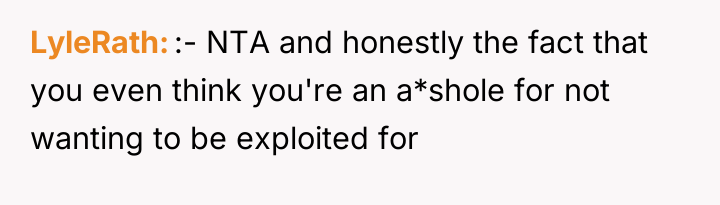
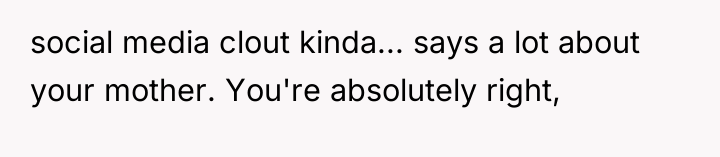
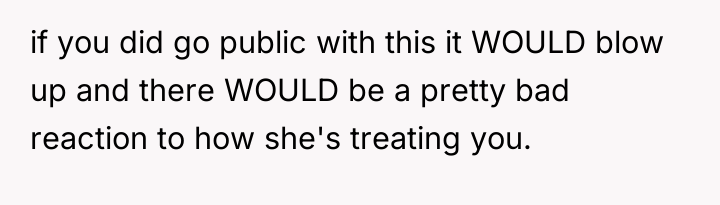
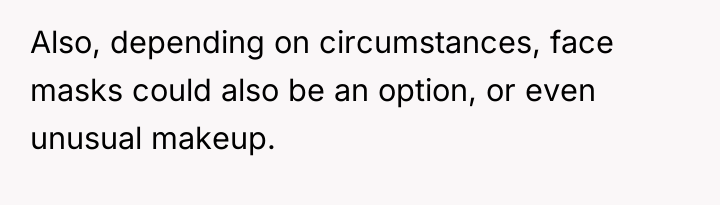
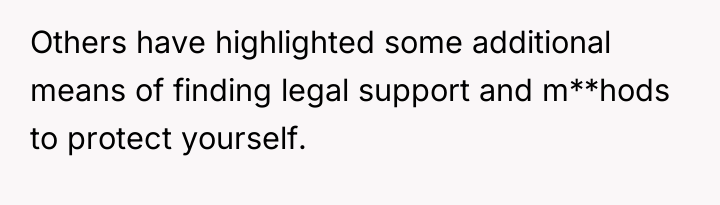
The community had thoughts — lots of them. From tough love to thoughtful advice, the comment section didn’t disappoint.
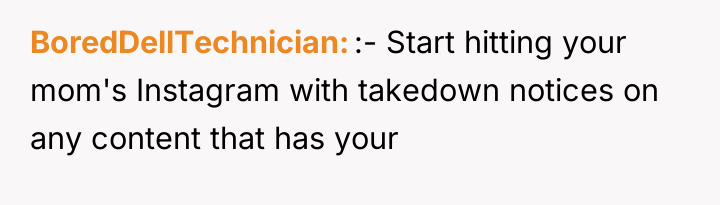
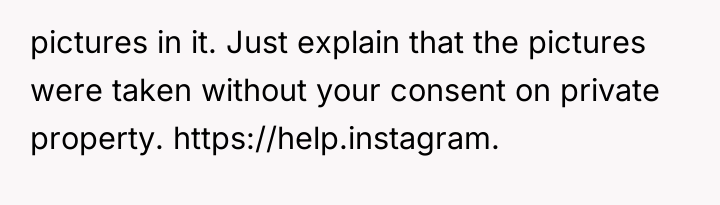

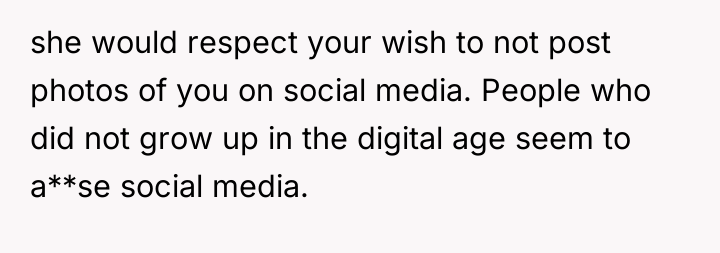
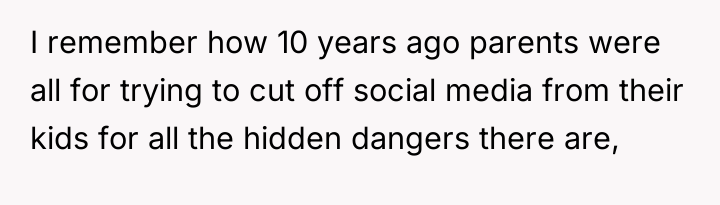


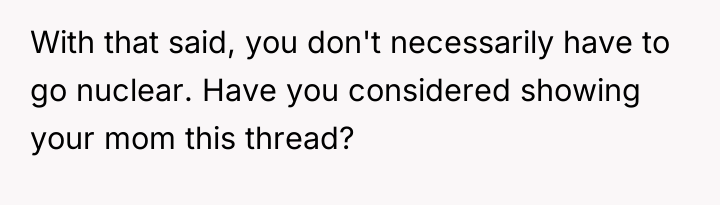
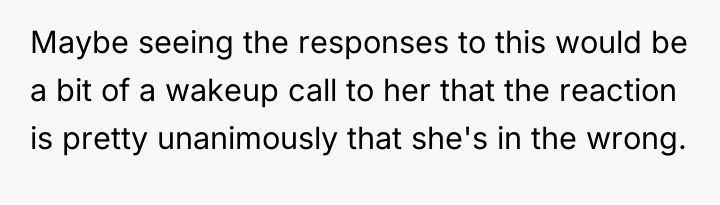
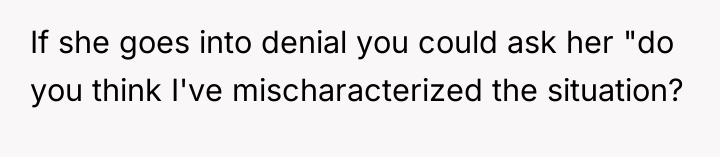
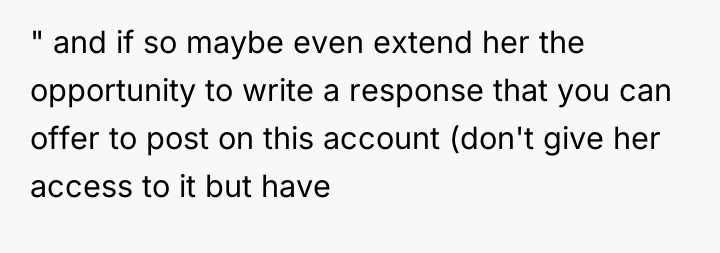

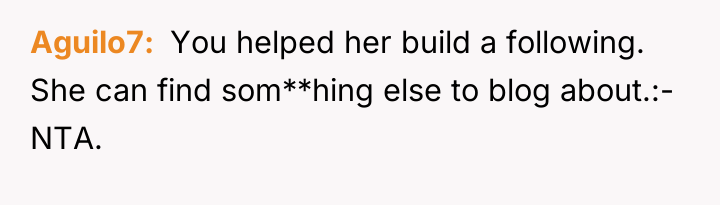



The original poster (OP) is clearly distressed by the extensive online presence their mother has created using their childhood images and personal details for her blogging income. The central conflict is the OP's assertive attempt to reclaim control over their digital identity and privacy, directly clashing with the mother's desire to document and monetize their shared history through images.
Given the history of broken agreements regarding consent and the mother's strong negative reaction to the highly visible boundary setting, the key question remains: Is the teenager justified in using such an overt, potentially disruptive method (the statement hoodie) to enforce non-negotiable privacy terms, or does this approach unnecessarily escalate conflict beyond what is reasonable for a familial relationship?