
I Set a Trap for My Snooping MIL and Now My Husband Wants Me to Apologize
Beneath the surface of a seemingly ordinary family life, a storm brews fueled by judgment and misunderstanding. A woman, confident in her choices and love for her husband, faces the relentless scrutiny of a mother-in-law who weaponizes tradition and suspicion, turning affection into accusation. Each whispered insult and disapproving glance cuts deeper than any surgical scar, unraveling the fragile threads of respect and peace they once held.
In this tangled web of love, identity, and control, the woman’s desire to reclaim her body and self-worth becomes an act of quiet rebellion. Yet, the battle is not just against external voices but the haunting question of acceptance—how to be true to oneself while navigating the suffocating expectations of family, marriage, and motherhood.










As renowned relationship therapist Esther Perel explains, “Infidelity is not the breaking of a vow, but the breaking of a promise of exclusivity, either sexual or emotional.” While this situation does not involve sexual infidelity, the core issue revolves around relational trust and the perception of exclusivity—in this case, the exclusivity of the OP’s private space and belongings.
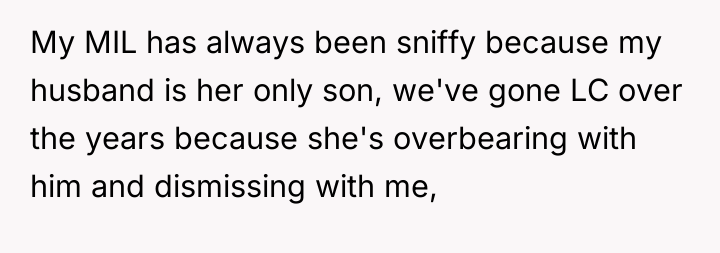
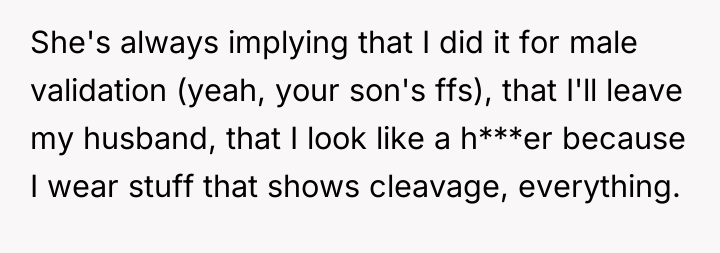
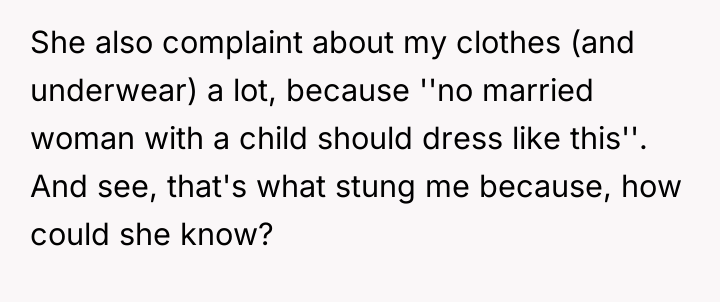
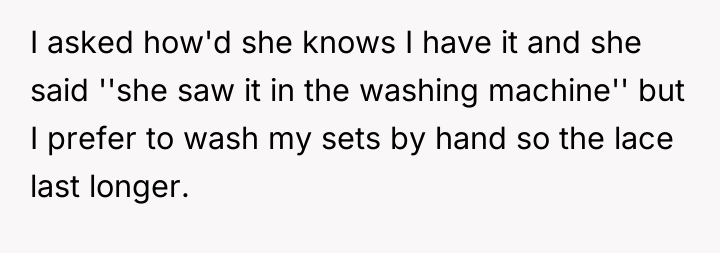
The OP was experiencing persistent boundary violations from her MIL regarding her body, clothing, and marital decisions, leading to significant emotional distress. The husband's initial dismissal of the OP's suspicions ("she could never") placed the OP in a position where she felt compelled to prove the violation to gain validation. Setting the trap, while emotionally understandable as a method to force accountability, is a high-risk strategy that replaces direct confrontation with passive-aggressive proof. This often backfires, as evidenced by the husband's reaction, which focuses more on the *method* of discovery than the *content* of the discovery itself.
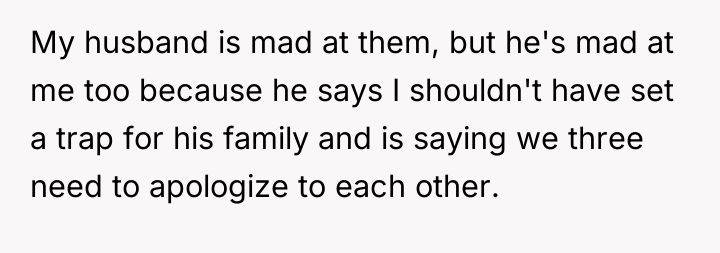
The husband is inappropriately attempting to mediate by demanding a three-way apology, effectively equating the victim (OP, whose privacy was invaded) with the transgressors (MIL/SIL). The OP's actions were a direct response to unaddressed boundary violations. The constructive recommendation is for the OP and her husband to first establish a united front regarding the MIL's unacceptable behavior and privacy invasion. Future conflicts should be handled through direct, assertive communication, establishing clear, enforceable consequences for any further snooping, rather than relying on entrapment.
HERE’S HOW REDDIT BLEW UP AFTER HEARING THIS – PEOPLE COULDN’T BELIEVE IT.:
What started as a simple post quickly turned into a wildfire of opinions, with users chiming in from all sides.
































The original poster (OP) felt justified in setting a trap to confirm suspicions that her mother-in-law (MIL) was invading her privacy regarding personal and intimate items. This action, while potentially confirming the MIL's snooping, led to immediate conflict with both the MIL/SIL and the husband, who is upset about the confrontation setup.
Given the confirmed invasion of privacy versus the intentional staging of the discovery, the central question remains: Was setting a deliberate trap to expose the MIL's snooping an acceptable method to address the continuous boundary violations, or did this approach unfairly escalate the situation and damage trust within the immediate family?