
AITA for saying the same jokes my FIL uses to give him a piece of his own medicine.
In a room filled with forced laughter and strained smiles, one man’s cruel humor cast a shadow over the family gathering. His sharp jabs at others’ appearances, masked as jokes, left a silent ache in the hearts of those who endured them, their pain hidden behind polite attempts to move on. But tonight, the usual quiet endurance shattered when one person finally stood up, reflecting the hurt back with the very words that had been so carelessly thrown around.
The confrontation was raw and honest, a mirror held up to years of unspoken discomfort. Yet, instead of understanding, the response was swift condemnation, revealing the deep divide between speaking out against cruelty and the cost of breaking the silence. In this clash, the true weight of words and the struggle for respect in family dynamics came painfully to light.


Subscribe to Our Newsletter
As renowned researcher Dr. Brené Brown explains, “Boundaries are the distance at which I can love you and me simultaneously.” This quote directly addresses the core tension in this scenario: the OP attempted to create necessary emotional distance (a boundary) to protect themselves and others from the FIL's hurtful humor, but the method used created immediate relational distance rather than allowing for mutual respect.
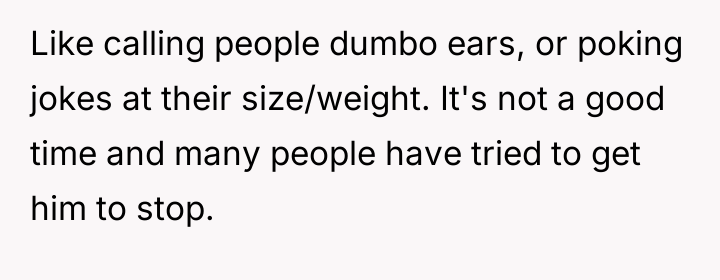
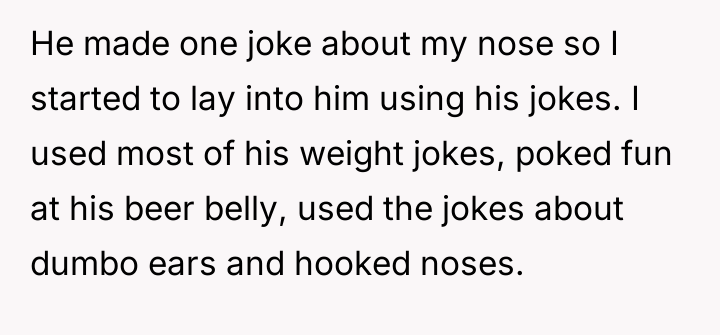
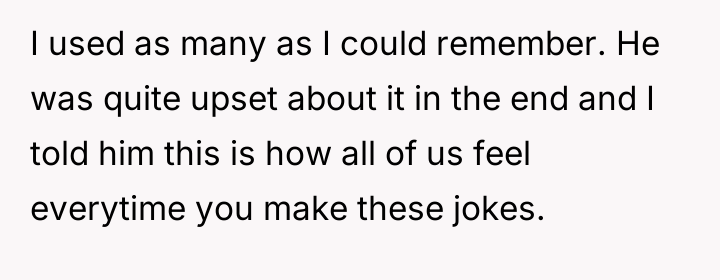
The FIL exhibits a pattern of using humor to belittle others regarding physical appearance, a behavior often rooted in insecurity or a misguided desire for attention and control. The OP's decision to retaliate by deploying the FIL's own specific insults (weight jokes, ear/nose comments) is a classic reactive defense mechanism. While the intent was to demonstrate the impact of his actions—a form of 'experiential learning'—the execution shifted the focus from the FIL’s inappropriate behavior to the OP’s equally inappropriate response. This 'tit-for-tat' approach rarely leads to constructive change; instead, it validates the aggressor’s belief that personal insults are an acceptable form of communication.
The subsequent criticism from the MIL and SIL suggests that while they may dislike the FIL’s jokes, they prioritize family harmony (or avoiding confrontation) over accountability. The OP’s actions, while emotionally understandable given the sustained provocation, were ultimately counterproductive because they provided the in-laws with justification to label the OP as the aggressor. A more effective approach would have involved clear, non-emotional statements setting a boundary in the moment (e.g., "I am not going to listen to jokes about people's bodies"), followed by immediately disengaging from the conversation or leaving the gathering, rather than engaging in an escalating insult exchange.
THIS STORY SHOOK THE INTERNET – AND REDDITORS DIDN’T HOLD BACK.:
The community had thoughts — lots of them. From tough love to thoughtful advice, the comment section didn’t disappoint.

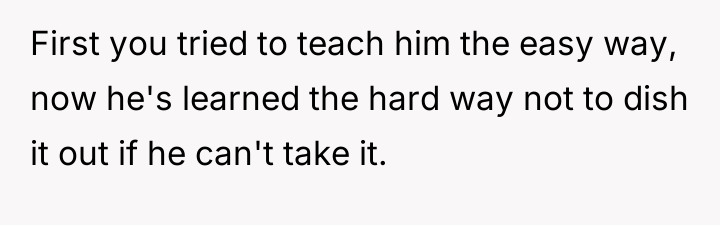



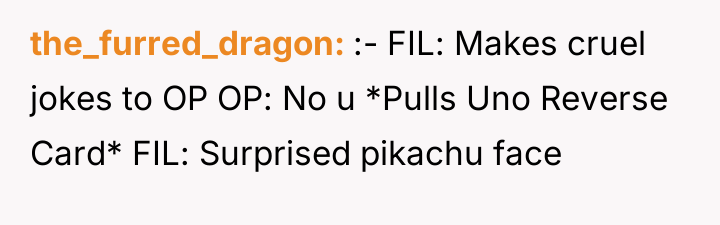

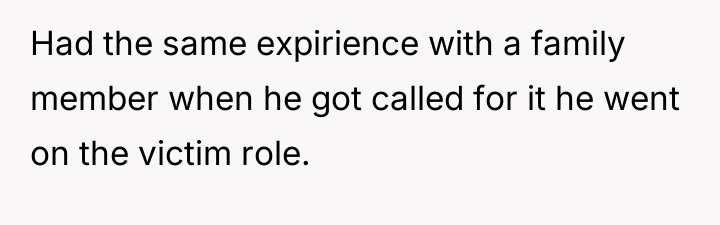
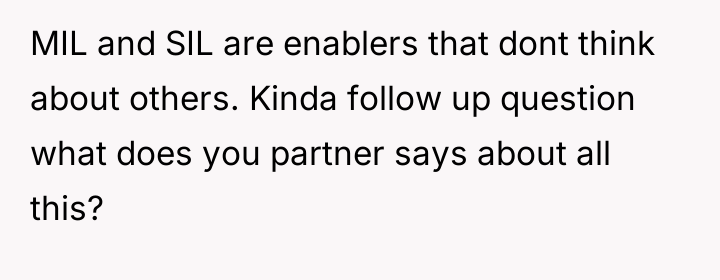


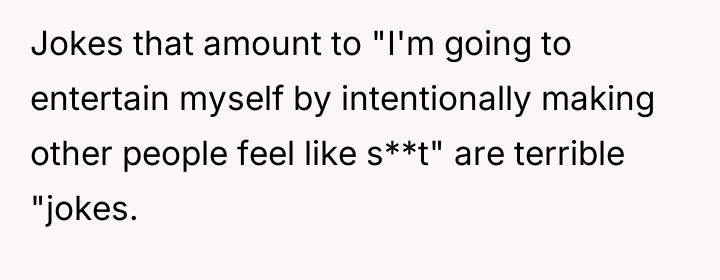

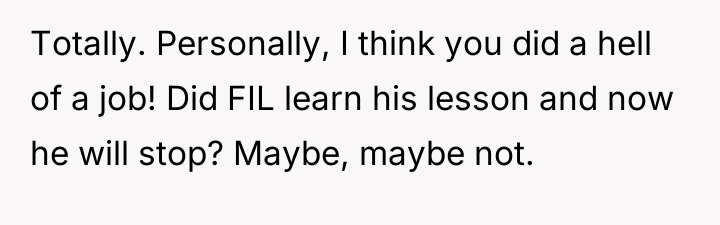
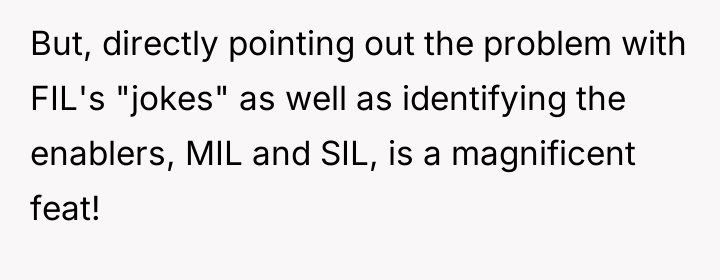
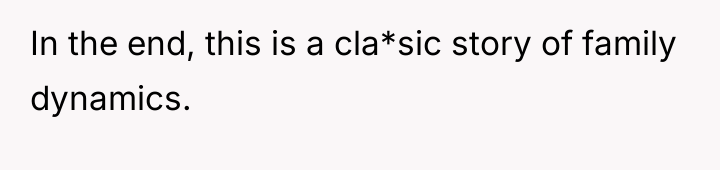
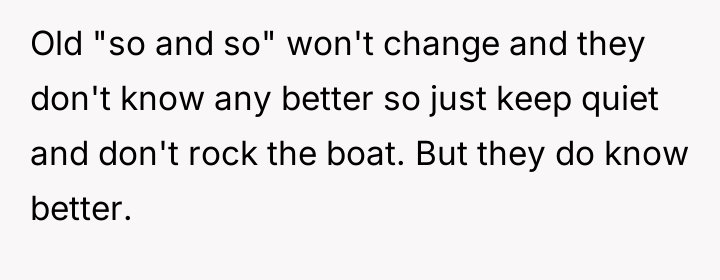
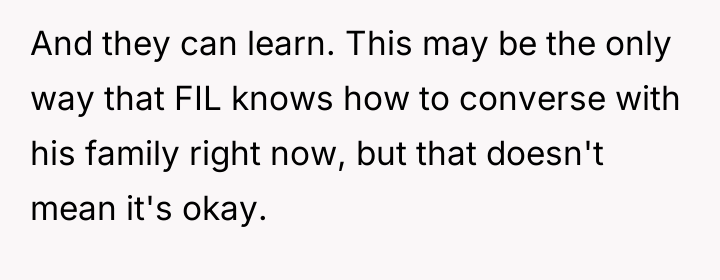
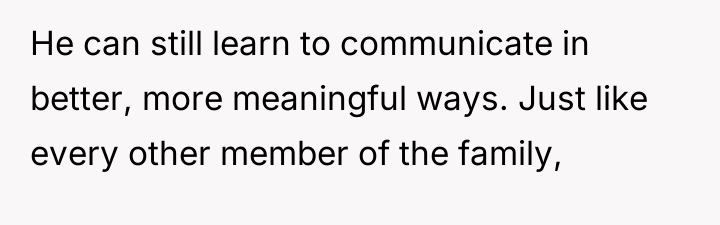
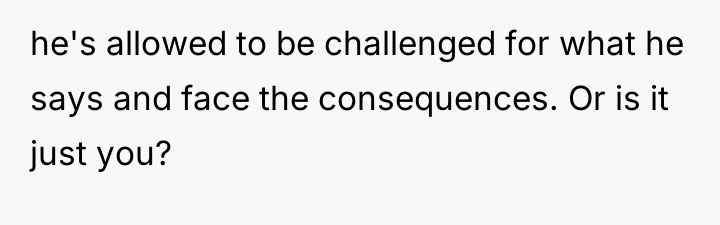
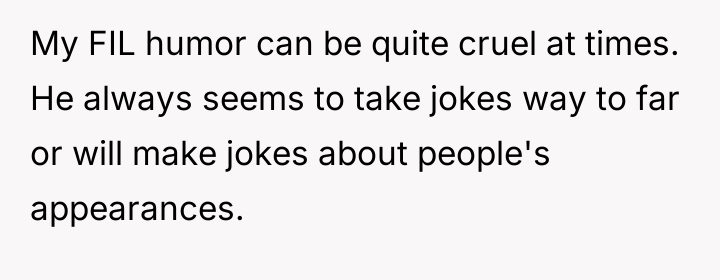
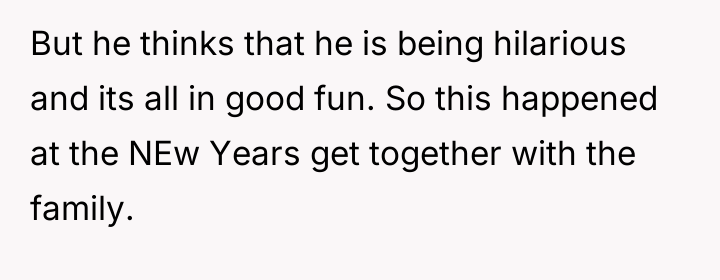
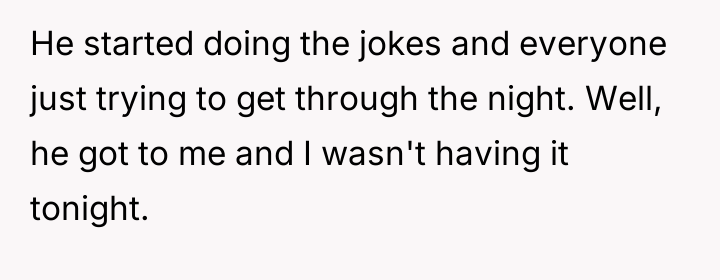
The original poster (OP) reached a breaking point regarding their father-in-law's (FIL) consistent pattern of making cruel and appearance-based jokes, culminating in a direct retaliation using the FIL's own offensive material. The immediate consequence was severe backlash from the mother-in-law (MIL) and sister-in-law (SIL), who accused the OP of going too far, highlighting a significant conflict between the OP's need to establish boundaries and the family's acceptance of the FIL's behavior.
Was the OP's reaction of mirroring the FIL's specific cruel comments an effective method to communicate the harm done, or did the escalation undermine the message by stooping to the same level of personal attack? This situation forces a consideration of whether mirroring toxic behavior is a justifiable tactic for boundary enforcement when subtle communication has failed.