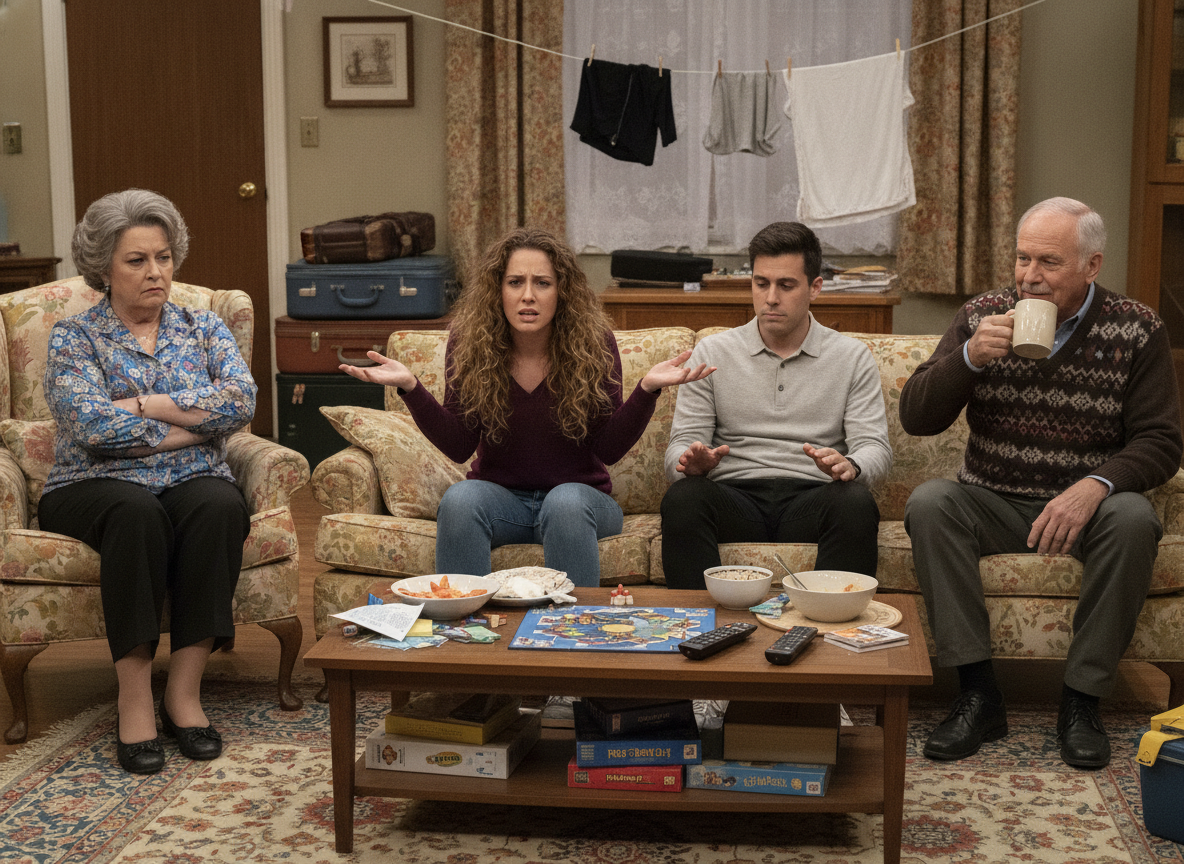
Woman's Story Of How She Took In Her Nieces And Not Their Dad After Her Sister D*ed Leaves Redditors With More Questions
The weight of loss hangs heavy in the air as a family grapples with the sudden void left by a beloved sister and mother. Amidst the shattering grief, a tangled web of past grievances and unresolved conflicts surfaces, threatening to overshadow the fragile bonds that remain. The sister’s heart is torn between compassion for her grieving nieces and the painful memories tied to their father, whose presence stirs old wounds.
In a house filled with silence and unspoken emotions, difficult decisions carve deep lines in the fabric of family loyalty. The nieces, innocent and mourning, become the fragile bridge between estranged adults clinging to their own pain and pride. As they step into a home that is both refuge and battleground, the true test begins—not just of forgiveness, but of love’s resilience in the face of heartbreak.













As renowned family therapist Dr. Terry Real explains, “Boundaries are about self-respect, not about controlling other people.” This situation highlights the collision between the OP's need for self-protection against a known source of conflict (the brother-in-law) and the immediate, acute needs of her nieces who are experiencing dual trauma: the loss of a mother and potential separation from their remaining father.
The OP’s decision to exclude her brother-in-law is understandable given his past actions, particularly his attempt to sue for property she occupies. This reflects a necessary measure to protect her own peace and the stability of her household, which is now hosting vulnerable minors. However, introducing this long-standing conflict into a period of acute grief often escalates emotional volatility. The father, while potentially manipulative in demanding residency, is also a grieving individual whose presence might be viewed by his daughters as essential for their emotional scaffolding during this period, regardless of his past behavior toward the OP.
The OP’s action to protect her boundary was appropriate in principle, but the execution was emotionally costly. The constructive recommendation here involves immediate, structured communication. The OP and her husband must align on a unified plan—even if it means temporarily tolerating supervised visits from the father in the home for the girls’ immediate comfort, while simultaneously setting firm, non-negotiable time limits and house rules. Future stability requires addressing the conflict with the brother-in-law separately, not within the scope of childcare for the grieving nieces.
REDDIT USERS WERE STUNNED – YOU WON’T BELIEVE SOME OF THESE REACTIONS.:
It didn’t take long before the comment section turned into a battleground of strong opinions and even stronger emotions.








































The original poster (OP) is grappling with a deeply painful family tragedy, which has been complicated by severe pre-existing conflict with her brother-in-law regarding past financial disputes, including a lawsuit over family property. Despite agreeing to shelter her grieving nieces, the OP established a firm boundary by refusing to house their father, leading to immediate family backlash from her husband and aunt who accuse her of selfishness and prioritizing past grievances over the immediate emotional needs of the grieving children.
Given the intense grief, the existing family animosity, and the division of opinion between the OP and her husband, the core question remains: Is maintaining a necessary personal boundary against a hostile family member justified when it directly conflicts with the immediate perceived needs of grieving children, potentially causing resentment toward the OP and further fracturing the family unit?
Trending This Week

AITAH after kicking my boyfriend out for calling my daughter a snitch and spoiled brat?
I have been dating my boyfriend for a couple of years now. I have an eight-year-old daughter from a previous relationship, and he has a four-year-old son. My boyfriend and I have always bumped heads on parenting styles and discipline. He believes his son is too young to know better, but says my daughter should already know how to act, calling her disrespectful and spoiled. My daughter's father is in jail and no longer in her life, so she craves a father figure, but my boyfriend refuses to show her affection, calling it weird. Recently, he called her a spoiled brat for leaving her plate on the table and a snitch for reporting his son's behavior. When I saw my daughter cry, I asked him to apologize, but he refused. I kicked him out of my house, and now he claims I am being too dramatic.

WIBTA to insist my neighbor keep a yard schedule?
For background I have a severely reactive rescue dog. She's terrified of other dogs and freaks out majorly when she sees them or hears them. My partner and I have been working with our vet and a behavioral trainer and we've made some progress, but my dog is still not truly comfortable anywhere but her own yard. A new lady just moved in next door, and she has two big dogs. They seem like nice dogs, they are quiet and she works with them a lot. The problem is that she works from home full time, and her dogs are always outside. She doesn't leave them there for hours or anything, but I never know when she's going to let them out or for how long. She also spends a lot of time out there with them after work and on weekends. To be fair to her, she trains them and she doesn't let them run up on the fence, and if they do bark, she makes them go inside. They're still out on the other side of the fence though and my dog is now scared and reacting in her own backyard. When my dog starts carrying on, she is the one who has to go inside. She already can't enjoy walks and now she can't even enjoy being outside. I asked my neighbor if she'd consider a schedule for the dogs so that my dog can enjoy her yard too without the neighbor's dogs freaking her out on the other side of the fence. She was polite about it but said no, she bought the house with the yard for her dogs, and they use it. She said she'd be glad to tell me when she's leaving with them for a period of hours, but otherwise she's not going to change what she's doing day to day. So nothing changed and her dogs get plenty of outdoor time and mine gets none except for the stray times when she takes one of her dogs to a training class or takes both of them for a hike. I'm really upset and want to insist that we adopt a schedule so that my dog can have some outside time too. My dog does not get the same opportunity as her dogs, not even close. Her dogs have free access five days a week, weeknights, and weekends. My dog only gets outside time now when she says she is leaving for a class or a hike. If I let my dog out to sun herself at 10:30 on a Tuesday, sure enough, it won't be five minutes before she's letting her dogs out and then my dog freaks out and has to come in. She is not getting anywhere close to what they are getting. The fence is a privacy fence. My dog freaks out when she can hear and smell the other dogs as well as see them. She can't see these dogs but she knows they're there.

AITAH for not telling my housemate I’m moving out and taking everything with me?
I have lived with two of my friends in a rented house share for ten months. Around three months into our tenancy, a girl we did not know moved in to fill the final room. While I was initially excited to have another female housemate, our first interaction was tense; instead of greeting me, she immediately asked about our cleaning plans. Despite explaining our weekly routine, she quickly began using our kitchen items and leaving them dirty. When one of my friends gently addressed this, she reacted by shouting at me for fifteen minutes, accusing me of trying to look good in front of the male roommates. Over the next seven months, her behavior deteriorated further. She monopolized the clothes drying racks, damaged our communal chopping boards, and left her hair all over the floors. Additionally, she filled the entire freezer, left appliances dirty, neglected bathroom hygiene, and took my personal hygiene products without permission. Whenever we tried to address these grievances, her anger was directed solely at me. Recently, a new job opportunity allowed my two friends and me to find a three-bedroom flat together. We are moving out next week. Since we purchased about ninety percent of the communal items in the house—including the toaster, microwave, kettle, and vacuum—we plan to take them with us. Because our communication has completely broken down, I have decided not to inform her of our departure, leaving her to find out when she notices the viewings or when the moving van arrives.