
Manager Asks If Firing An Employee Returning From Maternity Leave Makes Them A Bad Manager
When Jess returned from her maternity leave, the team that once revolved around her expertise had transformed. The void she left was filled by resilience, adaptation, and new talent, but beneath the surface, a storm of tension brewed as roles shifted and expectations clashed. The delicate balance between loyalty and practicality now hung by a thread, threatening to unravel the very fabric of the team.
Caught between compassion and business realities, the leader grappled with a gnawing guilt that felt almost demonic. The decisions made in Jess’s absence, though necessary, had created a chasm where trust once thrived, forcing everyone to confront uncomfortable truths about value, change, and the cost of progress.













Subscribe to Our Newsletter
As renowned ethicist and organizational psychologist Dr. Deborah Rhode explains, “Fairness is often perceived differently depending on one's position; what is efficient for the organization may feel arbitrary and cruel to the individual affected.”
The manager's decision process appears heavily weighted toward operational efficiency and cost management, which are valid business concerns. The justifications—lower salary cost, immediate project alignment, and proven team fit of the replacement—are compelling from a purely short-term logistical standpoint. However, relying on the fact that the team successfully adapted during Jess's absence, coupled with the simultaneous hiring of a cheaper replacement, suggests an inherent devaluation of Jess’s prior role and investment in the company. While the manager states the decision was 'fair to both employees,' fairness in this context must also consider the implied contract of returning after maternity leave, which carries an expectation of job security, even if the business context shifts.
The abrupt firing upon return, regardless of the justification, triggers significant emotional responses, as seen in Jess's reaction. A more constructive approach would have involved earlier, more transparent communication regarding potential budgetary constraints, perhaps exploring alternatives like a phased return or temporary reduced role, rather than presenting the termination as an immediate consequence of her paperwork submission. Moving forward, when long-term leave is involved, managers should establish clear communication channels about evolving project needs well in advance of the return date to mitigate the shock and potential legal exposure associated with what appears to be a termination masked as a necessary layoff.
THIS STORY SHOOK THE INTERNET – AND REDDITORS DIDN’T HOLD BACK.:
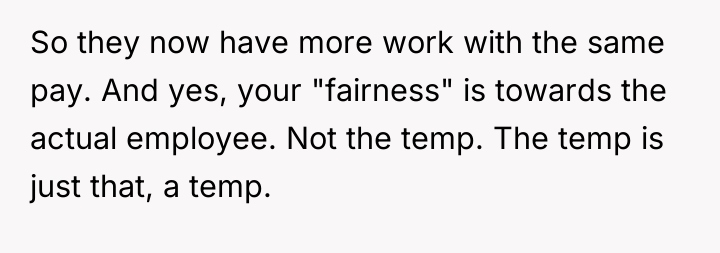
The internet jumped in fast, delivering everything from kind advice to cold truth. It’s a mix of empathy, outrage, and no-nonsense takes.





















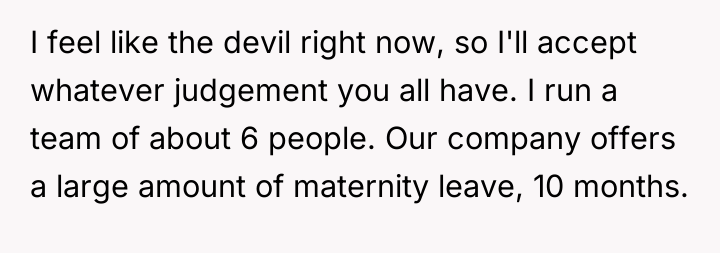
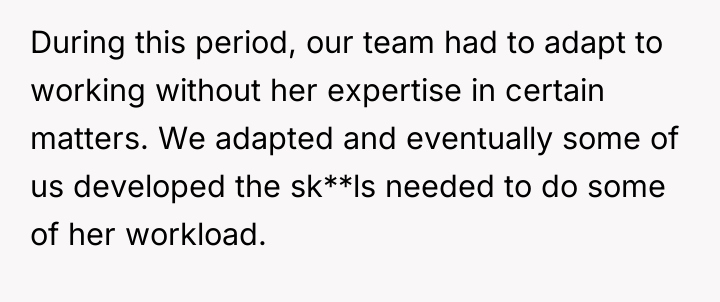
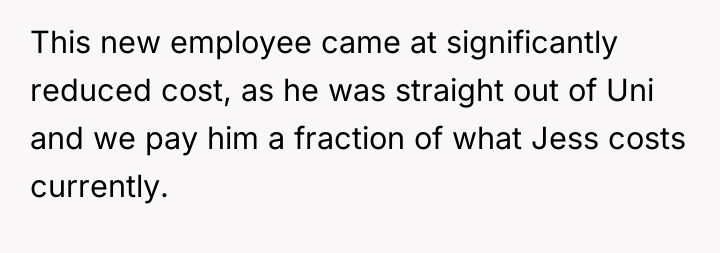
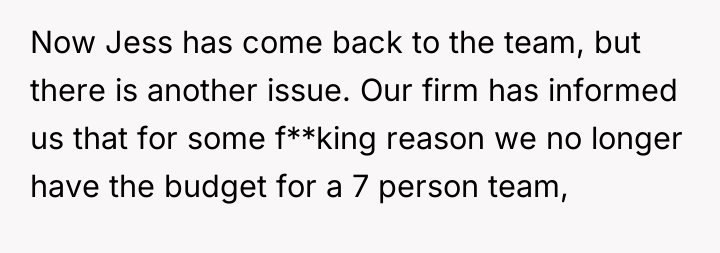
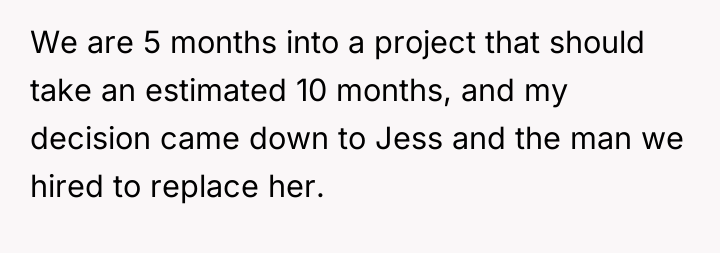
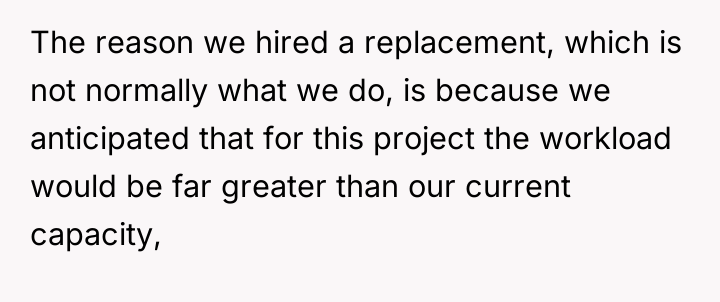
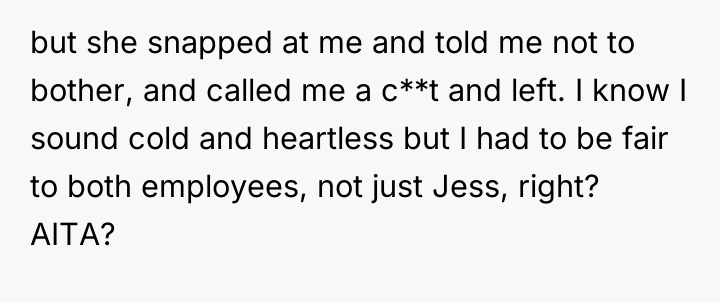
The team leader is struggling with the guilt of letting an experienced employee, Jess, go after her extended maternity leave, despite having hired a cheaper, current replacement. The central conflict lies between the leader's business decisions, which prioritized cost savings, project momentum, and team integration, and the significant personal impact these decisions had on Jess, who lost her job upon return.
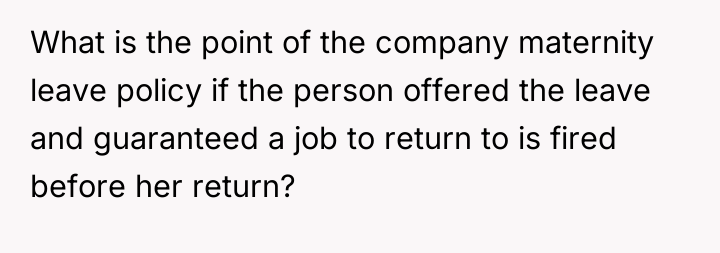
Was the team leader's decision, based on financial efficiency and project continuity, justified when weighed against the obligation to retain a long-term employee returning from legally protected leave, or did this action demonstrate a failure to support an employee during a crucial life transition? The debate centers on the balance between corporate expediency and employee loyalty.