
AITA for telling my dil she showed us who she really was on her wedding day?
In the midst of what should have been a joyous celebration, a father watched helplessly as his son's wedding day unraveled into a painful display of selfishness and cruelty. Debbie’s entitled behavior cast a shadow over the family’s happiness, especially towards the father’s eldest daughter, who was quietly battling the vulnerability of early pregnancy and the weight of past loss. Instead of support and love, she was met with harsh judgment and humiliation on a day meant for unity.
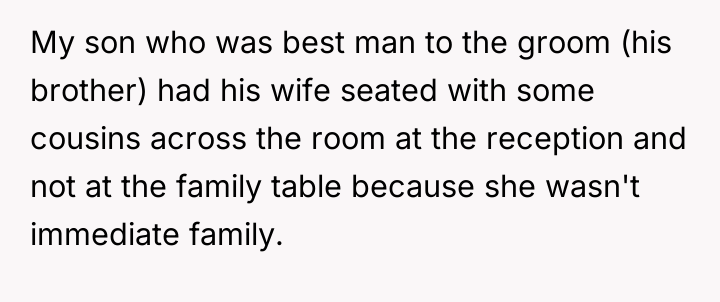
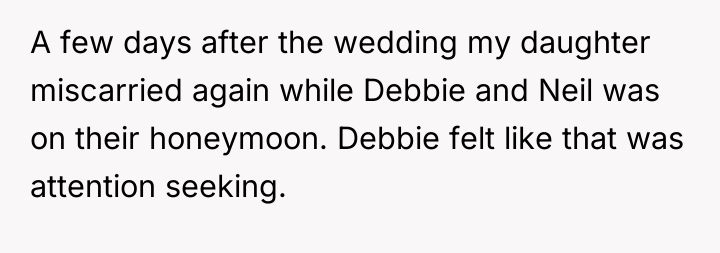
The wounds deepened when family bonds were fractured over something as simple as a seating arrangement, leading to silent resentment and a best man’s painful withdrawal. And as if the day’s heartbreak wasn’t enough, tragedy struck again just days later when the daughter suffered another miscarriage—alone in her grief while the newlyweds were away. This family’s story is one of celebration marred by division, pain, and the cruel absence of compassion when it was needed most.











Subscribe to Our Newsletter
As renowned researcher Dr. Brené Brown explains, “Boundaries are the distance at which I can love you and me simultaneously.” In this scenario, the family, led by the father, appears to be establishing a boundary in response to actions perceived as harmful or disrespectful by Debbie. The wedding day actions—insulting a pregnant bridesmaid, seating the best man's wife separately, and later minimizing a miscarriage—suggest a profound lack of empathy and respect for established family relationships.
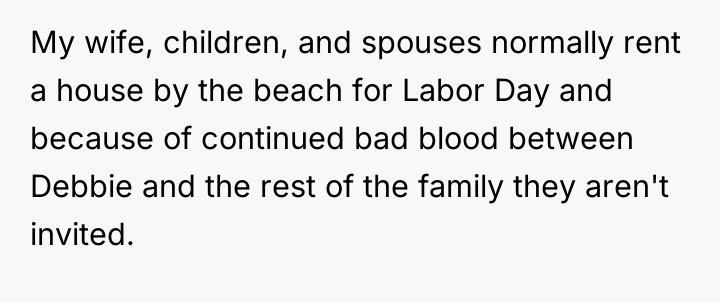
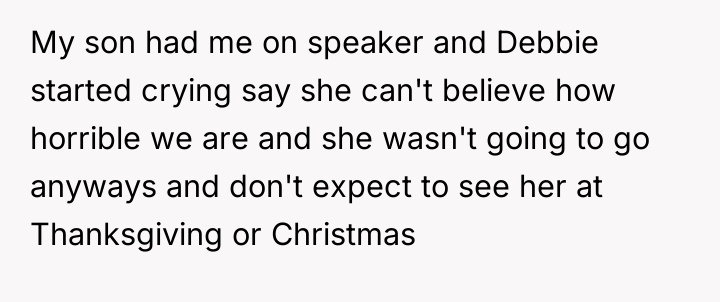
Neil's position as the spouse caught between his wife's demands and his family's reaction highlights a common dynamic where one partner's behavior forces the extended family to recalibrate their relational expectations. The father’s directness in communicating the family’s unified stance on the vacation, while emotionally charged in the final moments, was a clear articulation of the consequence of Debbie’s prior behavior. While the immediate fallout (Neil and Debbie threatening to skip all future holidays) is severe, it directly resulted from the initial provocations, not solely the father's defense of his family’s boundaries.
The father’s actions, in defending the emotional safety of his other children and spouse, were appropriate in setting relational limits following severe slights. A more constructive approach might have involved a mediated conversation with Neil (without Debbie present initially) to discuss the seriousness of the wedding day incidents *before* the vacation exclusion was finalized, focusing on specific behavioral changes required for future inclusion, rather than only enforcing the exclusion.
HERE’S HOW REDDIT BLEW UP AFTER HEARING THIS – PEOPLE COULDN’T BELIEVE IT.:
It didn’t take long before the comment section turned into a battleground of strong opinions and even stronger emotions.

>







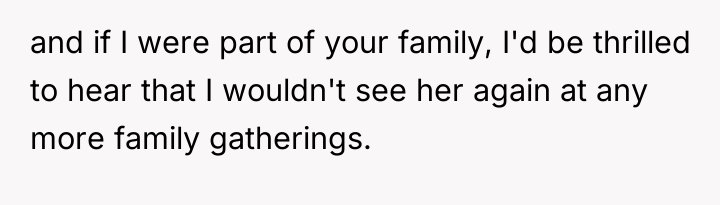


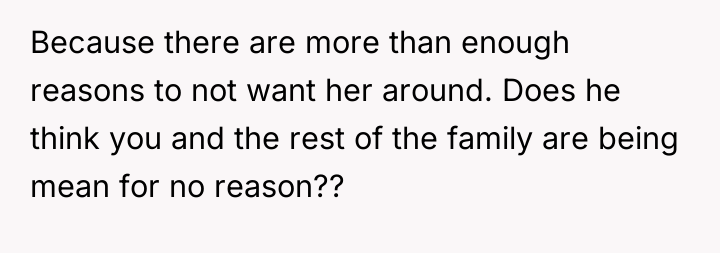

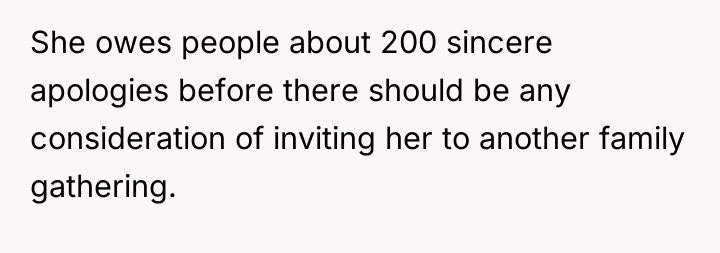




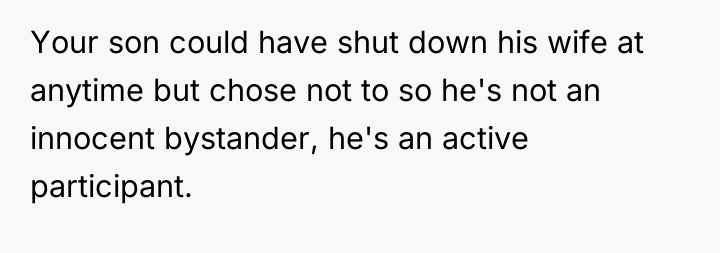

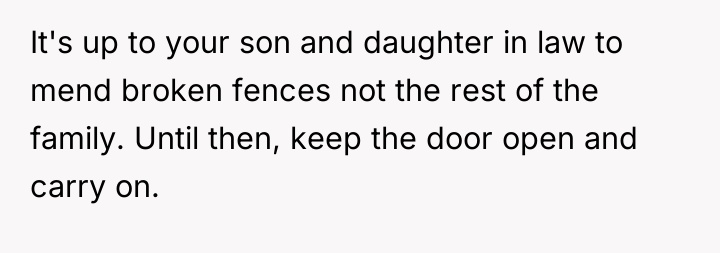
The original poster (OP) is clearly prioritizing the feelings and long-term harmony of his existing family unit over accommodating his son Neil and new daughter-in-law Debbie, whose behavior at the wedding caused significant distress and alienation among relatives. The central conflict stems from Debbie's perceived entitlement and hurtful actions, which led to immediate social consequences, such as exclusion from family events, and escalating tensions that have now resulted in Neil and Debbie cutting themselves off from most future family gatherings.
Given the severe rift caused by Debbie’s actions and the subsequent refusal by the wider family to include her, is the father justified in firmly supporting the family consensus against including Debbie in the upcoming beach vacation, even if it means Neil chooses to boycott the event with her?