
AITA for exposing a my cousin's boyfriend as a fake navy SEAL?
Beneath the fierce loyalty of a warrior lies a burning truth that refuses to be silenced. A man forged in the crucible of Special Warfare Combatant-Craft Crewmen knows the weight of honor and authenticity, and when whispers of deceit seep into his family, the betrayal cuts deeper than any battle wound. His instincts scream that the man claiming the SEAL title is nothing more than a shadow, a counterfeit hiding behind a stolen legacy.
Isolated by disbelief and stubborn denial from those closest to him, he stands alone against a tide of ignorance, determined to unmask the impostor. This isn't just about exposing a lie—it's a fight to protect the sacred honor of a brotherhood where every truth is earned in blood, sweat, and unyielding courage.

Subscribe to Our Newsletter
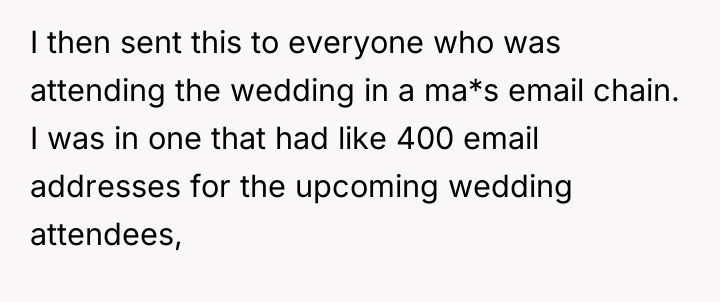
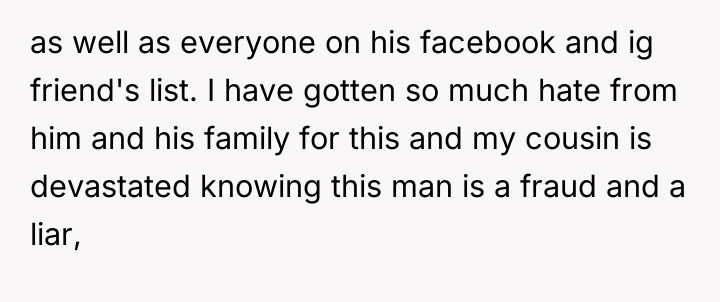
As renowned researcher Dr. Brené Brown explains, “Boundaries are the distance at which I can love you and me simultaneously.” In this situation, the OP established a boundary rooted in professional integrity and honesty, finding the fiancé's alleged deception intolerable. However, the execution of enforcing this boundary—by involving a third-party investigator (Don Shipley) and then broadcasting the negative findings to hundreds of contacts—escalated a private family concern into a public confrontation. This method bypassed direct communication with the fiancé or the immediate family unit, thereby violating social norms regarding privacy and conflict resolution within a tight-knit group.
The OP's military background as a SWCC member provides context for their strong reaction; military service often instills a high value on authenticity and distrust of misrepresentation, especially concerning Special Operations Forces. However, the actions show a potential deficit in understanding emotional labor and relational dynamics. The goal of exposing a lie, while ethically sound in a vacuum, must be balanced against the collateral damage inflicted, particularly the profound distress caused to the cousin. The mass email distribution maximized shame and conflict, effectively alienating the OP from the very community they sought to protect.
The OP's actions, while stemming from a desire for truth, were disproportionate to the social context, prioritizing confrontation over careful communication. To handle similar situations more effectively, the OP should first attempt direct, private communication with the person they suspect (the fiancé) or the concerned party (the cousin). If confrontation is necessary, it should remain contained within the immediate family circle, using verifiable information as a basis for discussion rather than immediate, widespread public exposure facilitated by external figures.
REDDIT USERS WERE STUNNED – YOU WON’T BELIEVE SOME OF THESE REACTIONS.:
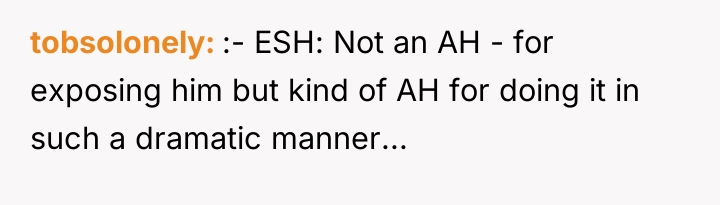
Users didn’t stay quiet — they showed up in full force, mixing support with sharp criticism. From calling out bad behavior to offering real talk, the comments lit up fast.
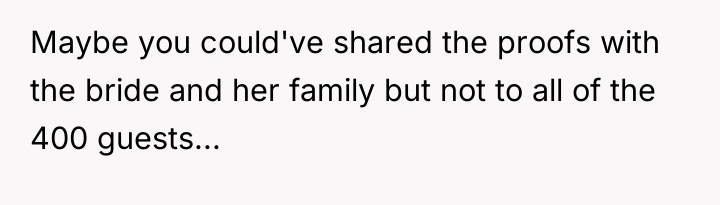

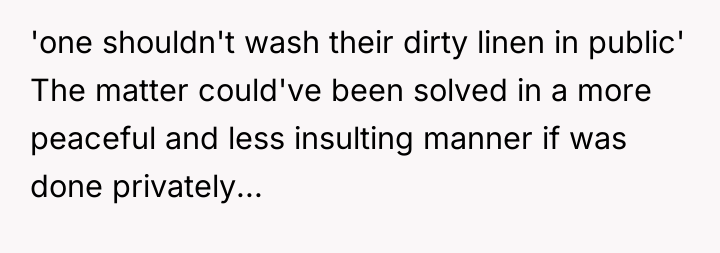
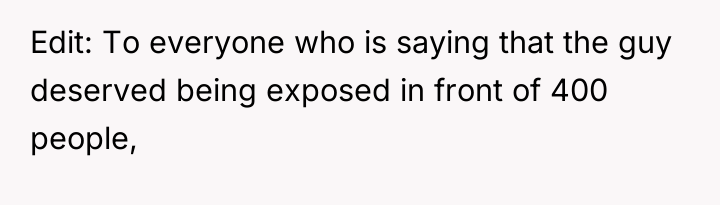
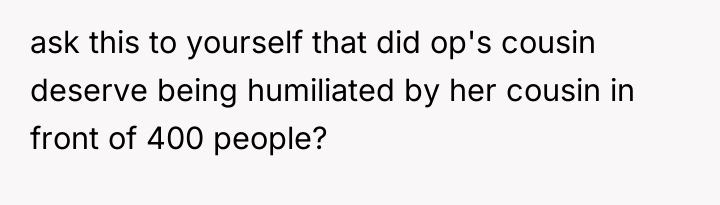
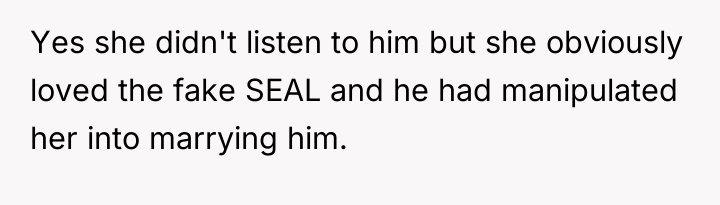
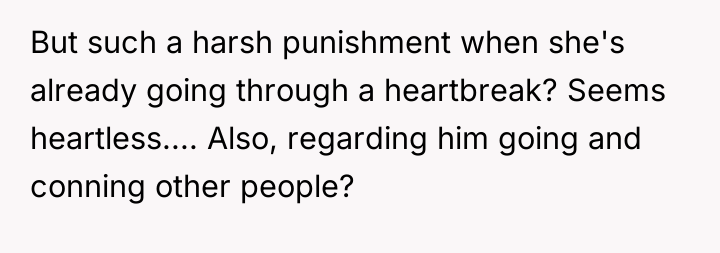

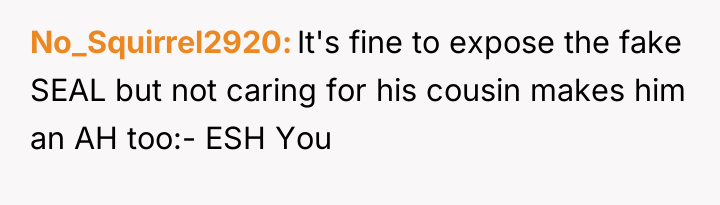
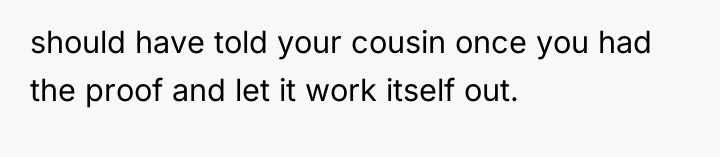
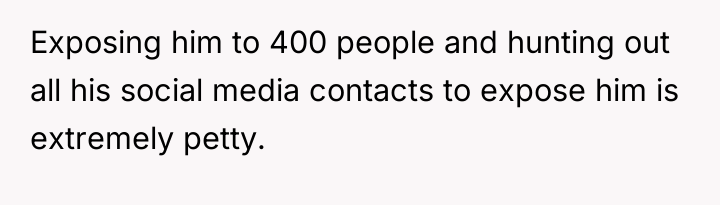
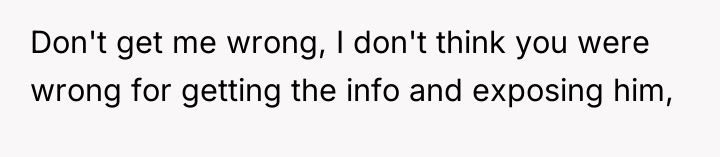
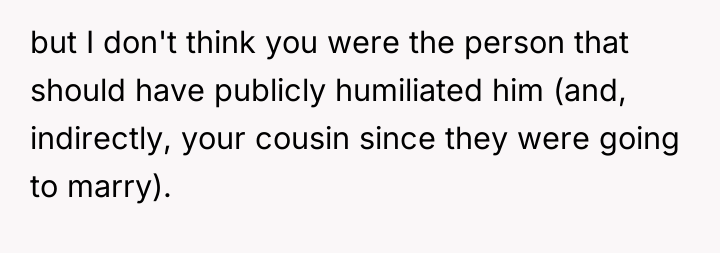
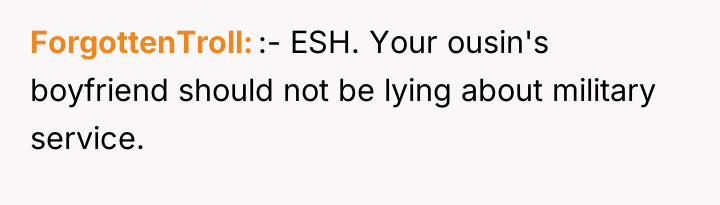
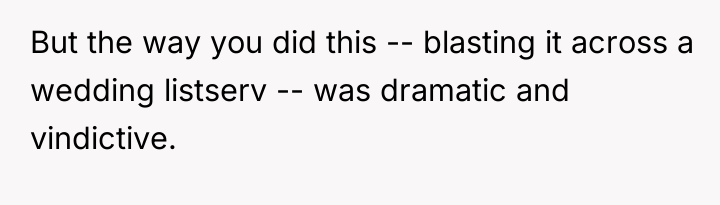
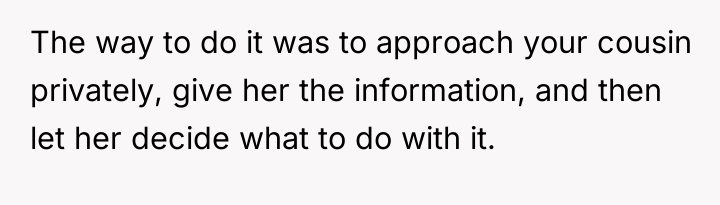
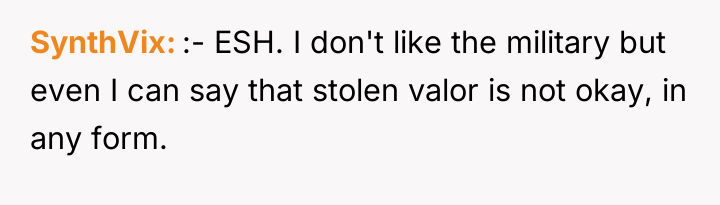

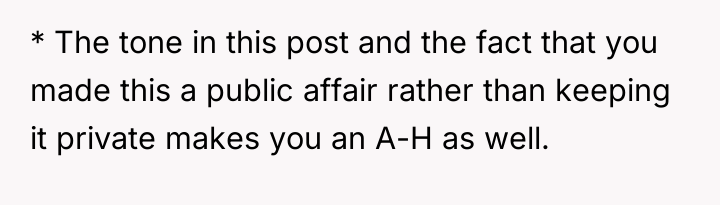
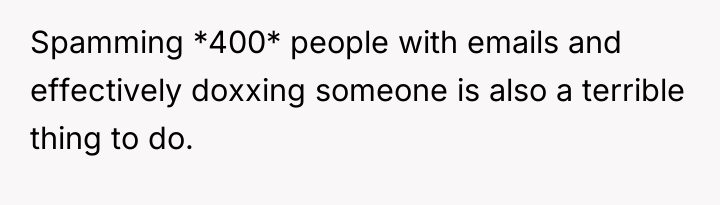
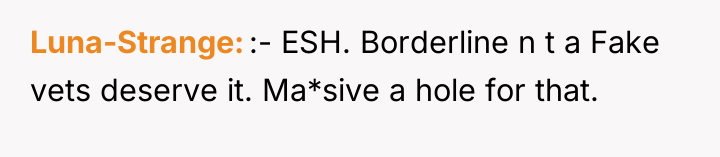
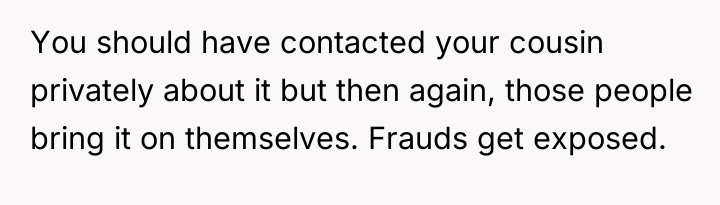
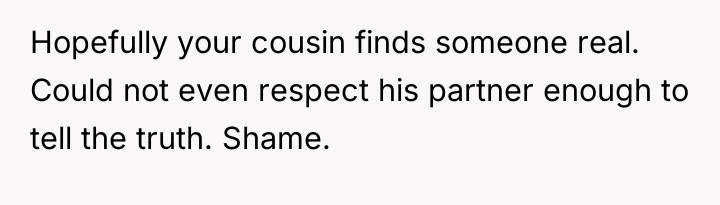

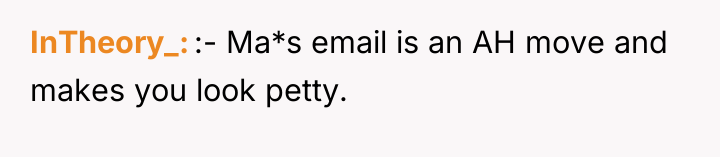

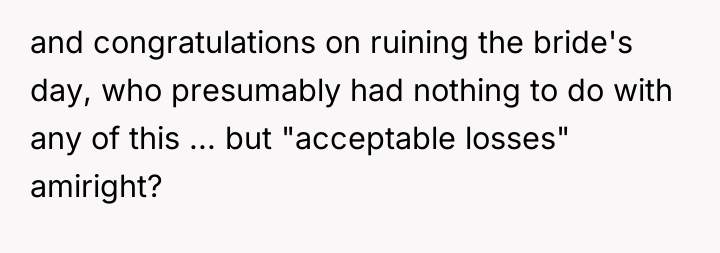


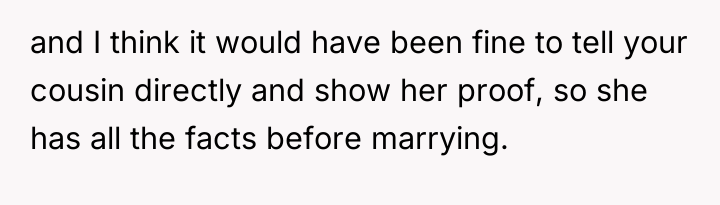
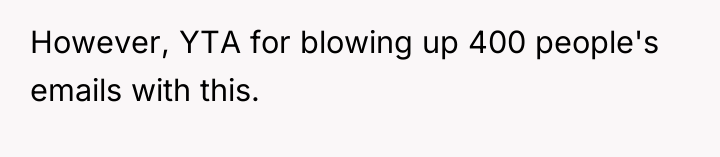

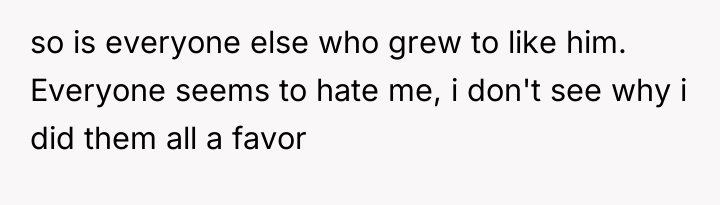
The original poster (OP) acted based on a strong conviction that their cousin's fiancé was falsely claiming to be a Navy SEAL, motivated by their own military background and personal observations suggesting deception. While the OP believes they exposed a fraud and did a favor for the family, this action led to intense backlash, resulting in the cousin's devastation and widespread family disapproval directed at the OP.
When an individual perceives a significant deception within the family structure, is exposing that deception via public denouncement the most appropriate course of action, or does the preservation of immediate family relationships and the cousin's emotional well-being take precedence over revealing the truth?