
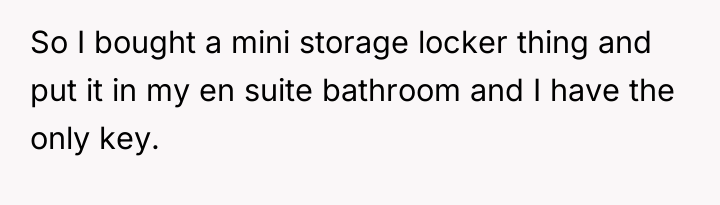
AITA for locking away my menstrual products so nobody else can access them?
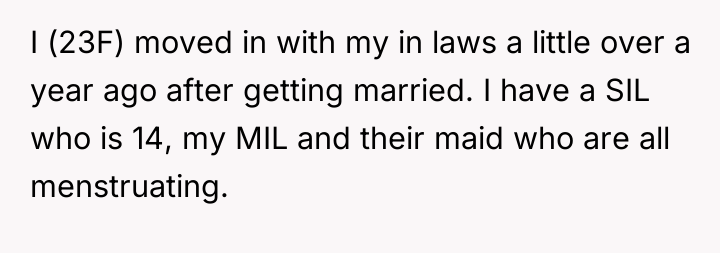
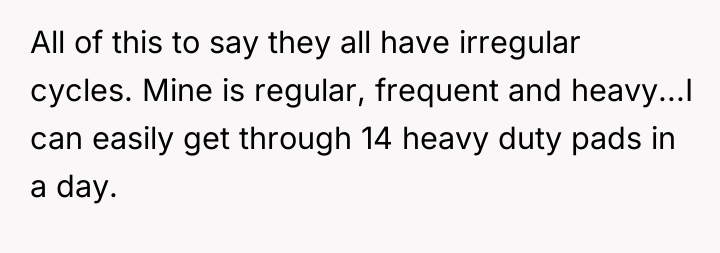
In a household where silence shrouds the natural rhythm of womanhood, a young bride finds herself wrestling with unspoken taboos and unexpected betrayals. Surrounded by women bound by secrecy and shame, her own struggles with a heavy, relentless cycle become a silent battle against the invisibility imposed by her mother-in-law’s rigid beliefs.
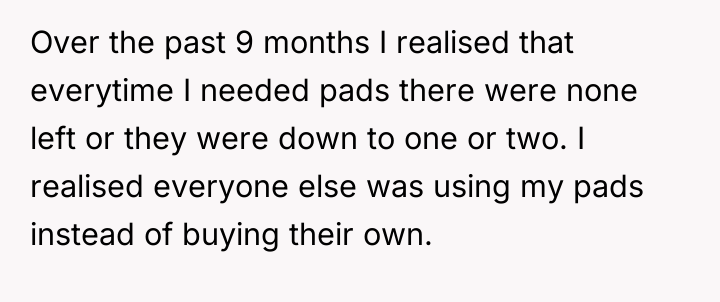
As the months unravel, the young woman uncovers a painful truth: her personal necessities are quietly being consumed by those closest to her, blurring the lines between family support and personal boundaries. In this charged atmosphere, her quiet plea for respect and understanding becomes a powerful testament to dignity and the need for open, compassionate dialogue.



Subscribe to Our Newsletter
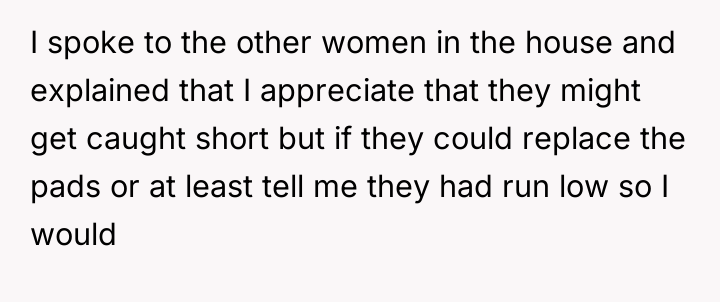
As renowned researcher Dr. Brené Brown explains, “Boundaries are the distance at which I can love you and me simultaneously.” In this situation, the OP established a boundary around a necessary personal resource—menstrual supplies—after her repeated attempts at polite communication failed. The conflict stems from a clash between the OP's need for autonomy and resource management and the in-laws' expectation of shared access and a broader, unspoken boundary against discussing or managing personal hygiene items openly.
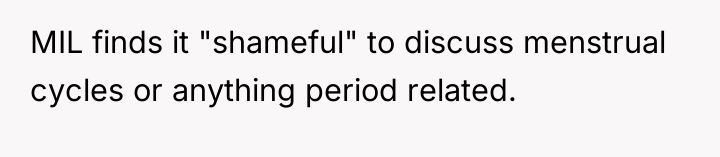
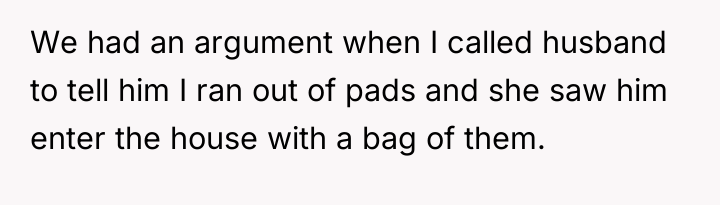
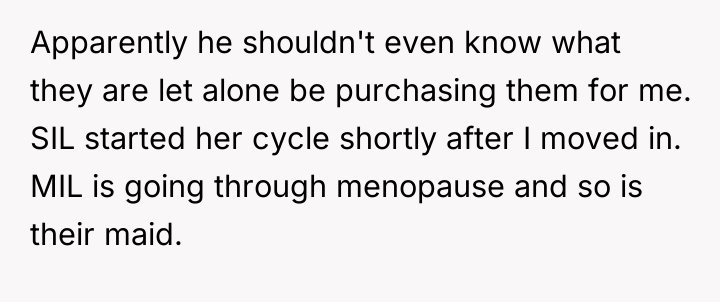
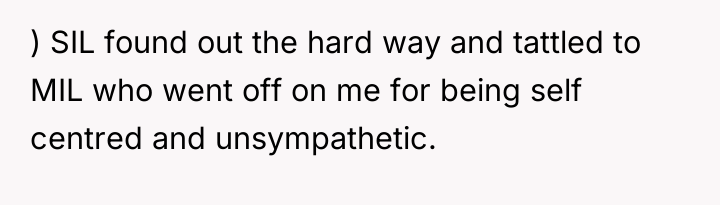
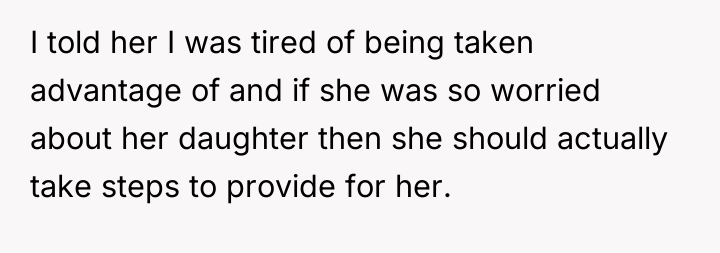
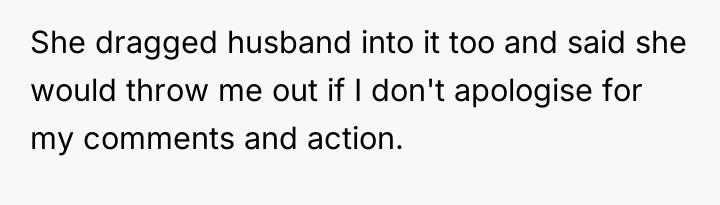
The MIL’s reaction suggests a deep-seated cultural or personal discomfort with the topic of menstruation, viewing the OP's proactive boundary setting (locking the supplies) as selfish rather than a necessary self-care measure. Furthermore, the MIL applied emotional leverage by involving the husband and threatening eviction, which shifts the dynamic from a discussion about shared supplies to a power struggle over the OP’s right to feel secure in her living situation. The SIL’s dependency, coupled with the MIL’s avoidance of purchasing or discussing pads, created an environment where the OP was unwittingly subsidizing the entire household's needs.
The OP’s action of securing the pads, while provocative, was an appropriate response to a pattern of boundary violation and resource depletion. A more constructive future approach would involve framing the issue strictly in terms of shared household finances or personal ownership rather than hygiene sensitivity, perhaps by presenting the MIL with a written budget breakdown showing the cost of pads over nine months. However, given the imminent move, prioritizing immediate self-sufficiency (as she did) over avoiding tension was a practical choice.
THE COMMENTS SECTION WENT WILD – REDDIT HAD *A LOT* TO SAY ABOUT THIS ONE.:
Support, sarcasm, and strong words — the replies covered it all. This one definitely got people talking.

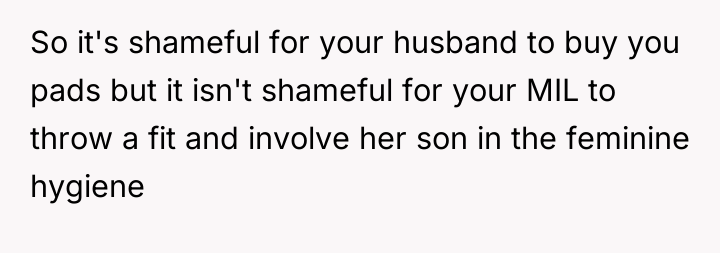
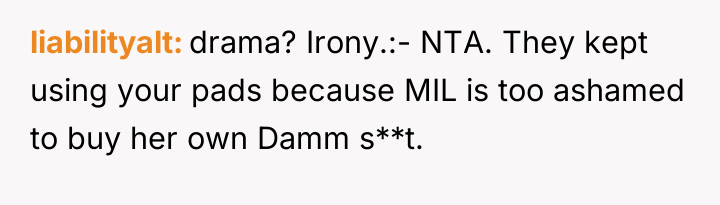
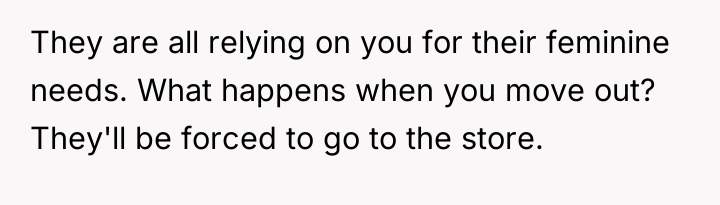



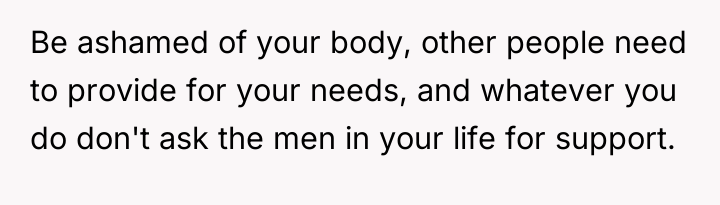



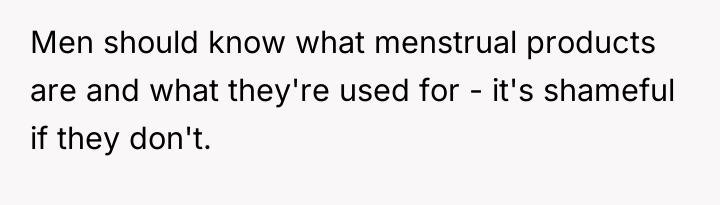
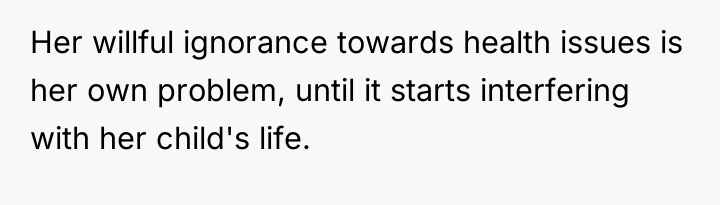


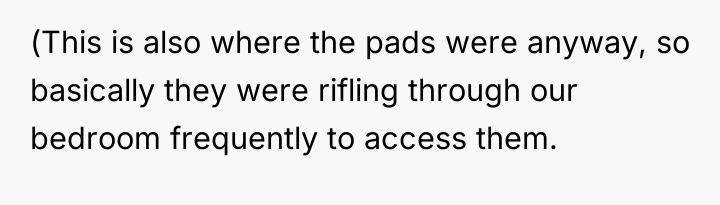
The original poster (OP) reached a breaking point due to repeatedly having her personal sanitary supplies used by other members of the household without replacement, leading her to take drastic action by locking her pads away. This action directly clashed with the mother-in-law's (MIL) established, albeit unspoken, household norms regarding privacy and provision, resulting in a significant familial conflict and threats of eviction.
Was the OP justified in securing her personal supplies after months of being taken advantage of, even if it violated the household's unspoken rules about privacy? Or was locking the pads away an excessive response that damaged the relationship beyond repair, especially given the short remaining time in the living arrangement?