
AITA for demanding my stepdaughter to pay for my daughter's wedding dress that she ruined?
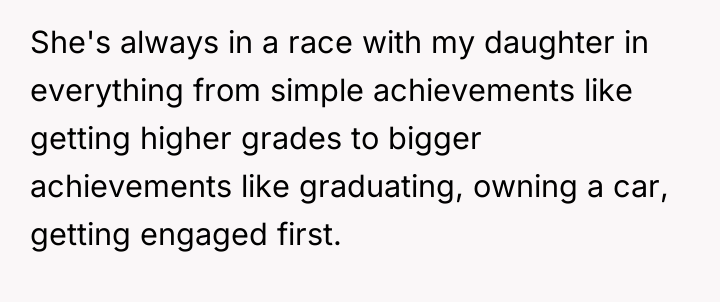
In a family shadowed by loss, a mother watches the delicate dance between her two daughters—one her own, the other a stepchild—both bound by love but divided by an unyielding rivalry. The stepdaughter’s fierce competitiveness casts a long shadow over the gentle spirit of the biological daughter, turning every milestone into a battleground where victory feels like survival.
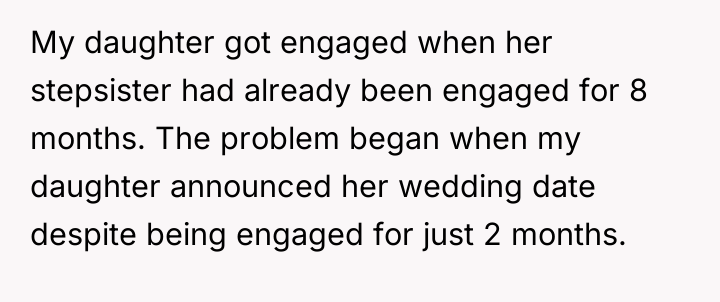
The tension reaches a breaking point when wedding plans ignite a silent war, exposing the raw ache beneath their smiles. As dates are set and dreams collide, the mother grapples with the fragile balance of protecting her daughters’ hearts while hoping to heal the invisible wounds left by years of unspoken conflict.

















Subscribe to Our Newsletter
As renowned family therapist Dr. Virginia Satir once stated, “The only way to change the way people relate to each other is to change the way they relate to themselves.” This situation highlights a severe breakdown in family relationships rooted in unchecked sibling rivalry and poor emotional regulation by the older stepdaughter.
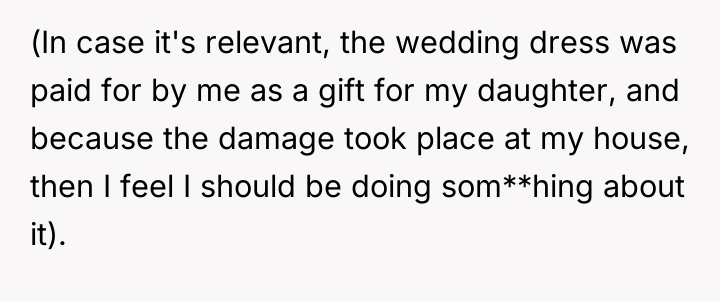
The stepdaughter’s actions—manifested as competitive striving, emotional withdrawal (ghosting), and finally, destructive retaliation (cutting the dress)—are classic indicators of unresolved personal insecurity being projected onto the sibling relationship. The competitive nature mentioned suggests she views her sister's achievements not as separate successes, but as direct threats to her own self-worth. The mother acted appropriately in confronting the vandalism immediately, especially since it occurred on her property and involved her gifted item. Demanding financial restitution ($700) is a necessary step in establishing accountability for property damage.
However, the rapid escalation involving the fiancé and threats of court action may close the door to future reconciliation. A constructive recommendation would be for the mother to separate the immediate accountability (payment for the dress) from the ongoing relational issues. While demanding payment for the dress is non-negotiable due to the act of spite, the mother could benefit from establishing firm, professional boundaries with both the stepdaughter and her fiancé regarding future interactions, possibly requiring a period of structured communication or mediated family counseling to address the underlying competitive dynamic, independent of the wedding planning.
REDDIT USERS WERE STUNNED – YOU WON’T BELIEVE SOME OF THESE REACTIONS.:
This one sparked a storm. The comments range from brutally honest to surprisingly supportive — and everything in between.









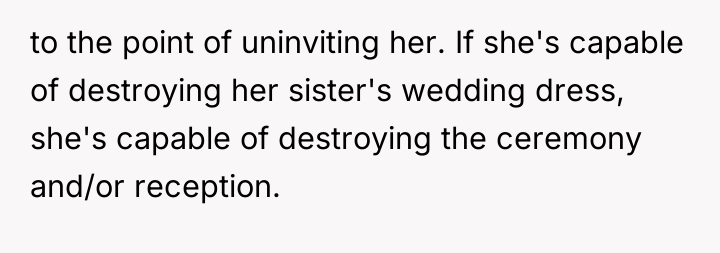












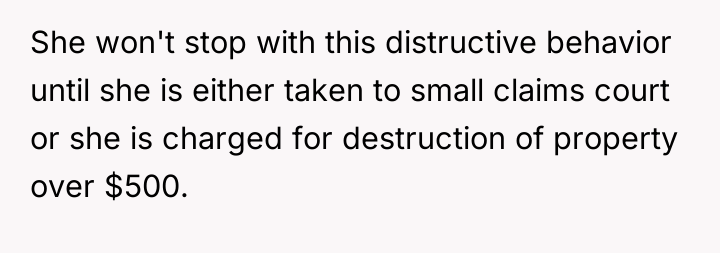
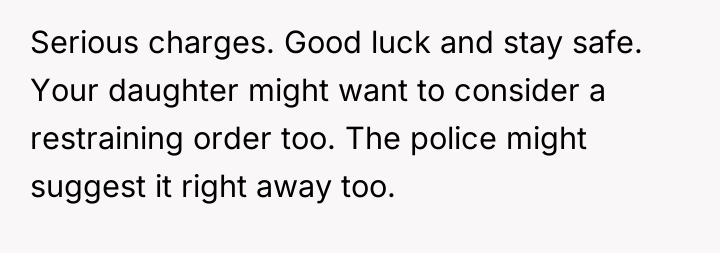
The mother is deeply distressed, positioned between supporting her biological daughter's happiness and managing the extreme, destructive behavior of her competitive stepdaughter. The central conflict revolves around the stepdaughter's inability to accept that her sister achieved a significant life milestone (setting a wedding date) before her, leading to an act of severe vandalism born out of spite.
Is the mother justified in immediately demanding repayment for the destroyed property and escalating the issue, or should she prioritize the stepdaughter's admitted mental health struggles and negotiate a payment plan, potentially sacrificing her own daughter's timeline for wedding stability?