
AITA for not wanting to support my boyfriend's early retirement?
Caught between loyalty and self-preservation, she faces a heart-wrenching crossroads. Her boyfriend’s dream of early retirement on a shoestring income demands sacrifices that threaten to unravel the life she’s carefully built for herself and her son. The weight of expectation presses down, challenging her to choose between supporting his desires and safeguarding her own future.
In the quiet turmoil of her doubts, she wrestles with the harsh judgment of those closest to her, branded selfish for simply wanting to live life on her own terms. Yet beneath the surface lies a fierce refusal to be overshadowed or diminished—a woman determined to claim her independence, pursue her dreams, and protect the fragile security she’s fought so hard to create.







Subscribe to Our Newsletter
As renowned family therapist and author Dr. Terrence Real explains, “Love is not a justification for sacrificing your life. Commitment is about building a shared life, not one person subordinating their needs to the other’s.” This situation centers heavily on mismatched expectations regarding lifestyle planning and the implicit assumption of shared financial burden versus individual autonomy.
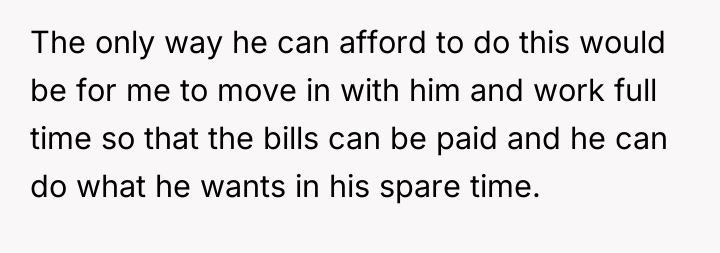
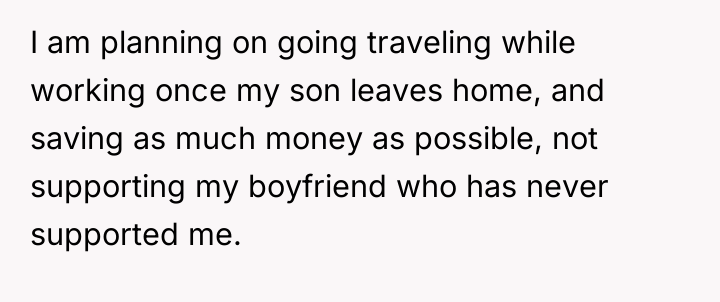
The boyfriend's proposal requires the poster to absorb the entirety of the financial responsibility necessary to maintain his desired early retirement lifestyle, while she still has significant career goals and insufficient personal savings for her own future. This imbalance suggests a lack of consideration for her established timeline (twenty more years of work) and the sacrifice involved (uprooting her life, losing personal space, and abandoning her travel plans). Furthermore, the boyfriend's plan to leave his property to his stepson, rather than sharing the asset with the partner whose labor will maintain the lifestyle, highlights a potential power dynamic where her contribution is treated as transactional support rather than a partnership investment.
The poster is not being unreasonable; prioritizing one's own long-term financial stability and established life goals over a partner's immediate, self-serving retirement plan is a necessary act of self-preservation. A constructive path forward would involve an honest discussion centered not on demands, but on defining what a mutually supportive retirement looks like, possibly involving a phased reduction in work for both parties later in the timeline, or clearly delineating independent financial planning.
REDDIT USERS WERE STUNNED – YOU WON’T BELIEVE SOME OF THESE REACTIONS.:
Support, sarcasm, and strong words — the replies covered it all. This one definitely got people talking.





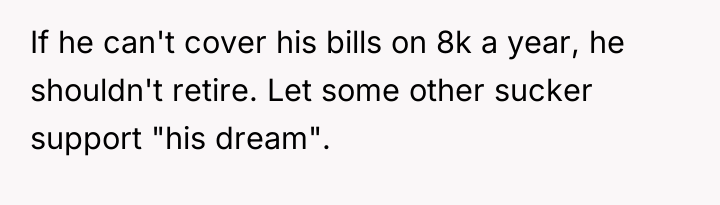











The original poster is facing a major life decision that pits her personal long-term financial security and career goals against her boyfriend's desire for early retirement funded by her continued full-time employment. The conflict is clear: her boyfriend expects a significant life change and financial contribution from her so he can stop working, while she views this arrangement as unfair given her own need to work for another two decades and the lack of reciprocal support.
Is the poster unreasonable for prioritizing her established career path, her son's stability, and her future retirement over immediately supporting her boyfriend's lifestyle change, or is the boyfriend justified in expecting her to sacrifice her career plans to subsidize his early retirement?