
AITA for not giving my girlfriend (25f) my dinner after I had already bought her dinner?
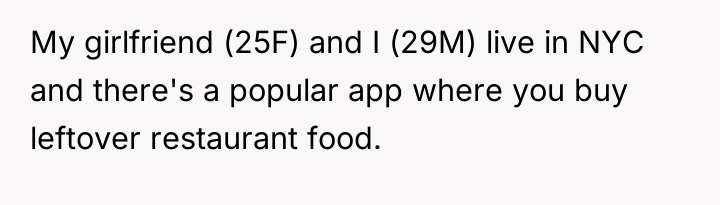
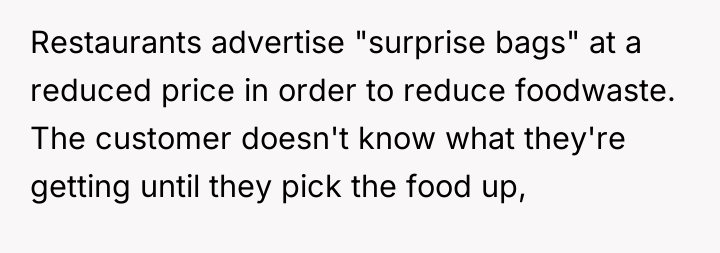
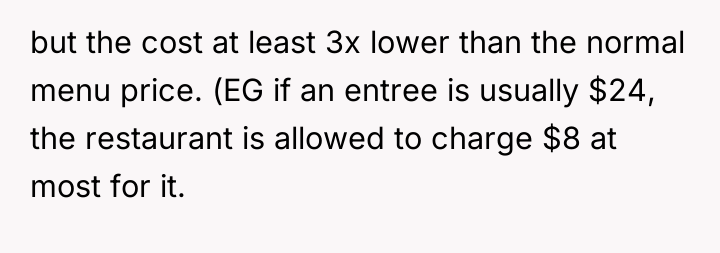
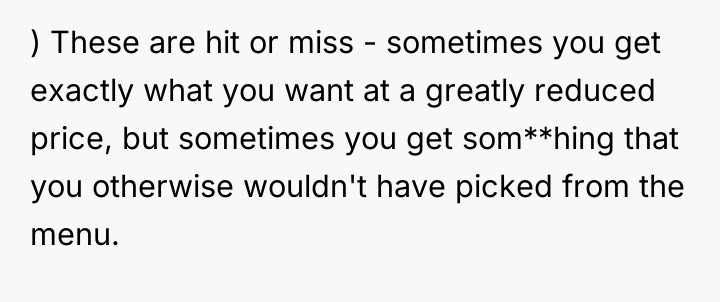
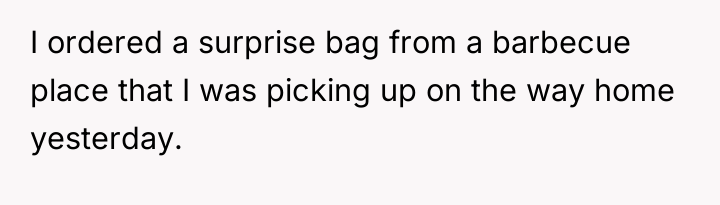
In the bustling heart of New York City, a couple navigates the unpredictable world of surprise bags—mystery meals sold at a fraction of their usual price to combat food waste. What begins as a simple, thrifty choice to share a meal soon unfolds into an emotional journey, where the unknown flavors mirror the uncertainties and surprises in their relationship.
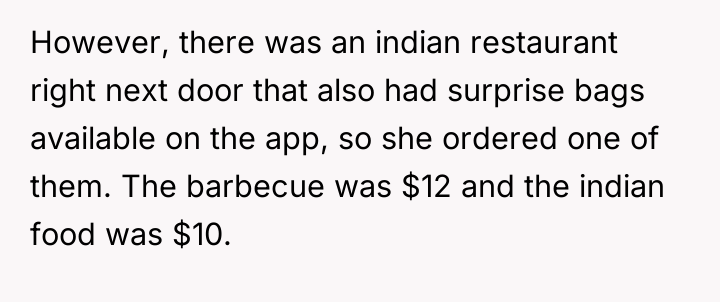
As the man carries the barbecue bag home and his girlfriend returns with Indian food next door, the stage is set for a moment of connection, disappointment, or revelation. Their choices, seemingly small and mundane, hold the power to stir deep feelings and test the bonds between them in a city that never stops moving.


Subscribe to Our Newsletter
As renowned researcher Dr. Brené Brown explains, “Boundaries are the distance at which I can love you and me simultaneously.” This situation highlights a failure to establish or respect relational boundaries when the agreed-upon transactional rules (using the surprise bag app) result in drastically unequal outcomes within a partnership.
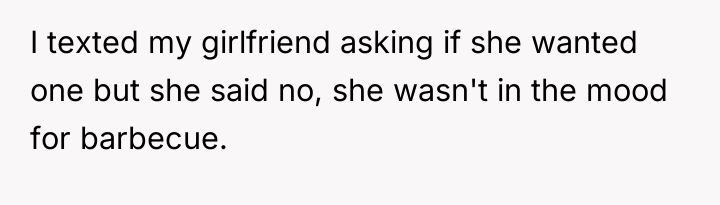
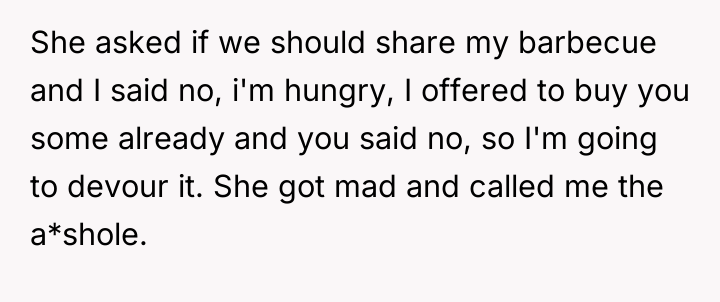
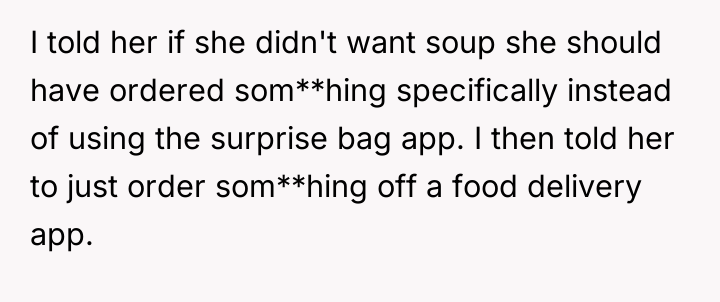
The original poster (OP) correctly points out that the girlfriend chose the method of purchase and declined his initial offer for the barbecue. This represents a commitment to the perceived bargain. However, the girlfriend's subsequent disappointment and frustration are understandable, especially given her recent broken leg, which makes alternative food acquisition difficult. The OP's insistence on 'you should have ordered something specific' dismisses the emotional labor and practical difficulty she faces. While the OP offered logistical solutions (ordering delivery or walking to the bodega), these solutions failed to account for the girlfriend's current physical vulnerability and desire for immediate, easy sustenance.
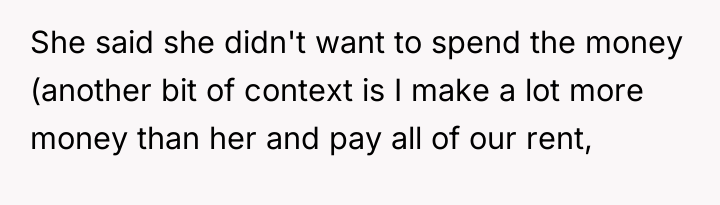
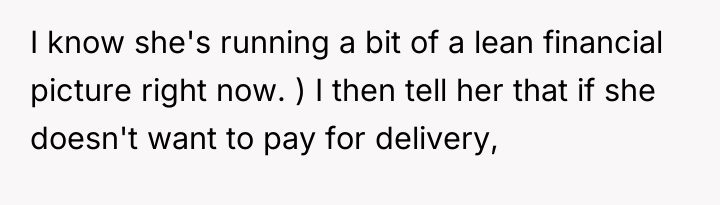
From a relational perspective, the OP’s actions were overly rigid. In a committed relationship, especially when one partner is temporarily vulnerable (recovering from an injury), there is an implicit agreement to prioritize mutual comfort over strict adherence to transactional fairness. The OP's high income and the girlfriend's lean financial picture further complicate the dynamic; refusing to share a $12 purchase when the partner is in physical distress suggests a lack of compassion outweighing the principle of 'she chose the risk.' A more constructive approach would have been to share the meal, perhaps agreeing that the OP would receive the majority, and then finding a way to compensate the girlfriend later, such as covering a future specific meal order for her.
AFTER THIS STORY DROPPED, REDDIT WENT INTO MELTDOWN MODE – CHECK OUT WHAT PEOPLE SAID.:
This one sparked a storm. The comments range from brutally honest to surprisingly supportive — and everything in between.
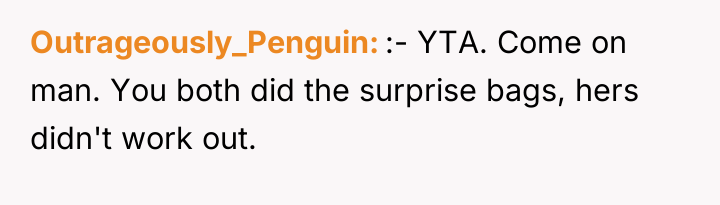
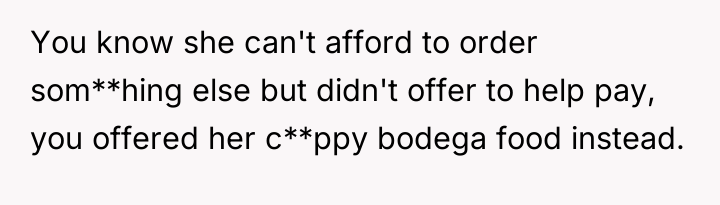
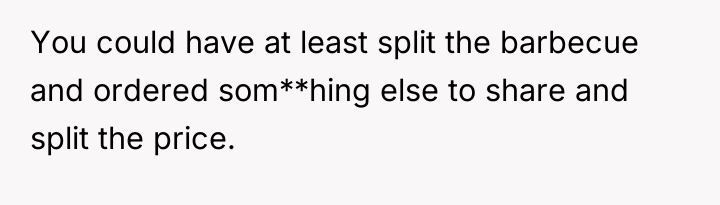
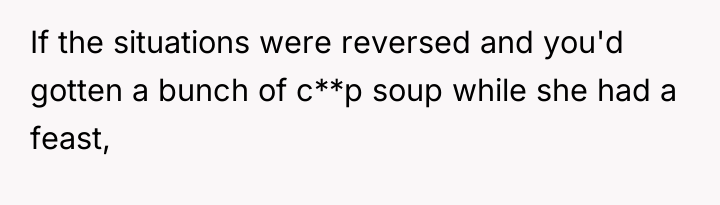
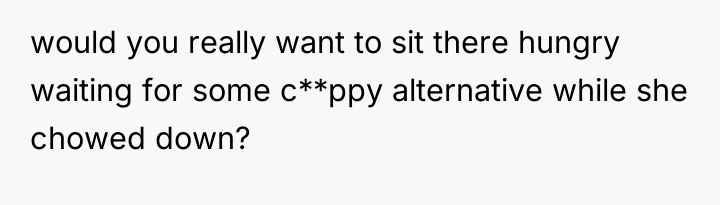
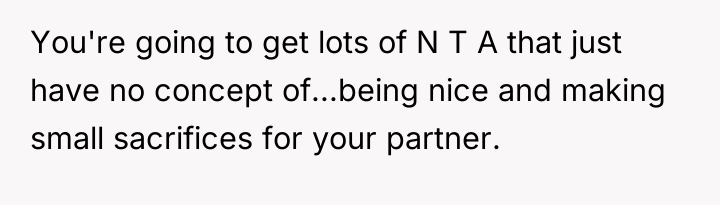
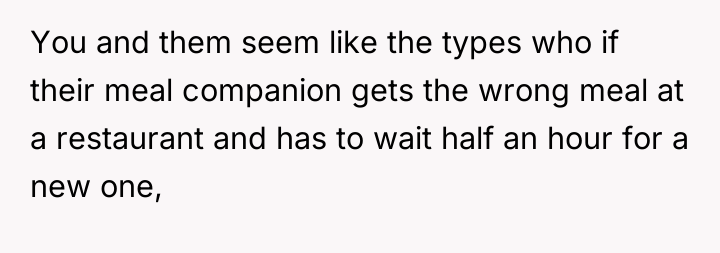
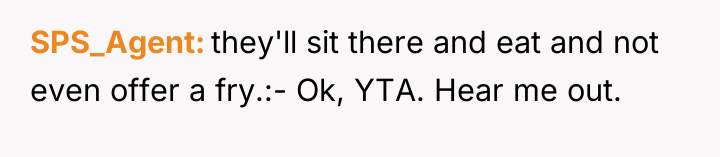
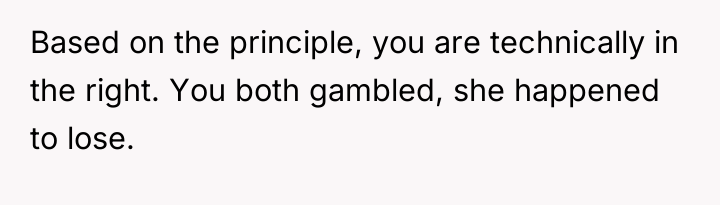
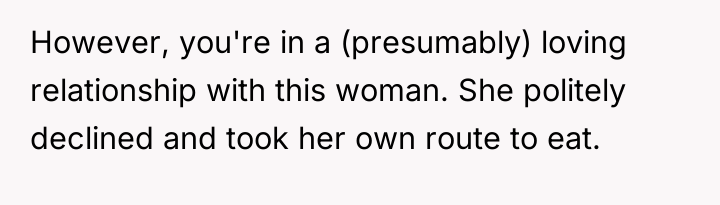

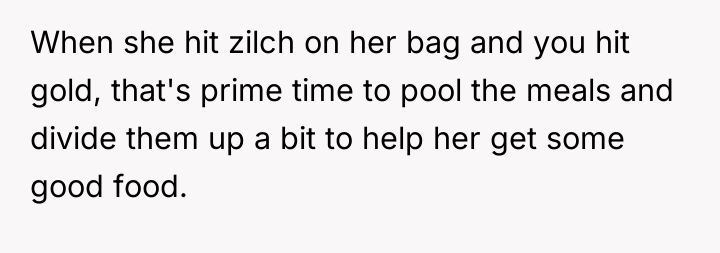
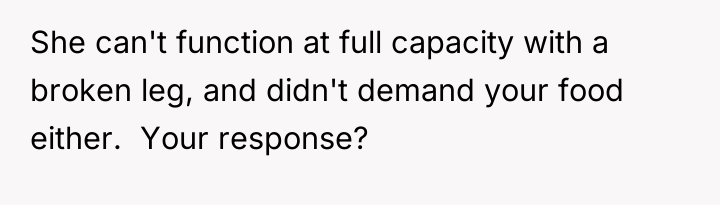

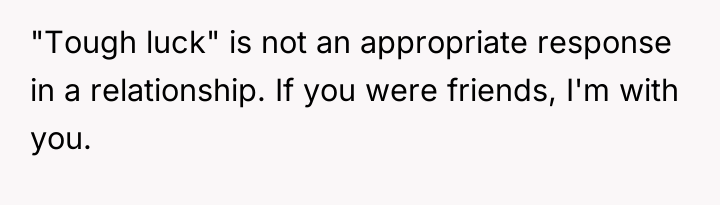
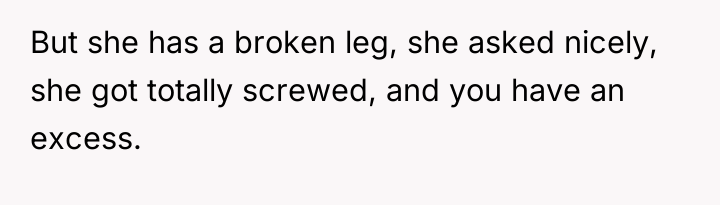

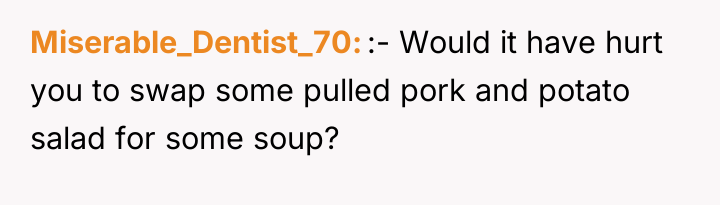
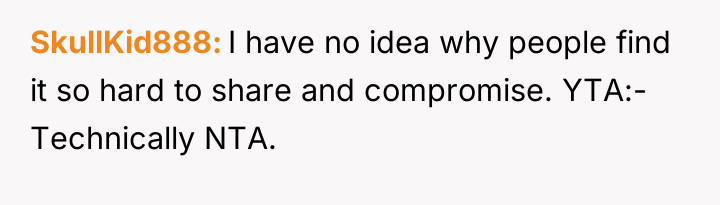
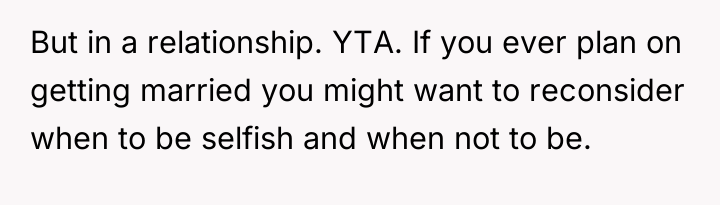
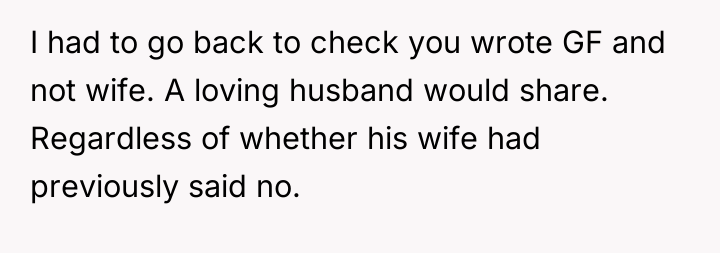



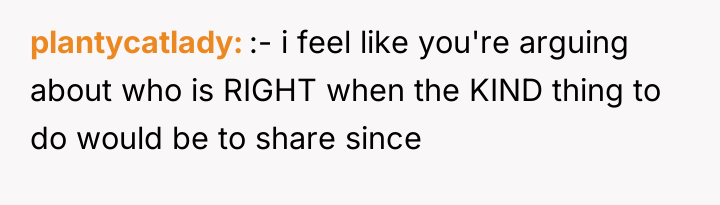
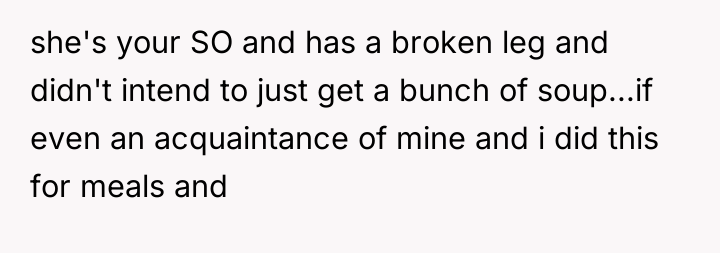
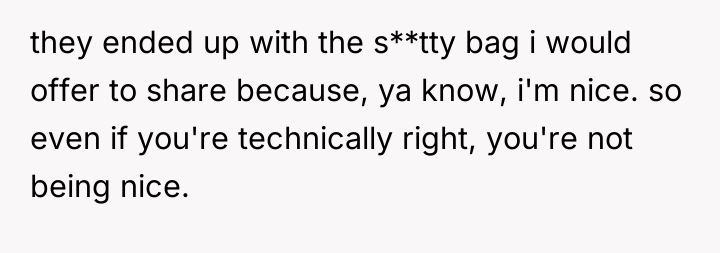
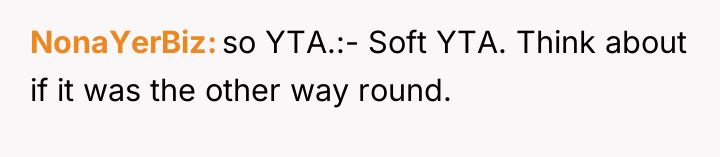
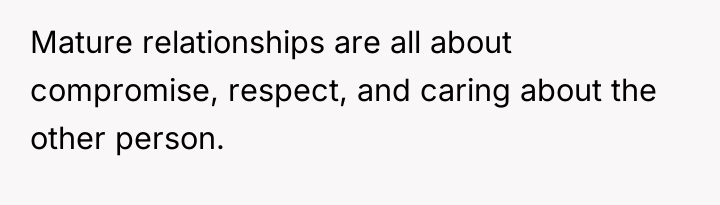

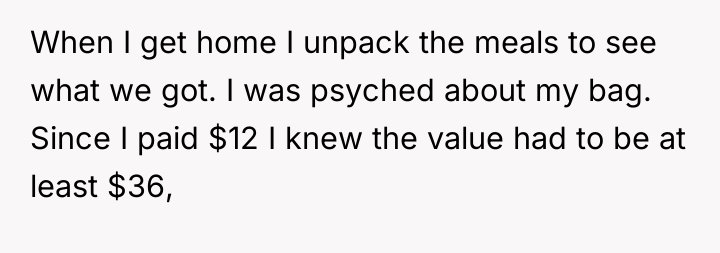
The original poster experienced a successful outcome with their food purchase, while their girlfriend was left with an unsatisfactory meal consisting mostly of soup, leading to a conflict about sharing the better food. The core tension lies between the OP's adherence to the 'risk' associated with the surprise bag purchase and the girlfriend's unmet need for a satisfying meal, compounded by her current physical limitations and financial constraints.
Given the disparity in the food received and the girlfriend's difficulty moving, was the original poster justified in refusing to share his high-value meal, or did his insistence on contractual fairness ignore a basic responsibility to support his partner during her recovery?