
Family Issues A Ban On Birthdays After The Death Of A Loved One But Finds Resistance With Their Son-In-Law Who Insisted On Celebrating His Daughter's First Birthday
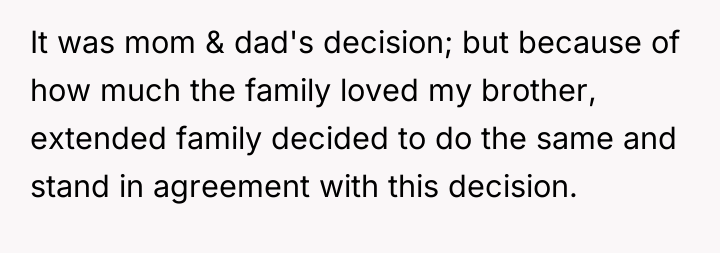
In the shadow of a devastating loss, a family's heartache shaped an unspoken vow: to erase birthdays from their lives, a painful tribute to a beloved son lost too soon. Their silence was a collective act of mourning, binding them in sorrow and respect, a fragile shield against reopening old wounds.
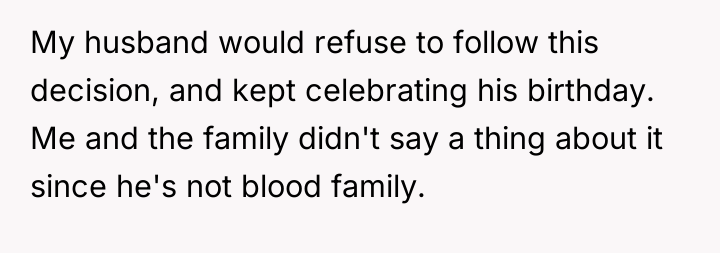
Yet love and hope quietly defied the silence. A husband's refusal to abandon celebration sparked a quiet rebellion, and the promise of new life brought a fragile tension between honoring grief and embracing joy. In this delicate dance, the family’s unspoken rules clashed with the yearning for happiness, revealing the deep complexities of healing and the enduring power of love.



Subscribe to Our Newsletter
As renowned researcher Dr. Brené Brown explains, “Boundaries are the distance at which I can love you and me simultaneously.” In this situation, the core conflict revolves around two distinct sets of relational boundaries that are actively colliding: the family’s boundary based on collective mourning, and the husband’s boundary asserting individual choice and the right to celebrate his child.
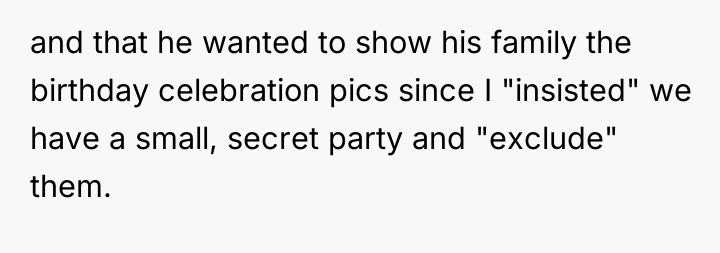
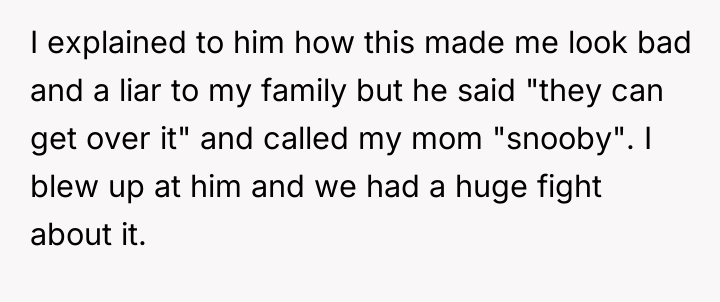
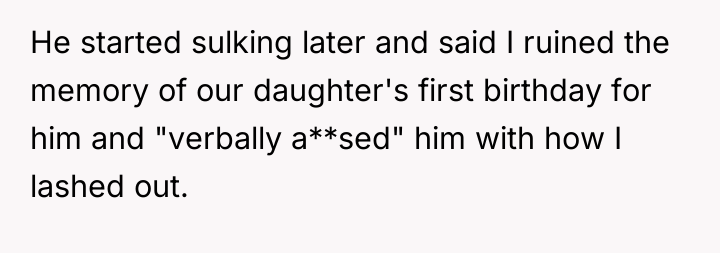
The OP's primary motivation was to maintain peace and honor her family's agreement, which is a form of self-preservation within that primary social unit. Her agreement to a 'secret' celebration was an attempt to create a temporary, localized boundary that pleased her husband while superficially respecting her parents' rules. The husband, however, showed a significant lack of emotional intelligence and respect for his wife’s position by unilaterally breaking the agreed-upon secrecy. His defensive reaction, shifting blame onto the OP for her frustration and labeling her reaction as 'verbal abuse,' is a classic deflection tactic used to avoid accountability for violating a mutual agreement. He failed to recognize that his public actions directly undermined the OP’s credibility within her family structure.
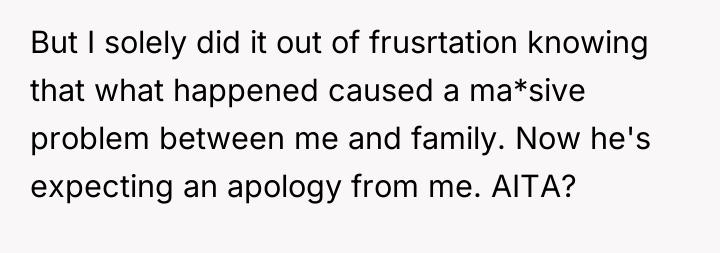
The OP’s reaction, while likely intense due to the stress and betrayal, was a direct consequence of the husband's breach of trust. Requiring an apology from the OP for reacting to being publicly exposed as deceitful is inappropriate. The constructive recommendation is for the couple to halt discussions about apologies and instead engage in a structured conversation about shared family values. The husband must first acknowledge the direct harm caused by his public disregard for the agreed-upon boundary before any discussion about future celebrations can proceed.
THE COMMENTS SECTION WENT WILD – REDDIT HAD *A LOT* TO SAY ABOUT THIS ONE.:
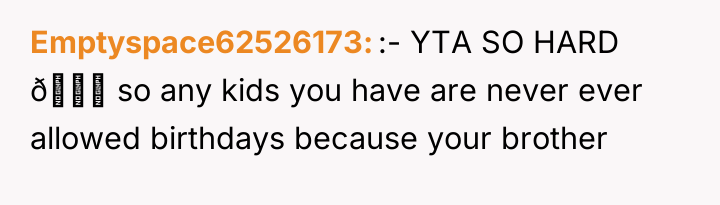
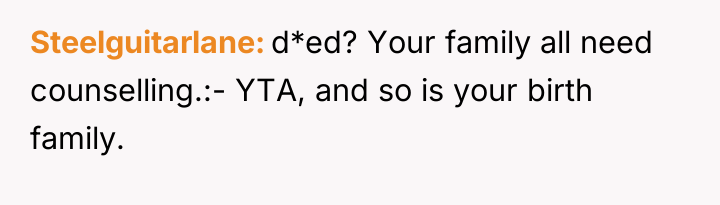
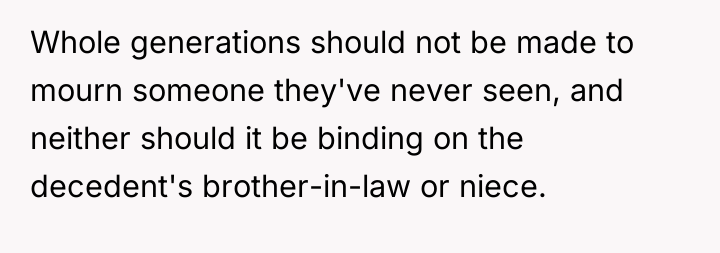
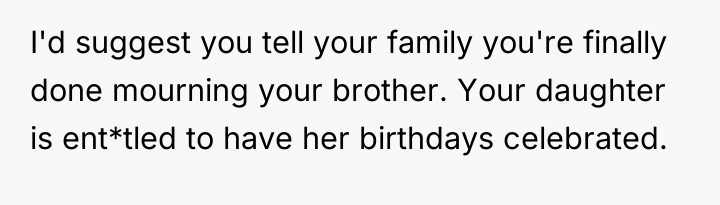
It didn’t take long before the comment section turned into a battleground of strong opinions and even stronger emotions.

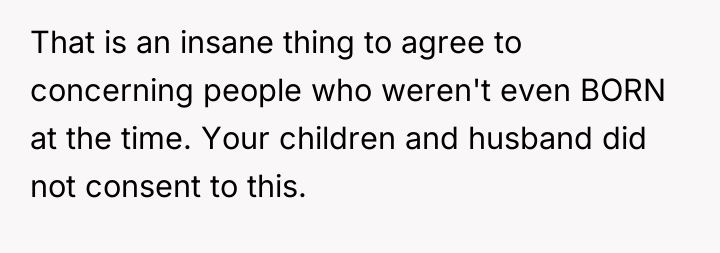


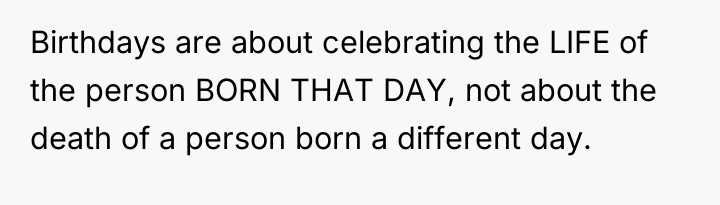
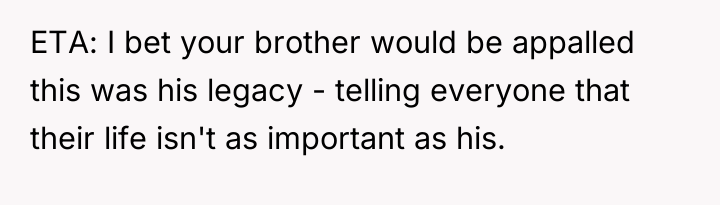
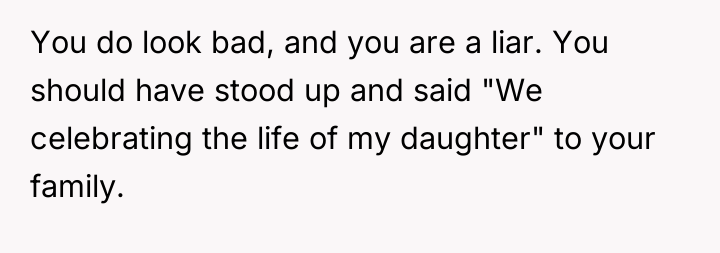

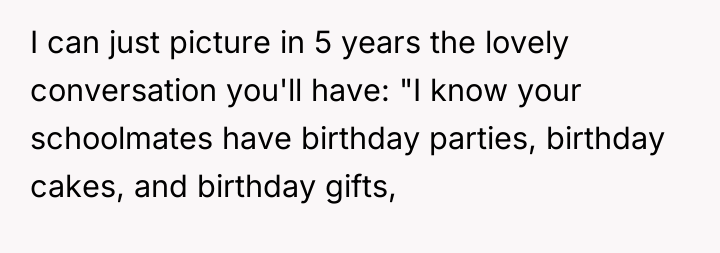




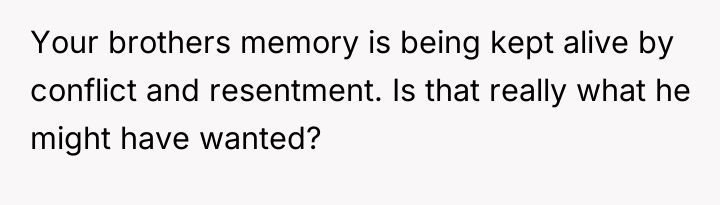


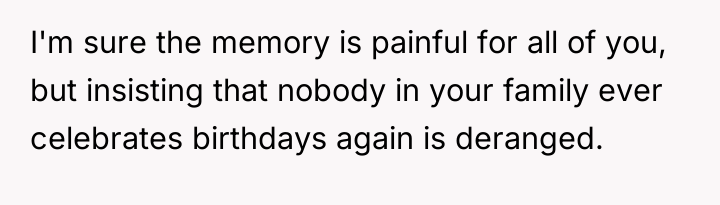




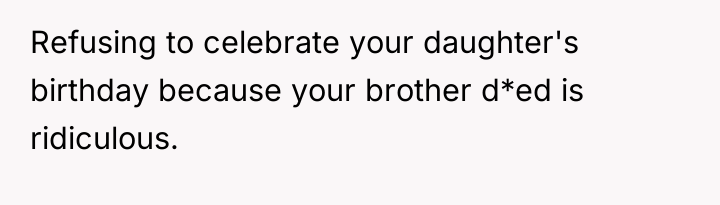


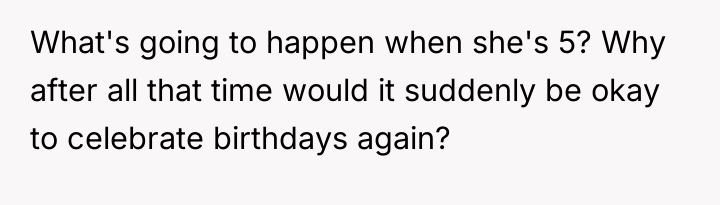

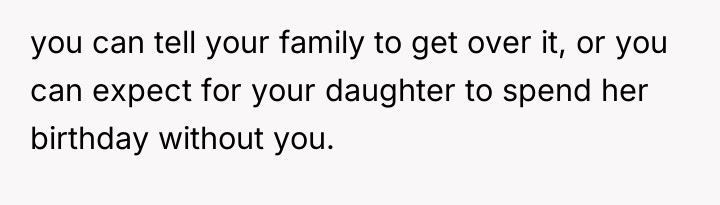
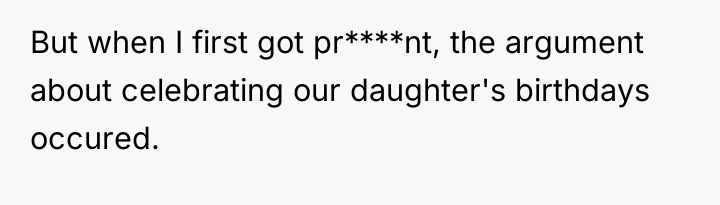
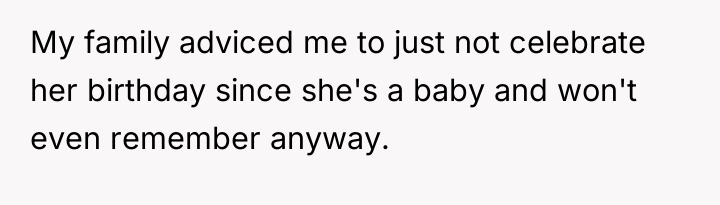
The original poster (OP) is caught between a deeply ingrained family tradition rooted in grief—the complete cessation of birthday celebrations following a tragic loss—and her husband's insistence on celebrating milestones for their daughter. Her attempt to compromise by planning a small, secret party ultimately failed due to her husband publicly posting photos, causing a significant rift with her family and placing the OP in a position of having to defend her perceived betrayal of family loyalty.
When faced with the consequences of broken trust with her family versus her husband's demands for independent action, whose responsibility was it to manage the boundary regarding the daughter's celebration: the OP, who agreed to the family's terms, or the husband, who rejected those terms entirely? Should the OP apologize for her reaction to the public betrayal, or is the husband accountable for violating the agreed-upon secrecy and disrespecting the family's profound agreement?