
MIL Refused to Tell Her Life Story Because I Am White and Now The Whole Family Is Turning Against Me
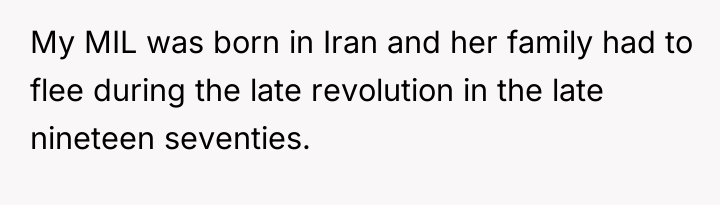
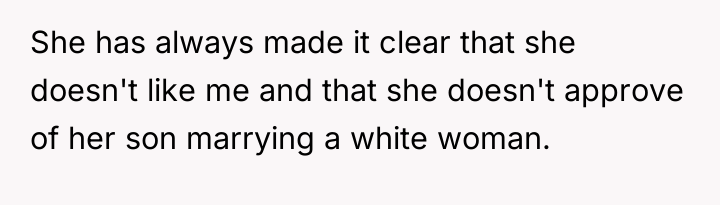
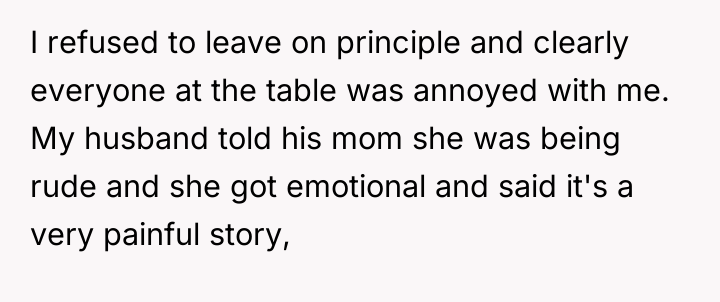
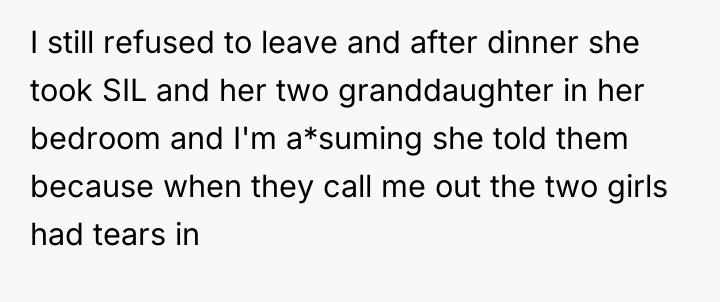
A deep chasm of unspoken pain and cultural divide hung heavy in the air as the family gathered, each person carrying their own burdens and biases. The mother-in-law, a woman scarred by the turmoil of fleeing her homeland during the Iranian revolution, guarded her past fiercely, especially from the daughter-in-law she openly disliked. Her silent judgment cast a shadow over the dinner table, where curiosity and a yearning for connection clashed with walls of resentment and exclusion.
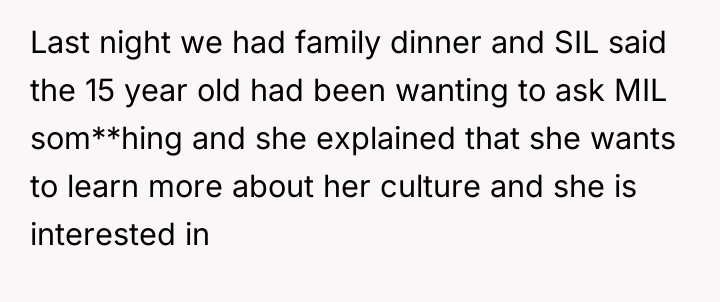
In the midst of this tension, a young teenager's innocent desire to understand her grandmother’s heritage ignited an emotional storm. The refusal to share a painful history became a symbol of deeper wounds and fractured relationships, exposing the fragile bonds that struggle to bridge cultural gaps and personal grievances. This family dinner was not just about food—it was a poignant confrontation with identity, acceptance, and the longing for empathy that remained just out of reach.



Subscribe to Our Newsletter
As renowned researcher Dr. Brené Brown explains, "Boundaries are the distance at which I can love you and me simultaneously."
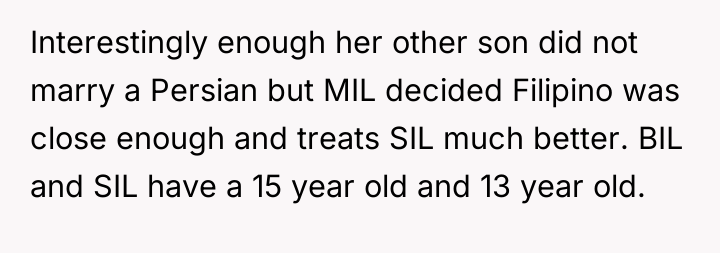
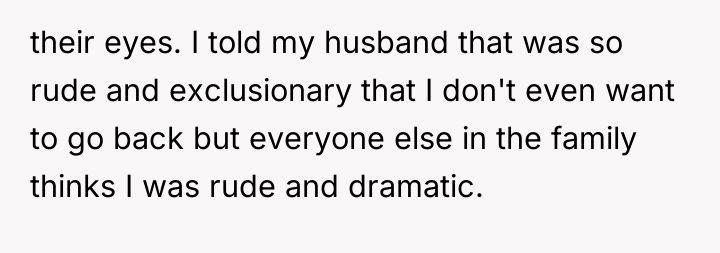
This situation highlights a severe breakdown in intergenerational and cross-cultural boundary setting within the family unit. The MIL’s past behavior—expressing disapproval of the OP based on race—establishes a baseline of hostility, making her subsequent action feel like a continuation of cultural rejection rather than mere privacy. Her motivation appears rooted in unprocessed trauma from fleeing Iran, which she feels the OP, as an outsider, cannot understand, thus creating a protected narrative space. The OP's reaction, refusing to leave on principle, while stemming from a desire for equitable inclusion and a refusal to accept mistreatment, shifted the focus from the MIL's discomfort to the OP's assertion of rights, which the rest of the family perceived as defiance and drama.
The core issue here is that the MIL attempted to enforce an unfair, relationship-damaging boundary (exclusion based on identity) rather than a healthy, trauma-informed one (a private discussion about painful memories). The OP’s refusal to leave, while emotionally understandable, escalated the confrontation. Moving forward, the OP and their husband need to enforce boundaries regarding *how* the MIL treats the OP (i.e., no open disapproval based on race) while respecting the MIL’s right to share painful history privately. A constructive recommendation is for the husband to privately address the MIL's exclusionary behavior while validating her pain, and for the OP to agree to step away from culturally sensitive storytelling sessions in the future, provided the general hostility and judgmental behavior cease.
THE COMMENTS SECTION WENT WILD – REDDIT HAD *A LOT* TO SAY ABOUT THIS ONE.:
When users weighed in, they held nothing back. It’s a raw, honest look at what people really think.



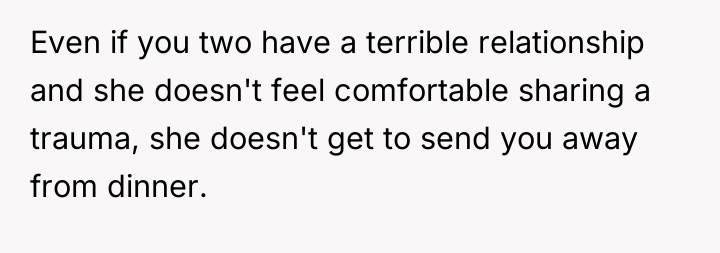
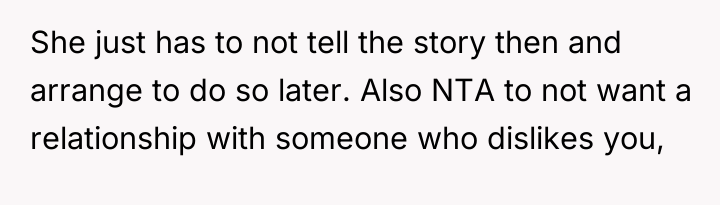
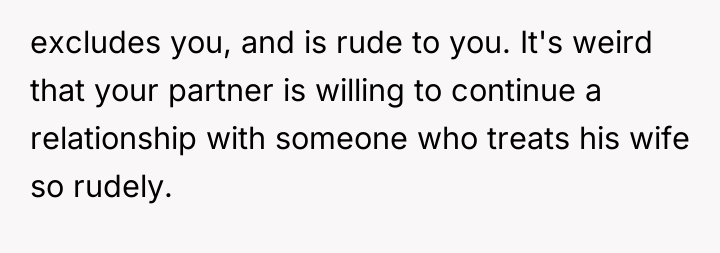







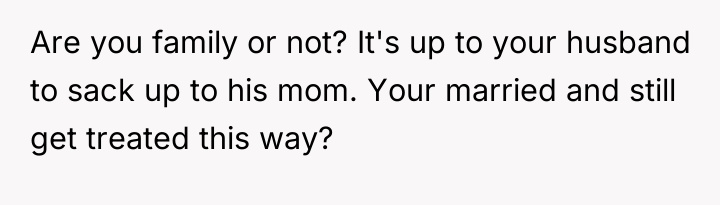
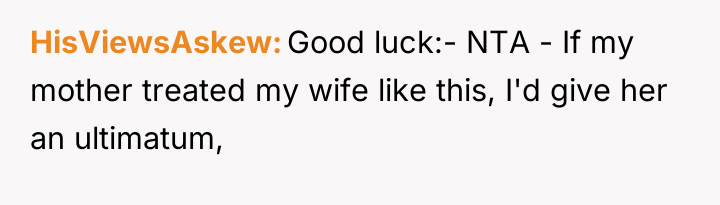

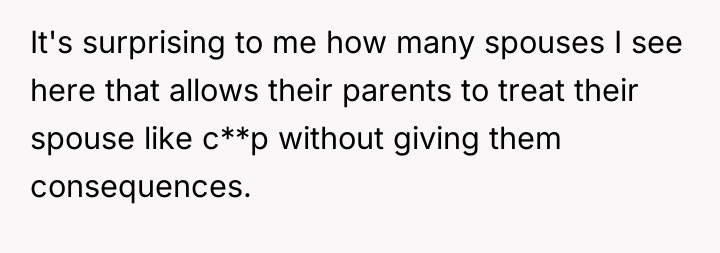


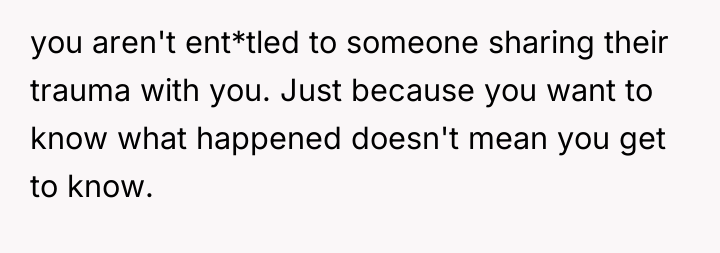
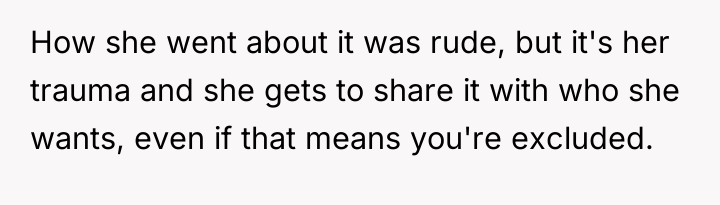
The original poster felt deeply excluded and disrespected when their mother-in-law deliberately shut them out of a significant family cultural discussion. This action directly conflicts with the OP's decision to stand their ground based on principle, leading to tension where the rest of the family sided against the OP's reaction.
Was the OP justified in refusing to leave the table on principle when faced with deliberate exclusion regarding sensitive family history, or did this stance exacerbate the conflict beyond what was necessary, given the MIL's clear emotional distress and stated boundaries?