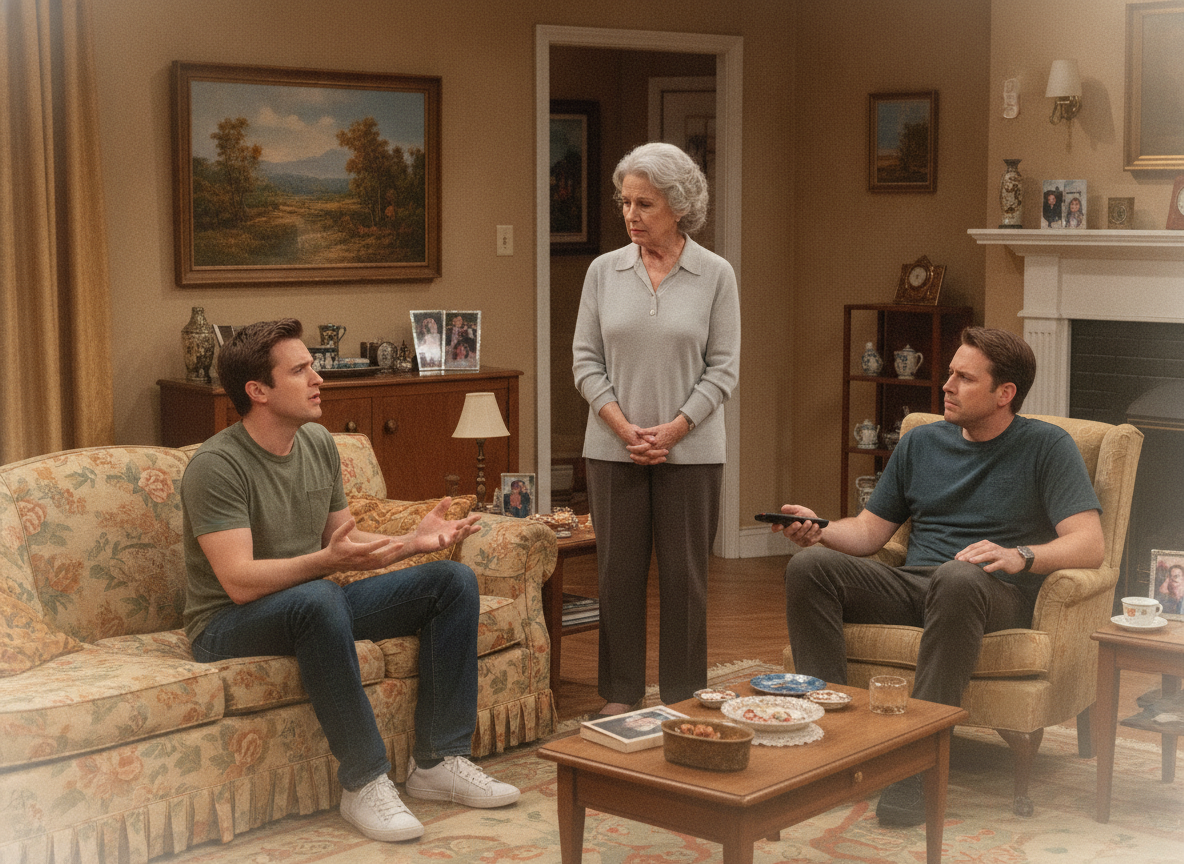
I Tried to Help a Client but They Accused Me of Being Transphobic After Their Wax
In the quiet intimacy of her waxing room, a young woman confronts the unexpected, grappling not just with unfamiliar anatomy but with the fragile boundaries of identity and comfort. Each day she navigates the deeply personal landscapes of her clients, yet nothing prepared her for the moment where biology defies easy labels, and the human story behind the skin challenges her understanding.
This encounter becomes more than a routine appointment; it is a profound lesson in empathy and respect, reminding her that beneath every surface lies a complex truth. In the delicate balance of her profession, she is called to honor not just the body, but the essence of the person before her, embracing the unknown with compassion and grace.





















As renowned researcher Dr. Brené Brown explains, “Boundaries are the distance at which I can love you and me simultaneously.” In this scenario, the service provider attempted to establish a professional boundary related to time allocation and scheduling, but the delivery—linking the time difference to the client's anatomy—blurred the line between necessary business practice and personal scrutiny.
The core conflict here involves navigating professional duty versus sensitivity toward diverse client presentations. The waxer correctly identifies that anatomy variations require different time slots, a legitimate business concern, especially when accommodating factors like skin texture or complexity that impact service quality. However, when the client perceived the suggestion as a demand to book a service "meant for a man," the communication failed. The waxer's attempt to be sensitive by generalizing the need for extra time ("everybody has different anatomy") was undercut by the context of the perceived anatomical difference and the potential implication that certain anatomies belonged only in certain appointment slots.
The waxer's intentions, though mixed (caring for the client while considering coworkers), resulted in the client feeling exposed and judged regarding their identity. Moving forward, the waxer should focus communication strictly on service duration based on observable technical need (e.g., "This anatomy requires more detailed cleansing and waxing time than the standard slot allows") without referencing gendered service names or making assumptions about identity. Direct, process-focused communication, rather than identity-linked scheduling advice, maintains professionalism and builds trust.
AFTER THIS STORY DROPPED, REDDIT WENT INTO MELTDOWN MODE – CHECK OUT WHAT PEOPLE SAID.:
The community had thoughts — lots of them. From tough love to thoughtful advice, the comment section didn’t disappoint.





































The waxer experienced professional difficulty when a client's anatomy did not fit standard booking categories, leading to an attempt to guide the client toward a longer appointment time. This attempt, while rooted in practical scheduling and consideration for coworker preparedness, was interpreted by the client as judgment and embarrassment regarding their identity.
Was the service provider justified in prioritizing scheduling accuracy and coworker readiness by suggesting a different service type, or did this suggestion cross a boundary and result in unnecessary emotional harm to a client seeking professional, non-judgmental care?
Trending This Week
AITA for not wanting to "adjust" to my(28F) boyfriend's(26M) parents living with us for months at a time?
My boyfriend and I have been living together for three years in Australia. A few months ago, his parents arrived from India to live with us. Although I was excited to make them feel comfortable, their demands soon made me feel uneasy in my own home. They were uncomfortable with us sleeping in the same room, resulting in my boyfriend sleeping in the living room for two months. The mother took over the kitchen and excluded me from grocery shopping, and they did not acknowledge me as his girlfriend in front of friends or help with cleaning. They also rearranged furniture against our requests, and his father expressed concern that I was not helping in the kitchen, which was untrue. Furthermore, they credited my boyfriend for things he did not do and criticized my clothing, claiming it violated their family values. My primary issue is that my boyfriend did not acknowledge these problems or stand up for me. He dismissed my concerns, saying his parents were guests and his father was simply traditional. After they left, I moved to another city for a job, and our long-distance relationship has been great. However, he recently informed me that his parents are visiting again for two months, having booked the tickets without consulting me. He expects me to accept frequent, long visits as a condition of moving back in together. I feel my privacy and personal space are being disregarded, and I want him to consider my needs and set boundaries.

WIBTA to insist my neighbor keep a yard schedule?
For background I have a severely reactive rescue dog. She's terrified of other dogs and freaks out majorly when she sees them or hears them. My partner and I have been working with our vet and a behavioral trainer and we've made some progress, but my dog is still not truly comfortable anywhere but her own yard. A new lady just moved in next door, and she has two big dogs. They seem like nice dogs, they are quiet and she works with them a lot. The problem is that she works from home full time, and her dogs are always outside. She doesn't leave them there for hours or anything, but I never know when she's going to let them out or for how long. She also spends a lot of time out there with them after work and on weekends. To be fair to her, she trains them and she doesn't let them run up on the fence, and if they do bark, she makes them go inside. They're still out on the other side of the fence though and my dog is now scared and reacting in her own backyard. When my dog starts carrying on, she is the one who has to go inside. She already can't enjoy walks and now she can't even enjoy being outside. I asked my neighbor if she'd consider a schedule for the dogs so that my dog can enjoy her yard too without the neighbor's dogs freaking her out on the other side of the fence. She was polite about it but said no, she bought the house with the yard for her dogs, and they use it. She said she'd be glad to tell me when she's leaving with them for a period of hours, but otherwise she's not going to change what she's doing day to day. So nothing changed and her dogs get plenty of outdoor time and mine gets none except for the stray times when she takes one of her dogs to a training class or takes both of them for a hike. I'm really upset and want to insist that we adopt a schedule so that my dog can have some outside time too. My dog does not get the same opportunity as her dogs, not even close. Her dogs have free access five days a week, weeknights, and weekends. My dog only gets outside time now when she says she is leaving for a class or a hike. If I let my dog out to sun herself at 10:30 on a Tuesday, sure enough, it won't be five minutes before she's letting her dogs out and then my dog freaks out and has to come in. She is not getting anywhere close to what they are getting. The fence is a privacy fence. My dog freaks out when she can hear and smell the other dogs as well as see them. She can't see these dogs but she knows they're there.

AITA for refusing to let my mom move into my new house
I recently put an offer on a home that was accepted, and I am getting ready to close next week. Over the last five years, I worked extremely hard to pay down my debt and save money by working multiple jobs and going to school full-time. My mother and I have never gotten along well, but I moved her into my tiny apartment a year ago to help her out because she lives on Social Security and cannot work. Our agreement was to split expenses, but she has rarely paid her share, doubling my financial burden while constantly criticizing me. When I bought my house, I did so in my name only to protect myself. After she saw the house, she immediately criticized it and demanded the master bedroom. This led to a major argument where I told her she could not live with me. Now, she refuses to look for veteran housing assistance, my siblings want nothing to do with her, and I am emotionally drained by her dependency.