
My fiancé pushed my brother into a pond and my family is boycotting my wedding
In the fragile space between family loyalty and personal boundaries, a young woman grapples with the uncomfortable realities hidden beneath the surface of her seemingly close-knit family. At just 23, she faces the weight of cultural expectations and favoritism that shield her abrasive older brother, whose actions threaten to unravel the delicate threads holding them together.
Amidst the celebration of her mother’s birthday, a casual moment turns charged with unspoken tension when her brother’s careless comment exposes deeper fractures—between tradition and acceptance, love and judgment. In this quiet backyard confrontation, the invisible battles of identity and respect come crashing into the light, forcing her to confront not only her brother’s flaws but the complexities of their shared history.




Subscribe to Our Newsletter
As renowned researcher Dr. Brené Brown explains, “Boundaries are the distance at which I can love you and me simultaneously.”
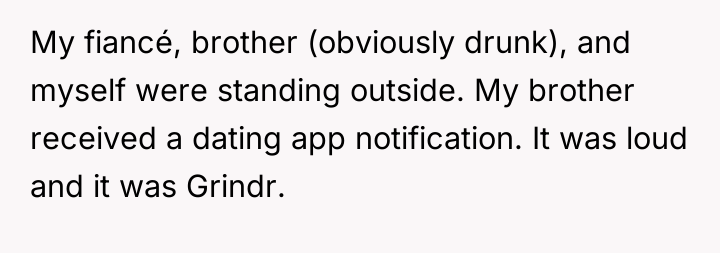
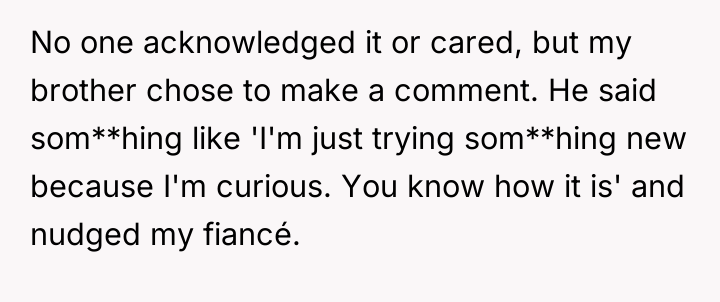
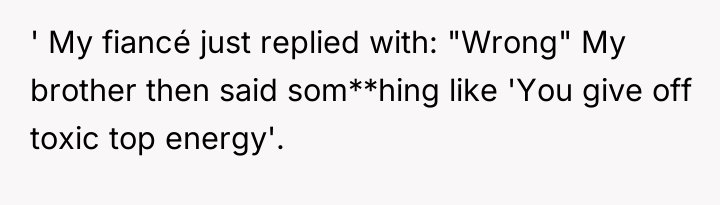
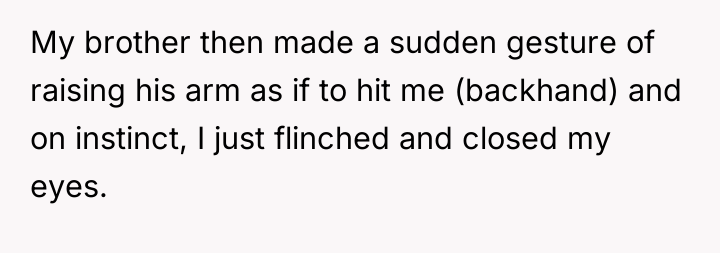
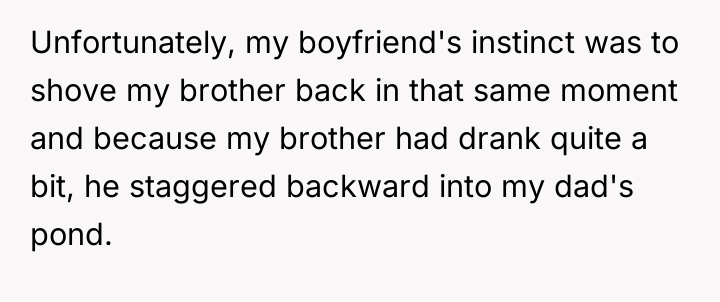
This situation is a classic illustration of boundary breakdown exacerbated by cultural dynamics of favoritism. The brother’s initial comments regarding the fiancé’s sexuality and military experience were invasive and disrespectful, establishing a clear need for a boundary from the OP and her fiancé. When the brother escalated to a physical threat (raising his hand), the fiancé’s reaction, while protective, crossed into physical confrontation, leading to the damage. The core issue now is not the initial insult, but the accountability for the subsequent physical interaction and the financial cost. The OP's parents appear to be enabling the brother's abrasive behavior through unquestioning support, a common pattern when an older male child is favored, which puts undue emotional labor on the OP.
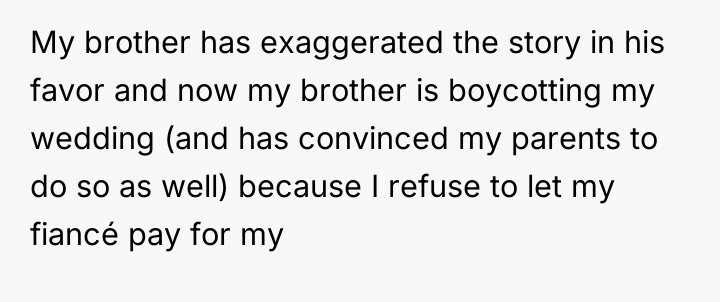
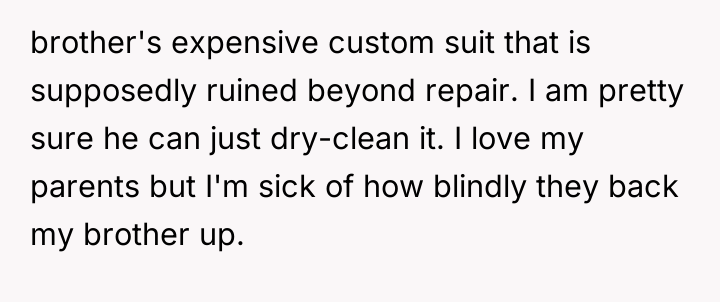
The OP's refusal to pay for the suit is appropriate if the brother’s gesture was genuinely perceived as an attack, making his subsequent damage a direct consequence of his own aggressive action. However, to save the wedding, the OP might consider a strategic compromise focusing on communication rather than immediate financial capitulation. The constructive recommendation is for the OP and her fiancé to present a unified front to her parents, clearly stating that the brother’s threatening behavior is unacceptable and that the focus must return to the wedding, perhaps by offering to split the cleaning cost without admitting full financial fault for the 'ruined' suit.
THE COMMENTS SECTION WENT WILD – REDDIT HAD *A LOT* TO SAY ABOUT THIS ONE.:
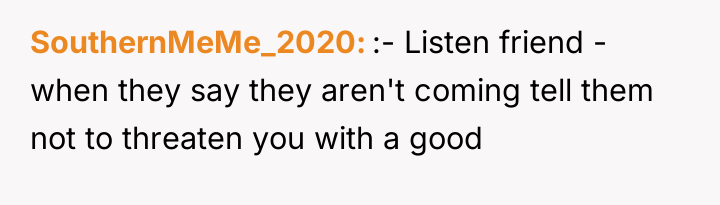
The internet jumped in fast, delivering everything from kind advice to cold truth. It’s a mix of empathy, outrage, and no-nonsense takes.













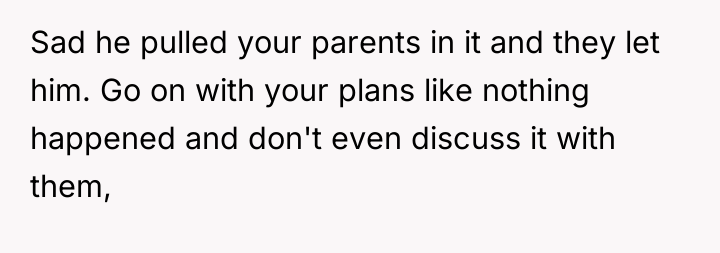



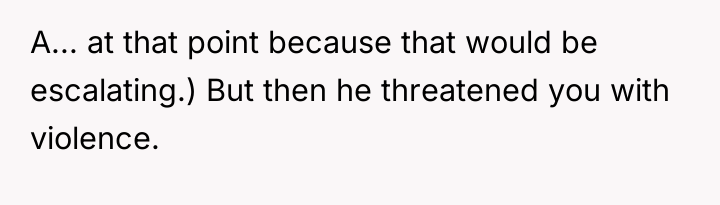
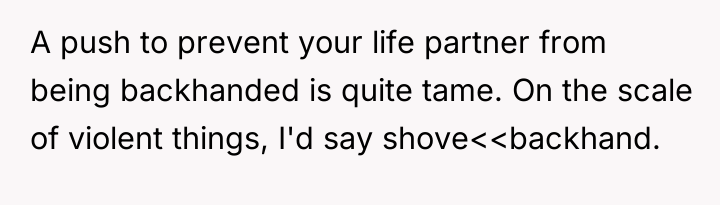
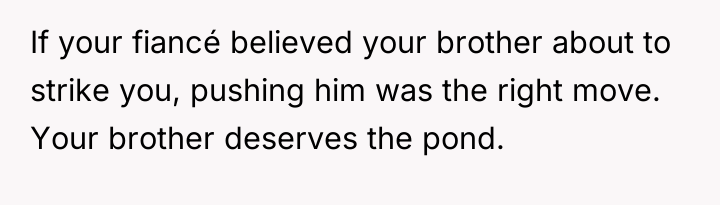

The original poster (OP) is facing a severe family conflict where her brother is boycotting her wedding, an action supported by her parents. This conflict stems from an escalating argument where the brother made inappropriate comments, which was followed by a physical shove from the fiancé after the brother made a threatening gesture toward the OP. The OP's refusal to pay for the brother's potentially over-exaggerated damaged suit is now the central point of contention.
Given the pattern of parental favoritism toward the brother and the physical escalation involving the fiancé, is the OP correct to stand firm on the financial demand, prioritizing her fiancé's and her own boundaries over the threat of a wedding boycott, or should she concede to repair the relationship with her family?