
AITA for telling my sister-in-law to stop “Playing poor” around my kids?
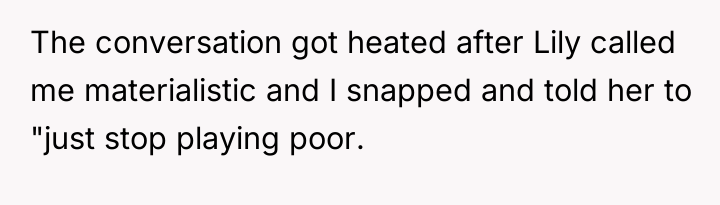
In the quiet aftermath of her divorce, Lily found solace in simplicity, embracing a life stripped of excess and the weight of financial worry. Her newfound perspective on freedom through having less has quietly seeped into the hearts of those around her, especially the children she lovingly watches, planting seeds of doubt about the comforts their parents have worked so hard to provide.
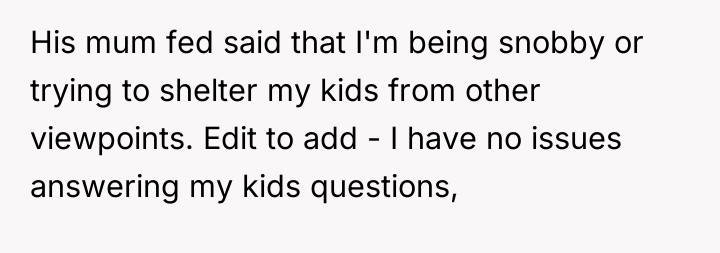
Amid the tender balance of gratitude and ambition, a mother watches her children’s innocent questions with a growing unease. She yearns for them to understand that success and comfort are not enemies, but gifts earned through perseverance—gifts meant to inspire, not guilt. Yet, Lily’s gentle influence challenges this belief, stirring an emotional conflict between honoring a simpler truth and celebrating the dreams built with sacrifice.









Subscribe to Our Newsletter
As renowned researcher Dr. Brené Brown explains, “Boundaries are the distance at which I can love you and me simultaneously.” This situation highlights a fundamental clash of values framed as a boundary violation. The OP is attempting to establish an emotional boundary around their children's perception of wealth and success, viewing the sister-in-law’s commentary as undermining their parenting and life choices.
Lily’s motivation appears rooted in her recent hardship, leading her to embrace minimalism as a coping mechanism or philosophical stance, which she feels ethically bound to impart to the children. However, when hosting or babysitting, her role shifts from a family member sharing personal philosophy to a temporary caregiver in another household. By actively framing the OP's lifestyle negatively (e.g., implying materialism), she steps over the implicit boundary of respecting the host family's values. The OP’s reaction, while escalating the situation with the harsh comment, stems from a protective instinct to validate their family’s stability and hard work against an external critique.
The OP's initial request to moderate comments was appropriate for protecting their parenting goals. The professional recommendation is that the OP needed to focus on the *impact* on the children rather than judging Lily’s lifestyle (i.e., avoiding the 'playing poor' comment). Future discussions should center on mutual respect for differing financial realities and parental authority. The OP can teach their children gratitude for what they have while also acknowledging that other valid life paths exist, without allowing those paths to generate guilt about their own comfort.
THIS STORY SHOOK THE INTERNET – AND REDDITORS DIDN’T HOLD BACK.:
The community had thoughts — lots of them. From tough love to thoughtful advice, the comment section didn’t disappoint.
