
AITA for not wanting to leave my baby alone with my in-laws because I don't trust their judgment?
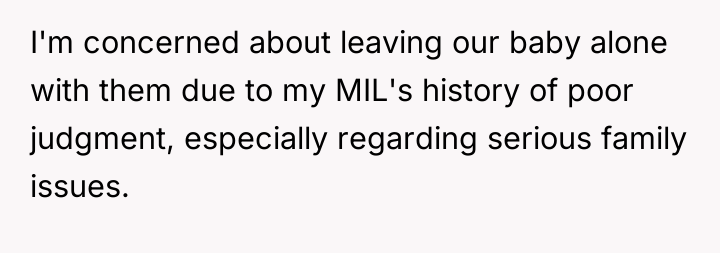
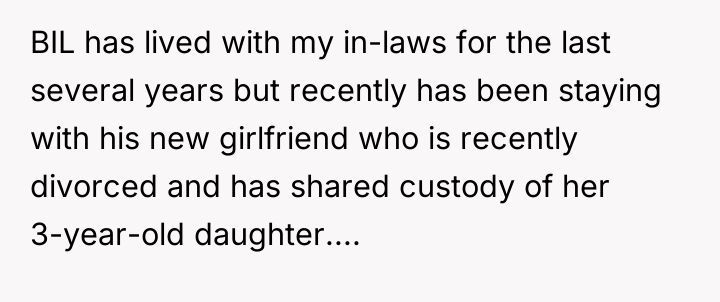
A couple on the brink of parenthood faces a quiet storm brewing beneath the surface of family joy. Expecting their first child, the woman wrestles with deep-seated fears about entrusting her baby to the care of her in-laws, haunted by the shadow of her mother-in-law’s questionable judgment and a brother-in-law’s dark, unsettling past.
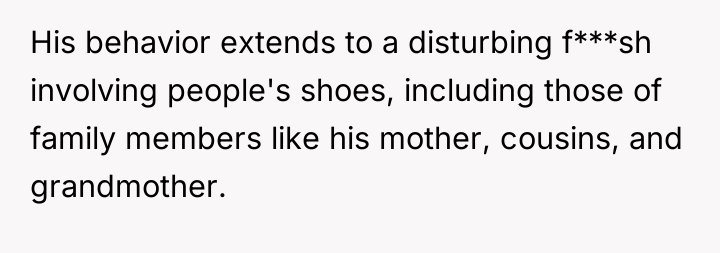
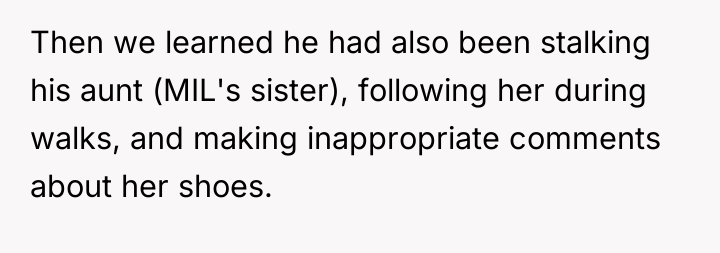
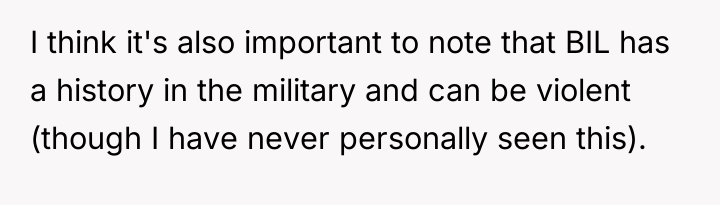
The brother-in-law’s history of sexual misconduct and disturbing fetishes casts a threatening pall over what should be a time of celebration and hope. Despite assurances and therapy, his inappropriate behavior and the unsettling messages sent to family members shatter any illusion of safety, leaving the couple to confront a terrifying reality hidden behind closed doors.







Subscribe to Our Newsletter
As renowned researcher Dr. Brené Brown explains, “Boundaries are the distance at which I can love you and me simultaneously.”
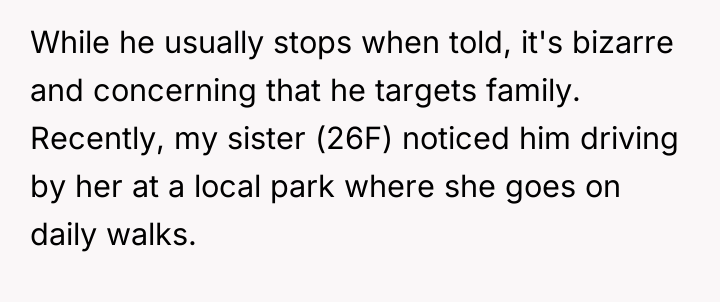
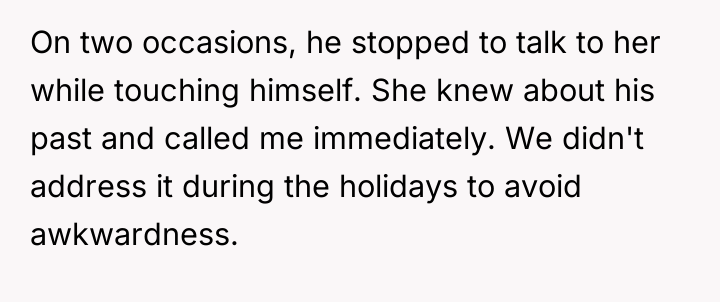
The OP's concerns are rooted in legitimate threats to safety, not mere preference. The brother-in-law (BIL) exhibits a pattern of concerning sexual behaviors—public indecency arrests, explicit messaging, and confirmed instances of stalking and physical imposition during walks—which escalate the risk profile significantly. The mother-in-law’s (MIL) refusal to acknowledge or address these serious issues, coupled with her minimizing language ("paid his dues"), indicates a failure in parental responsibility and boundary enforcement. This dynamic suggests the MIL prioritizes familial peace or loyalty over the physical and psychological safety of vulnerable individuals, including future grandchildren. The OP's intuition regarding the FIL’s unaddressed issues further complicates the environment, suggesting a potential multigenerational pattern of secrecy and boundary violation that the MIL actively upholds.
The OP's protective instincts regarding her child are entirely appropriate and necessary. When caregivers ignore documented predatory behavior, they become complicit in creating an unsafe environment. A constructive recommendation involves establishing firm, non-negotiable boundaries: zero unsupervised time with the in-laws until the BIL is verifiably living elsewhere and has demonstrated sustained, professional accountability for his actions. Furthermore, the OP and her husband must agree on communication: they need to present a united front, focusing on documented facts (the incidents) rather than emotional arguments, making it clear that any claim on the baby must include verifiable safety standards for all household members.
THE COMMENTS SECTION WENT WILD – REDDIT HAD *A LOT* TO SAY ABOUT THIS ONE.:
When users weighed in, they held nothing back. It’s a raw, honest look at what people really think.






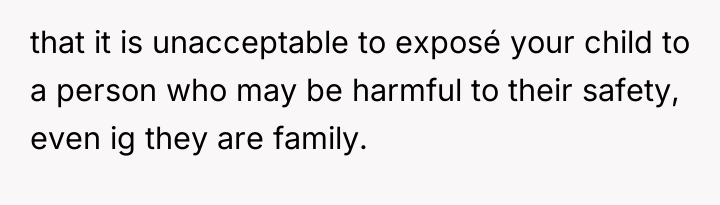
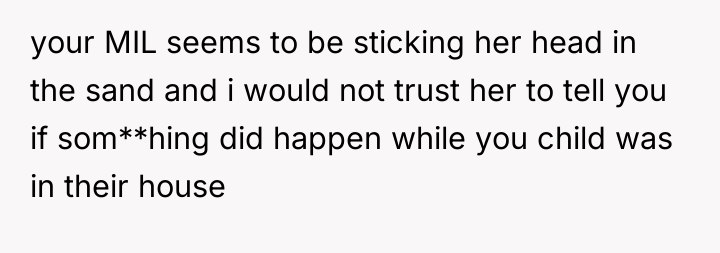
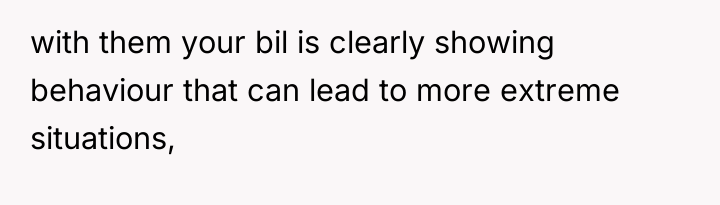






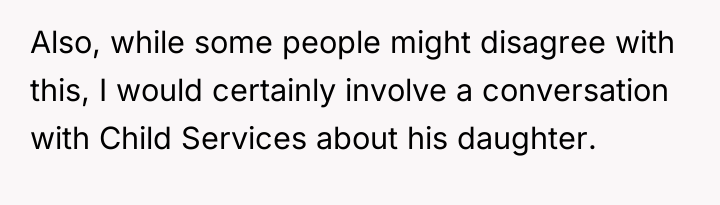
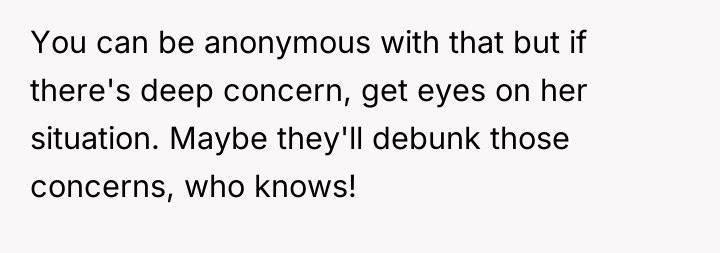


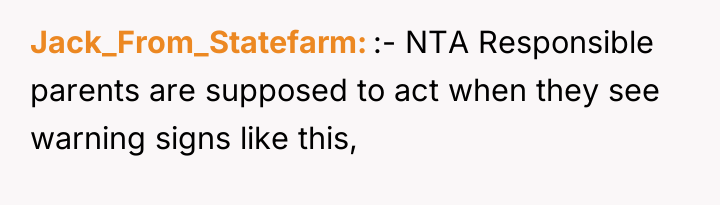



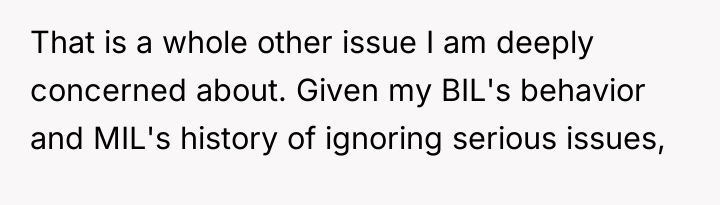
The original poster is facing a severe conflict between her deep desire to protect her unborn child and the pressure to trust her in-laws, who have demonstrated a pattern of minimizing or ignoring dangerous behaviors within the family, specifically from the brother-in-law.
Given the history of concerning behavior, lack of accountability from the brother-in-law, and the mother-in-law's clear pattern of dismissiveness regarding serious safety issues, the central question remains: Is it ever safe to leave a vulnerable infant in the care of grandparents whose judgment has been proven unreliable in protecting other family members from known threats?