
Telling kids the truth = crushing their souls?
In a world where victories are often measured by trophies and stats, this father finds profound meaning in the simple joy of watching his children play. For him, sports are more than a game—they are a crucible where character is forged, teamwork is learned, and decency is practiced, shaping his children into not just athletes, but good humans.
Yet, beneath the weekend drills and countless miles driven, lies a quiet acceptance. This family’s story is not about prodigies or champions, but about embracing imperfection, celebrating effort, and finding pride in being "just okay"—because sometimes, the greatest triumph is simply learning to play with heart.















Subscribe to Our Newsletter
As renowned researcher Dr. Brené Brown explains, “Boundaries are the distance at which I can love you and me simultaneously.” While this quote directly addresses personal boundaries, the underlying principle applies here: the father failed to create an emotional boundary that allowed for both truth and empathy to coexist in the conversation.
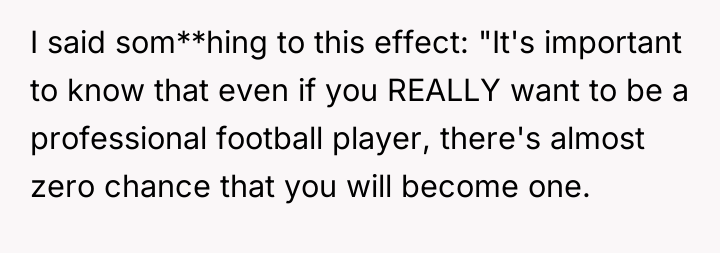
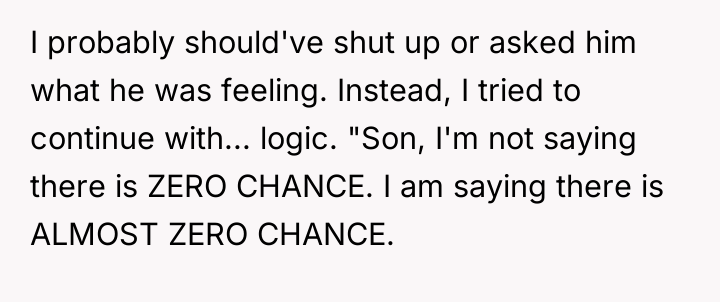
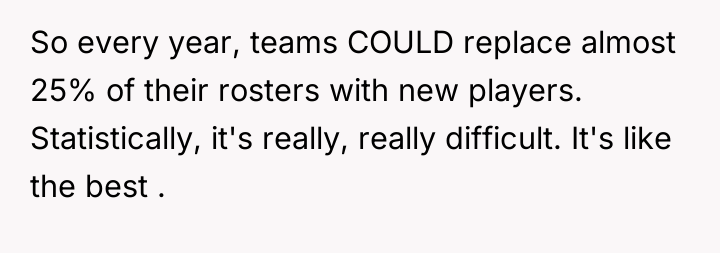
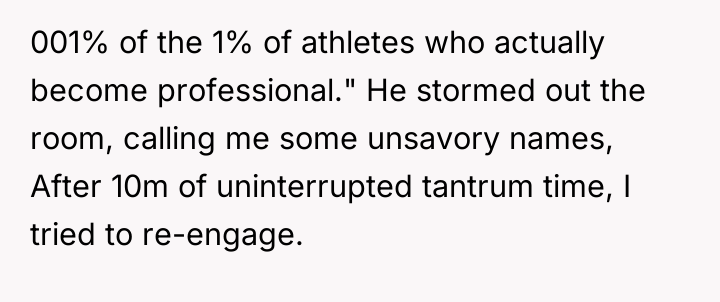
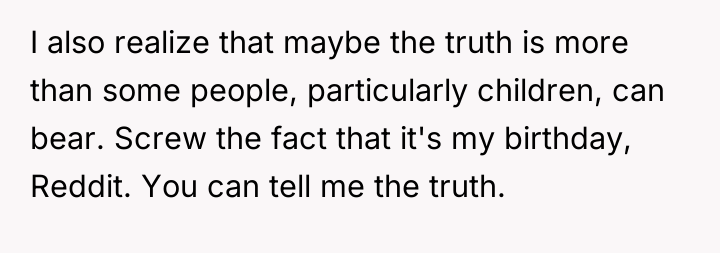
The core issue stems from a failure in communication timing and delivery, particularly when responding to a potentially vulnerable question posed on a significant day (the father's birthday). The son was likely seeking affirmation or shared wisdom; instead, he received a crushing statistical deconstruction of his ambition. The father openly admits his belief that the "American Dream pitch" is false, suggesting his motivation was to deliver 'the truth,' but truth delivered without scaffolding or empathy often registers as rejection or invalidation to a child. The father’s instinct to revert to 'more logic' after seeing the initial tears highlights a pattern where intellectual correctness overrides emotional attunement.
The father's actions were understandable given his underlying belief system about honesty, but they were emotionally inappropriate for the context. A more constructive approach would have been to first validate the son's passion ('That is an amazing dream, and I love that you are working so hard') before gently pivoting to the value of transferable skills and the importance of having backup plans. Future interactions should focus on separating the dream from the effort: celebrating the dedication required for sports while simultaneously nurturing interests in areas like academics, which offer more reliable long-term security.
REDDIT USERS WERE STUNNED – YOU WON’T BELIEVE SOME OF THESE REACTIONS.:
This one sparked a storm. The comments range from brutally honest to surprisingly supportive — and everything in between.


























The father positioned himself as a realist, attempting to temper his ten-year-old son's aspirations regarding professional sports with stark statistical probabilities. This created a conflict between the father's desire to impart pragmatic life lessons and the son's need for emotional validation regarding his dreams, leading to an immediate emotional breakdown and rejection of the father's subsequent attempts at reconciliation.
Was the father wrong to deliver a statistically accurate assessment of the slim chances of professional sports success to his son on his birthday, or was his attempt to manage unrealistic expectations a necessary form of parental honesty? The debate centers on where the balance lies between protecting a child's hope and grounding them in reality.