
Husband says I'm selfish
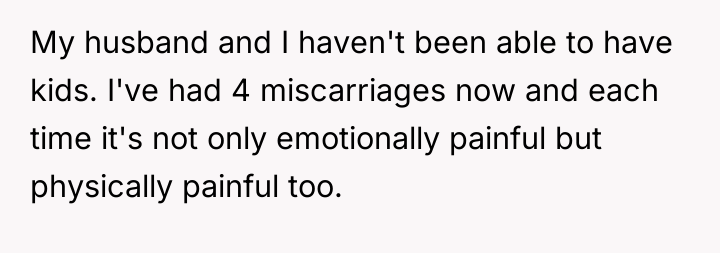
In the quiet struggle of longing and loss, a woman bears the invisible scars of four miscarriages, each one a devastating blow to her body and soul. Her heart aches not just from the absence of a child, but from the profound physical pain that shadows every attempt to create life, a burden unseen by many but deeply felt by her.
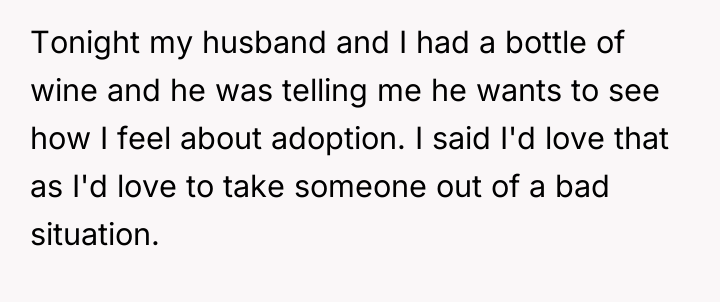
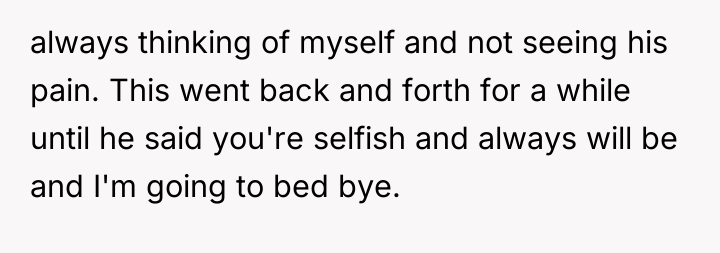
Amidst this fragile pain, a tender conversation with her husband turns cold when his words cut deeper than any wound. His suggestion of adoption, meant to be a hopeful path, is marred by a harsh reminder of what they have not yet achieved together, leaving her feeling misunderstood and isolated in her suffering.









Subscribe to Our Newsletter
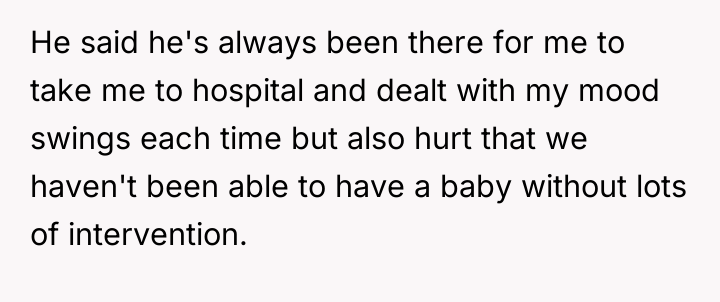
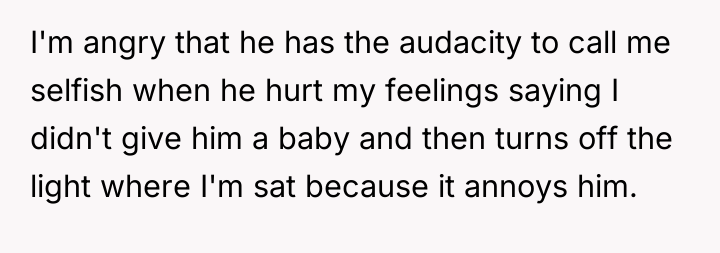
As renowned researcher Dr. Brené Brown explains, “Boundaries are the distance at which I can love you and me simultaneously.” In this situation, the conflict escalates due to a severe breach of emotional boundaries by both parties. The husband's comment, suggesting the OP failed to provide a biological child, is an invalidation of her immense physical and emotional labor during the miscarriages. This comment weaponizes her fertility struggles against her, shifting the focus from shared grief to placing blame.
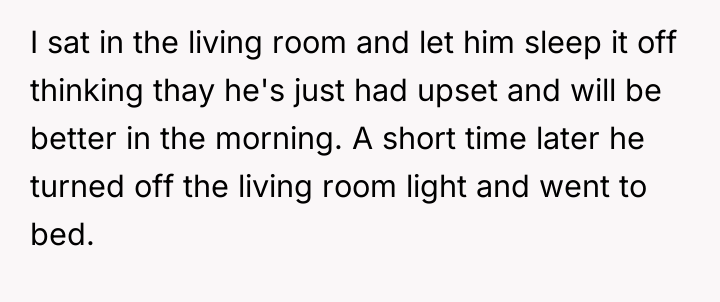
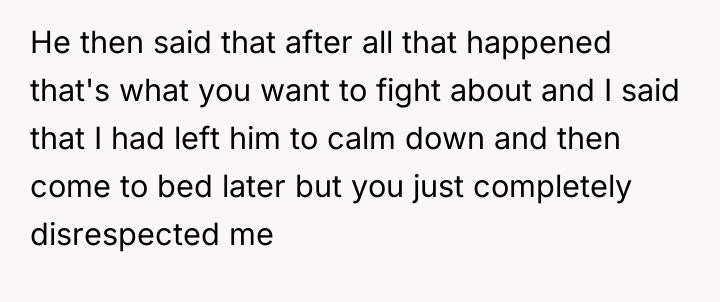
The husband's subsequent action—turning off the light—is a passive-aggressive maneuver that escalates the dynamic from verbal argument to controlling behavior. When the OP confronted him about this specific act, he deflected by minimizing it as a trivial issue compared to the overall topic of children, thereby avoiding accountability for disrespect. The OP's reaction, while fueled by anger, focused on this clear boundary violation (being dismissed while physically present) after attempting to give him space to cool down, indicating a need to re-establish mutual respect within the shared space.
The OP's actions in seeking medical care and trying to communicate her pain were appropriate responses to a shared crisis. However, the relationship currently lacks a foundation of compassionate communication. The constructive recommendation is for the couple to pause discussions about fertility and adoption until they can engage in mediation or counseling focused strictly on communication skills and validating each other's distinct forms of pain, ensuring that neither partner uses their suffering as a weapon against the other.
THIS STORY SHOOK THE INTERNET – AND REDDITORS DIDN’T HOLD BACK.:
This one sparked a storm. The comments range from brutally honest to surprisingly supportive — and everything in between.









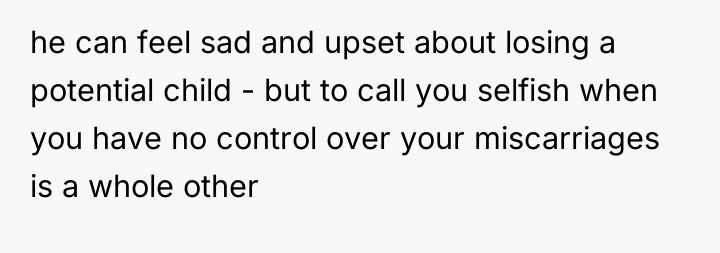

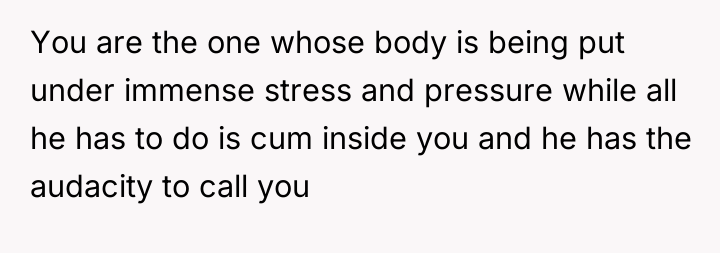











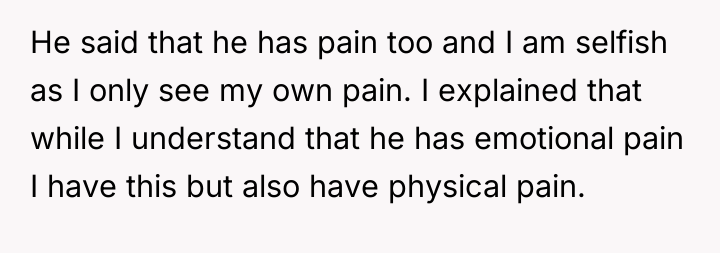
The original poster (OP) is navigating profound grief and physical pain following four miscarriages, while also dealing with her husband's expressed frustration about the lack of a biological child. The central conflict arises when the husband labels the OP as selfish for focusing on her medical situation, immediately followed by a dismissive action—turning off the living room light—which the OP interpreted as a significant act of disrespect and control.
Given the intense emotional strain and the husband's harsh accusation, the core question remains: Does the husband's acknowledged pain about not having a child justify his insensitive comments and subsequent disrespectful behavior, or do the OP's physical and emotional suffering from recurrent pregnancy loss require him to offer unwavering support and sensitivity, regardless of his own feelings?