
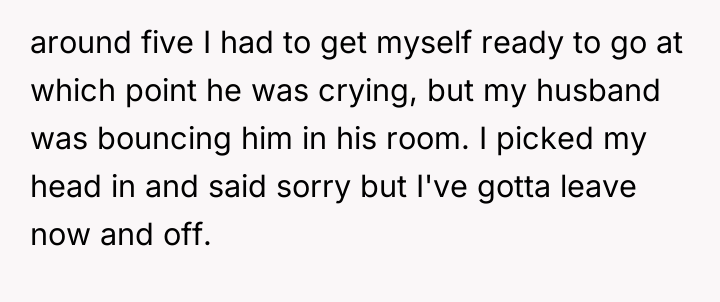
Left my husband with the baby to go to a work dinner
A mother’s heart is torn between her career and her children, each demanding her presence and love. After months away from work events, she finally accepts an invitation to a dinner with a senior executive, hoping to balance her professional growth with the chaos of motherhood. Yet, as she steps out the door, the fragile peace at home shatters, and the weight of her choices crashes down in a flood of texts from her husband about their teething, fussy baby.
In the quiet moments of that evening, she faces the raw reality of sacrifice and guilt—the relentless tug-of-war between ambition and nurturing, between personal dreams and family duties. Her story is a powerful testament to the invisible struggles countless parents endure, caught in the delicate dance of love, responsibility, and the pursuit of self.











Subscribe to Our Newsletter
According to Dr. Terry Real, a recognized family therapist known for his work on intimate relationships, effective partnerships require clear communication regarding expectations and mutual support for individual goals. In this scenario, the initial agreement between the couple about the dinner suggests a commitment that was later undermined by the husband's reactive communication.
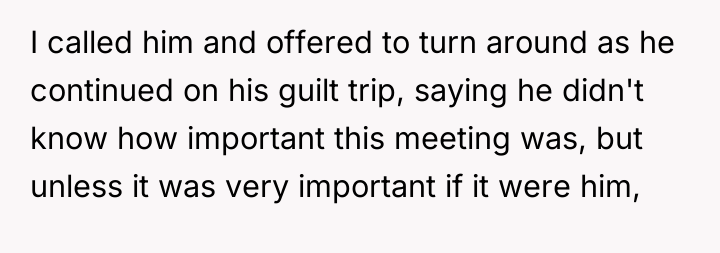
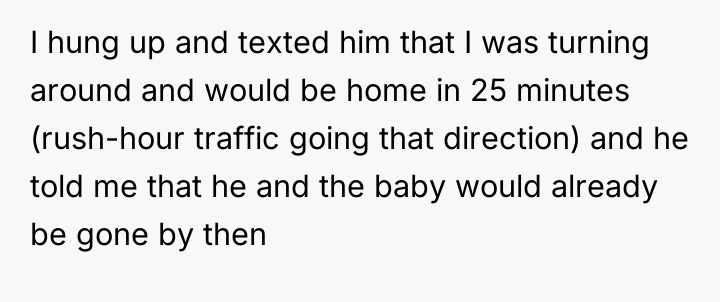
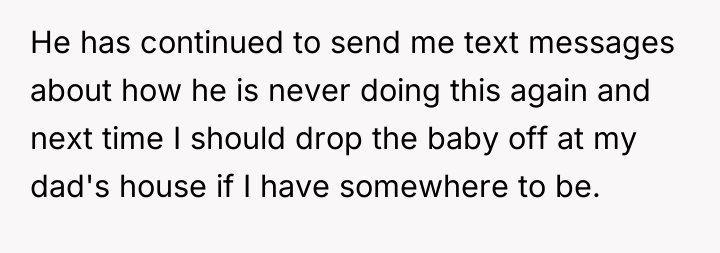
The husband's behavior, characterized by guilt-tripping texts, sending a voice note of the crying baby, and issuing ultimatums about future support, demonstrates poor boundary setting and an unhealthy communication pattern. The primary conflict is not the dinner itself, but the sudden withdrawal of support and the use of emotional leverage after the wife had already left, which undermines her autonomy and professional standing. The wife, after checking in and offering to return, acted reasonably given the prior arrangement, but the partner escalated the situation by changing the terms post-departure.
The wife's action of attending the work event was appropriate, as it was a pre-approved, work-related commitment, especially after returning to work following a long absence. Moving forward, the recommendation is for the couple to establish firm communication protocols for high-stakes events: commitments should only be canceled if both parties agree, and emotional manipulation (like guilt trips or threats of withholding future support) must be explicitly addressed as unacceptable communication behavior.
THE COMMENTS SECTION WENT WILD – REDDIT HAD *A LOT* TO SAY ABOUT THIS ONE.:
The internet jumped in fast, delivering everything from kind advice to cold truth. It’s a mix of empathy, outrage, and no-nonsense takes.




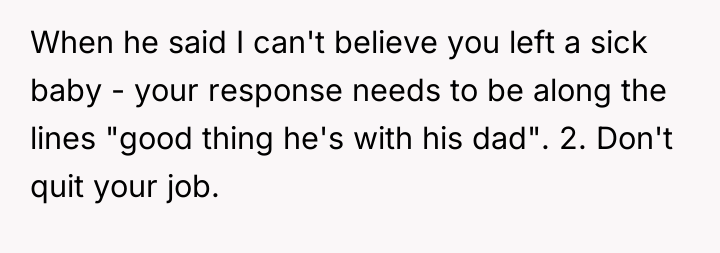











The individual felt conflicted, attempting to balance a necessary work commitment with the immediate, demanding needs of their young, unwell child, leading to external criticism from their partner regarding perceived prioritization.
When faced with a conflict between career obligations and immediate childcare demands that conflict with a partner's evolving stance, should a parent prioritize their professional obligation after prior agreement, or defer to the partner's immediate emotional distress regarding the child's condition?