My Boyfriend Blamed Me for Almost Suffocating Him After He Lied About Being Fine
In the tender dance of intimacy, trust often walks hand in hand with vulnerability. For this young couple, a moment meant to explore and deepen their connection instead unearthed an unexpected tension, leaving unspoken questions hanging in the air. What began as a shared adventure into new experiences quickly shifted into a silent struggle, one where the lines between pleasure and pain blurred in the quiet aftermath.
Beneath the surface of their closeness, emotions stirred and doubts crept in, revealing the fragile balance of care and communication in their relationship. The boyfriend’s silence and sudden withdrawal cast a shadow over the night’s memory, hinting at a deeper unease that neither dared to fully confront. In that delicate pause, the true test of their bond quietly awaited.












As stated by relationship expert Dr. Harriet Lerner in her work on boundaries and communication, 'When we fail to communicate our needs clearly, we set the stage for resentment and misunderstanding.' This situation is a clear case where the pressure to please a partner overrides the need for clear, ongoing safety confirmation, leading to dual miscommunication.
The boyfriend's initial insistence on the activity despite the girlfriend's skepticism suggests a difficulty in respecting boundaries or perhaps prioritizing his desire over her comfort. Crucially, his verbal response immediately after the act ('Yes, I’m okay. That was great') masked severe physical distress. This immediate retraction or denial of harm creates a dangerous precedent. Furthermore, his subsequent anger, storming out, and vague accusations ('you had better things to worry about') are avoidance tactics that escalate conflict rather than resolving the underlying issue of physical safety and emotional vulnerability.
The girlfriend was placed in a difficult position: she was attempting to fulfill her partner's request while also being mindful of her own body weight concerns. Her stated action of checking on him indicates care, but the boyfriend’s accusation that she 'didn't even ask if I was okay' directly contradicts her recollection and suggests a distortion of the event, possibly due to lingering pain or embarrassment. In future situations, open-ended, low-pressure check-ins ('On a scale of 1 to 10, how is this feeling for you?') are more effective than simple 'Are you okay?' questions, especially during intense activities. The current focus should be on establishing a firm rule: if physical distress is observed, the activity stops immediately, regardless of verbal assurances.
THIS STORY SHOOK THE INTERNET – AND REDDITORS DIDN’T HOLD BACK.:
This one sparked a storm. The comments range from brutally honest to surprisingly supportive — and everything in between.








Trending This Week

AITA for staying anonymous after reporting my sister and her husband to CPS?
My sister met her husband when she was pregnant with another man's child. She never told anyone in the family who the father is, and she never told the father about the child either. Her husband refused to include my nephew in the wedding or treat him as his own. Since they had their own children, his bad treatment of my nephew has become worse. He refuses to watch my nephew, threatens to let him starve, and says he would not stop him from getting hurt. My sister ignores this and defends her husband. I reported this to Child Protective Services anonymously. They investigated but did not remove my nephew because there were no physical injuries. My sister is angry about the report and wants to find out who made it. Some of my family think it is cowardly to stay anonymous, but I worry that if my sister finds out it was me, I will never see my nephew again.
AITA for not wanting to "adjust" to my(28F) boyfriend's(26M) parents living with us for months at a time?
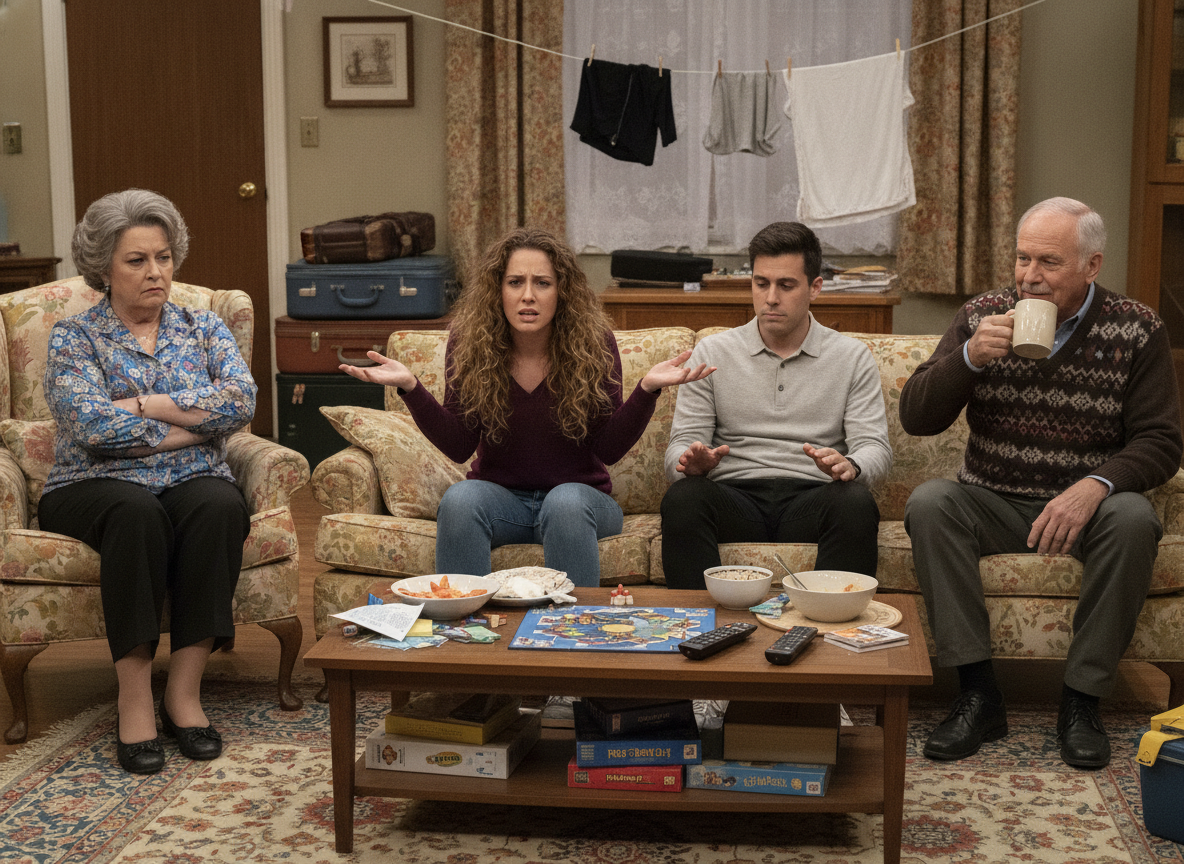
My boyfriend and I have been living together for three years in Australia. A few months ago, his parents arrived from India to live with us. Although I was excited to make them feel comfortable, their demands soon made me feel uneasy in my own home. They were uncomfortable with us sleeping in the same room, resulting in my boyfriend sleeping in the living room for two months. The mother took over the kitchen and excluded me from grocery shopping, and they did not acknowledge me as his girlfriend in front of friends or help with cleaning. They also rearranged furniture against our requests, and his father expressed concern that I was not helping in the kitchen, which was untrue. Furthermore, they credited my boyfriend for things he did not do and criticized my clothing, claiming it violated their family values. My primary issue is that my boyfriend did not acknowledge these problems or stand up for me. He dismissed my concerns, saying his parents were guests and his father was simply traditional. After they left, I moved to another city for a job, and our long-distance relationship has been great. However, he recently informed me that his parents are visiting again for two months, having booked the tickets without consulting me. He expects me to accept frequent, long visits as a condition of moving back in together. I feel my privacy and personal space are being disregarded, and I want him to consider my needs and set boundaries.
AITA for telling my brother that if my parents need money they can ask me for it themselves.
My parents did not think a girl needed an education, so they chose not to save any money for me growing up. They had no interest in my education or extracurricular activities. My mom's brother, Bryan, grew up in the UK and he had a different attitude. He would always check in on me and see how I was doing in school. He bought me my first graphing calculator. Because I wanted to impress him, I worked myself raw to graduate with honors. I was the salutatorian in my school and received a scholarship to my dream school. I did not even bother telling my parents. I graduated from high school and moved to the west coast. My parents tried to convince me to come home, but I was quite happy for the first time I could remember. I studied in a STEM field and was recruited before I graduated. My job pays me very well and I met my husband at work. My brother also attended university and is an engineer. He does well for himself, except that he is constantly giving our parents money. My brother talked to me recently about how we needed to support our parents in their old age. I said I had no problem contributing to them. However, they would have to ask me for help. I would not volunteer it or send it through him. If they wanted my money, they had to ask for it. He says that they won't because it would shame my father to ask a woman for money. I am okay with him feeling shame after the way he raised me. My brother says I am being unreasonable and it does not matter since my parents know where the money will be coming from. I think that my parents need to get over themselves.