I Cheated on My Wife Through Her Depression and Now I Want Her Back After Seeing Her Happy
He had loved her from the moment they met—her radiant smile and boundless energy had been the light of his life. For ten years, she was his first and only love, the woman he dreamed of building a future with, their lives intertwined in harmony and shared dreams.
But the shadows crept in with heartbreak and loss. The repeated pain of miscarriages shattered her spirit, and with it, the vibrant woman he once knew faded into a shell weighed down by depression and despair. Their love, once full of warmth and hope, now struggled to survive in the quiet ache of what was lost.



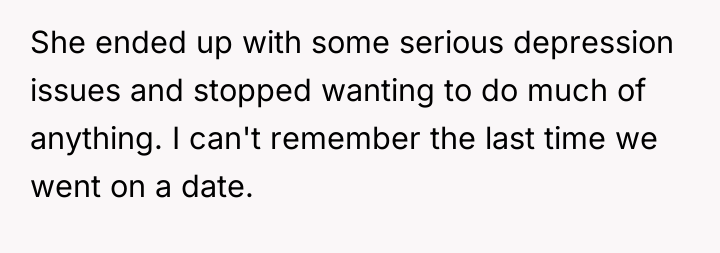
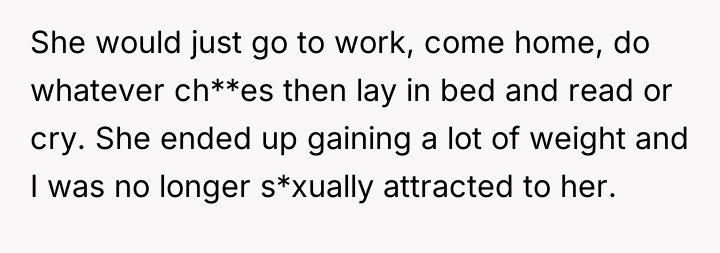

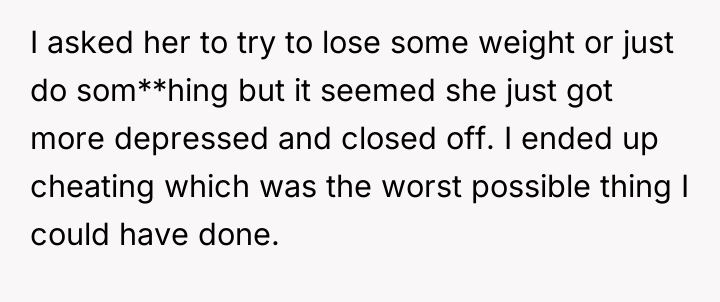
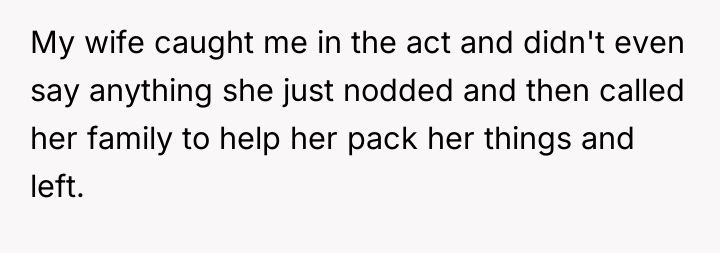




Dr. John Gottman, a renowned relationship expert known for his extensive research on marital stability, often emphasizes that trust and emotional safety are the absolute cornerstones of a lasting partnership. In this scenario, the husband (OP) violated the fundamental contract of fidelity, an action that severed the emotional bond and security his wife relied upon. The subsequent difficulty stemmed from a long, unaddressed relational decline: the wife's severe depression following miscarriages led to physical and emotional withdrawal, which in turn extinguished the husband's attraction and led to his decision to cheat.
OP's motivations appear rooted in regret over loss rather than a mature plan for repair. Seeing his wife happy and attractive after separation has triggered a powerful sense of possessiveness and nostalgia, often termed 'grass is greener syndrome' or loss aversion regarding a known partner. His desire to 'reconsider' ignores the fact that the wife has clearly invested in moving forward and healing outside of the marriage that caused her distress. The wife’s shift in appearance and happiness is a result of gaining distance from the source of her pain (the marriage and the betrayal), not necessarily an invitation to return.
From a professional standpoint, OP's actions (cheating) were wholly inappropriate as a response to relationship distress, especially given his wife's existing severe depression. A constructive recommendation would be for OP to completely halt any pursuit of reconciliation. Instead, he should focus entirely on addressing the root causes of his own actions through individual therapy. If reconciliation were ever possible, it would require significant time, genuine remorse demonstrated through consistent actions (not just words), and a commitment from both parties to long-term couples counseling focused on deep communication skills.
HERE’S HOW REDDIT BLEW UP AFTER HEARING THIS – PEOPLE COULDN’T BELIEVE IT.:
The crowd poured into the comments, bringing a blend of heated opinions, solid advice, and a few reality checks along the way.


















The husband is confronting the severe consequences of his infidelity, deeply regretting the loss of his wife and the marriage they once shared. His current emotional state is a mix of longing for the past and a painful realization of the irreparable damage caused by his actions, especially now that he sees his wife seemingly thriving after leaving him.
Given the depth of the betrayal and the finality of her departure, is it justifiable for the husband to ask his ex-wife to reconsider the finalized divorce and attempt to rebuild a relationship based on a foundation of broken trust?
Trending This Week

AITA for telling my sister she has more than enough children?
My sister already has six children with her husband, which is far more than they can comfortably provide for given their financial troubles. It is also more than both of them can handle, resulting in my fifteen-year-old niece being treated as an unpaid babysitter who is constantly expected to help with her younger siblings. Recently, my sister experienced a miscarriage during the early stages of her seventh pregnancy. While talking to her about this painful experience, I remarked that at least she already has six other children and suggested that perhaps that is enough. My sister was highly offended, calling me insensitive and stating that her family choices do not concern me. However, they do affect me, as I have loaned her and her husband money on multiple occasions to help support their household.

AITA for staying anonymous after reporting my sister and her husband to CPS?
My sister met her husband when she was pregnant with another man's child. She never told anyone in the family who the father is, and she never told the father about the child either. Her husband refused to include my nephew in the wedding or treat him as his own. Since they had their own children, his bad treatment of my nephew has become worse. He refuses to watch my nephew, threatens to let him starve, and says he would not stop him from getting hurt. My sister ignores this and defends her husband. I reported this to Child Protective Services anonymously. They investigated but did not remove my nephew because there were no physical injuries. My sister is angry about the report and wants to find out who made it. Some of my family think it is cowardly to stay anonymous, but I worry that if my sister finds out it was me, I will never see my nephew again.

AITAH after kicking my boyfriend out for calling my daughter a snitch and spoiled brat?
I have been dating my boyfriend for a couple of years now. I have an eight-year-old daughter from a previous relationship, and he has a four-year-old son. My boyfriend and I have always bumped heads on parenting styles and discipline. He believes his son is too young to know better, but says my daughter should already know how to act, calling her disrespectful and spoiled. My daughter's father is in jail and no longer in her life, so she craves a father figure, but my boyfriend refuses to show her affection, calling it weird. Recently, he called her a spoiled brat for leaving her plate on the table and a snitch for reporting his son's behavior. When I saw my daughter cry, I asked him to apologize, but he refused. I kicked him out of my house, and now he claims I am being too dramatic.