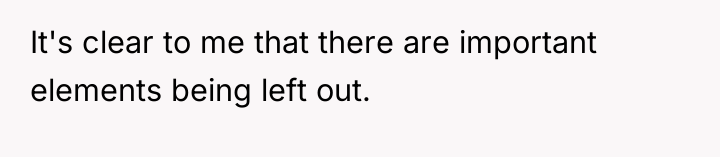
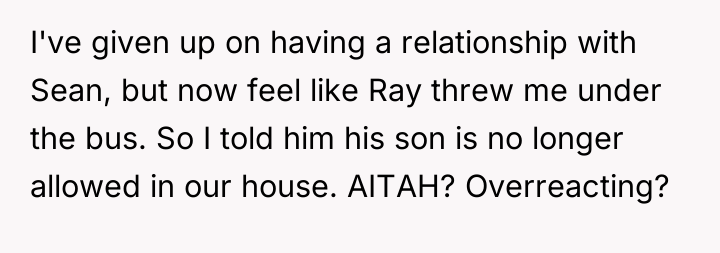
AITAH to tell my husband his son is no longer welcome in our house
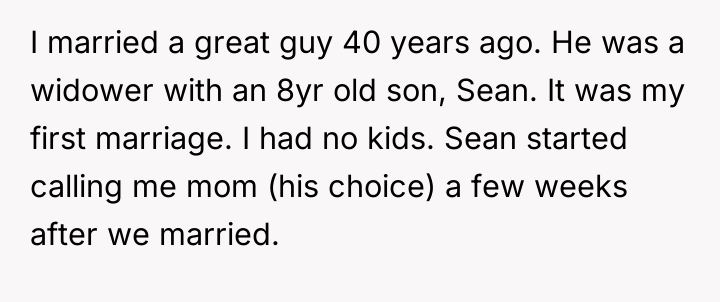
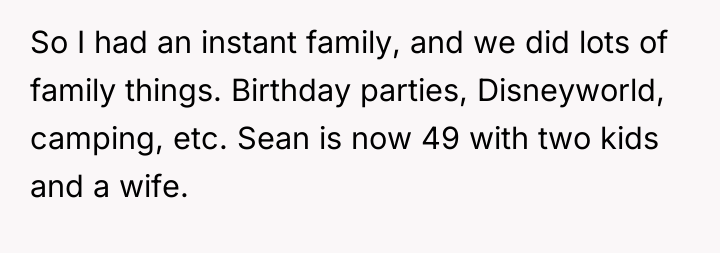
For forty years, she embraced a love that instantly became a family, welcoming Sean, her stepson, as her own son. Their bond was filled with warmth, laughter, and shared memories, from birthday parties to adventurous trips, weaving a tapestry of togetherness that felt unbreakable.
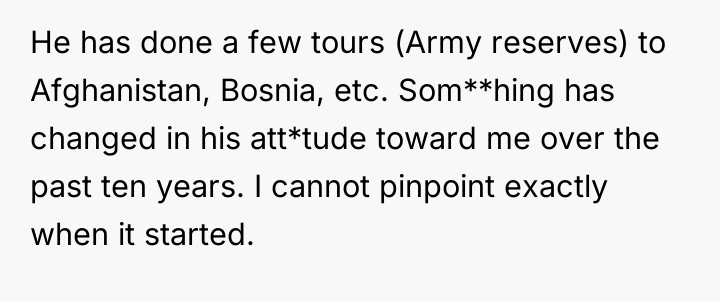
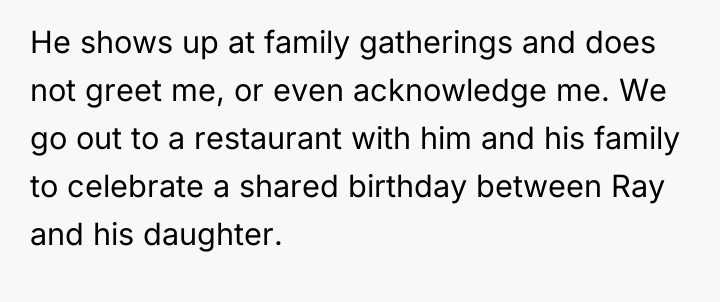
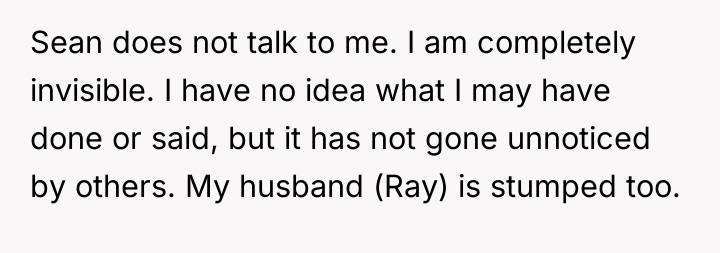
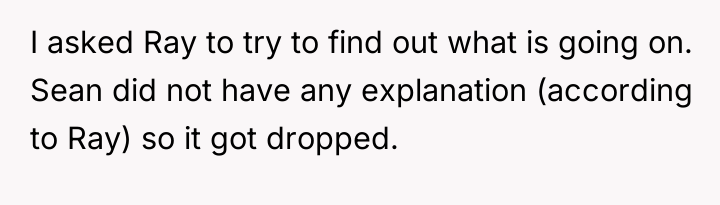
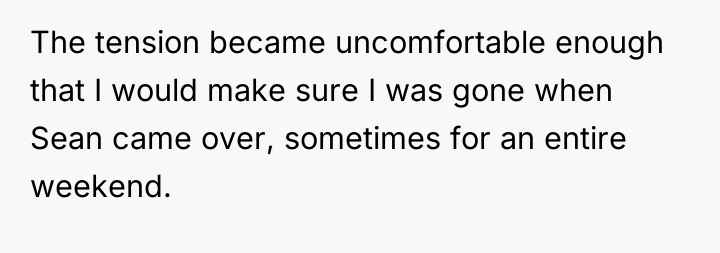
Yet, over the past decade, a silent chasm grew between them, turning once joyful gatherings into moments of cold distance and painful invisibility. The unanswered questions and unspoken hurts cast a shadow over their relationship, leaving her to grapple with a love that feels forgotten and a family fractured without explanation.



Subscribe to Our Newsletter
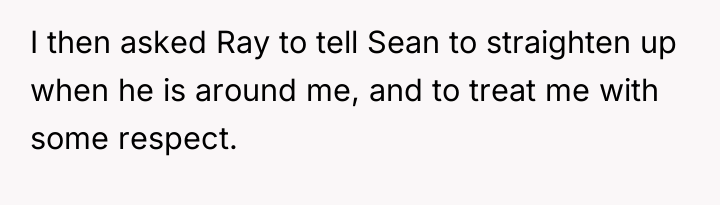
According to Dr. Harriet Lerner, a clinical psychologist known for her work on boundaries, 'When we stop over-functioning for others, we force them to take responsibility for themselves.' In this situation, the OP has spent years over-functioning by accepting invisibility and attempting to manage the stepson's behavior indirectly through her husband. The core issue stems from inconsistent parenting and boundary enforcement by the husband, Ray, which began when Sean was a child and has persisted into adulthood.
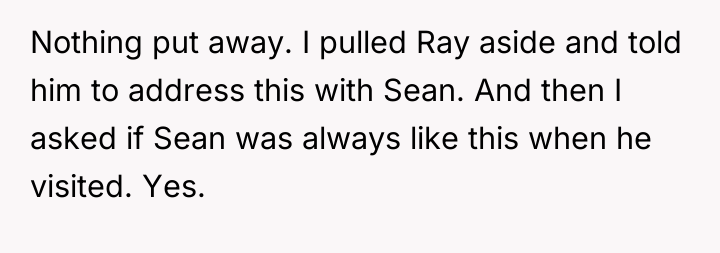
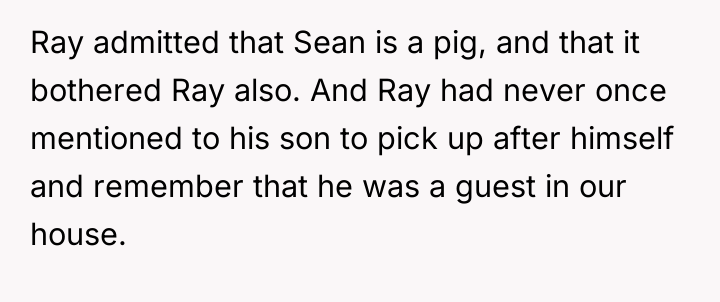
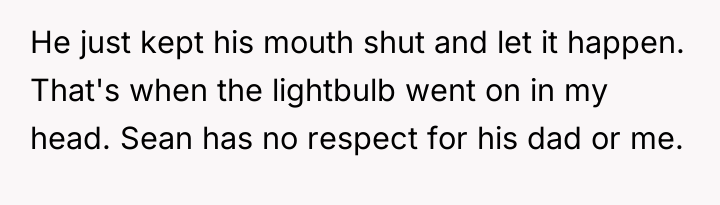
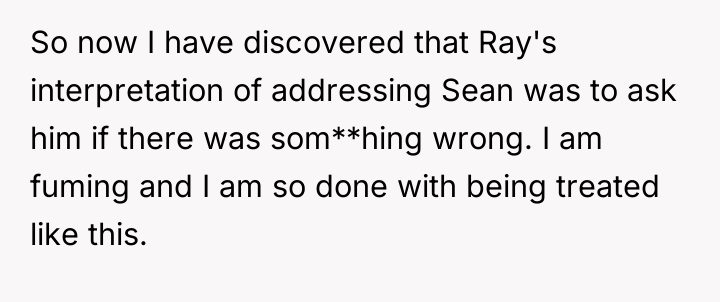
Sean’s behavior—ignoring the OP and exhibiting messy, inconsiderate habits at their shared residence—demonstrates a clear lack of respect, likely stemming from an unchallenged sense of entitlement fostered by Ray's passivity. Ray’s admission that Sean is a 'pig' but his subsequent failure to address it shows a dynamic where maintaining superficial peace with his adult son outweighs supporting his wife's emotional needs and maintaining household standards. The OP correctly identified that Ray's 'fix' (asking if something was wrong) was inadequate because it did not address the required behavioral change.
The OP's decision to ban Sean was an extreme but understandable reaction to feeling betrayed by her husband and utterly disrespected by her stepson. While her anger is valid, immediately banning the stepson punishes the symptom (Sean's behavior) while bypassing the root cause (Ray's enabling). A more constructive approach would have involved the OP and Ray establishing a firm, unified boundary agreement first: Ray must agree to enforce specific behavioral expectations (respectful greeting, house cleanliness) during Sean's visits. If Sean violates these agreed-upon, simple rules after clear communication, then exclusion becomes a necessary, mutually agreed-upon consequence, rather than a unilateral reaction driven by fury.
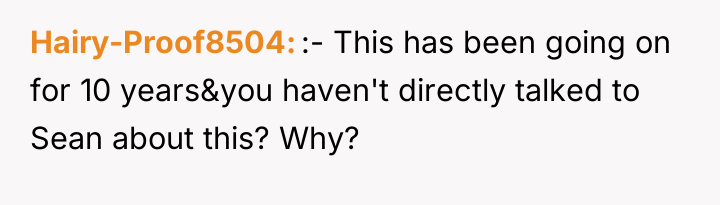
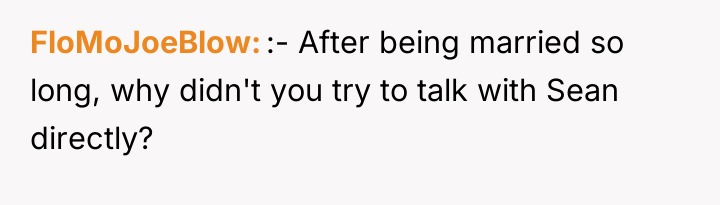
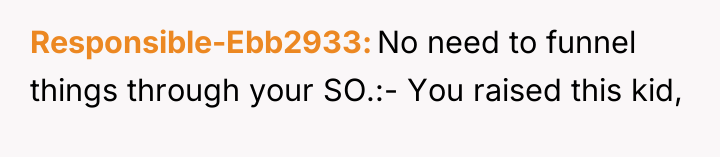
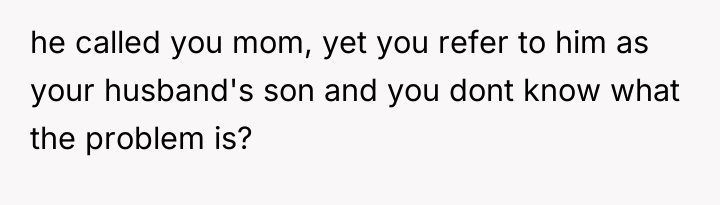
THIS STORY SHOOK THE INTERNET – AND REDDITORS DIDN’T HOLD BACK.:
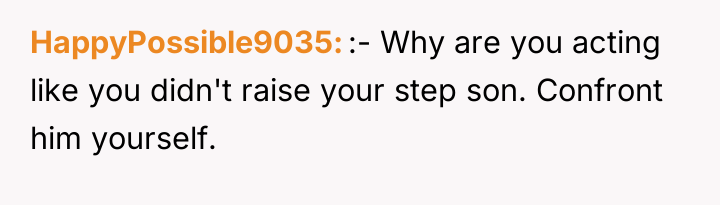
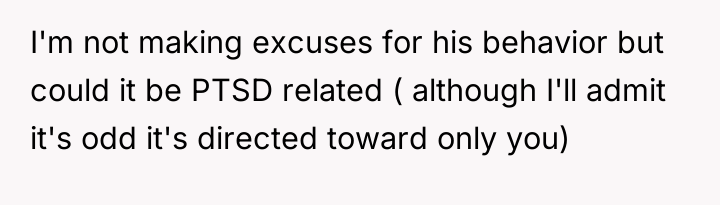
It didn’t take long before the comment section turned into a battleground of strong opinions and even stronger emotions.