
AITAH for cu***ng off my best friend after she slept with my boyfriend?
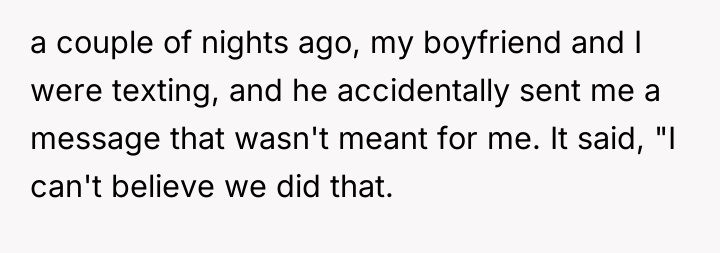
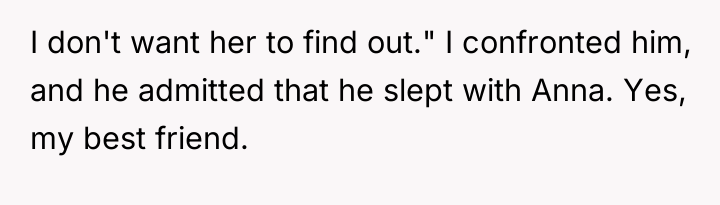
Betrayal cuts deepest when it comes from those you hold closest to your heart. She trusted her best friend, Anna, the person she believed would stand by her through anything, and her boyfriend, the man she thought was her safe haven. But in one devastating moment, that trust shattered, leaving her world trembling on the edge of heartbreak.
The accidental message revealed a secret that no one was prepared to face—a one-time mistake that tore apart years of friendship and love. Now, she stands alone in the wreckage of what was once unbreakable, grappling with shock, pain, and the cruel reality that sometimes, the people you love can hurt you the most.




Subscribe to Our Newsletter
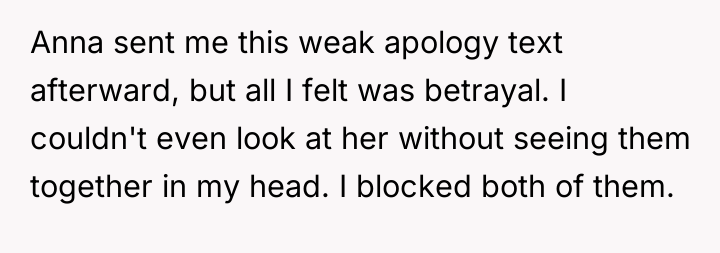
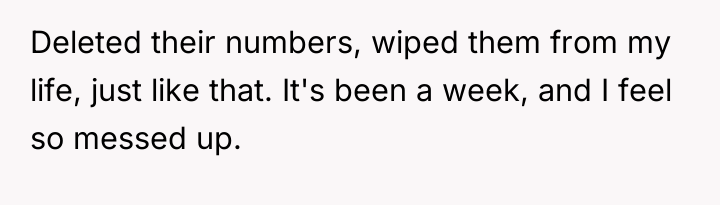
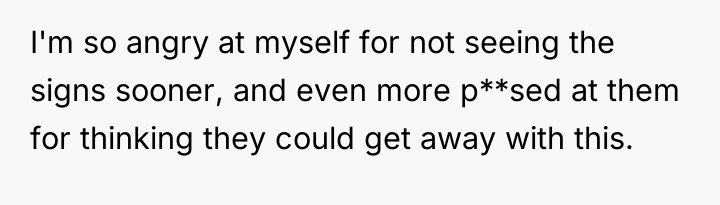
According to Dr. Harriet Lerner, an expert in interpersonal relationships, 'Setting boundaries is the lifeblood of all healthy relationships.' In this scenario, the self-text author (OP) faced a catastrophic violation of boundaries and trust from two primary sources: their romantic partner and their best friend. The motivation behind the OP's immediate action—blocking both individuals—is a powerful self-protective mechanism to halt further emotional harm and prevent potential manipulation or gaslighting following the revelation.
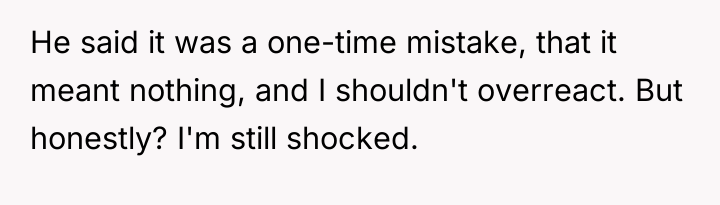
The boyfriend's minimizing language ("one-time mistake," "shouldn't overreact") is a common pattern used to diminish the gravity of infidelity and shift emotional responsibility back onto the victim. Anna’s "weak apology text" further suggests a lack of accountability. The OP’s reaction, while emotionally intense, reflects a clear understanding that the foundation of both relationships (romantic and platonic) has been irreparably damaged. When trust, the core component of intimacy, is destroyed so completely, immediate termination of contact is a valid psychological defense against ongoing trauma.
The OP’s actions were appropriate for immediate self-preservation in the face of extreme emotional shock. A constructive recommendation for handling similar future situations would be to establish a 'cooling-off' period before making permanent decisions. While cutting off contact immediately served to stop the pain, creating a brief, defined period of no contact—perhaps one to two weeks—allows intense emotional reactions to subside slightly, ensuring that the final decision to permanently block or exclude is made from a place of firm resolve rather than pure, immediate shock, although the current action is entirely understandable.
REDDIT USERS WERE STUNNED – YOU WON’T BELIEVE SOME OF THESE REACTIONS.:
The community had thoughts — lots of them. From tough love to thoughtful advice, the comment section didn’t disappoint.





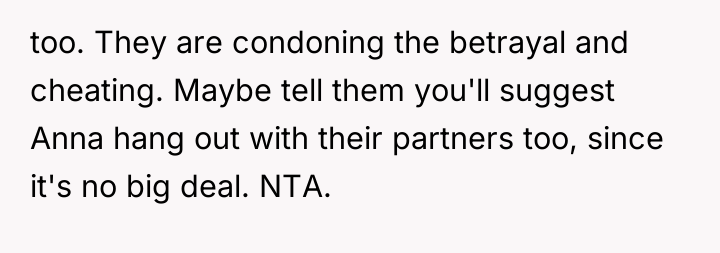

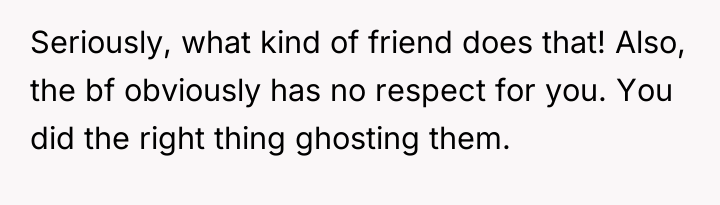
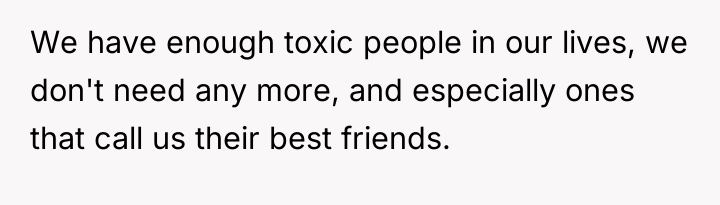


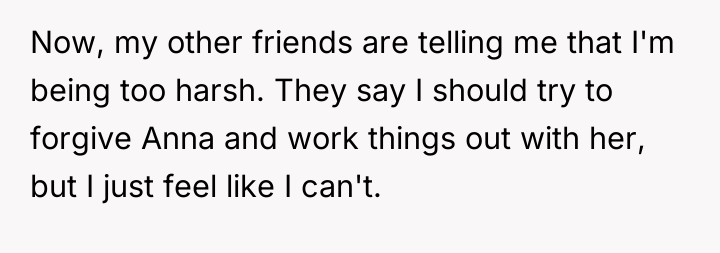
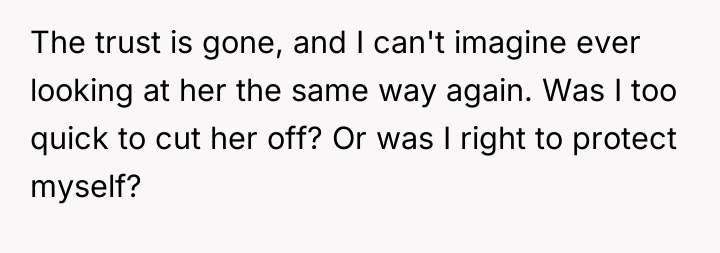
The individual is experiencing intense shock and anger due to the betrayal by both their best friend and boyfriend. Their immediate reaction was to completely sever ties with both individuals, an action seen by some peers as overly harsh, creating a central conflict between the need for self-protection and external expectations of forgiveness or reconciliation.
Given the severity of the double betrayal involving a romantic partner and a lifelong friend, was the immediate and complete blocking of both individuals a necessary act of self-preservation, or did this drastic action prevent a more measured approach to dealing with the profound breach of trust?