
AITA for giving my sister-in-law a handmade gift instead of buying from her expensive registry?
In a world where love often speaks through grand gestures and expensive gifts, one woman chose the quiet, heartfelt language of her hands. She poured over fifty hours into a meticulously knitted baby blanket, weaving not just wool, but hopes, dreams, and a deep affection for her sister-in-law’s unborn child. It was a gift born from genuine care, a symbol of love far beyond price tags.
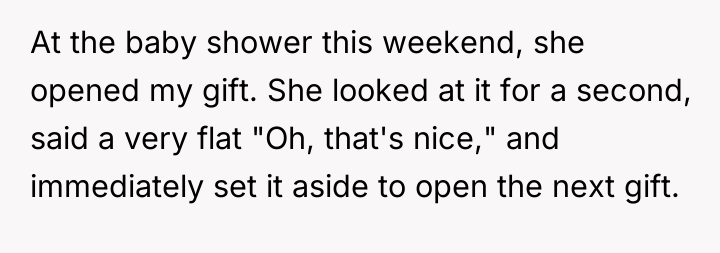
But in the harsh glare of material expectations, her labor of love was met with cold indifference—a flat “Oh, that’s nice” that shattered the warmth she had wrapped into every stitch. Behind closed doors, her sister-in-law’s words revealed a painful truth: her heart’s offering was dismissed, a silent reminder of how value is often measured not by love, but by luxury.










Subscribe to Our Newsletter
Dr. Harriet Lerner, a clinical psychologist known for her work on boundaries and family dynamics, often emphasizes the importance of clear communication regarding expectations versus expressions of love. In this scenario, the gift-giver's motivation was rooted in personal expression and affection, whereas the sister-in-law's focus was rooted in material utility and adherence to a curated list.
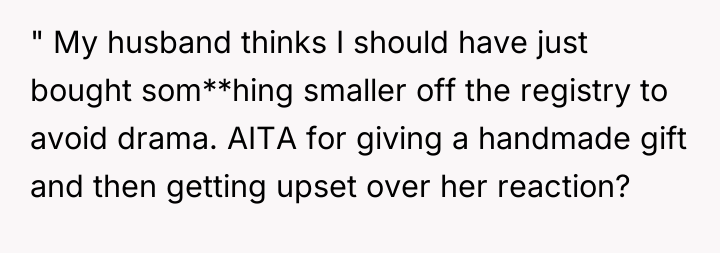
The sister-in-law displayed a lack of emotional intelligence by publicly devaluing a labor-intensive gift. Her statement about 'another blanket' and wishing people would stick to the registry suggests that she views gifts primarily as transactional solutions to logistical problems, rather than expressions of goodwill. The gift-giver, though correct in feeling hurt by the dismissal, escalated the situation by confronting the sister-in-law immediately about the overheard comment. While her feelings are valid (this is a form of emotional labor being rejected), direct confrontation about overheard gossip often puts the other party on the defensive, leading to the sister-in-law justifying her response as being 'practical.'
The gift-giver's actions were an understandable reaction to rejection of her effort, but responding via text about an overheard comment was less effective than addressing the issue calmly later, or perhaps not at all, given the impending stress of the baby's arrival. For future interactions, the gift-giver should manage expectations by either contributing financially toward a registry item or by keeping highly personal, time-intensive gifts private until the event, understanding that high-end tastes often correlate with a lower appreciation for non-monetary value.
REDDIT USERS WERE STUNNED – YOU WON’T BELIEVE SOME OF THESE REACTIONS.:
This one sparked a storm. The comments range from brutally honest to surprisingly supportive — and everything in between.












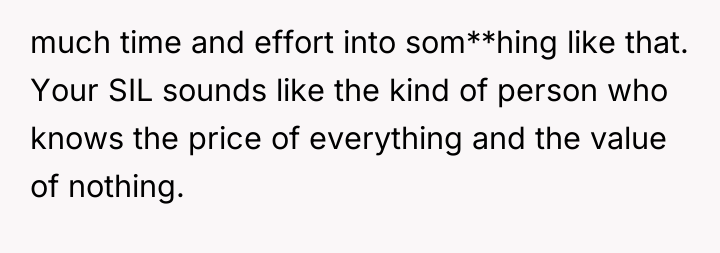






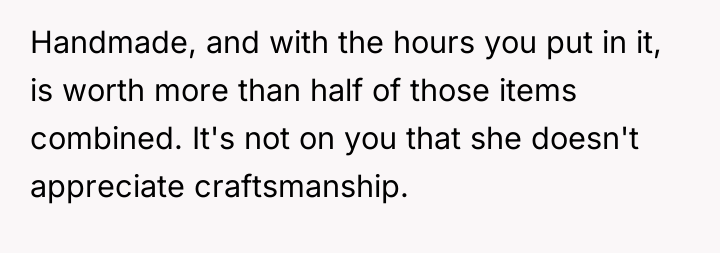

The gift-giver experienced deep hurt and embarrassment after investing significant time and effort into a personal, handmade gift, only to have it seemingly dismissed by the expectant mother who prioritized items based strictly on a high-end registry list.
The central conflict lies between the value placed on thoughtful, personal sentiment versus the perceived necessity of expensive, practical items requested by the recipient. Should the gesture of heartfelt effort override specific material demands in gift-giving, or is the recipient justified in expecting only items that fit their pre-established needs and aesthetic?