
AITA for preventing my pr****nt sister access to my food?
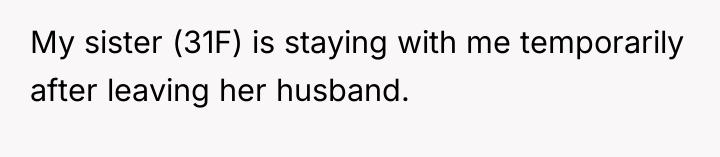
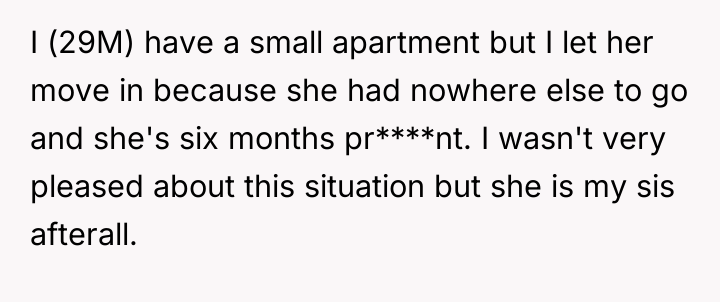
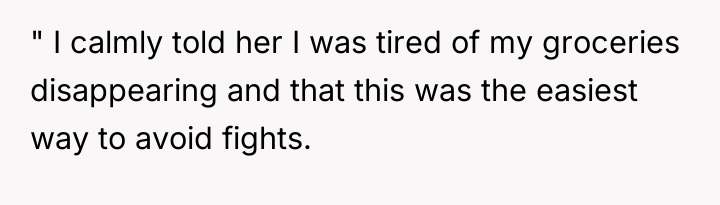
In the quiet confines of a small apartment, a brother’s patience frays under the weight of unspoken sacrifices. His sister, six months pregnant and seeking refuge from a broken marriage, has taken shelter in his home, bringing with her not just the hope for a fresh start but also the relentless strain of shared space and clashing needs.
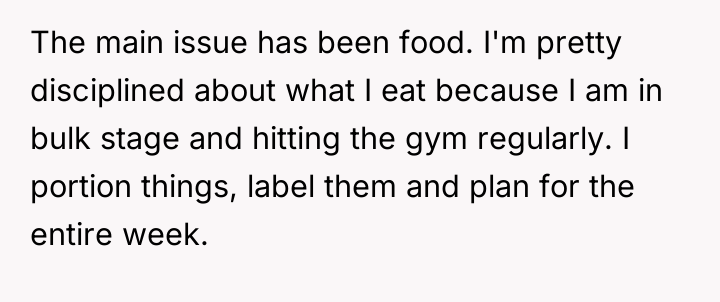
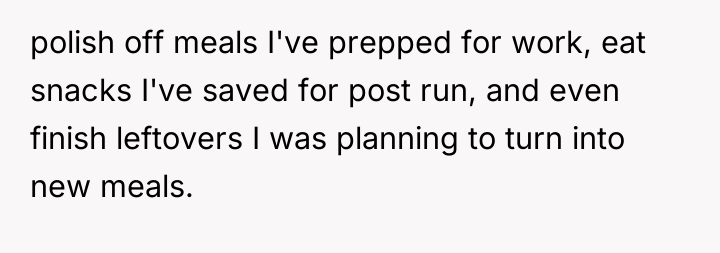
What began as an act of love and protection slowly spirals into tension, as the brother’s carefully structured world is unraveled by disappearing meals and shattered boundaries. The silent battle over food becomes a poignant symbol of their fractured lives—where empathy and frustration collide, and the true cost of family loyalty is laid bare.




Subscribe to Our Newsletter
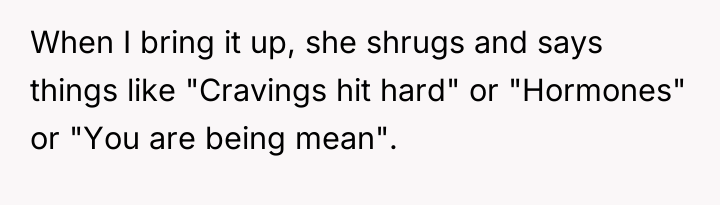
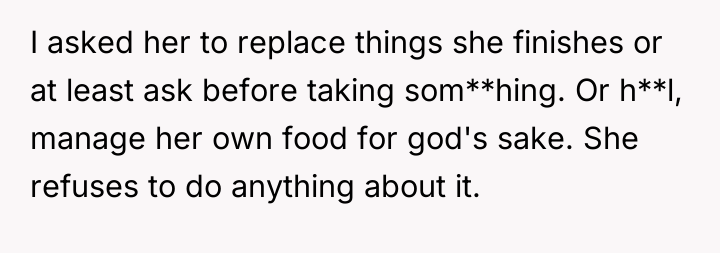
According to relationship expert Dr. Harriet Lerner, author of 'The Dance of Anger,' setting boundaries is a critical element of self-respect and maintaining healthy relationships, even with close family. Boundaries define what is acceptable behavior and what is not. When the OP's initial requests (asking her to replace items or ask permission) were met with dismissal ('Cravings hit hard,' 'You are being mean'), the line defining acceptable behavior had already been crossed repeatedly.
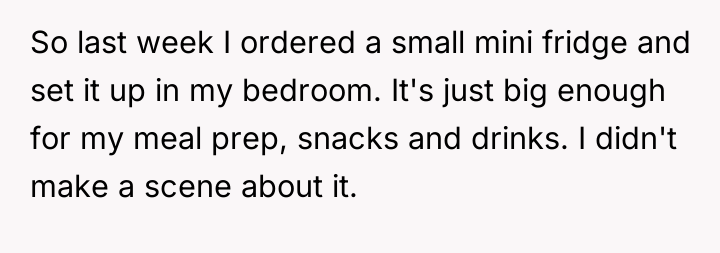
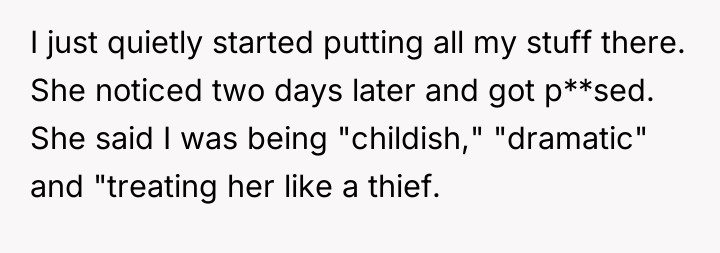
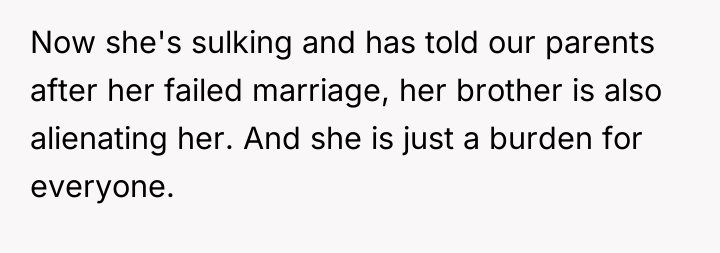
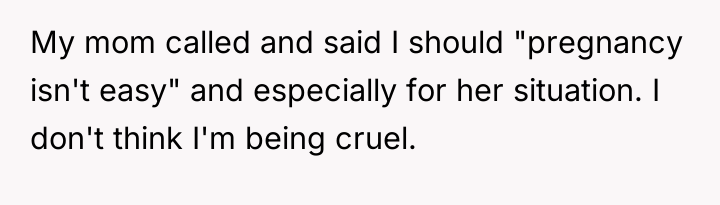
The sister's responses—blaming hormones or accusing the brother of meanness—are classic deflection techniques that avoid responsibility for the action. This behavior exploits the brother's perceived sense of duty (familial obligation) and emotional labor. The brother’s decision to install a mini-fridge was a non-verbal boundary enforcement mechanism. While the sister labeled it 'childish,' it was, in fact, a proportional, practical response to repeated boundary violations that had become emotionally draining for the host. The parents' intervention, invoking the pregnancy and marital distress, adds significant emotional leverage, shifting the focus from property rights to empathy and support, which complicated the OP's right to privacy over his belongings.
The OP's action (securing his food) was appropriate as a final, low-conflict measure to protect his deeply personal investment (time, money, and discipline for fitness goals). A more effective approach in the future, once the mini-fridge was in place, would be to re-frame the conversation by focusing solely on the boundary, not the food itself. For instance: 'I understand you are stressed, but my meal prep is essential for my health goals. The new fridge ensures we both have the space we need without arguments. This separation is necessary for our living situation to remain positive.'
THE COMMENTS SECTION WENT WILD – REDDIT HAD *A LOT* TO SAY ABOUT THIS ONE.:
It didn’t take long before the comment section turned into a battleground of strong opinions and even stronger emotions.


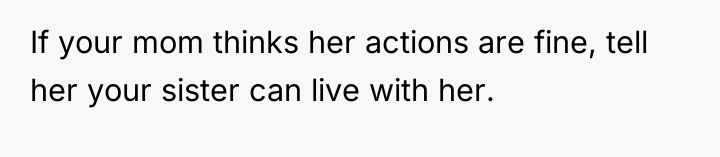



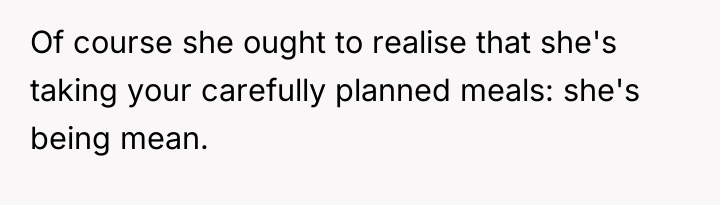
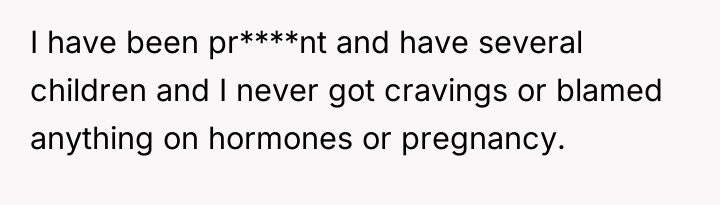


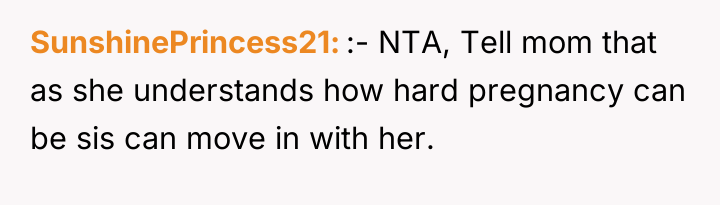
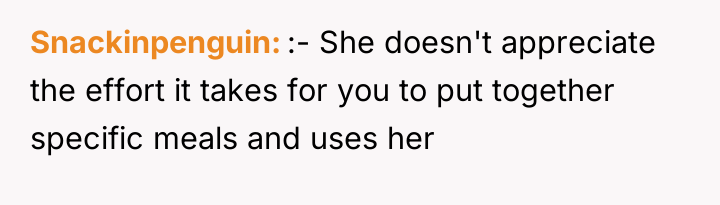

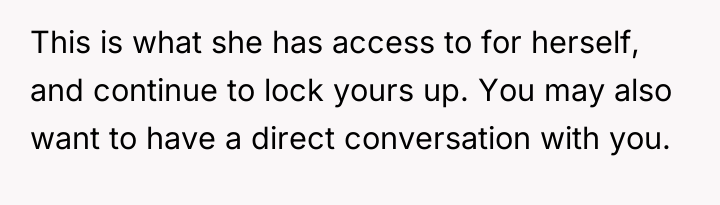
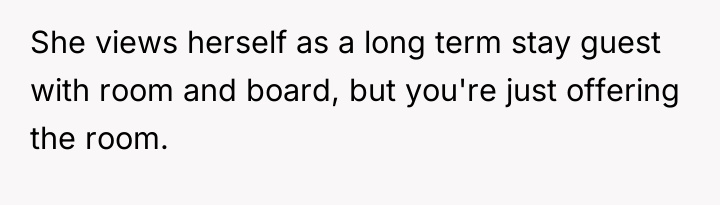

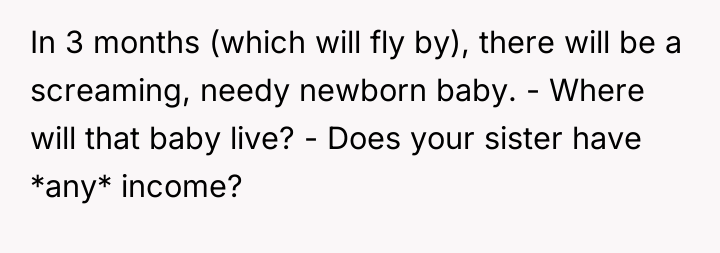
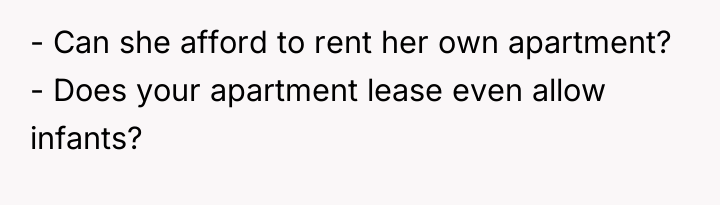
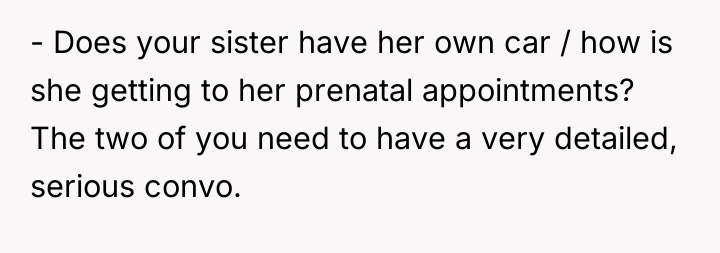

The individual is caught between supporting a pregnant sister during a difficult life transition and maintaining personal boundaries regarding shared living space and resources. The core conflict lies in the sister's continued disregard for the brother's labeled, planned food supply, leading him to take protective measures that the sister perceived as aggressive or uncaring.
Is it justified for a host to unilaterally secure personal property, such as specific nutrition items, when a guest repeatedly violates agreed-upon or common-sense boundaries concerning shared resources, even when the guest is under significant personal distress? Should personal needs and dietary discipline outweigh temporary accommodations for a family member in crisis?