
AITA for putting the kibosh on Sons' n**ed vacation?
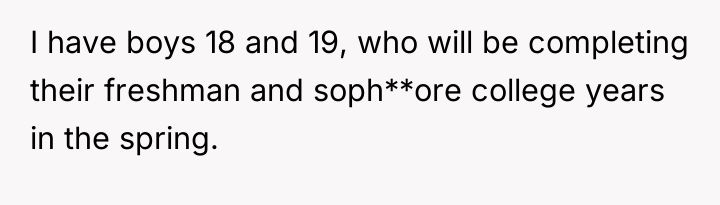
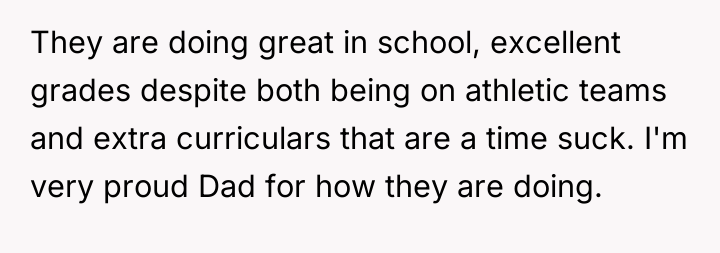
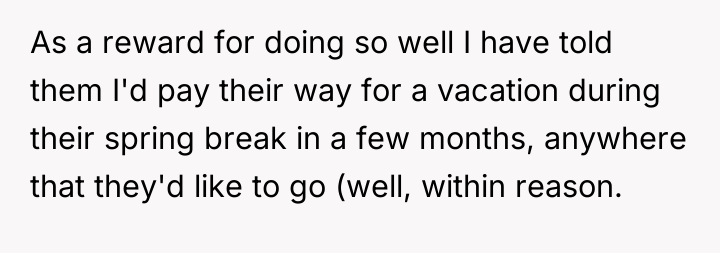
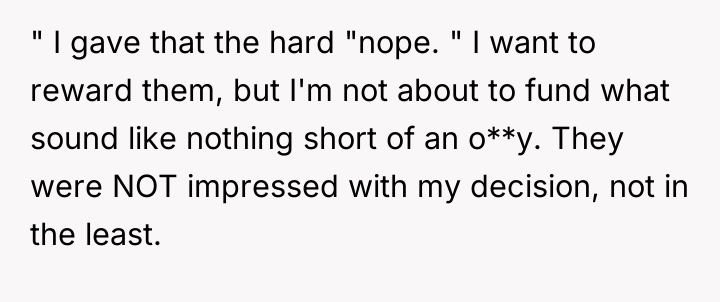
A proud father watches with admiration as his two sons, balancing the demanding worlds of academics and athletics, excel beyond expectations. Their hard work and dedication shine through their excellent grades and busy extracurricular lives, filling him with immense pride and prompting a special reward: a spring break vacation of their choosing, a celebration of their achievements and a chance to create unforgettable memories.
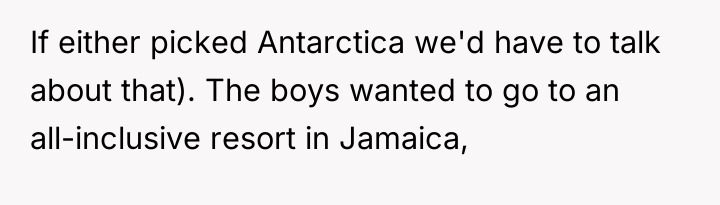
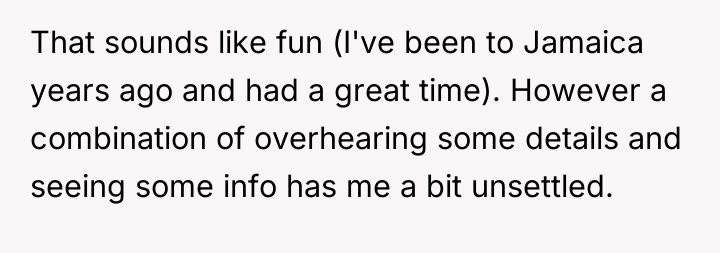
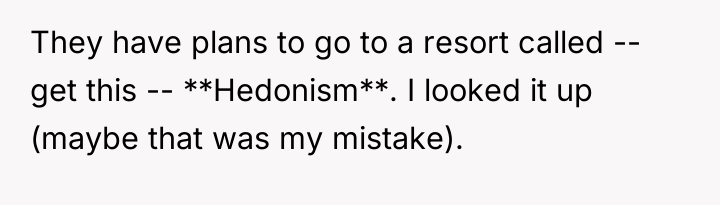
Yet, beneath this joy lies a flicker of unease. The destination chosen by his boys—a resort named Hedonism in Jamaica—stirs a quiet storm of concern in his heart. What began as excitement for their adventure now wrestles with apprehension, as he grapples with the unknown facets of their plans, caught between trust in his sons and the instinct to protect them from the shadows that lurk beneath the surface.








Subscribe to Our Newsletter
According to family systems theory, as outlined by experts like Murray Bowen, parental authority and influence naturally shift as children transition into young adulthood, yet financial support often remains a key lever of control. In this situation, the father is attempting to exert boundary control over his adult sons' leisure choices, a boundary that is becoming increasingly blurred as they attend college and operate with increasing autonomy.
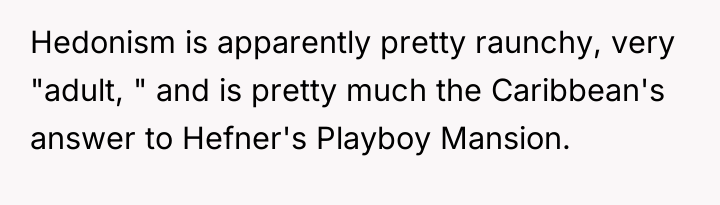
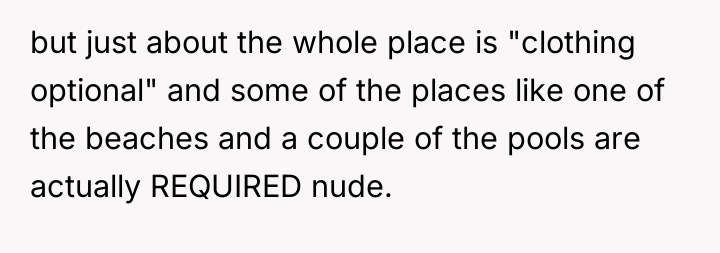
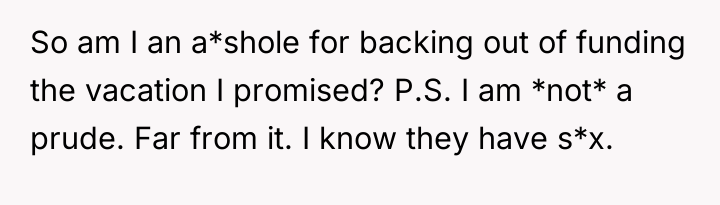
The father's discomfort stems from a conflict between his broad acceptance of his sons' sexual activity (evidenced by providing condoms) and his specific refusal to fund an environment explicitly centered around sexual themes and nudity (the Hedonism resort). This suggests a psychological principle at play: enabling versus endorsing. The father is willing to enable safe, private adult behavior but draws a hard line at actively endorsing or paying for an overtly sexualized group experience. While his desire to maintain financial boundaries around specific activities is understandable from a personal ethics standpoint, backing out of a previously established reward creates a significant issue regarding reliability and perceived conditional love.
A constructive recommendation would involve establishing clearer financial parameters upfront for high-value rewards. For future situations, the father should agree on a budget and general type of trip (e.g., 'an all-inclusive beach trip') and then collaboratively veto specific locations as a family before booking. In this instance, since the promise was made, the father should fulfill the financial commitment but clearly state that this specific venue crosses his personal line, thereby separating the reward for achievement from the specific activity funding. Moving forward, he should focus on rewarding effort and success generally, rather than funding specific, potentially controversial, youth-driven plans.
REDDIT USERS WERE STUNNED – YOU WON’T BELIEVE SOME OF THESE REACTIONS.:
The community had thoughts — lots of them. From tough love to thoughtful advice, the comment section didn’t disappoint.

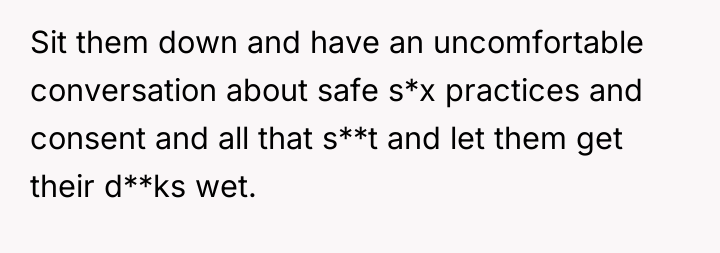
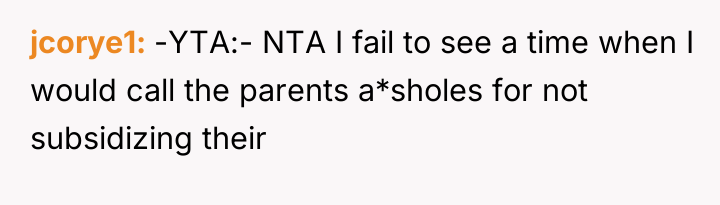

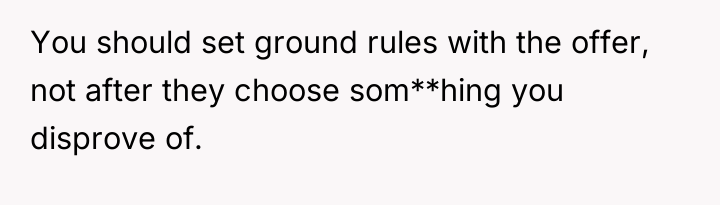










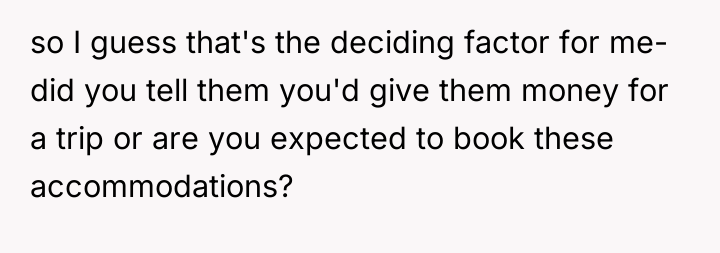
The father is caught between honoring a promised reward for his sons' academic success and his strong moral discomfort with the specific destination they chose. His attempt to support their fun clashes directly with his refusal to finance an environment he perceives as overly explicit and inappropriate for his funding.
Is the father justified in revoking funding for a promised reward based on the nature of the establishment, even when the reward was intended to support the sons' choices? Or does withdrawing the offer fundamentally violate the trust and principle of the promised reward, regardless of the location?