
AITA for refusing to help pay for the damages my son caused at a party?
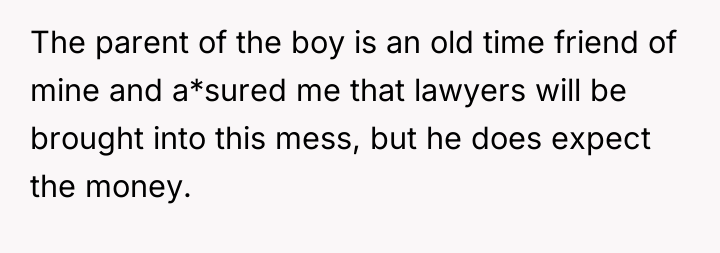
A father’s heart is torn between protecting his children and facing the harsh consequences of their actions. After two decades of marriage and raising two teenagers with trust and freedom, a sudden crisis shatters the fragile balance when Eric’s night out spirals into damage and demands for compensation. The weight of responsibility now threatens not only their family harmony but the dreams they have painstakingly built for their daughter’s future.
Caught in a painful dilemma, the father grapples with the impossible choice between standing by his son or securing his daughter’s education. The clash of loyalty and hardship reveals the delicate threads that hold a family together, as they confront the ripple effects of one night’s mistakes and the sacrifices love sometimes demands.


Dr. Haim Ginott, a renowned child psychologist, emphasized the importance of communicating limits while validating feelings, stating, 'Anger is acceptable; attack is not.' In this scenario, the father is setting a very firm financial boundary based on the cause-and-effect of the son's actions, which addresses the 'attack' (the damage) by demanding restitution. However, the execution risks creating an environment where the son feels attacked rather than disciplined.
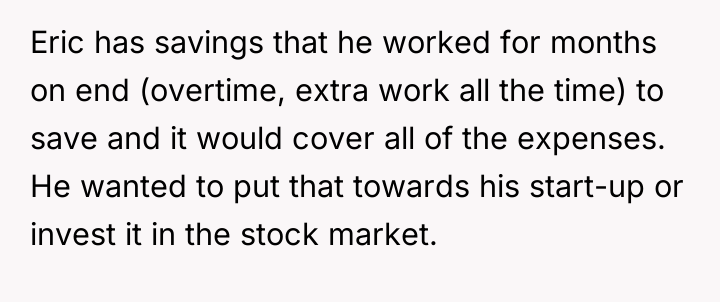
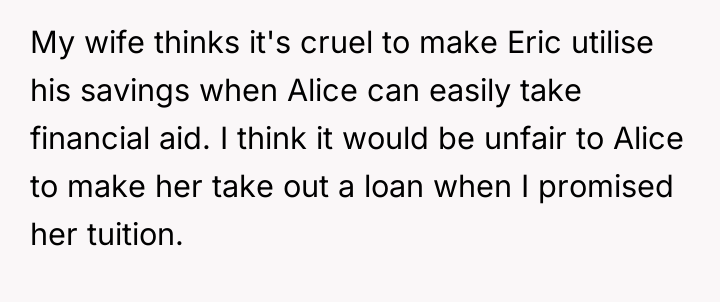
The core conflict here involves parental accountability, sibling equity, and financial planning. The father rightly views the son’s savings as the immediate source to cover the liability he created. Forcing the son to use his savings teaches a powerful lesson about the real-world costs of recklessness, which often outweighs abstract punishment. Conversely, the wife and son perceive this demand as disproportionately punitive because the consequence (using savings) directly impedes the son's future aspirations (start-up/investment), while the alternative (daughter taking loans) seems less severe because it involves outside institutions rather than direct familial sacrifice.
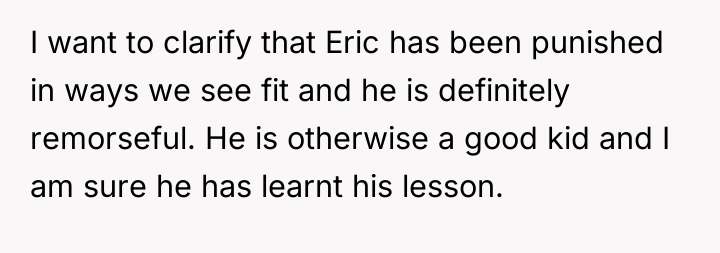
The father’s insistence on punishing Eric by depleting his savings, despite Eric’s remorse, ignores the concept of proportional consequence within the family unit, especially when other parties (like the daughter via loans) can absorb the external shock. While teaching responsibility is vital, leveraging this situation to directly threaten the daughter's promised financial security suggests a failure in creating a dedicated, protected fund for college. A constructive recommendation would be for the parents to agree on a structured repayment plan for Eric to cover the damages over time, perhaps using a portion of his savings immediately, while agreeing to support Alice's tuition as promised, thereby balancing accountability with familial support.
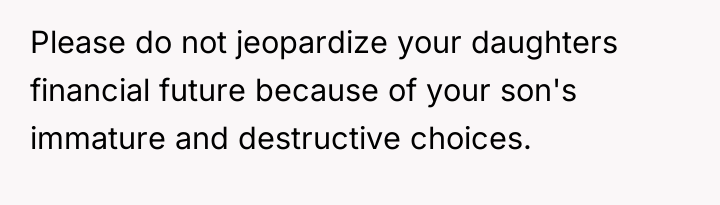
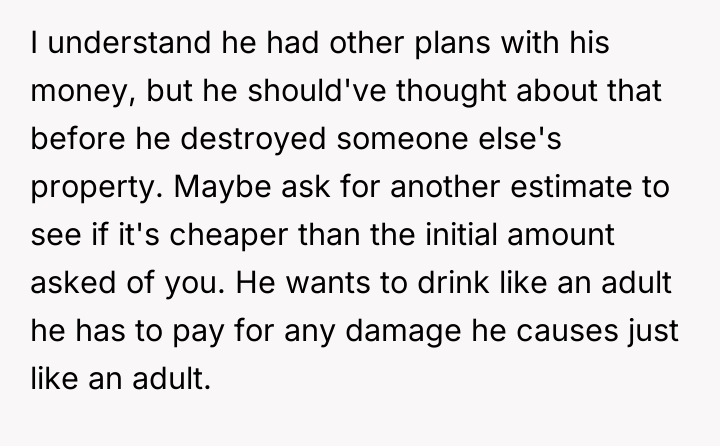
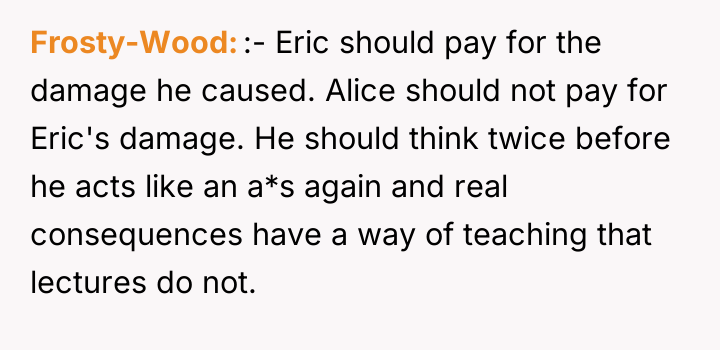
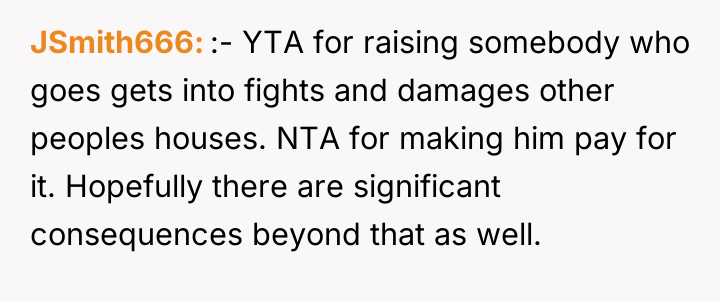
THE COMMENTS SECTION WENT WILD – REDDIT HAD *A LOT* TO SAY ABOUT THIS ONE.:
It didn’t take long before the comment section turned into a battleground of strong opinions and even stronger emotions.
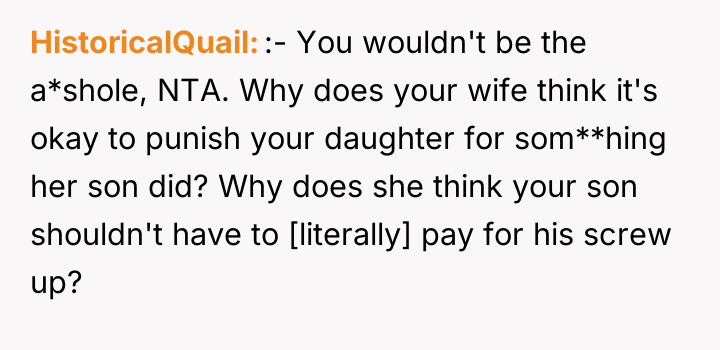
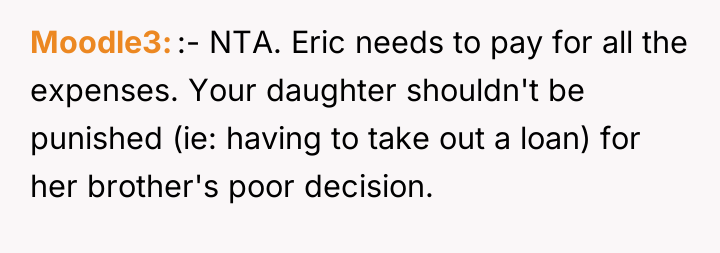
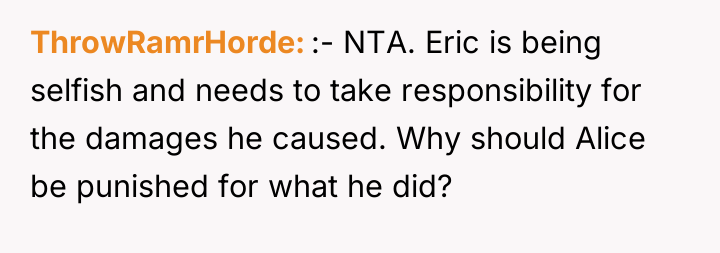
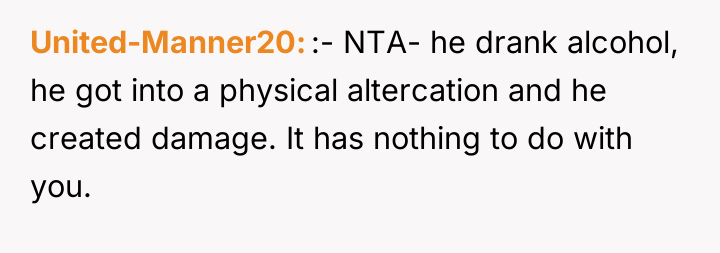
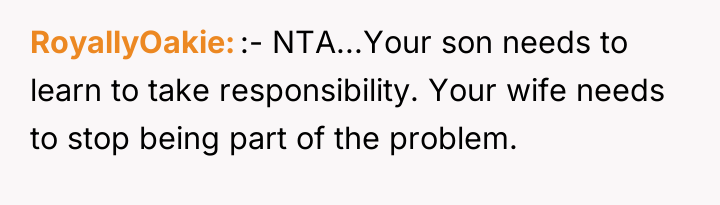
The father finds himself in a difficult position, torn between his commitment to his daughter's guaranteed education fund and the immediate financial responsibility for his son's destructive actions at a party. His attempt to enforce accountability on his son by using his savings directly conflicts with his wife's view that this demand is overly harsh, especially when financial aid is an option for the daughter.
Given that the son has the means to cover the damages and the father has a direct promise to the daughter regarding her tuition, is it more critical to enforce parental responsibility and financial restitution immediately, or is it more compassionate to protect the son's future savings by utilizing available alternatives like financial aid for the daughter?