
AITA for buying my daughter a bag of chips?
In the delicate dance of blending families, small acts often become the silent battlegrounds where love and frustration collide. A parent's heart is tested not just by grand gestures, but by the quiet struggles over something as simple as a bag of potato chips—a symbol of fairness, respect, and belonging in a household still finding its rhythm.
What began as a minor annoyance spiraled into a poignant reflection of boundaries and understanding, revealing the fragile threads that hold a blended family together. Amid the chaos of teenage appet*tes and sibling rivalry, the parent's quiet plea for harmony underscores the deeper yearning for acceptance and peace in a home that feels just a little too small for all their dreams.

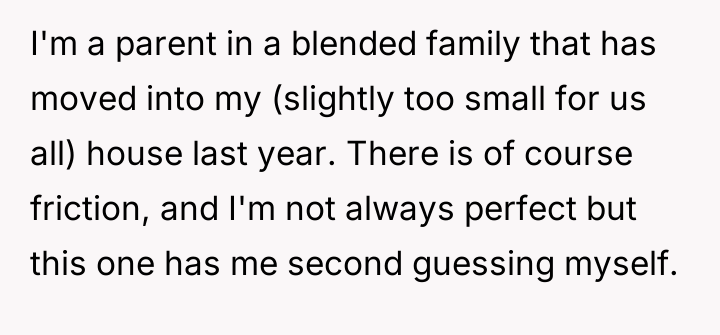
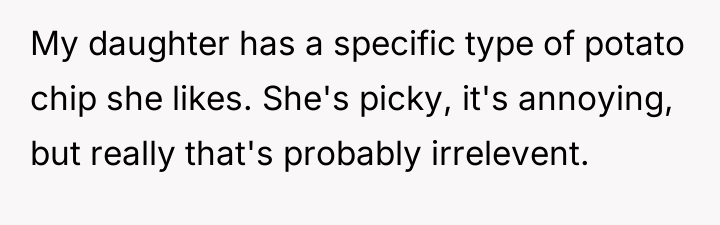
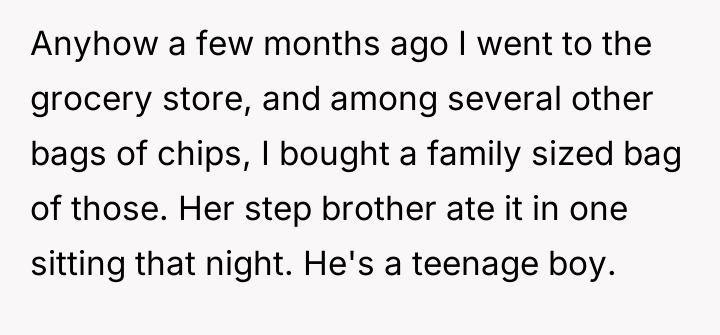
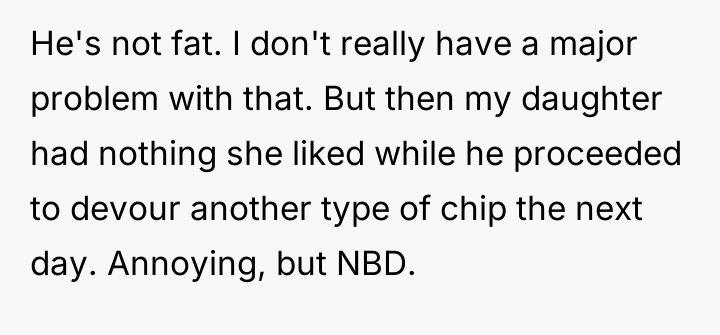

Subscribe to Our Newsletter
As stated by Dr. Terri Apter, an expert on stepfamily dynamics, 'The creation of boundaries and ground rules that respect the history and needs of each partner and child is crucial for stepfamily success.' In this situation, the core conflict is not about potato chips, but about perceived fairness, resource allocation, and establishing shared family norms in a newly formed, slightly overcrowded household.
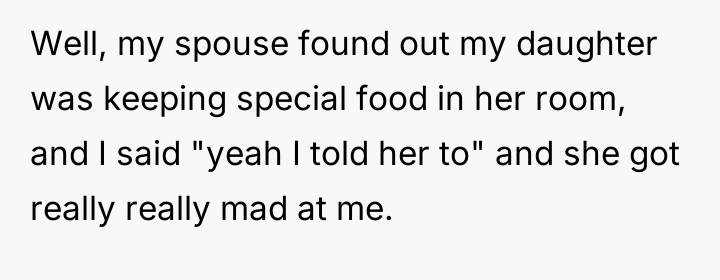
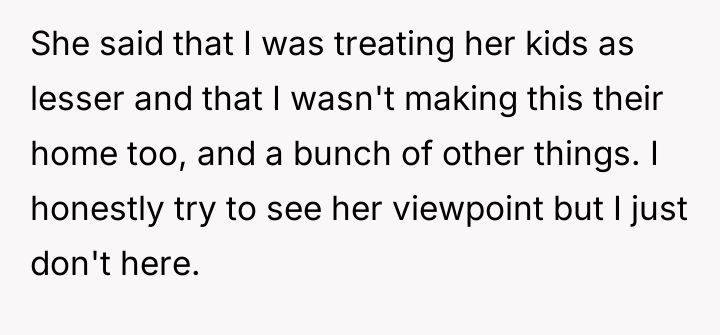
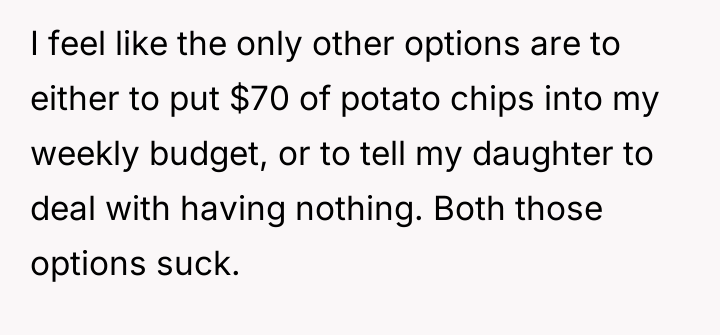
The parent's motivation was to ensure their biological daughter felt secure in having her specific needs met, thereby avoiding an emotional reaction. This is a common parental instinct: protecting one's child. However, by facilitating private storage, the parent unintentionally signaled to the spouse that separate rules or entitlements existed based on biological relation, directly violating the need for perceived equity in a stepfamily structure. The step-parent (the spouse) likely felt that setting a precedent where one child has 'special' reserved food fosters resentment and challenges the 'making this their home too' message.
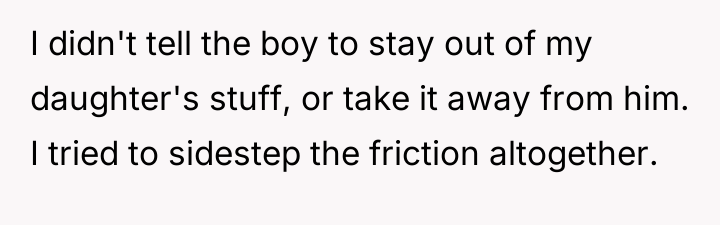
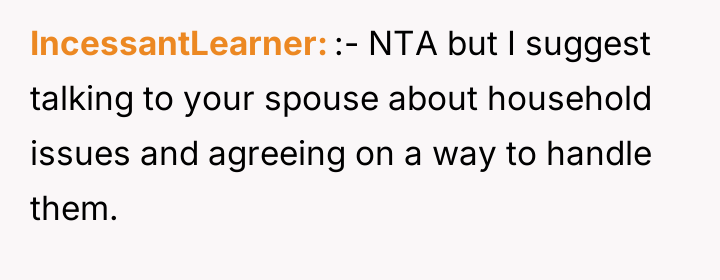
The parent’s approach prioritized conflict avoidance over transparent, shared boundary setting. A more constructive approach, aligning with principles of establishing clear family systems, would have been to discuss the consistent overconsumption with the spouse first. Recommendation: The parent should sit down with the spouse to agree on a unified policy—whether that is buying a larger quantity for general consumption, establishing clear rules for sharing communal snacks, or allocating a specific budget for specialty items for each child—and then communicate that single policy to all children together. This replaces secret accommodations with visible, agreed-upon equity.
THIS STORY SHOOK THE INTERNET – AND REDDITORS DIDN’T HOLD BACK.:
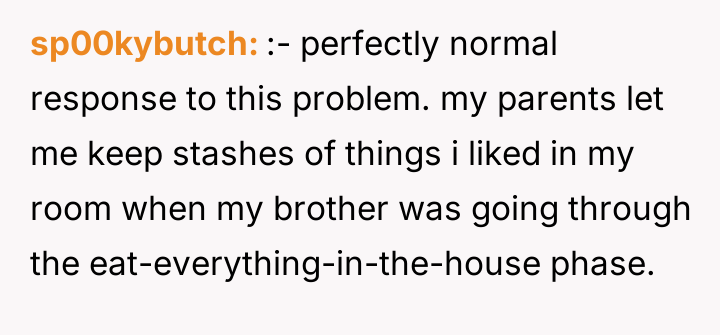
The internet jumped in fast, delivering everything from kind advice to cold truth. It’s a mix of empathy, outrage, and no-nonsense takes.
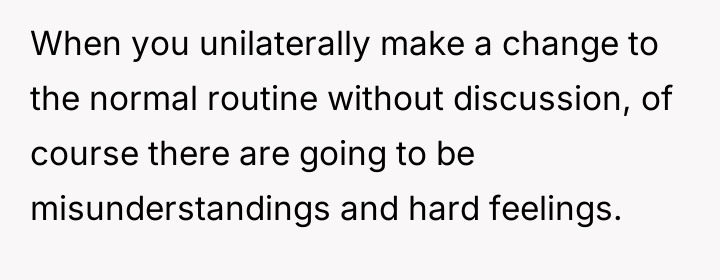
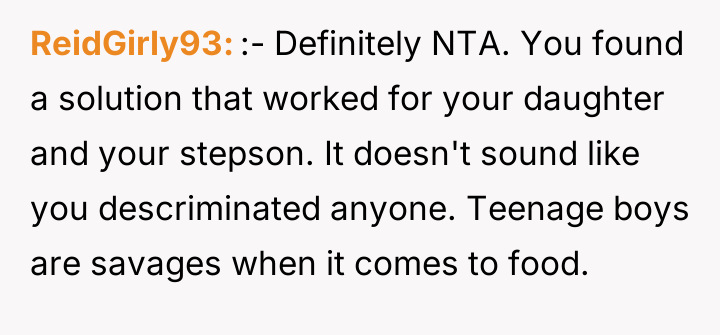
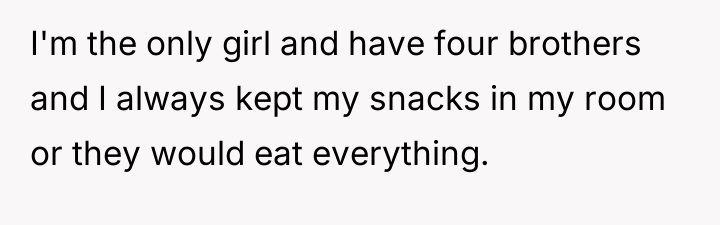
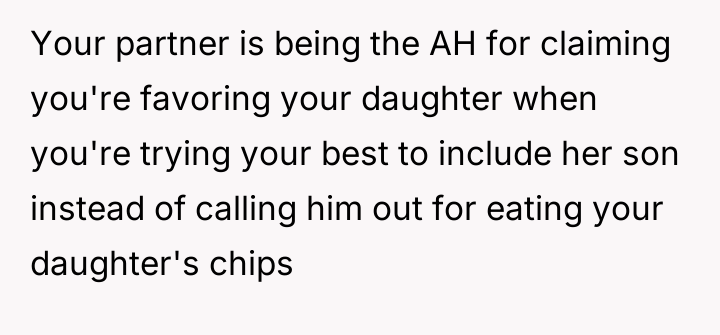
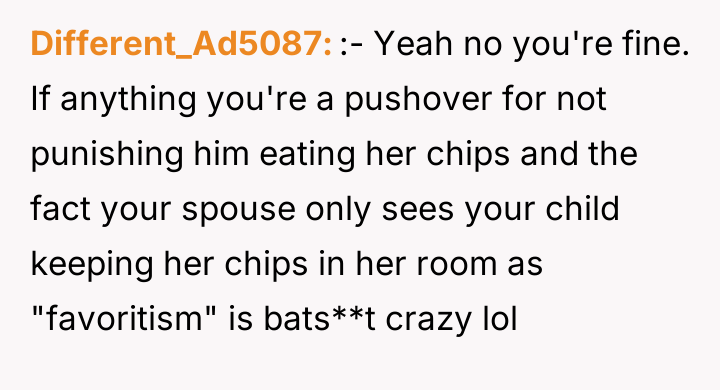
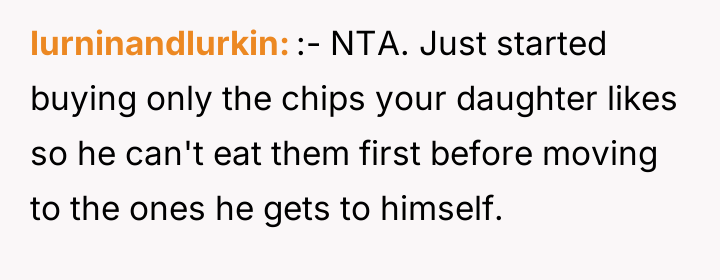
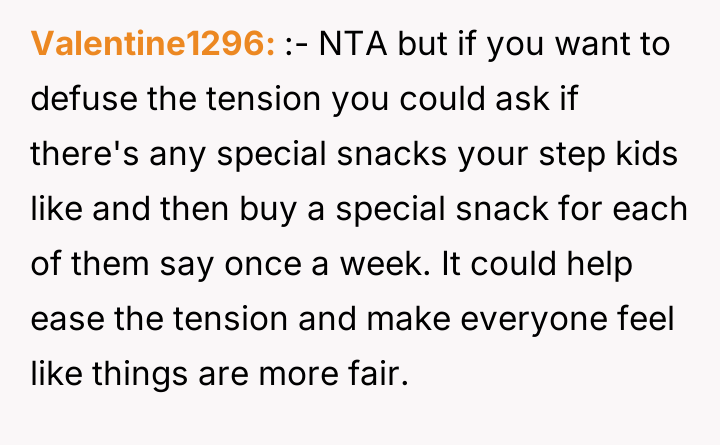
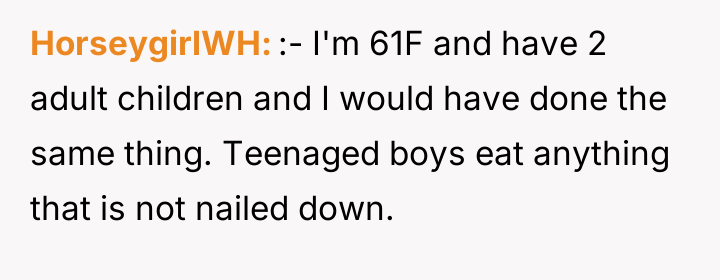
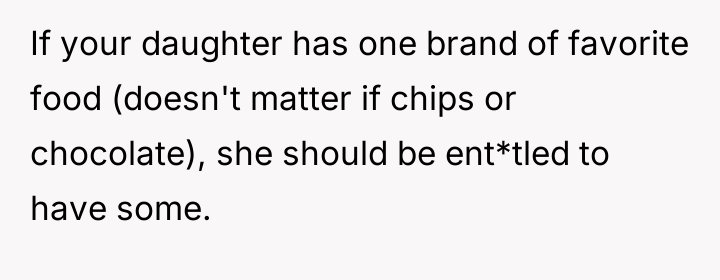
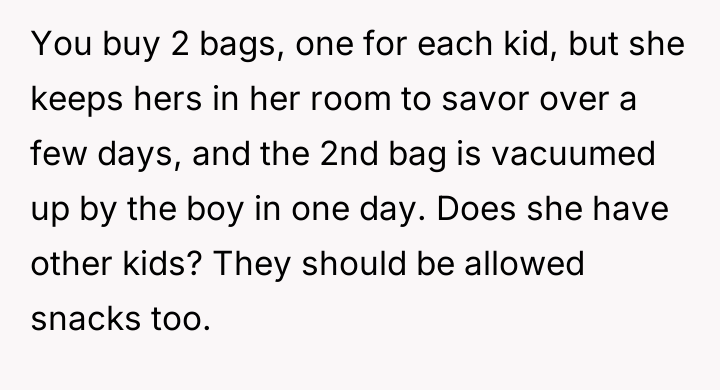
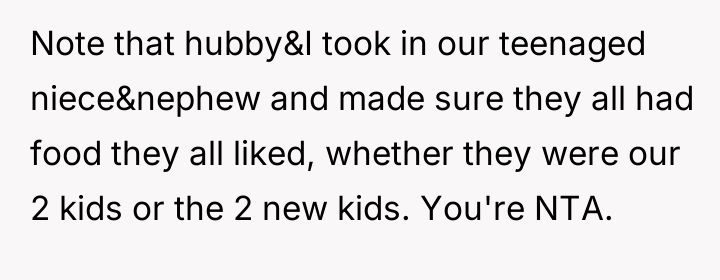
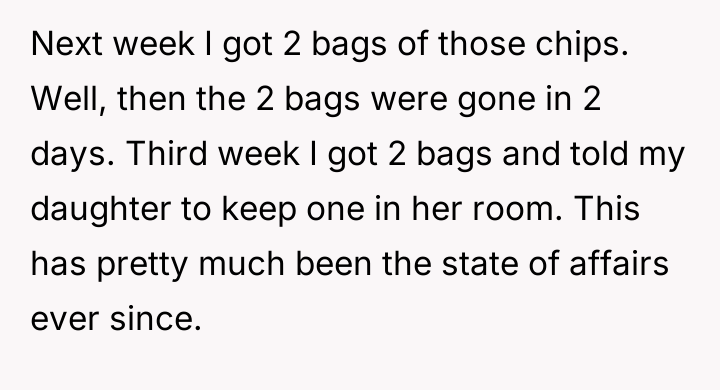
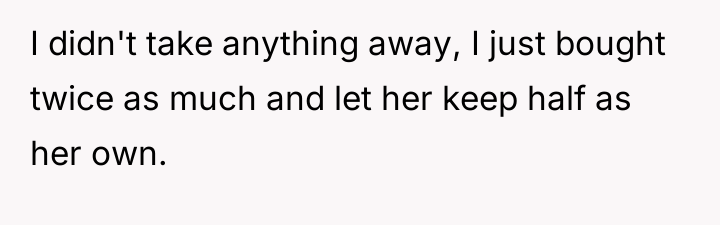
The parent attempted to solve a recurring conflict over a specific snack by managing supply—buying extra and allowing the daughter to store some privately. This action, intended to prevent friction and ensure fairness for the daughter, was interpreted by the spouse as creating a hierarchy where the stepson was being excluded or treated as lesser in the shared household.
Was the decision to facilitate private storage of desired snacks an appropriate, pragmatic solution to managing picky eating habits and unequal consumption, or did it fundamentally undermine the goal of establishing a unified, equitable blended family environment?