
Husband And Wife Save $4 Million To Retire Early, His Financially Irresponsible Parents Found Out And Are Berating Him For Not Lending Them Money
In the quiet aftermath of a lifetime of hard work and sacrifice, a couple finds themselves perched on the edge of a new chapter, armed with a modest fortune and a shared dream of peace. But beneath the surface of their cautious contentment lies a storm of familial expectations and financial desperation, threatening to unravel the sanctuary they have so carefully built.
Caught between love and loyalty, they face the crushing weight of relentless demands from those they once called their own, whose reckless choices have left them adrift in a sea of debt. In this fragile balance of trust and survival, every secret kept and every boundary drawn becomes a battle for their future—and their freedom.

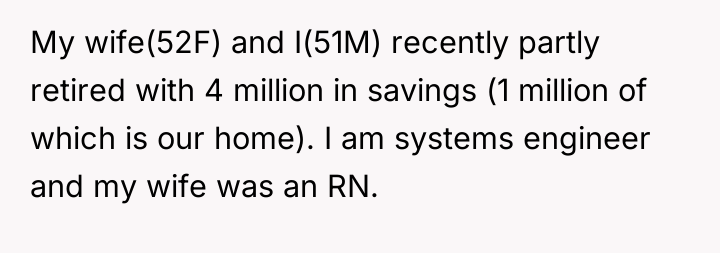











Dr. Ramani Durvasula, a clinical psychologist specializing in narcissistic abuse and dysfunctional family dynamics, frequently notes that financial control and secrecy often serve as boundary mechanisms in families where one party is chronically dependent or exploitative. In this scenario, the husband (OP) implemented a strategy of financial misrepresentation ('pretending we are dead broke') as a defense mechanism against the known history of his parents' and brother's financial irresponsibility and subsequent demands for money.
The motivation here is primarily self-preservation and protecting earned assets from perceived financial predators within the immediate family unit. The OP's experience—where past vacations led directly to requests for funds—validates his cautious approach. However, the disclosure by his son unintentionally dismantled this protective barrier, creating a crisis of trust. The conflict is classic: the family feels entitled to shared prosperity (or at least transparency), while the OP feels entitled to keep the fruits of his labor private, especially given his family's poor stewardship of their own resources.
Ethically, adults are generally not obligated to bail out other capable adults who have made poor financial choices, especially when those choices result in recurring dependency. The OP's strategy, while dishonest, was a reactive boundary enforcement. The constructive recommendation for the future is to pivot from deception to direct, firm communication. Instead of pretending to be broke, the OP should firmly state that while he cares for them, his assets are allocated for his retirement and will not be used to subsidize their ongoing debt or spending habits. This establishes a healthy, albeit potentially uncomfortable, boundary moving forward.
THIS STORY SHOOK THE INTERNET – AND REDDITORS DIDN’T HOLD BACK.:
Users didn’t stay quiet — they showed up in full force, mixing support with sharp criticism. From calling out bad behavior to offering real talk, the comments lit up fast.


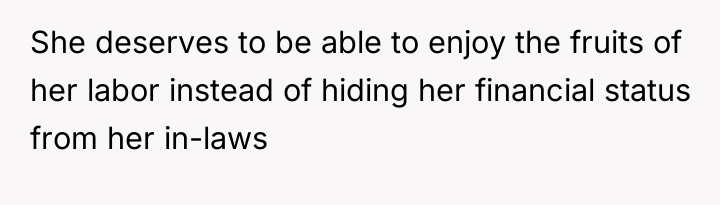












The man feels a deep conflict between his desire to protect his financial security and the perceived obligation to support his struggling family members. His past actions, rooted in a need for self-preservation against constant demands, have now been exposed, forcing a confrontation regarding his financial status.
Given that the financial deception has been revealed, is the husband justified in continuing to conceal his true financial situation from his family to maintain boundaries, or does the knowledge of their semi-retirement now create a new, unavoidable obligation for him to offer support?