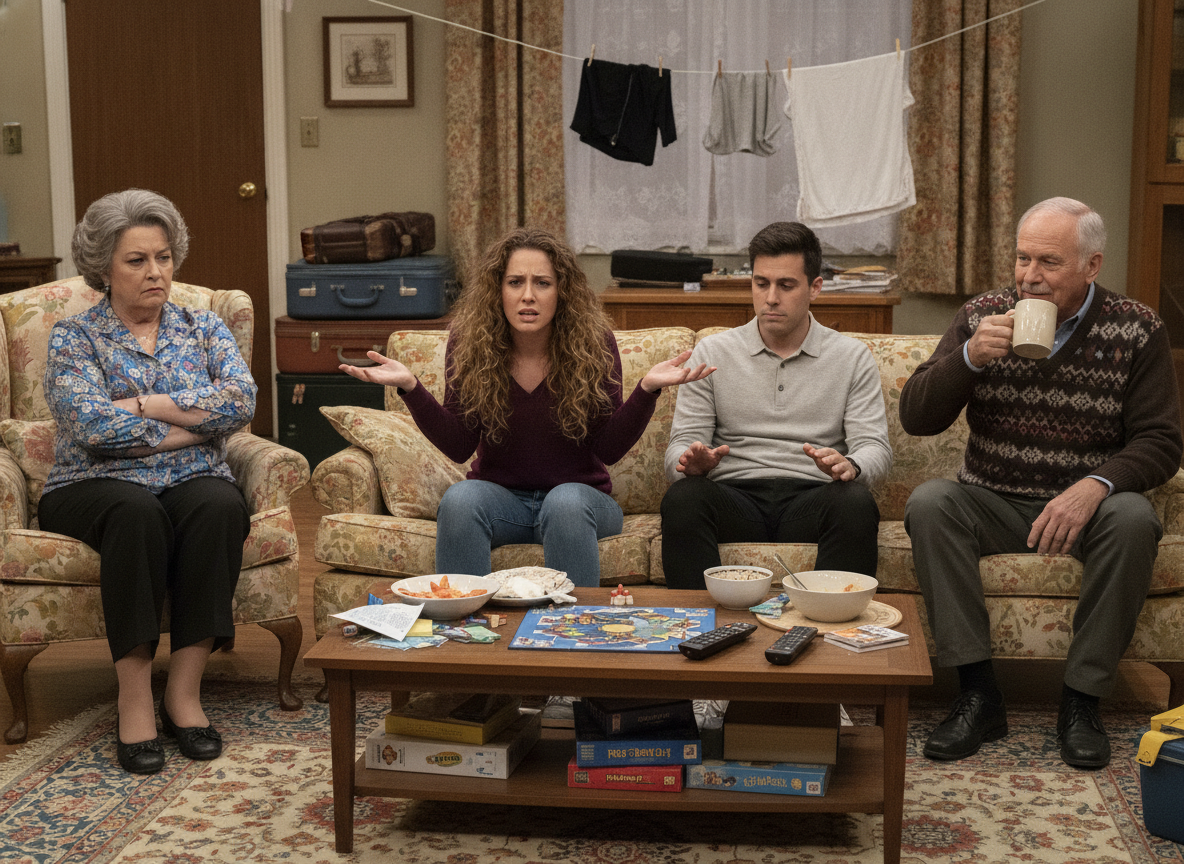
Siblings Challenge Middle Daughter's Inheritance Rights After She Was Declared the Sole Beneficiary by Their Deceased Father
Betrayed and isolated, she faced the heartbreaking truth of her family’s silent fracture. For years, her parents’ separation was a secret kept from her, and her siblings had severed ties with their father, leaving her to bridge the painful divide alone. In reaching out, she found solace in renewed days filled with laughter, rides, and shared meals—a fragile thread of connection in a family unraveling.
But joy turned to despair when her father fell ill, and she found him alone and vulnerable, a stark reminder of the loneliness that had crept into their lives. While she stood vigil by his hospital bedside, her siblings and mother arrived only to visit him, leaving her to endure the silent hall, a witness to the growing chasm that no words could mend.




According to estate planning experts like those cited by the American Bar Association (ABA), the designation of a Payable on Death (POD) beneficiary on a bank account bypasses the probate process entirely, meaning the funds legally belong to the named individual (the daughter) upon the owner's death. Similarly, if the house was legally deeded to her or if the Will clearly named her as the sole beneficiary and that Will was executed correctly, her claim to the property is legally sound, independent of the siblings' desires.
The core conflict here is not legal but emotional and relational, driven by feelings of exclusion and perceived unfairness. The daughter was estranged but became the primary emotional and physical caregiver, which often establishes an implicit contract or expectation of reward (the inheritance) that the other siblings resent because they were absent. The mother’s influence and the siblings’ initial silence after the parents' separation suggest a pattern of excluding the daughter, making their current demands feel hypocritical to her. The daughter's act of giving them $15,000 suggests an attempt to buy peace or fulfill a perceived moral obligation, which, unfortunately, only signaled to the siblings that the daughter might be willing to concede more under pressure.
The daughter's actions in securing her father's welfare (reporting abuse, hiring an attorney) were ethically appropriate and demonstrated commendable advocacy. Moving forward, she should cease all discussion regarding the inheritance with her family and rely solely on her attorney to manage the current demand letter. Her constructive recommendation should be to maintain firm legal boundaries: all communication regarding the estate must go through legal counsel, and no further voluntary financial concessions should be made, as doing so validates their coercive tactics.
THIS STORY SHOOK THE INTERNET – AND REDDITORS DIDN’T HOLD BACK.:
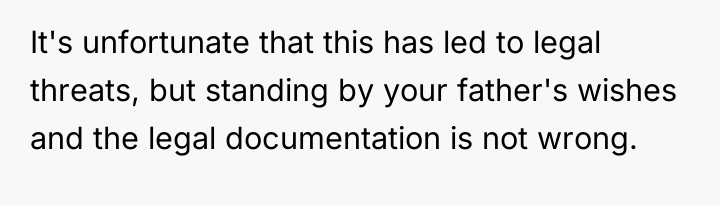
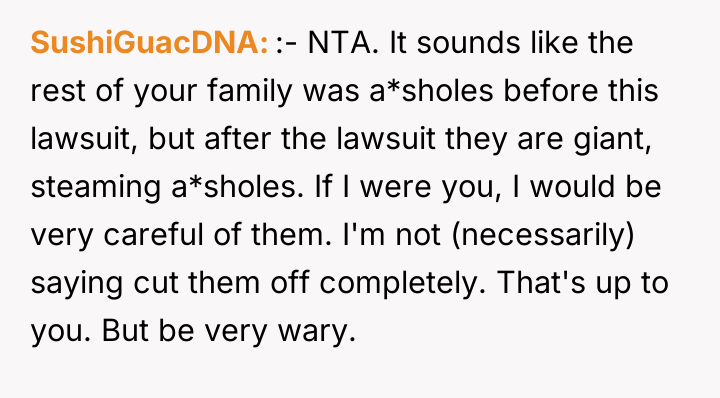
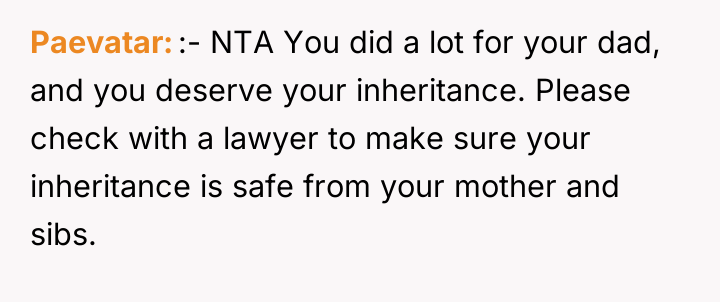
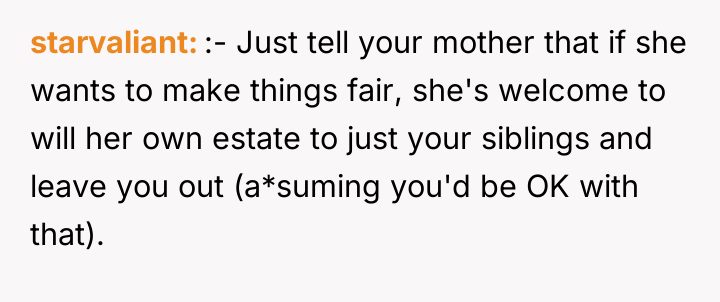
The community had thoughts — lots of them. From tough love to thoughtful advice, the comment section didn’t disappoint.
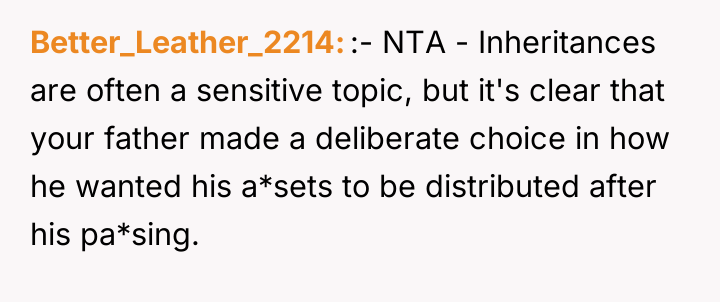
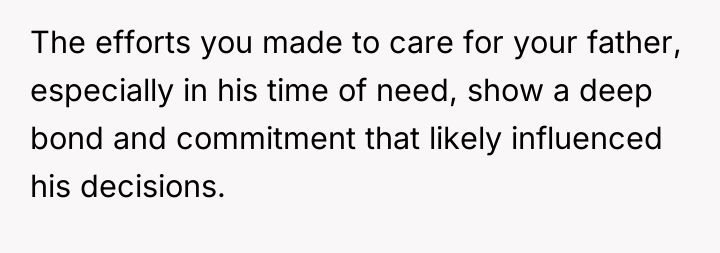
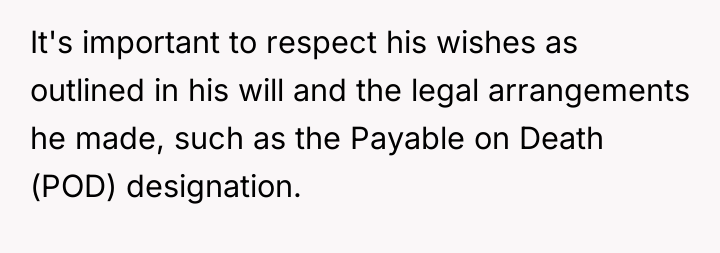
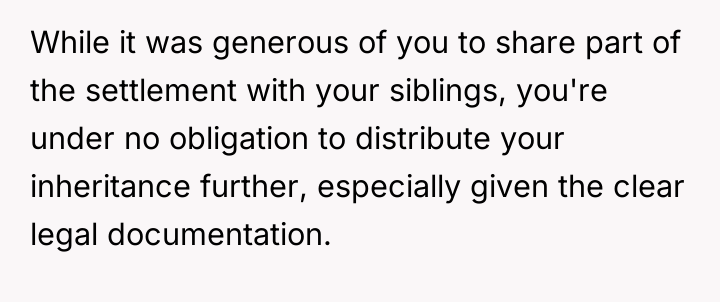


The woman deeply valued her relationship with her father, acting as his primary caregiver and advocate during his final health crises, which ultimately led to her inheriting his assets as per his explicit instructions. However, this dedication has resulted in severe familial conflict, as her siblings and mother believe they are entitled to an equal share of the inheritance, creating a four-year-long dispute over the ownership of the house and the money already shared.
Given the documented legal beneficiary status for the house and the bank account, is the threat of a lawsuit by the siblings to force the transfer of the home a credible legal risk, or is it merely an attempt at financial coercion based on perceived familial obligation rather than legal right?
Trending This Week

AITA for telling my sister she has more than enough children?
My sister already has six children with her husband, which is far more than they can comfortably provide for given their financial troubles. It is also more than both of them can handle, resulting in my fifteen-year-old niece being treated as an unpaid babysitter who is constantly expected to help with her younger siblings. Recently, my sister experienced a miscarriage during the early stages of her seventh pregnancy. While talking to her about this painful experience, I remarked that at least she already has six other children and suggested that perhaps that is enough. My sister was highly offended, calling me insensitive and stating that her family choices do not concern me. However, they do affect me, as I have loaned her and her husband money on multiple occasions to help support their household.
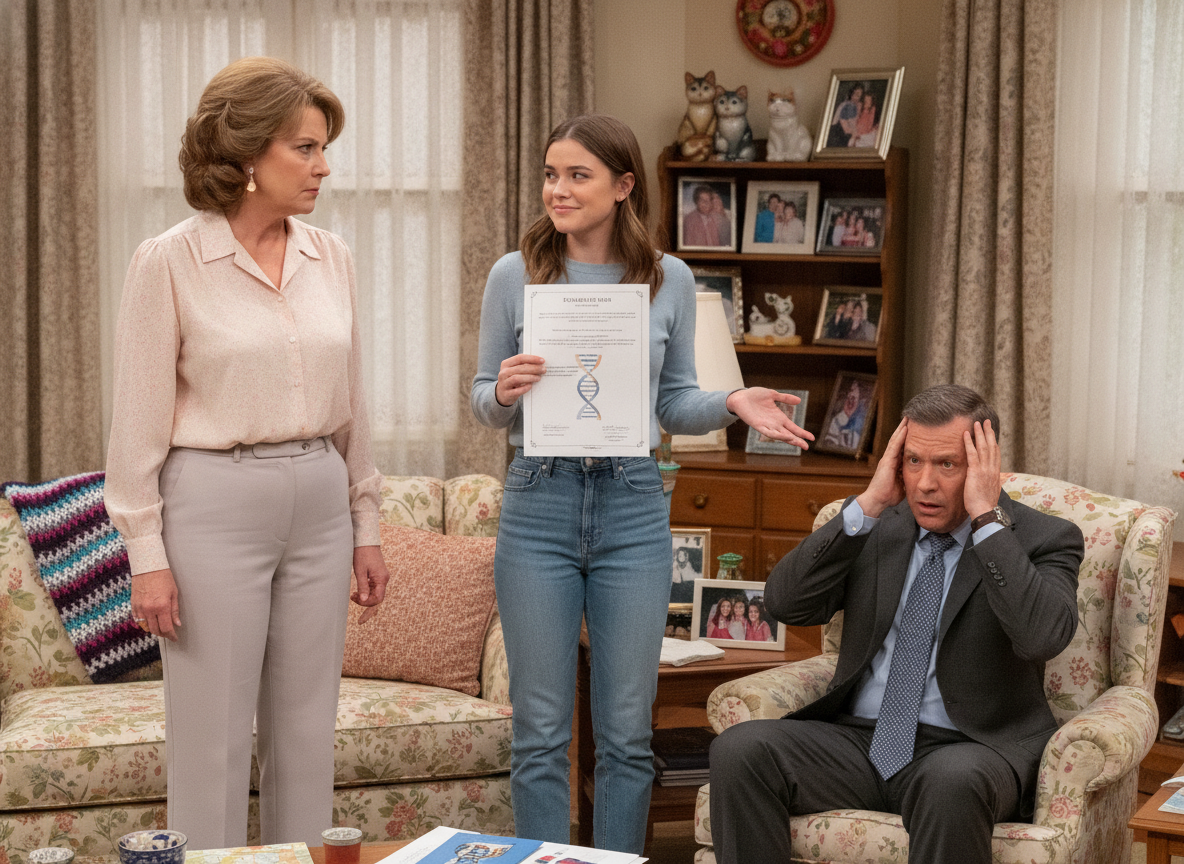
AITAH for getting a dna test to see if i share the same dna as both my parents even though i was demanded specifically by my mom not to do so, since i was a child?
I have always suspected that I might not be biologically related to my parents. Growing up, my mother treated me and my younger brother very differently. I was disciplined more harshly, grounded for longer periods, and subjected to invasive phone searches, while my brother faced few consequences even when he got his girlfriend pregnant at sixteen. My father was mostly passive and uninvolved in my upbringing. Due to the toxic environment, I eventually moved 1,000 miles away with my spouse to find peace. My suspicions are fueled by physical and legal anomalies. I do not share my parents' physical features, such as their freckles or dark brown eyes, and I am the only person in both my immediate and extended family with a completely different last name. Whenever I questioned my mother about my last name, she became defensive and refused to explain. Recently, during a family visit, a card game prompted me to admit to getting a DNA test. My mother reacted with immediate anger and hostility, which caused me to panic and lie that I was joking. Despite promising my mother during my childhood that I would never take a DNA test, my curiosity led me to purchase a kit. My mother's oldest sister recently found a long-lost sister through a DNA test, yet my mother remains strictly opposed to me doing the same. I have sent my kit in and expect the results soon, but I feel immense guilt, as if searching for the truth is a betrayal that could ruin my family relationships.

AITA for staying anonymous after reporting my sister and her husband to CPS?
My sister met her husband when she was pregnant with another man's child. She never told anyone in the family who the father is, and she never told the father about the child either. Her husband refused to include my nephew in the wedding or treat him as his own. Since they had their own children, his bad treatment of my nephew has become worse. He refuses to watch my nephew, threatens to let him starve, and says he would not stop him from getting hurt. My sister ignores this and defends her husband. I reported this to Child Protective Services anonymously. They investigated but did not remove my nephew because there were no physical injuries. My sister is angry about the report and wants to find out who made it. Some of my family think it is cowardly to stay anonymous, but I worry that if my sister finds out it was me, I will never see my nephew again.