
Couple Gets Into Heated Argument As Wife Challenges Husband's Traditional Views That Woman Must Cook For Family
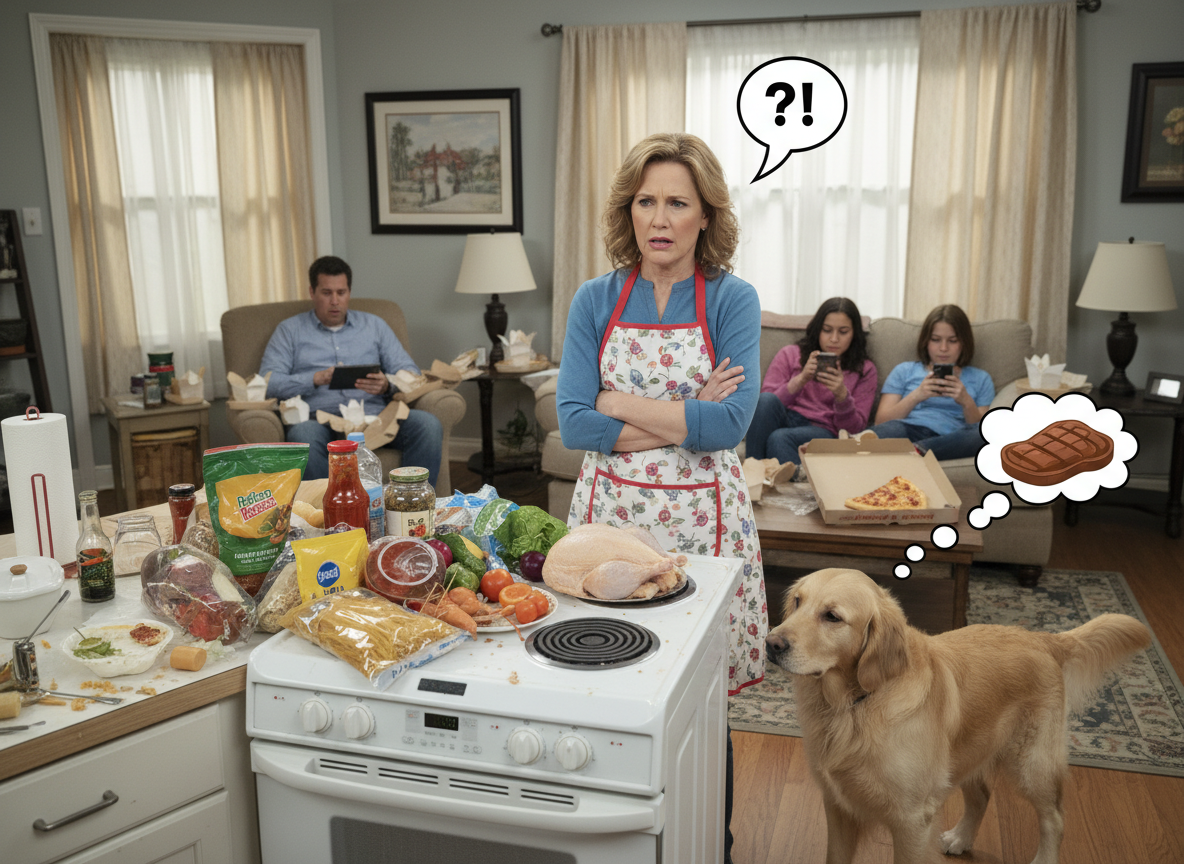
A weary mother, juggling the demands of family life, finds herself caught in a quiet battle over something as simple as dinner. After a late afternoon buffet, her husband’s anger over her reluctance to cook ignites a deeper tension, exposing the fragile balance between care and exhaustion in their home.
In the midst of this ordinary moment, the mother asserts her need for understanding and respect, challenging the expectation that she must always be the caretaker. Her quiet resistance speaks volumes about the unspoken struggles many face, where love and duty collide with the very human need for rest and autonomy.



According to Dr. Terri Givens, an expert in family dynamics and gender roles, the conflict often lies not in the labor itself, but in the embedded, often unspoken, assumptions about who 'owns' that labor. Givens notes that in many partnerships, the division of household tasks defaults to traditional gender roles unless actively and explicitly renegotiated, leading to resentment when one partner feels they are carrying an unequal 'mental load' or 'emotional labor.'
The husband's insistence that it is the wife's 'job' to provide a balanced meal reflects a strong adherence to traditional scripts regarding maternal responsibility for household sustenance. The wife, feeling tired and having already accommodated a large meal out, asserted a boundary based on immediate capacity. While the children and husband are capable of making simple food, the husband's reaction suggests he views the 'balanced meal' preparation as a specific type of caregiving that falls under the wife's domain, irrespective of circumstance. This pattern highlights a breakdown in shared responsibility and communication regarding the daily management of family needs.
From a professional standpoint, the wife’s action of providing a main dish (the roast) and setting clear self-service expectations was a reasonable, albeit passive-aggressive, assertion of her exhaustion boundary. However, the underlying issue is the lack of shared responsibility for meal planning and preparation. For future situations, the most constructive approach is for the couple to collaboratively define 'feeding the family'—establishing a rotating schedule or clearly defining when meals are catered versus self-prepared, thus ensuring the burden of provisioning does not automatically default to the mother.
AFTER THIS STORY DROPPED, REDDIT WENT INTO MELTDOWN MODE – CHECK OUT WHAT PEOPLE SAID.:
The crowd poured into the comments, bringing a blend of heated opinions, solid advice, and a few reality checks along the way.

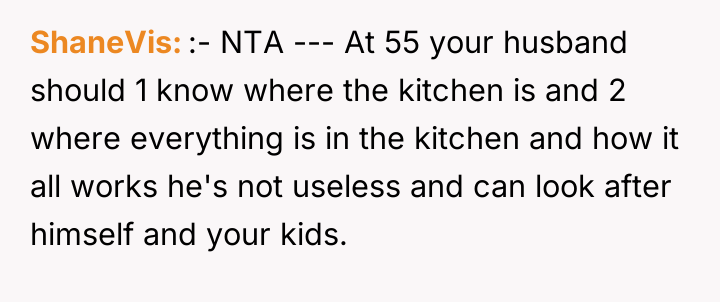



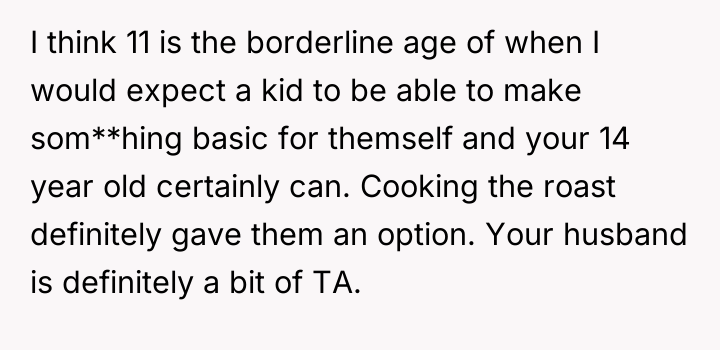
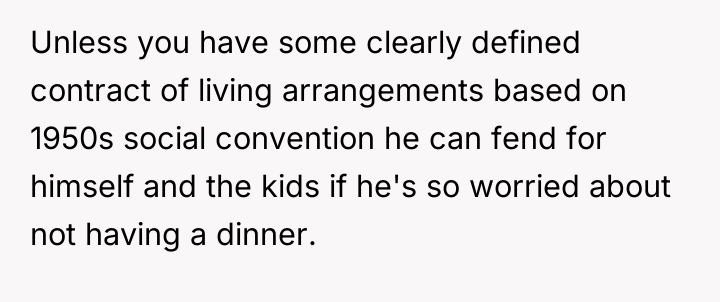
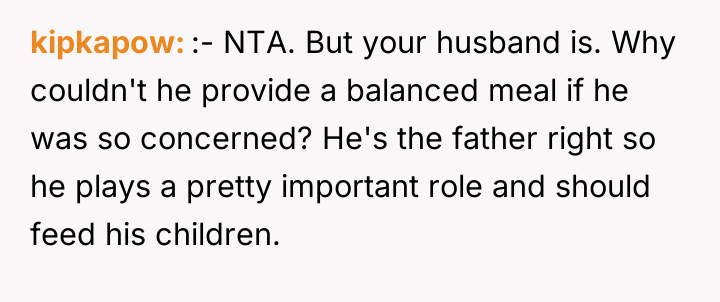


The original poster expressed exhaustion and a desire not to cook after already eating out, creating a conflict with her husband's expectation that she, as the mother, is solely responsible for providing a balanced, home-cooked meal. Her stance prioritizes her immediate well-being and the capability of the family members to self-serve.
Is the expectation that the mother must always provide a prepared, balanced dinner, even after a large, late lunch, a fair burden in a modern household, or does the capacity of all capable family members to prepare simple food override the traditional division of domestic labor?