
Dog Owners Discuss A Worrying Trend - Parents Not Wanting To Help Their Kids With “Their” Dogs
In countless homes, the innocent hope of a child to care for a beloved dog often clashes with harsh reality—a reality where the weight of responsibility is too heavy for young shoulders to bear. The silent struggle of children caught between their own growing pains and the needs of a living being reveals a profound truth: love alone is not enough to nurture a pet’s life.
This story is a heartfelt plea to parents everywhere to recognize that a dog is not just a gift for a child, but a lifelong family commitment. It challenges the common misconception that children can single-handedly provide the care, time, and resources needed, reminding us all that true compassion means sharing the burden, not passing it down.
Dr. Gail Melson, a developmental psychologist specializing in human-animal interactions, frequently discusses the dual role pets play in child development: as sources of emotional support and as learning tools for responsibility. Melson's work suggests that the positive outcomes for children (empathy, nurturing skills) are contingent upon adult modeling and scaffolding of care tasks.
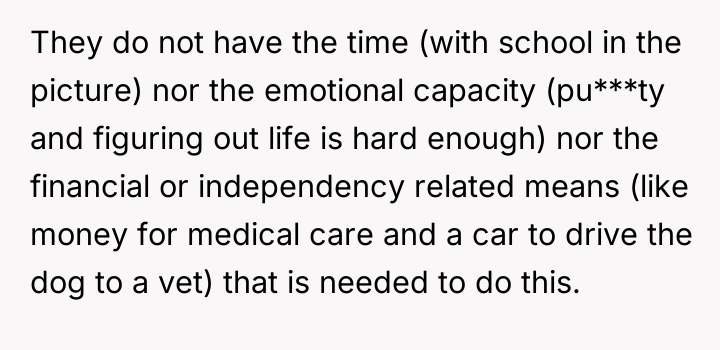
The core issue presented here is one of mismatched expectations and a failure to establish clear boundaries of responsibility, which affects both the child and the animal. Children, particularly those experiencing puberty, often lack the executive functioning skills and consistent motivation required for long-term care tasks like veterinary visits or consistent training. When parents delegate total responsibility, they risk creating emotional distress for the child if they fail, or worse, neglect the animal’s welfare, violating the ethical contract made when bringing a dependent creature into the home.
The author's conclusion that adults must be prepared to take over is psychologically sound. Responsibility is taught, not simply assigned. For future situations, adults should implement a 'co-ownership' model where the child manages age-appropriate tasks (feeding, walking) while the parent handles finances, health management, and major training hurdles. This approach honors the child's desire for connection while safeguarding the animal's well-being.
THIS STORY SHOOK THE INTERNET – AND REDDITORS DIDN’T HOLD BACK.:
When users weighed in, they held nothing back. It’s a raw, honest look at what people really think.
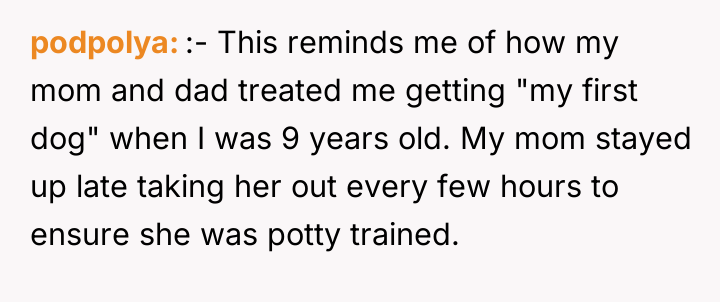
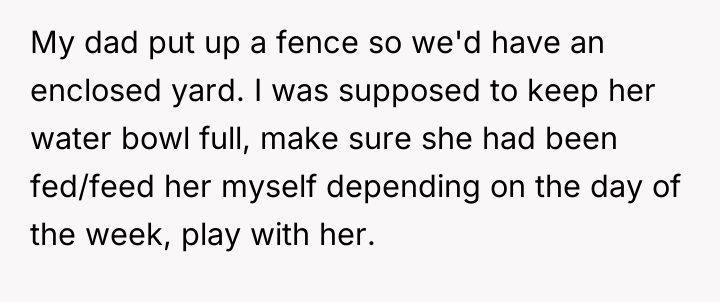

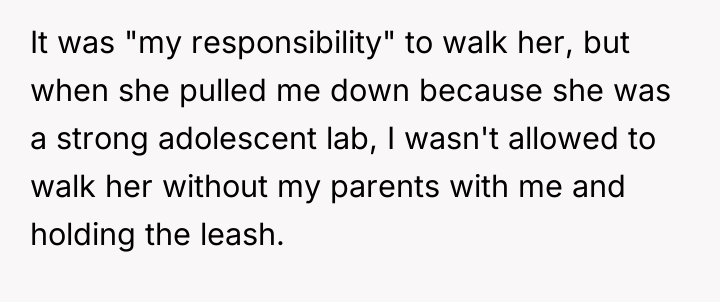
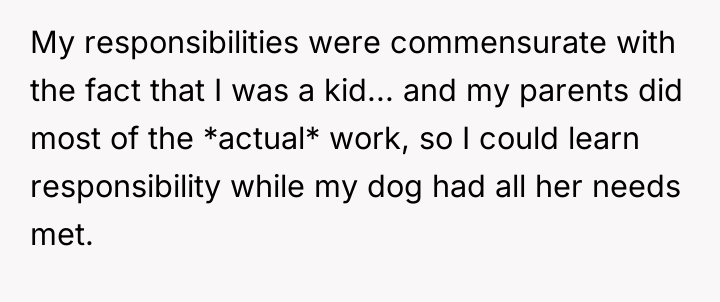

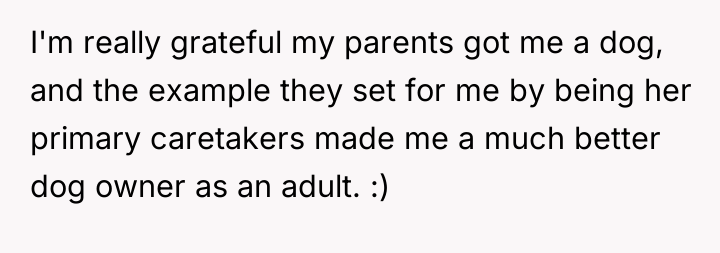

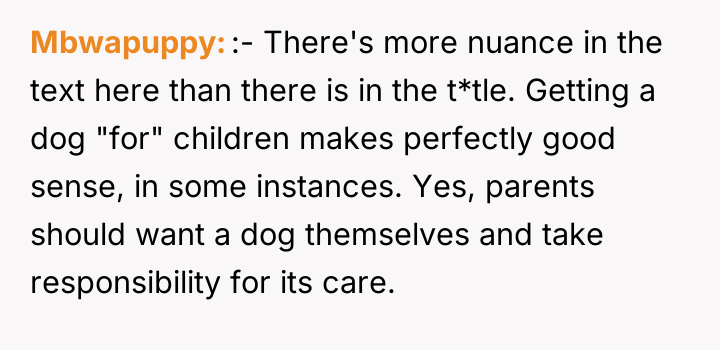
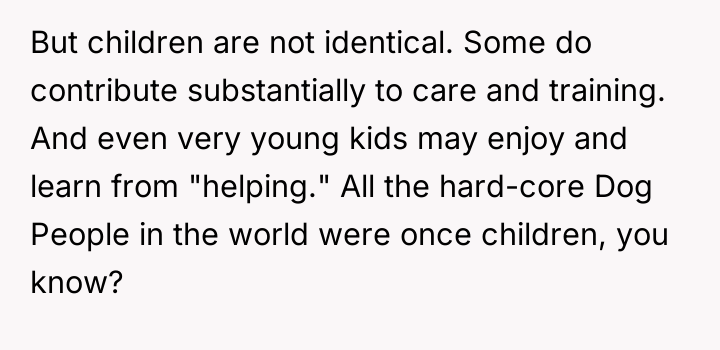
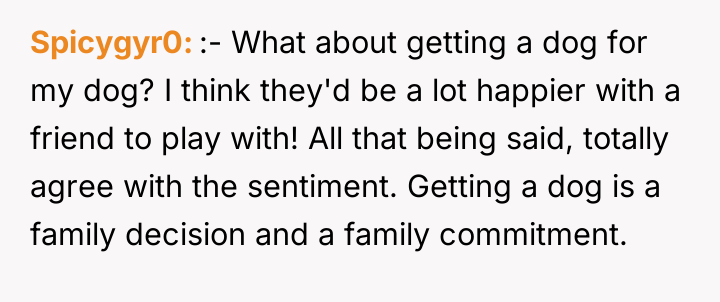
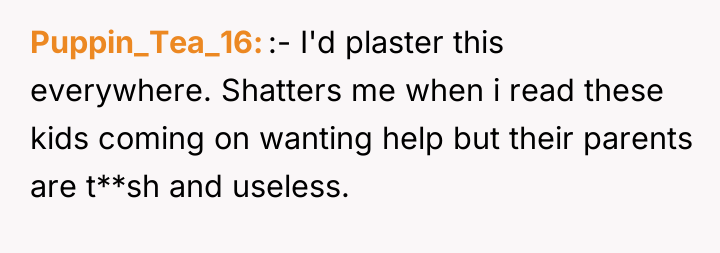
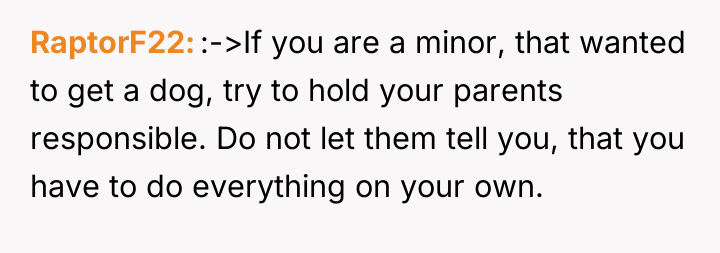
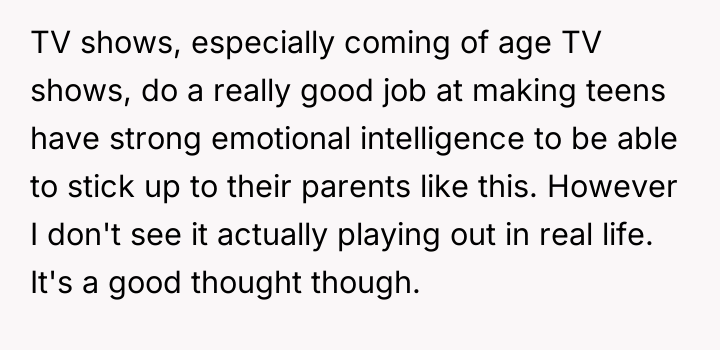
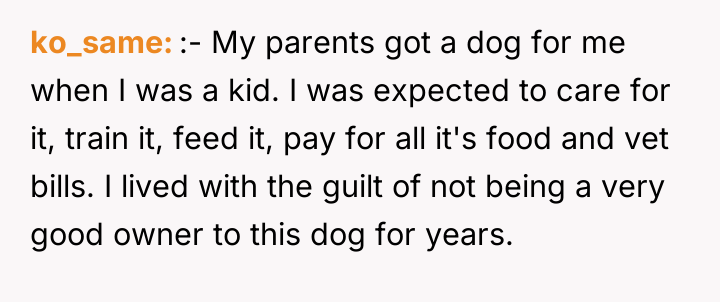
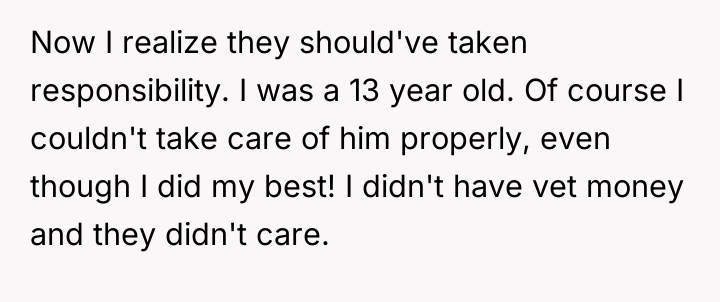


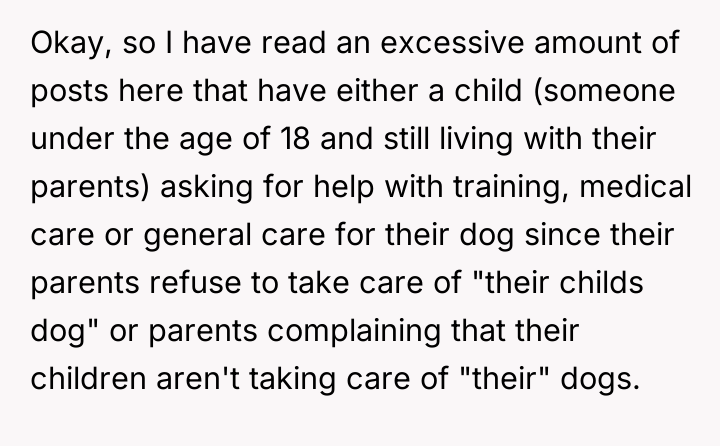
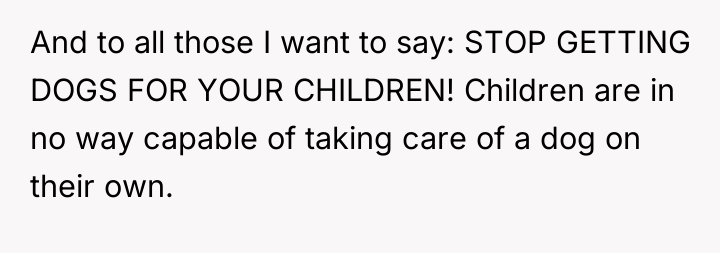
The author strongly asserts that parents must assume primary responsibility for any dog acquired for their children, emphasizing that minors lack the necessary time, maturity, and resources for sole pet ownership. This stance directly challenges the common practice of gifting pets to children under the assumption of full minor responsibility.
Given the clear gap between parental expectations and the reality of child capabilities regarding pet care, is it more detrimental to a child's development to deny them the experience of caring for a pet, or to allow them to have one while knowing the adult will inevitably shoulder the majority of the actual work?