AITA for excluding my daughter from a movie night?
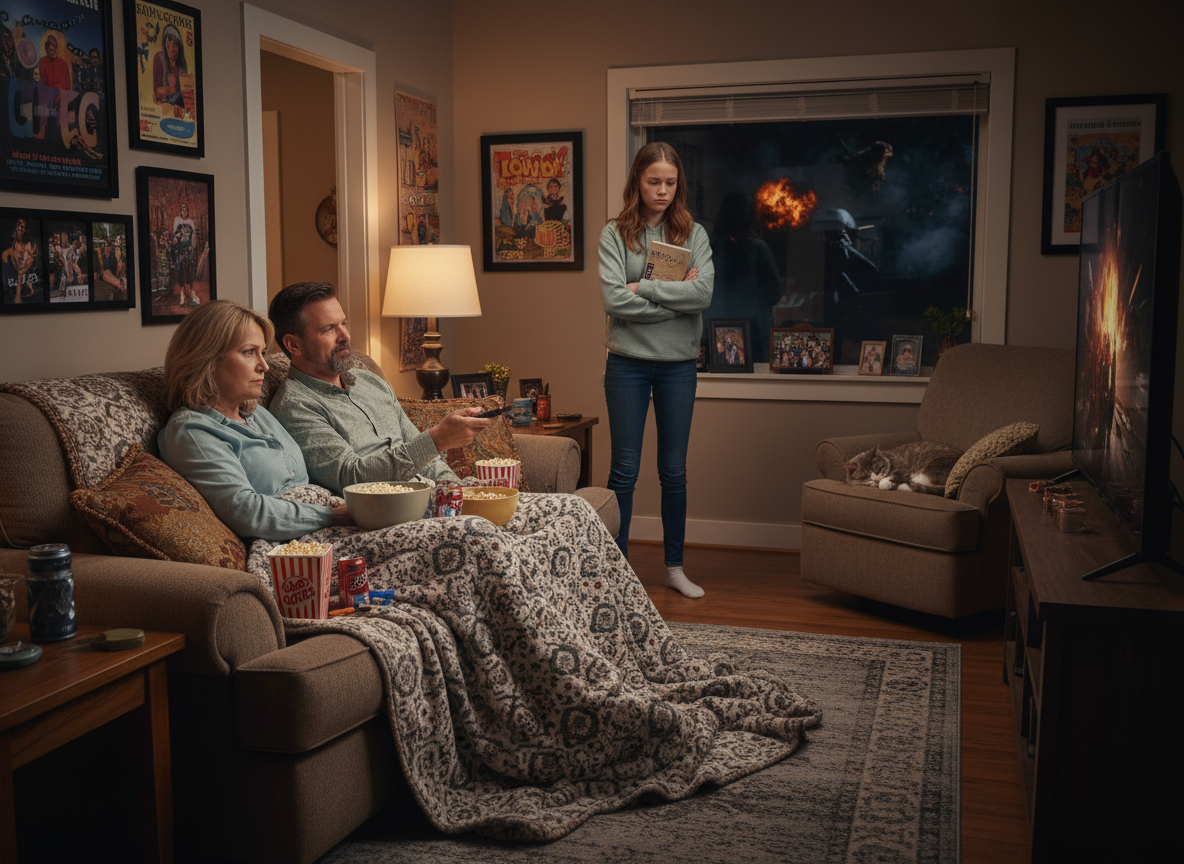
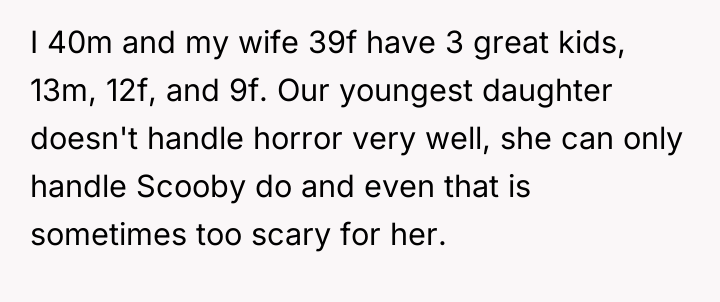
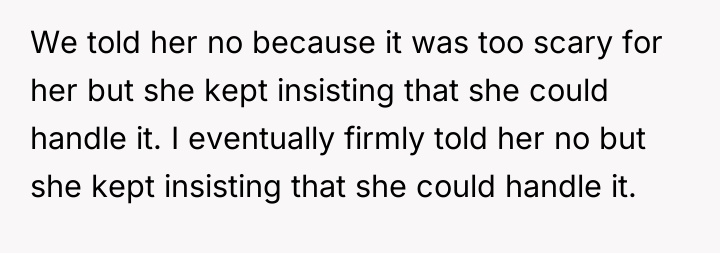
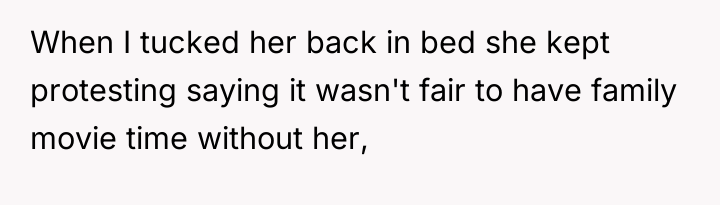
In a household where laughter and love intertwine with the complexities of childhood fears, a father faces the heart-wrenching challenge of protecting his youngest daughter from the shadows that haunt her dreams. Despite her yearning to join the world of scary stories, her fragile spirit trembles at even the slightest fright, creating a poignant struggle between her curiosity and her vulnerability.
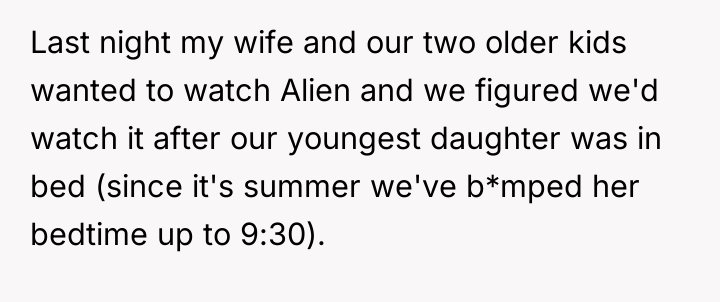
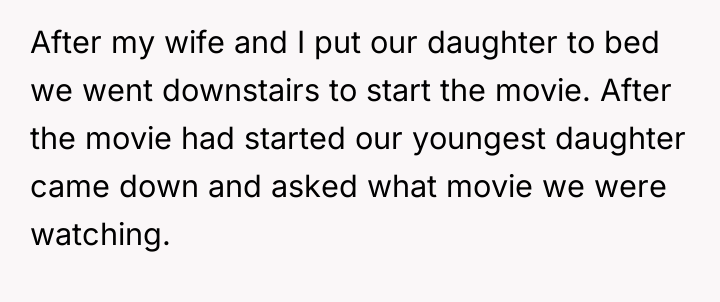
As the family embarks on a night of thrilling adventure with a classic horror film, the delicate boundary between protection and independence is tested. The father’s resolve to shield his daughter from the darkness of the unknown is met with her desperate pleas, illuminating the tender and often painful dance of parenting—a dance where love must sometimes say no, even when it breaks a child’s heart.









As renowned child development expert Dr. T. Berry Brazelton states, “Consistency in parenting is important, but it must be tempered with flexibility to meet the changing needs of the child.”
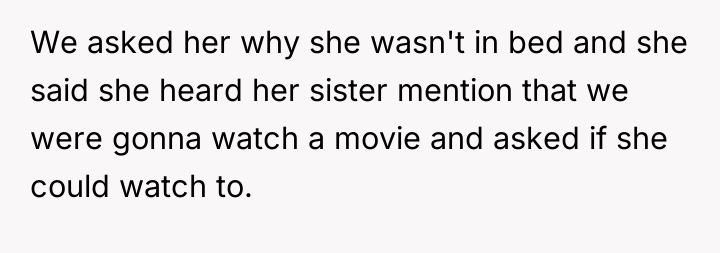
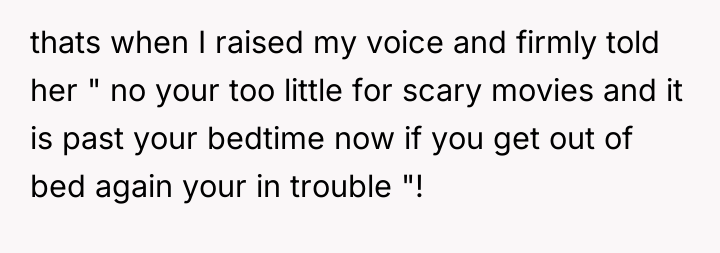
The OP correctly identified and upheld two crucial boundaries: the child's established bedtime and the content restriction based on her known sensitivity to horror. Children thrive on predictable routines, and yielding to a tantrum, especially one occurring after bedtime, often reinforces that destructive behavior is an effective tool for manipulation. The father’s action of physically removing the child and clearly stating the reason ("too little for scary movies") addressed the immediate boundary violation directly.
However, the wife’s concern touches upon the concept of 'felt security' and exclusion. While the boundary was necessary, the delivery—escalating to a raised voice and the blunt statement about being "too little"—could be perceived by the child as punitive rather than protective. A more constructive approach might involve validating the child's desire to participate ("We know you want to watch, and we love that you want to be with us") while firmly holding the boundary ("But it is past your bedtime, and this movie is too scary for you right now").
Overall, the OP’s action of maintaining the content and time boundary was appropriate for long-term discipline. The recommendation for future similar situations is to prepare a 'Plan B' in advance: if the child disrupts the planned activity, immediately pivot to an alternative, agreed-upon quiet activity (like reading together in their room or an age-appropriate movie in another space) to acknowledge their desire to connect without sacrificing the core boundaries.
THIS STORY SHOOK THE INTERNET – AND REDDITORS DIDN’T HOLD BACK.:
The community had thoughts — lots of them. From tough love to thoughtful advice, the comment section didn’t disappoint.

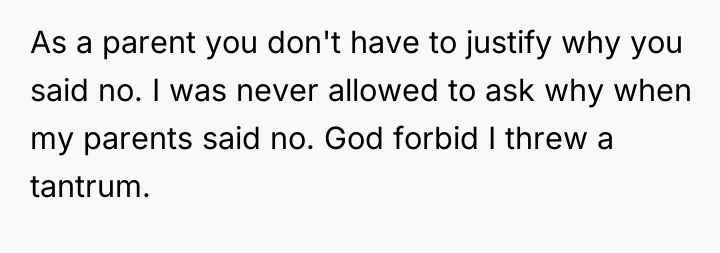
















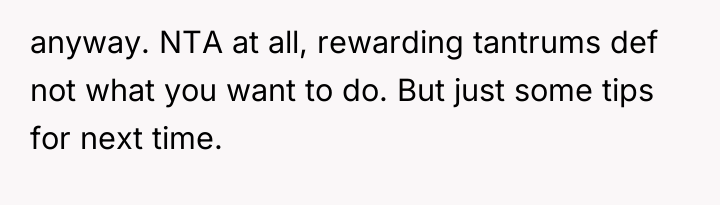

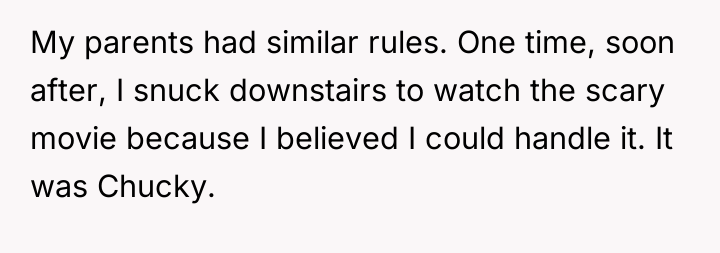


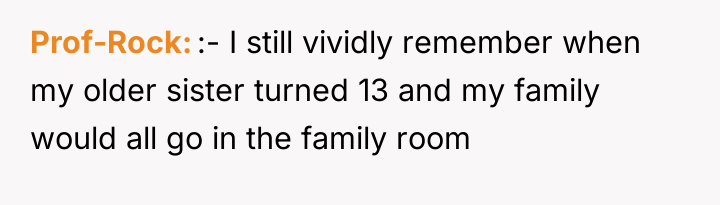
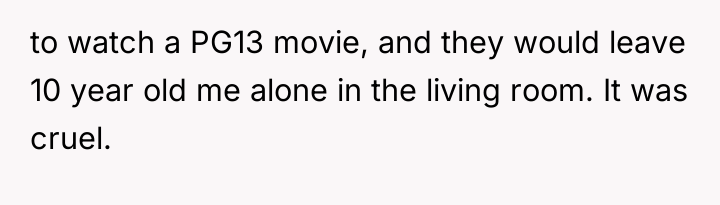
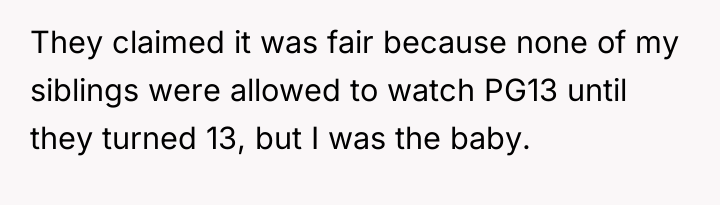
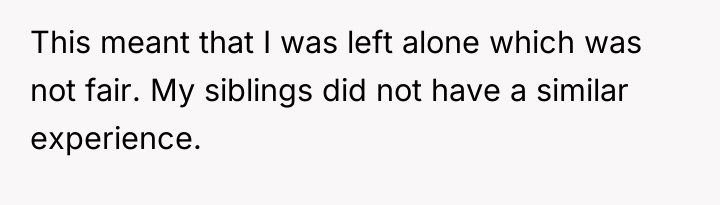











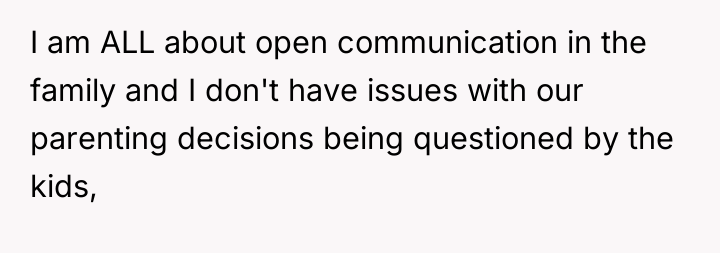

The original poster (OP) felt they handled a situation appropriately by enforcing bedtime and content restrictions for their sensitive youngest child, prioritizing consistency and their own plans. The central conflict arises because the OP's wife believes this firm approach caused the child unnecessary exclusion and distress, suggesting an alternative that prioritized inclusion over the strict adherence to the initial plan.
Was the father right to firmly enforce the established bedtime and content restrictions despite the child's significant protest and emotional outburst, or would it have been better for family harmony to find an alternative, age-appropriate movie option to prevent the feeling of exclusion?
Trending This Week

Dad disfigured me and refuses to address it- i accidentally make his fiancé leave him. AITAH?
When I was six years old, I tripped on my father's farm and fell face-first against a concrete wall. I lost three teeth and felt my jaw bones misalign. My father did not take me to the hospital. Instead, he forced my jaw back into place with his hands and told me not to tell my mother, who was traveling abroad at the time. Because I received no medical attention, my chin grew back disfigured and lopsided, causing me constant jaw pain, physical issues like bruxism, and deep insecurity. Recently, I told my mother the truth about the accident. She was furious and called my father, demanding that he pay for reconstructive surgery. My father reacted defensively, calling me vain and refusing to pay. During a recent visit, my father's fiancée asked me about my childhood. She had heard about the phone argument and was shocked. Feeling safe with her, I opened up about my past experiences with my father. Shortly after I returned home, my father called me in a rage. His fiancée had called off their wedding after learning about his past behavior. He blamed me entirely, screaming insults, calling me vengeful, and telling me he was glad my face was ruined. Despite the emotional toll and feeling guilty for the breakup, I realized with the support of my boyfriend that I did nothing wrong. I plan to call his ex-fiancée to talk, and I am choosing to focus on my own life, my upcoming exams, and moving forward without relying on my father.

AITA for telling my sister that her husband is having an affair?
I am seventeen years old, and my twenty-five-year-old sister is married to a thirty-eight-year-old man named James. Recently, while having lunch at a restaurant with a friend, I saw James with another woman. They appeared to be on an intimate date. My friend advised me to record them instead of confronting them immediately, so we gathered video proof. I went straight to my sister's house and showed her the footage. Instead of being sad, she became furious with me, accusing me of trying to ruin her marriage out of jealousy, and she kicked me out and blocked me. The next day, my sister arrived at our parents' house with her bags, having decided to leave James. She apologized to me, explaining that she already had suspicions but had reacted badly because she had fought hard against our family to marry him. Our father had previously warned her about James's manipulative nature and the age gap. My sister and I reconciled, and she is now proceeding with a divorce.

AITA for leaving Thanksgiving because my partner's creepy brother was there?
I and my partner have been friends for a few years and started dating more seriously early this year. This was the first time he invited me to Thanksgiving, which he called a Friendsgiving. His parents were hosting it, but it was mostly their friends and his friends, not extended family. For whatever reason, I assumed his brother would not be there. I have tried really hard to be nice to his brother, who has always made me uncomfortable with staring and hovering. Last year, my partner asked if his brother could join us on a road trip. I expressed my discomfort, but my partner assured me it would be fine. During the trip, I felt like I was babysitting him. A few weeks later, I discovered that his brother had posted lewd drawings of me online, which he had created during our trip. When I brought this up to my partner, he brushed it off, and I did not explicitly spell out how uncomfortable it made me. I made it clear that I did not want to be around his brother after that. When I had dinner with his parents, his brother usually stayed in his room. However, at the Friendsgiving dinner, his brother showed up and was seated right next to me. My partner did not warn me or try to prevent us from being seated together. Feeling overwhelmed, I decided to leave. I took the car keys, and when my partner asked what I was doing, I raised my voice in front of the guests, telling him he could choose between me and his brother. I drove away, leaving him at his parents' house, and went to stay with my sister.