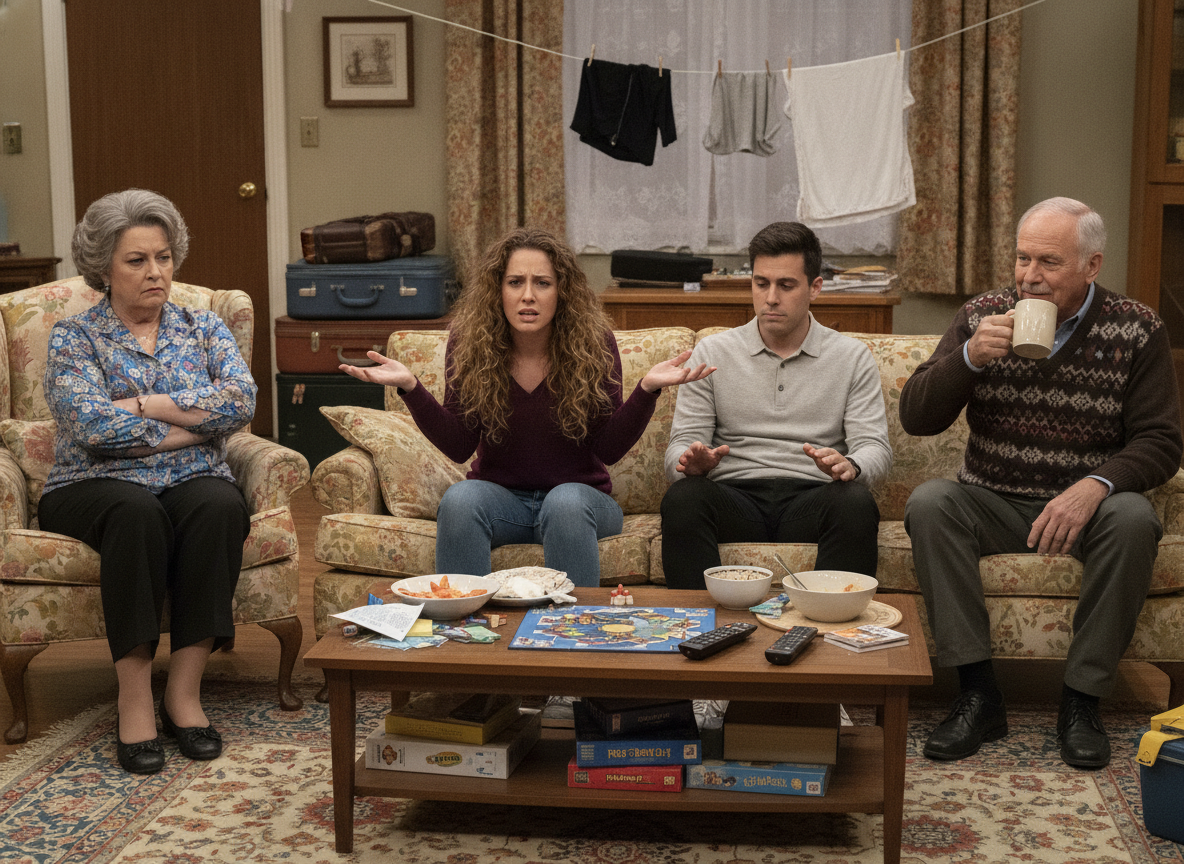
AITA for excluding my daughter from a movie night?
In a household where laughter and love intertwine with the complexities of childhood fears, a father faces the heart-wrenching challenge of protecting his youngest daughter from the shadows that haunt her dreams. Despite her yearning to join the world of scary stories, her fragile spirit trembles at even the slightest fright, creating a poignant struggle between her curiosity and her vulnerability.
As the family embarks on a night of thrilling adventure with a classic horror film, the delicate boundary between protection and independence is tested. The father’s resolve to shield his daughter from the darkness of the unknown is met with her desperate pleas, illuminating the tender and often painful dance of parenting—a dance where love must sometimes say no, even when it breaks a child’s heart.















As renowned child development expert Dr. T. Berry Brazelton states, “Consistency in parenting is important, but it must be tempered with flexibility to meet the changing needs of the child.”
The OP correctly identified and upheld two crucial boundaries: the child's established bedtime and the content restriction based on her known sensitivity to horror. Children thrive on predictable routines, and yielding to a tantrum, especially one occurring after bedtime, often reinforces that destructive behavior is an effective tool for manipulation. The father’s action of physically removing the child and clearly stating the reason ("too little for scary movies") addressed the immediate boundary violation directly.
However, the wife’s concern touches upon the concept of 'felt security' and exclusion. While the boundary was necessary, the delivery—escalating to a raised voice and the blunt statement about being "too little"—could be perceived by the child as punitive rather than protective. A more constructive approach might involve validating the child's desire to participate ("We know you want to watch, and we love that you want to be with us") while firmly holding the boundary ("But it is past your bedtime, and this movie is too scary for you right now").
Overall, the OP’s action of maintaining the content and time boundary was appropriate for long-term discipline. The recommendation for future similar situations is to prepare a 'Plan B' in advance: if the child disrupts the planned activity, immediately pivot to an alternative, agreed-upon quiet activity (like reading together in their room or an age-appropriate movie in another space) to acknowledge their desire to connect without sacrificing the core boundaries.
THIS STORY SHOOK THE INTERNET – AND REDDITORS DIDN’T HOLD BACK.:
The community had thoughts — lots of them. From tough love to thoughtful advice, the comment section didn’t disappoint.









































The original poster (OP) felt they handled a situation appropriately by enforcing bedtime and content restrictions for their sensitive youngest child, prioritizing consistency and their own plans. The central conflict arises because the OP's wife believes this firm approach caused the child unnecessary exclusion and distress, suggesting an alternative that prioritized inclusion over the strict adherence to the initial plan.
Was the father right to firmly enforce the established bedtime and content restrictions despite the child's significant protest and emotional outburst, or would it have been better for family harmony to find an alternative, age-appropriate movie option to prevent the feeling of exclusion?
Trending This Week

AITA for staying anonymous after reporting my sister and her husband to CPS?
My sister met her husband when she was pregnant with another man's child. She never told anyone in the family who the father is, and she never told the father about the child either. Her husband refused to include my nephew in the wedding or treat him as his own. Since they had their own children, his bad treatment of my nephew has become worse. He refuses to watch my nephew, threatens to let him starve, and says he would not stop him from getting hurt. My sister ignores this and defends her husband. I reported this to Child Protective Services anonymously. They investigated but did not remove my nephew because there were no physical injuries. My sister is angry about the report and wants to find out who made it. Some of my family think it is cowardly to stay anonymous, but I worry that if my sister finds out it was me, I will never see my nephew again.

AITAH for not telling my housemate I’m moving out and taking everything with me?
I have lived with two of my friends in a rented house share for ten months. Around three months into our tenancy, a girl we did not know moved in to fill the final room. While I was initially excited to have another female housemate, our first interaction was tense; instead of greeting me, she immediately asked about our cleaning plans. Despite explaining our weekly routine, she quickly began using our kitchen items and leaving them dirty. When one of my friends gently addressed this, she reacted by shouting at me for fifteen minutes, accusing me of trying to look good in front of the male roommates. Over the next seven months, her behavior deteriorated further. She monopolized the clothes drying racks, damaged our communal chopping boards, and left her hair all over the floors. Additionally, she filled the entire freezer, left appliances dirty, neglected bathroom hygiene, and took my personal hygiene products without permission. Whenever we tried to address these grievances, her anger was directed solely at me. Recently, a new job opportunity allowed my two friends and me to find a three-bedroom flat together. We are moving out next week. Since we purchased about ninety percent of the communal items in the house—including the toaster, microwave, kettle, and vacuum—we plan to take them with us. Because our communication has completely broken down, I have decided not to inform her of our departure, leaving her to find out when she notices the viewings or when the moving van arrives.

AITA for refusing to let my mom move into my new house
I recently put an offer on a home that was accepted, and I am getting ready to close next week. Over the last five years, I worked extremely hard to pay down my debt and save money by working multiple jobs and going to school full-time. My mother and I have never gotten along well, but I moved her into my tiny apartment a year ago to help her out because she lives on Social Security and cannot work. Our agreement was to split expenses, but she has rarely paid her share, doubling my financial burden while constantly criticizing me. When I bought my house, I did so in my name only to protect myself. After she saw the house, she immediately criticized it and demanded the master bedroom. This led to a major argument where I told her she could not live with me. Now, she refuses to look for veteran housing assistance, my siblings want nothing to do with her, and I am emotionally drained by her dependency.